
 Worksheets
2nd 9 Weeks Social Studies Exam
Total questions: 60
Worksheet time: 45mins
What is in the first amendment of the Constitution?
the three branches of government
the basic freedoms of all people
the responsibilities of the house of representatives
The first amendment includes...
Freedom of speech, religion, press petition and assembly
No illegal searches and seizures
The right to bear arms
No quartering troops
Why did Anti-federalists oppose the Constitution?
The document gave the northern states more rights than the southern states
The believed that the Articles of Confederation was a better document
They feared a stronger document might interfere with their rights
What does "to form a more perfect Union mean?"
To form a Union that was better than the Articles of Confederation
To form a Union where all men were created equal
To form a Union that is better than other nations
The Preamble lists the ___ for the creation of United States Constitution.
grievances
unalienable rights
reasons
weaknesses

Who invented the cotton gin?
John Deere
Eli Whitney
Samuel Slater
Samuel Morse
After the invention of the cotton gin, more ________________ people were brought to work in the fields.
elite
enslaved
lower class
middle class
Who was the first president of the United States under the U.S. Constitution?
George Washington
John Adams
Thomas Jefferson
What is the nickname for the men who attended the Constitutional Convention?
Federalists
Partisans
The Founding Fathers
Each of the three branches of the national government limits the exercise of power by the other two branches.
Checks & Balances
Veto Process
Bicameral
Federalism
The main job of the Supreme Court is to
oversee the work of the lower courts
to decide whether or not laws conflict with the U.S. Constitution
to review every law before it is signed by the President
enforce the laws passed by Congress
what are the first ten amendments known as?
Preamble
Articles
Bill of Rights
The federal system divides governmental powers between the national government and the governments of the states is best defined as....
Democracy
Federalism
Republicanism
What was the main reason for the division between the Upcountry and the Lowcountry in South Carolina?
The questions of religious freedom
This is a false statement, there was never a division between the Upcountry and Lowcountry
Economic differences/ different lifestyles
What was the main cash crop of South Carolina during the 1800s?
Tobacco
Cotton
Rice
Corn

The Great Compromised created the idea that Congress is made up of two houses, which one is based on population?
House of Burgesses
Senate
House of Representatives
Continental Congress
Which best describes the agreement in the Commerce Compromise?
The federal government would control interstate trade only, and the states would control trade within the border and with foreign countries.
The Northern States would make all trade decisions so long as they did not try to pass laws against slavery.
The federal government would control all trade between states and with foreign countries but the states would control trade within their borders.
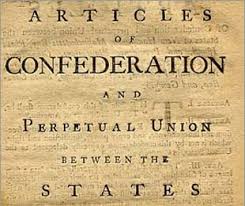
Under the Articles of Confederation, for any changes to the Articles or new laws Congress needed ______ 13 states to agree.
9 of the
7 of the
6 of the
10 of the
What is the name of the first written plan of government in America?
Constitution
Treaty of Paris
Declaration of Independence
Articles of Confederation
an agreement or a settlement of a dispute that is reached by each side making concessions.
failure
compromise
definition
knowledge
What document ended the American Revolution
Treaty of France
Treaty of Spain
Treaty of America
Treaty of Paris
During the American Revolution, the partisan forces used guerilla warfare. Which group likely passed the knowledge of this battle tactic>
Native American Tribes
French Forces
British soldiers who deserted the army to help the Americans
During the American Revolution, which battle is considered to be the turning point for partisan effort in the South?
Battle of Cowpens
Battle of Kings Mountain
Battle of Camden
During the American Revolution, which South Carolina battle resulted in the closing of South Carolina’s ports?
Battle of Yorktown
Battle of Kings Mountain
Siege of Charleston
How did the British reward slaves who served them during the American Revolution?
They took them to England after the war
They gave them their freedom
They paid them well
What was the significance of the Battle at Cowpens?
It was the last major battle in South Carolina
It was the turning point of the war
Lord Cornwallis left South Carolina after the battle
Which of the following BEST describes the South Carolina Provincial Congress?
A. The first legislative body in South Carolina that was independent of Royal government
C. The first government of South Carolina that recognized the independence of Native Americans
A group of men who tried to negotiate a treaty with King George III


What did the "Tea Act" do?
taxed tea on tea that came from China
taxed tea
gave The British India Company exclusive rights to sell tea to the colonies
taxes only on tea from the British East India Company
Which of the following BEST defines the purpose of the Sons of Liberty?
To fight against the taxation and oppression of the colonies by King George III and Parliament
To work with the King of England to keep the peace in the colonies
To spread their religious beliefs
An economic concept where it was believed that colonies existed to contribute to the wealth and power of the Mother Country.
mercantilism
headright system
sovereignty
manumission
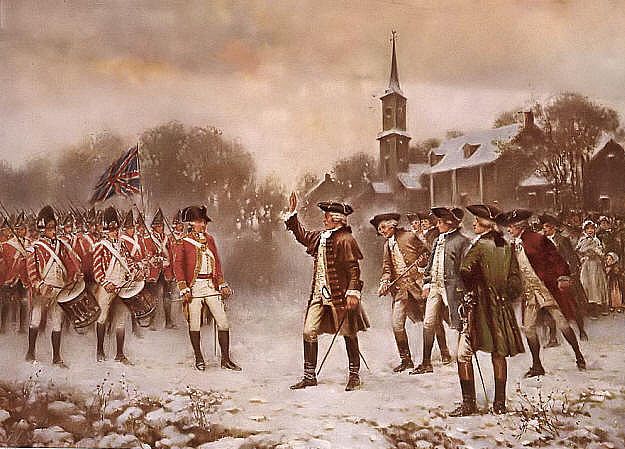
This act allowed British soldiers to live in colonial homes.
The Quebec Act
The Stamp Act
The Declaratory Act
The Quartering Act
What was the COLONIAL name for the acts that closed Boston Harbor, banned town meetings, and other harsh penalties?
The Coercive Acts
The Townshend Acts
The Intolerable Acts
The Proclamation of 1763
As a result of the French and Indian War, Great Britain incurred a significant debt that they thought the American colonists should...
pay a small amount of the debt.
accept the taxes placed on them.
disregard any new taxes.
place a tax on goods going to England.
The Revenue Act of 1764 placed a luxury tax or duty on import items such as this, it is also known as the ____________Act.
Molasses
Tea
Sugar
Quartering

What was the famous quote of the colonists when protesting the British?
No taxation without representation
No representation without taxation
No taxation on tea without cream and sugar
No taxation without illumination


A type of hit-and-run tactic used in warfare (by the Patriots in the Rev. War)
Guerilla Warfare
Ratify
Repeal
"No taxation without representation"

