wayground logo

Free Printable Worksheets

Font size

S
M
L
XL
Worksheets

1st Semester Review

Total questions: 240

Worksheet time: 6hrs 2mins

Name
Class
Date
1.
The diagram below shows the cycling of nutrients in an ecosystem.
The removal of which of the following groups would cause an immediate decrease in the amount of energy flowing through the system?
a)
Producers
b)
Consumers
c)
Decomposers
d)
Inorganic nutrients
2.
Green plants are
a)
producers
b)
consumers
c)
herbivores
d)
omnivores
3.
What is the original source of almost all energy in most ecosystems?
a)
carbohydrates
b)
sunlight
c)
water
d)
carbon
4.
An organism that produces its own food supply from inorganic compounds is called a(an)
a)
heterotroph
b)
consumer
c)
detritivore
d)
autotroph
5.
What is an ecological model of the relationships that form a network of complex interactions among organisms in a community from producers to decomposers?
a)
food web
b)
an ecosystem
c)
food chain
d)
a population
6.
What is the term for each step in the transfer of energy and matter within a biological community?
a)
energy path
b)
food web
c)
trophic level
d)
food pyramid
7.
which symbiosis is this 
a)
parasitism 
b)
mutualism
c)
commensalism
d)
nonalism 
8.
symbiotic relationship in which both organisms benefit
a)
competition
b)
Mutualism
c)
nitrogen fixation
d)
energy pyramid
9.
The energy at each trophic level in the pryamid of energy decreases by a factor of ____.
a)
10
b)
1
c)
100
d)
2
10.
What does a food web represent?
a)
All connections of energy flow throughout all organisms in a habitat.
b)
The specific ways that mutualism is carried out.
c)
A single pathway or energy flow between organisms. 
d)
How carnivores get their food. 
11.
diagram that shows the energy available to each trophic level in an ecosystem; 10% is passed on to upper levels, the rest is lost as heat
a)
succession 
b)
cellular respiration
c)
energy pyramid
d)
biochemical cycle
12.
a relationship between two in which one species, the predator, feeds on the other species, the prey
a)
chemosynthesis
b)
predation
c)
cellular respiration 
d)
commensalism
13.
symbiotic relationship in which one organisms benefits and the other organism is not affected
a)
invasive (non-native) species
b)
mutualism 
c)
nitrogen fixation
d)
commensalism
14.
Members of a species in a defined area
a)
Ecosystem
b)
community
c)
biodiversity
d)
population
15.
Where an organism lives
a)
habitat
b)
niche 
c)
heterotrogh
d)
biosphere
16.
Non-living factor that affects an ecosystem
a)
biotic factor
b)
abiotic factor
c)
food chain 
d)
biome
17.
Organisms that breaks down and absorbs nutrients from dead organisms 
a)
consumer
b)
trophic level
c)
decomposer
d)
species
18.
A food chain is illustrated below:
The arrows represented most likely indicate
a)
A. Energy released from metabolism into the environment as heat.
b)
B. Oxygen released from metabolism produced by cellular respiration.
c)
C. The absorption of energy from the environment that has been created.
d)
D. The transport of glucose away from the organism through photosynthesis.
19.
A pond ecosystem is shown in the diagram below. Which statement describes an interaction that helps maintain the dynamic equilibrium of this ecosystem?
Which statement describes an interaction that helps maintain the dynamic equilibrium of this ecosystem?
a)
The frogs make energy available to this ecosystem through the process of photosynthesis.
b)
The algae directly provide food for both the rotifers and the catfish.
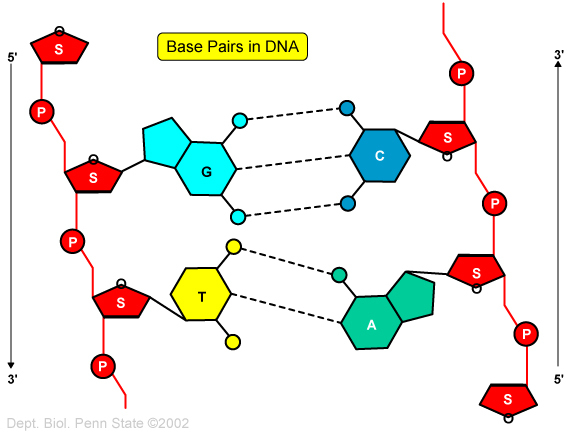
c)
The green-backed heron provides energy for the mosquito larvae.
d)
The catfish population helps control the populations of water boatman and waterfleas.
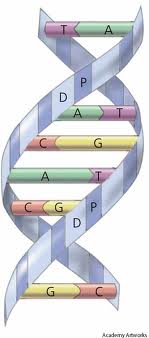
20.
In the energy pyramid here, which organisms have the most energy available?
a)
Producers
b)
Carnivores
c)
Herbivores
d)
Top Predator
21.
If there is 1000 Kcal available in the producers in trophic level 1, how much energy is available in the herbivores in trophic level 2?
a)
10 Kcal
b)
1 Kcal
c)
100 Kcal
d)
1000 Kcal
22.
In the energy pyramid here, how much of the energy in the producers gets passed to the herbivores?
a)
10%
b)
20%
c)
80%
d)
90%
23.
If these organisms were arranged in a food pyramid, which organism would have the least amount of total energy available?
a)
coyote
b)
insect
c)
lizard
d)
shrub
24.
The largest and most inclusive of the Linnaean taxonomic ranks is the
a)
kingdom
b)
order
c)
phylum
d)
family
25.
The total amount of living tissue at each trophic level in an ecosystem can be shown in a(n) 
a)
energy pyramid
b)
pyramid of numbers
c)
biomass pyramid 
d)
biogeochemical cycle
26.
Extreme flooding destroys the under-story vegetation in an oak forest. Which of the species below is most likely to disappear? 
a)
A squirrel that only eats acorns from the oak trees
b)
Frogs that eat insects and hide in vines and grasses
c)
A hawk that eats frogs and small birds
d)
A lichen that grows on trees and stones 
27.
Which of the organisms in the food web obtains 1% energy?
a)
Grasshopper
b)
Snake 
c)
Deer 
d)
Fox
28.
Suppose that scientific research reported that the cod population was reduced in the ecosystem represented by the food web. What result would be most likely over time?
a)
The leopard seal population may decrease
b)
The photosynthetic plankton population may decrease
c)
The penguin population may decrease
d)
The krill and zooplankton populations may decrease
29.
About 10% of the energy at one trophic level is passed to the next level. What usually happens to the energy that is not passed to the next trophic level or used to carry out life processes?
a)
It is given off as heat 
b)
It is stored as vitamins.
c)
It is used in reproduction.
d)
It is used in protein synthesis 
30.
Look at the energy pathways in the food chains shown. In which food chain would humans receive the least amount of energy supplied by the producer?
a)
Food chain 1
b)
Food chain 2
c)
Food chain 3
d)
all food chains are equal 
31.
The diagram shows a simplified food pyramid. The number of organisms is generally smaller at the top than at the bottom because organisms at the top usually
a)
have more offspring
b)
have more predators 
c)
adapt more quickly
d)
require more energy 
32.

This biomes gets very little rainfall.

a)

temperate forest

b)

rainforest

c)

grassland

d)

desert

33.

This biome is much like a cold desert.

a)

tundra

b)

taiga

c)

boreal forest

d)

grassland

34.

This biome can be very hot or very cold.

a)

tundra

b)

desert

c)

boreal forest

d)

grassland

35.

Which biome listed has the most energy available for cycling?

a)

tundra

b)

rainforest

c)

boreal forest

d)

desert

36.

The difference between the tundra and a cold desert is...

a)

vegetation

b)

location

c)

predators

d)

all of the above

37.

Which biome listed is likely to have the most herbivores?

a)

tundra

b)

desert

c)

rainforest

d)

grassland

38.
Nitrogen has three occurring isotopes: Nitrogen-13, Nitrogen-14, Nitrogen-15. Which isotope is the most abundant?
a)
Nitrogen-13
b)
Nitrogen-14
c)
Nitrogen-15
d)
Based on the information given, it cannot be determined
39.
Atom 1 has Mass=12  Protons=6
Atom 2 has Mass= 14 Electrons=6
Are these atoms isotopes of each other or different elements?
a)
Different Elements - Mg & Si
b)
Different Elements - Ar & Ca
c)
Isotopes of Carbon
d)
Isotopes of Magnesium
40.
Which particles make up the nucleus of an atom?
a)
protons and neutrons
b)
electrons and protons
c)
electrons, protons, and neutrons
d)
electrons and neutrons
41.
What is the mass number and name of an element with 8 protons and 8 neutrons?
a)
16 - Carbon
b)
16 - Oxygen
c)
24 - Oxygen
d)
8 - Neon
42.
The mass of one proton is greater than the mass of one...
a)
neutron
b)
electron
43.
What is an atom mostly made up of?
a)
protons
b)
electrons
c)
empty space
d)
neutrons
44.
What is the mass number defined as?
a)
the number of protons
b)
the number of protons and neutrons
c)
the number of neutrons
d)
the number of protons and electrons
45.
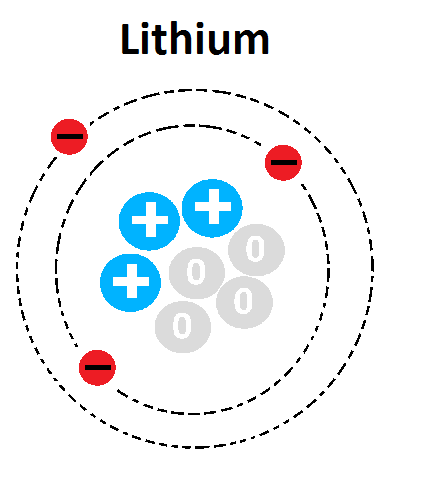
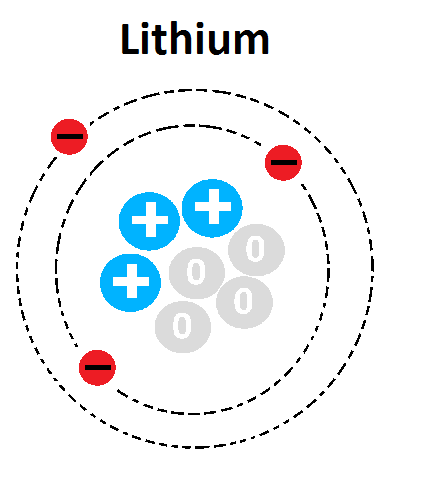
What is the atomic number of this atom?
a)
1
b)
3
c)
4
d)
7
46.

What is the mass number of this atom?

a)

1

b)

3

c)

4

d)

7

47.

An element has the mass number 12 and atomic number 6. The number of neutrons in it is:

a)

6

b)

10

c)

4

d)

8

48.

Atoms of the same element which have a different number of neutrons are called _________________.

a)

ions

b)

isotopes

c)

quarks

d)

molecules

49.

Which subatomic particle has a negative charge in the atom?

a)

proton

b)

neutron

c)

electron

d)

quark

50.
What atoms make up all carbohydrates?
a)
Carbon, Sulfur, Hydrogen
b)
Carbon, Oxygen, Phosphorus
c)
Carbon, Oxygen, Nitrogen
d)
Carbon, Oxygen, Hydrogen
51.
How many sugar units make up monosaccharides?
a)
one
b)
two
c)
three
d)
zero
52.
How many sugar units make up polysaccharides?
a)
one
b)
two
c)
more than two
d)
zero
53.
Which do all carbohydrates do for us?
a)
provide energy
b)
make muscle
c)
make brains
d)
make hair
54.
What molecule is this
a)
sucrose
b)
protein
c)
glucose
d)
cellulose
55.
What type of carbohydrate is this?
a)
polysaccharide
b)
disaccharide
c)
monosaccharide
d)
it isn't a carbohydrate
56.
All carbohydrate names end with which ending:
a)
ise
b)
ase
c)
ese
d)
ose
57.
These are all properties of a disaccharide EXCEPT:
a)
made up of two sugars
b)
sucrose
c)
2 monosaccharides joined by dehydration synthesis
d)
ratio of 1:2:1
58.
Which of these are examples of carbohydrates?
a)
DNA, RNA
b)
Fats, hormones
c)
amino acids
d)
starches, glucose, chitin
59.
Which of these is a lipid?
a)
triglycerides
b)
steroids
c)
fatty acids
d)
all of the above
60.
Lipids are found in every cell on Earth. Which part of the cell do lipids make up?
a)
cell nucleus
b)
cell vacuole
c)
cell membrane
d)
cell golgi body
61.
Which of the following is a characteristic of lipids?
a)
They are polar molecules.
b)
They are nonpolar molecules.
c)
They dissolve in water.
d)
They are hydrophilic.
62.
These are the monomers (building blocks) of lipids?
a)
nucleotides
b)
amino acids
c)
disaccharides
d)
fatty acids
63.
Which of the following is NOT a function of lipids?
a)
long term energy
b)
provides flavor in food
c)
used to make hormones
d)
building of muscles
64.
Which specific lipid has the following characteristics:
1. Makes up the cell membrane
2. Has a polar, hydrophilic head
3. Has 2 non-polar, hydrophobic tails
a)
waxes
b)
phospholipids
c)
steroids
d)
triglycerides
65.
What does hydrophobic mean?
a)
the fear of water
b)
the fear of hydrogen
c)
the love of water
d)
the love of hydrogen
66.
This picture shows what type of lipid?
a)
unsaturated fat
b)
wax
c)
saturated fat
d)
steroid
67.
A "kinky structure" due to the double bonds between carbon atoms creates a lipid known as what?
a)
saturated fat
b)
wax
c)
steroid
d)
unsaturated fat
68.
Triglycerides include both:
a)
fats and oils
b)
waxes and steroids
c)
steroids and phospholipids
d)
saturated fats and waxes
69.
Saturated fats are _____ at room temperature.
a)
solids
b)
gases
c)
liquids
d)
non of the above
70.
Saturated fats have this type of structure:
a)
kinky with double bonds between carbons
b)
4-fused carbon rings
c)
straight with single carbon bonds
d)
rectangular with triple carbon bonds
71.
Which of the following foods contains unsaturated fats?
a)
fish
b)
olive oil
c)
cheese
d)
eggs
72.
Which of the following foods contains saturated fats?
a)
steak
b)
avocados
c)
peanut butter
d)
oil
73.
What is a triglyceride?
a)
a glycerol joined to 3 fatty acids
b)
a glycogen joined to 2 fatty acids
c)
4-fused carbon rings
d)
long chains of hydrocarbons and an alcohol.
74.
What is a protein: 
a)
A polymer composed of many sugars.
b)
A polymer composed of many amino acids. 
c)
A polymer composed of fatty acids. 
d)
A polymer composed of nucleotides. 
75.
What is a peptide bond?
a)
Bond that holds two amino acids together.
b)
A bond that holds hydrogen and oxygen molecules together.
c)
A bond that holds the phosphate group of one nucleotide and a sugar of a neighboring nucleotide.
d)
A bond that is formed by the sharing of electrons.
76.
How many different amino acids are there?
a)
15
b)
20
c)
25
d)
30
77.
This is one job proteins do NOT have in the body
a)
storing genetic information
b)
structure
c)
speed up chemical reactions
d)
transport things through cell membrane
78.
What is the monomer of proteins?
a)
amino acids
b)
polypeptides
c)
nucleotides
d)
monosaccharides
79.
Which macromolecule is this?
a)
carbohydrate
b)
lipid
c)
protein
d)
nucleic acid
80.
Which analogy best describes the role enzymes play in cells?
a)
Like walls in buildings, enzymes provide structural support for the cell
b)
Like the person who helps you bag your groceries, enzymes speed up processes in cells
c)
Like books in libraries, enzymes store information that can be used by the cell when needed
d)
Like the fence around a yard, enzymes act as a barrier preventing entry to the cell.
81.

What is the function of nucleic acids?

a)

Energy

b)

Energy Storage

c)

Building Cell Structures

d)

Information Storage

82.

What are 2 types of nucleic acids?

a)

Fatty Acids and Glycerol

b)

DNA and RNA

c)

Amino Acids and Enzymes

d)

Monosaccharides and Polysaccharides

83.

The monomers of nucleic acids are

a)

Nucleotides

b)

Amino Acids

c)

Glycerol

d)

Glucose

84.

What contains information for making the body's proteins?

a)

Proteins

b)

Nucleic Acids

c)

Carbohydrates

d)

Lipids

85.

Which of the following is NOT part of a nucleotide?

a)

Nitrogenous Base

b)

Phosphate Group

c)

Pentose Sugar

d)

Fatty Acid

86.

What sugar is found in DNA?

a)

Glucose

b)

Ribose

c)

Deoxyribose

d)

Fructose

87.

What sugar is found in RNA?

a)

Ribose

b)

Deoxyribose

c)

Glucose

d)

Galactose

88.

The sides of a DNA molecule are made of

a)

Fatty Acid and Glycerol

b)

Sugar and Phosphate

c)

Amino Acids and Peptides

d)

Nitrogenous Bases and Enzymes

89.

Which base is ONLY found in DNA?

a)

Cytosine

b)

Guanine

c)

Thymine

d)

Adenine

90.

Which base is only found in RNA?

a)

Uracil

b)

Thymine

c)

Adenine

d)

Guanine

91.

What is used by cells for energy?

a)

DNA

b)

ATP

c)

RNA

d)

ADP

92.

How many phosphate groups are found in a molecule of ATP?

a)

1

b)

2

c)

3

d)

4

93.

What is stored in the chemical bonds of ATP?

a)

Sugar

b)

Neutrons

c)

Energy

d)

Protein

94.

What happens when the end phosphate is broken off a molecule of ATP?

a)

Energy is stored

b)

Energy is released

c)

Neutrons are stored

d)

Neutrons are released

95.

What is produced when the last phosphate group is removed from ATP?

a)

DNA

b)

ADP and phosphate

c)

RNA

d)

Amino Acids and Peptide bonds

96.

What suffix tells identifies an enzyme?

a)

ose

b)

ese

c)

ise

d)

ase

97.

The image shown is of

a)

DNA

b)

RNA

c)

Fatty Acids

d)

ATP

98.

The image shown is of

a)

DNA

b)

RNA

c)

Fatty Acids

d)

ATP

99.

What molecule is shown here?

a)

Peptide

b)

Amino Acid

c)

Nucleotide

d)

Carbohydrate

100.

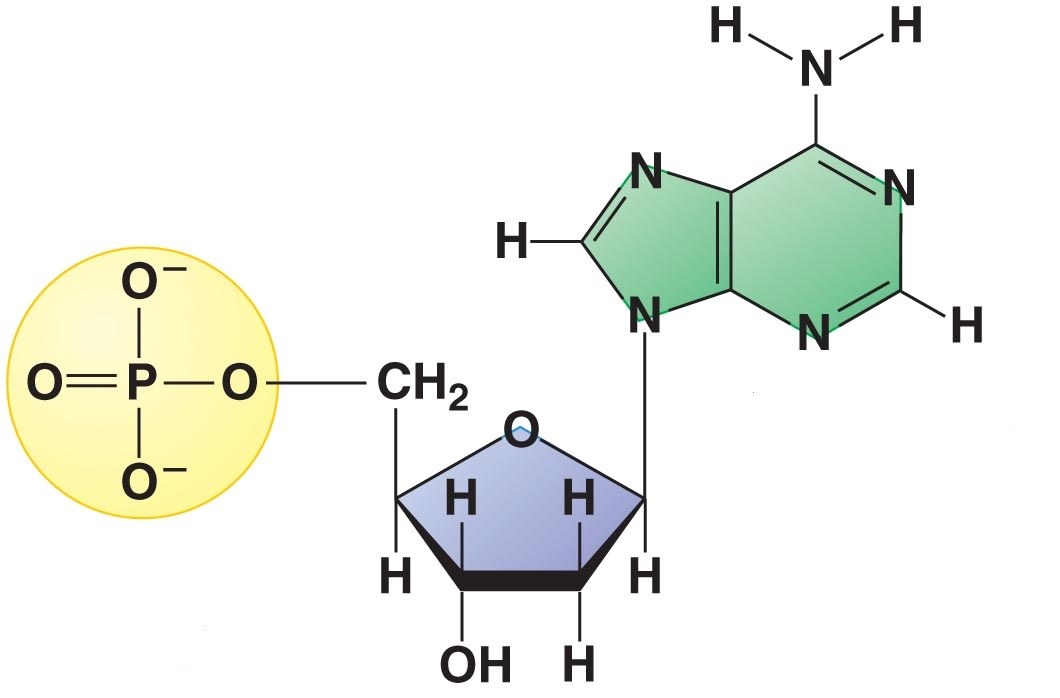
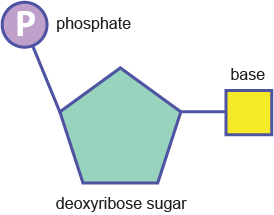
What is A?

a)

Phosphate Group

b)

Pentose Sugar

c)

Nitrogenous Base

d)

Adenosine Triphosphate

101.

What is B?

a)

Phosphate Group

b)

Pentose Sugar

c)

Nitrogenous Base

d)

Adenosine Triphosphate

102.

What is C?

a)

Phosphate Group

b)

Pentose Sugar

c)

Adenosine Triphosphate

d)

Nitrogenous Base

103.

Which of the following statements is NOT part of the cell theory?

a)

Cells are the basic unit of structure and function in all living things.

b)

All cells are produced from other cells.

c)

Cells are the basic unit of structure and function in all matter.

d)

All living things are composed of cells.

104.
Which statement reflects one of the major components of the cell theory?
a)
All living things are multi-cellular.
b)
Organs are the basic unit of structure and function for all living things.
c)
All cells come from previously existing cells.
d)
Every organism has a reproductive system to ensure survival of the species.
105.
This organelle is a rigid outer layer that protects plant cells.
a)
Cell Membrane
b)
Cell Wall
c)
Nucleus
d)
Chloroplast 
106.

This organelle controls what goes in and out of plant and animal cells.

a)

Cell Wall

b)

Cell Membrane

c)

Chloroplasts

d)

Cytoplasm

107.

The _____________ stores food, water, wastes, and other materials in both plant and animal cells.

a)

Vacuole

b)

Mitochondria

c)

Cytoplasm

d)

Nucleus

108.
An organelle that captures energy from the sunlight in order to use it to produce food in plant cells is ______________.
a)
Chromatin
b)
Chloroplast
c)
Cytoplasm
d)
Cell Membrane
109.

The _____________ holds the DNA, and controls the functions of eukaryotic cells.

a)

Nucleus

b)

Nuclear Membrane

c)

Mitochondria

d)

Chloroplast

110.

The _____________ is a gel-like fluid that fills plant and animal cells. It holds the organelles in place and gives each cell its shape.

a)

Cytoplasm

b)

Cell Membrane

c)

Cell Wall

d)

Chloroplast

111.

What can only be found in plant cells?

a)

Cell membrane

b)

Vacuole

c)

Chloroplast

d)

Mitochondria

112.

What is found in both plant and animal cells but is much larger in plant cells because it helps to provide structure and support?

a)

Nucleus

b)

Mitochondrion

c)

Chloroplast

d)

Vacuole

113.
Cell membranes are found in
a)
Only animal cells
b)
Only plant cells
c)
Some plant and animal cells
d)
All plant and animal cells
114.

Cell organelles work together to maintain

a)

homeostasis

b)

eukarya

c)

prokarya

d)

organisms

115.

What is the main difference between prokaryotic and eukaryotic cells?

a)

Prokaryotic cells are found only in multicellular organisms

b)

Eukaryotic cells are found only in unicellular organisms

c)

Eukaryotic cells have a nucleus and prokaryotic cells do not

d)

Prokaryotic cells have DNA and eukaryotic cells do not

116.

When we exercise we use a lot more energy than when we are at rest. How to our cells help to maintain homeostasis during periods of exercise?

a)

The cells will die from using too much energy.

b)

The cells won't be able to keep up so they will multiply and create new cells.

c)

The cells will slowly die from using too much energy.

d)

The cells will create more mitochondria over time to produce more energy.

117.

What are the three parts of the cell theory?

a)

All cells come from pre-existing cells.

b)

Cells are the basic unit of structure and organization in all living things.

c)

Cells are the basic unit of structure and organization in all matter.

d)

All organisms are made of one or more cell.s

118.

Why is a cell membrane important to both plant and animal cells?

a)

It stores food and water.

b)

It controls the activities of the cell.

c)

It uses energy from the Sun to perform photosynthesis.

d)

It provides a barrier between the cell and its environment.

119.

A vacuole is a membrane-bound sac that plays a role in the storage and the release of cellular products. How do the vacuoles in animal cells differ from vacuoles in a plant cell?

a)

Plant cell vacuoles are usually smaller because plants can make their own food.

b)

Animal cells usually contain less vacuoles because they have an excretory system to eliminate waste.

c)

Plant cell vacuoles are usually larger because they also provide structural support for the plant tissues.

d)

Animal cell vacuoles are usually larger because they have to store a lot of glucose from the food they eat for later use

120.
Which of the following is NOT part of the cell membrane?
a)
Lipids
b)
Carbs
c)
Proteins
d)
Nucleic Acids
121.
Lipid tails are...
a)
Hydrophobic
b)
Hydrophilic
122.
When looking at the cell membrane, where are the phosphate heads located?
a)
Floating between bilayer levels
b)
Outer part of the bilayer
c)
Inner part of the bilayer
d)
Located at different parts throughout the bilayer
123.
When looking at the cell membrane, where are the lipid tails located?
a)
Inner part of the bilayer
b)
Outer part of the bilayer
c)
At the end of the bilayer
d)
Goes through each end of the bilayer
124.
Which of the following is responsible for getting complex molecules across the cell membrane?
a)
Lipids
b)
Carbs
c)
Proteins
d)
Nucleic Acids
125.
The phosphate heads of the lipid bilayer are
a)
Hydrophilic
b)
Hydrophobic
c)
Amphipathic
126.
What is D
a)
Phospholipid
b)
carrier protein
c)
cholesterol
d)
peripheral protein
127.
What is B
a)
Phospholipid
b)
Protein
c)
Carbohydrate
d)
cholesterol
128.
This picture show the molecules getting help across the membrane.  The vocabulary word that best describes this is
a)
diffusion
b)
osmosis
c)
facilitated diffusion
d)
active transport
129.
Which type of Passive Transport is being represented in this picture?
a)
Passive Diffusion
b)
Simple Diffusion
c)
Active Diffusion
d)
Facilitated Diffusion
130.
When particles move out of a cell through facilitated diffusion, the cell ____________.
a)
Gains energy
b)
Uses energy
c)
Releases energy
d)
Does not use energy
131.
This cell organelle helps organisms maintain homeostasis by controlling what substances may enter or leave cells.
a)
vacuole
b)
nucleus
c)
cell membrane
d)
cell wall
132.
Osmosis is the diffusion of __________.
a)
water
b)
glucose
c)
air
d)
passive transport
133.
How is diffusion (left) different from the process on the right?
a)
 Diffusion takes place due to osmotic pressure. 
b)
Diffusion requires cellular energy for the transfer of molecules.
c)
Diffusion requires protein channels as a passage-way for particles
d)
Diffusion transfers particles from an area of high to low concentration. 
134.

Describe the movement of molecules going through the proteins in the illustration.

a)

Molecules are moving from a higher concentration to a lower concentration.

b)

Molecules are moving from a lower concentration to a higher concentration.

c)

Molecules are moving from a higher concentration to a lower concentration and then from a lower to higher concentration.

d)

Molecules are moving from a lower concentration to a higher concentration and then from a higher concentration to a lower concentration.

135.
The movement of molecules from an area of HIGHer Concentration TO an area of LOWer Concentration
a)
Diffusion
b)
Osmosis
c)
High Low
d)
Alay wa?
136.
EQUAL AMOUNT OF SOLUTE AND SOLVENT IN AND OUT OF THE CELL
ตัวละลาย SOLUTE = ตัวทำละลาย SOLVENT
a)
Osmosis
b)
Isotonic
c)
Hypotonic
d)
Hypertonic
137.
The cell below is in a _________ solution.
a)
Hypotonic
b)
Hypertonic
c)
Isotonic
138.
The cell below is in a _____________ solution.
a)
Hypertonic
b)
Hypotonic
c)
Isotonic
139.
This egg has shrunk, what type of solution was it placed in?
a)
hypotonic solution
b)
hypertonic solution
c)
isotonic solution
d)
active transport
140.
What type of solution allows water to enter the plant cell?
a)
hypotonic solution
b)
hypertonic solution
c)
isotonic solution
d)
active transport
141.
A HYPOTONIC solution has a ______________ concentration of solute (dissolved stuff) than inside the cell.
a)
lower
b)
equal
c)
higher
142.
An ISOTONIC solution has a(n) ______________ concentration of solute (dissolved stuff) than inside the cell.
a)
lower
b)
equal
c)
higher
143.
If a cell is placed in a HYPOTONIC solution, water will move _________ of the cell, causing it to ___________.
a)
into, swell
b)
out of, shrivel
c)
in and out of the cell, stay the same
144.
What type of solution is this cell in?
a)
Isotonic
b)
Hypertonic
c)
Hypotonic
d)
diffused
145.

Which organelle contains DNA and controls the cell?

a)

Cell membrane

b)

nucleus

c)

nucleolus

d)

lysosme

146.

This organelle digests dead cell parts and contains enzymes

a)

lysosome

b)

golgi body

c)

smooth ER

d)

Rough ER

147.

The gelatinous material inside the cell

a)

ribosomes

b)

lysosome

c)

granum

d)

cytoplasm

148.

This pigment is found in chloroplasts.

a)

rhodopsin

b)

chlorophyll

c)

thylakoid

d)

stroma

149.

Proteins are produced at this organelle.

a)

golgi body

b)

ribosome

c)

cytoskeleton

d)

cilia

150.

this organelle makes ATP.

a)

chloroplast

b)

mitochondria

c)

ribosome

d)

nucleolus

151.

The genetic material inside a cell

a)

DNA

b)

chromatin

c)

chromosomes

d)

gene

152.

The inside of the mitochondria,the folds of the mitichondria

a)

cristae,matrix

b)

matrix,cristae

153.

This organelle produces the spindle fiber used during mitosis.

a)

lysosome

b)

centriole

c)

cytoplasm

d)

ribosome

154.

A stack of thylakoids

a)

stroma

b)

chlorophyll

c)

granum

155.

Yhis organelle packages and processes proteins

a)

Smooth ER

b)

Rough ER

c)

Golgi body

d)

vacuole

156.

the short hair like structures

a)

flagella

b)

cilia

c)

lysosome

d)

ribosome

157.

Ribosomes are produced here

a)

nucleus

b)

nuclear membrane

c)

nucleolus

d)

chromosomes

158.

long whip like structures used for movement

a)

hair

b)

cilia

c)

flagella

d)

cytoskeleton

159.

Microtubules make up which structures?Choose all that apply.

a)

cytoskelton

b)

cilia

c)

flagella

d)

spindle fiber

160.

This structure is found in plants and is made of cellulose.

a)

chloroplast

b)

cell membrane

c)

cell wall

d)

cytoplasm

161.

2 organelles only found in animal cells

a)

cytoplasm,centriole

b)

centriole,vacuole

c)

centriole,lysosome

d)

lysosome,vacuole

162.

The pigment found in chloroplasts.

a)

chlorophyll

b)

green

c)

starch

d)

cellulose

163.

this organelle acts as a transport channel in the cell.

a)

Rough ER

b)

Smooth ER

c)

Golgi body

d)

nucleus

164.
The interior space of the chloroplast is called:
a)
Lamellae
b)
Grana
c)
Stroma
d)
Thylakoids
165.
The electrons for the Light Reactions come from
a)
NADP+
b)
Water
c)
NADPH
d)
Glucose
166.
Chlorophyll gives leaves a green colour because it:
a)
Absorbs green light
b)
Reflects green light
167.

Which of the following is NOT a product of the light reactions?

a)

Oxygen

b)

NADPH

c)

ATP

d)

Glucose (Sugar)

168.
Where do the light reactions happen?
a)
mitochondria membrane
b)
thylakoid membrane
c)
stroma
d)
central vacuole
169.
What is the main purpose of the light dependent reactions?
a)
To provide the energy for the calvin cycle
b)
To capture energy and make sugar
c)
To reflect green light
d)
To make sugars
170.

What part of the plant cell performs photosynthesis?

a)

The Mitochondrion

b)

The Nucleus

c)

The Chloroplast

d)

The Cell Wall

171.
What are the two products of the light reactions that are needed for the calvin cycle?
a)
NAD and NADPH
b)
NADP + and Glucose
c)
NADPH and ATP
d)
Oxygen and NADPH
172.
What gas does the process of photosynthesis release into the atmosphere?
a)
oxygen
b)
carbon dioxide
c)
water
d)
nitrogen
173.
Thylakoids are arranged in stacks called ____.
a)
Lamellae
b)
Stroma
c)
Granum
d)
Glucose
174.
The principal chemical compound that living things use to store energy is
a)
DNA
b)
ATP
c)
H2O
d)
CO2
175.
What supplies the electron that is lost in PS II?
a)
oxygen
b)
water
c)
glucose
d)
rubisco
176.
In the ________________________, energy from the sun is used to make ATP 
a)
light-independent reaction
b)
dark reaction
c)
light-dependent reaction
d)
Calvin cycle
177.
Leaves look green because.....
a)
they eat their vegetables
b)
to blend into their environment
c)
they contain a molecule named chlorophyll
d)
they are sick
178.

Which of the following equations represents the overall chemical reaction for photosynthesis?

a)

6O2+ 6H2O → C6H12O6+ 6O2

b)

C6H12O6 + 6H2O→ 6O2+ 6O2

c)

6CO2+ 6H2O→ C6H12O6+ 6O2

d)

6O2 + 6H2O→ C6H12O6 + 6CO2

179.

Sunlight is used during photosynthesis to-

a)

Break down the xylem

b)

Break down the stomata

c)

Break down the water

d)

Capture the water

180.
What does NADPH do? 
a)
carries electrons to the Calvin cycle
b)
carries electrons to the ETC
181.
What happens to NADPH and ATP after they are used in the Calvin Cycle?
a)
they recycle back to the light reactions
b)
they are used to make G3P
182.
The two main stages of photosynthesis are the
a)
light reactions and respiration
b)
dark reactions and the Calvin cycle 
c)
light reactions and the Calvin cycle
d)
dark reactions and fermentation
183.
In green plants, the primary function of the Calvin cycle is to
a)
Use ATP to release carbon
b)
Split water to release oxygen.
c)
Construct simple sugars from carbon dioxide.
d)
Use NADPH to release carbon
184.
Which of the following is NOT a reactant of the dark reactions?
a)
NADPH
b)
ATP
c)
Oxygen
d)
Carbon dioxide
185.
Which of the following is NOT a product of the dark reactions? 
a)
NADP+
b)
NADPH
c)
ATP
d)
G3P (to form glucose)
186.
What is made during the light independent reactions?
a)
ATP
b)
NADPH
c)
sugar
d)
fat
187.
TRUE or FALSE.  The Calvin Cycle can happen during the day.
a)
True
b)
false
188.
Which of the following is NOT a reactant of the Calvin Cycle?
a)
NADPH
b)
ATP
c)
Oxygen
d)
Carbon dioxide
189.
What is the name of the simple sugar that is produced in photosynthesis?
a)
Sucrose
b)
Dextrose
c)
Glucose
d)
Lactose
190.
Where do NADP+ and ADP produced in the Calvin cycle go? 
a)
Back to the light reactions
b)
out of the chloroplast
191.
Where does glycolysis take place in cells?
a)
Cytoplasm
b)
Mitochondrion
c)
Endoplasmic Reticulum
d)
Ribosomes
192.
Glycolysis results in the net gain of:
a)
2 ATP
b)
4 ATP
c)
4 NADH
d)
2 Acetyl CoA
193.
Glycolysis results in the total production of:
a)
2 ATP
b)
4 ATP
c)
4 NADH
d)
2 Acetyl CoA
194.
Glycolysis occurs during aerobic or anaerobic conditions.
a)
True
b)
False
195.
Which of the following is not a requirement for glycolysis?
a)
Oxygen
b)
ATP
c)
NAD+
d)
Glucose
196.
Fermentation involves
a)
aerobic respiration
b)
anaerobic respiration 
197.
Yeast is a(n)
a)
autotroph
b)
producer
c)
heterotroph
d)
plant
198.
Lactic acid fermentation occurs in your muscles after a workout because your cells are struggling to get
a)
Glucose
b)
Sunlight
c)
Oxygen
d)
Water
199.
Fermentation is cellular respiration without which molecule?
a)
CO2
b)
O2
c)
C6H12O6
200.
The process carried out by yeast that causes bread to rise is
a)
alcoholic fermentation
b)
lactic acid fermentation
c)
cellular respiration
d)
yeast mitosis
201.
Which of the following best describes a DNA molecule?
a)
double helix
b)
contains ribose
c)
made of amino acids
d)
contains Uracil
202.
Why is DNA important?
a)
it is very small and very complicated
b)
it's in everything
c)
it serves as the blueprint for traits of all living things
d)
because we eat it every day for energy
203.
Which 2 molecules form the sides (backbone) of the DNA ladder?
a)
deoxyribose sugar and adenine
b)
deoxyribose sugar and a hydrogen bond
c)
deoxyribose sugar and the nucleus
d)
deoxyribose sugar and phosphate
204.
Nitrogenous bases are joined by which type of bond?
a)
polar bonds
b)
ionic bonds
c)
covalent bonds
d)
hydrogen bonds
205.
Which 2 molecules forms the sides (backbone) of the DNA ladder?
a)
deoxyribose and adenine
b)
deoxyribose and a hydrogen bond
c)
sugar and the nucleus
d)
deoxyribose (sugar) and phosphate
206.
What are the three components of a nucleotide?
a)
sugar, hydrogen, nitrogen base
b)
sugar, oxygen, nitrogen base
c)
sugar, phosphate, nitrogen base
d)
sugar, phosphate, protein
207.
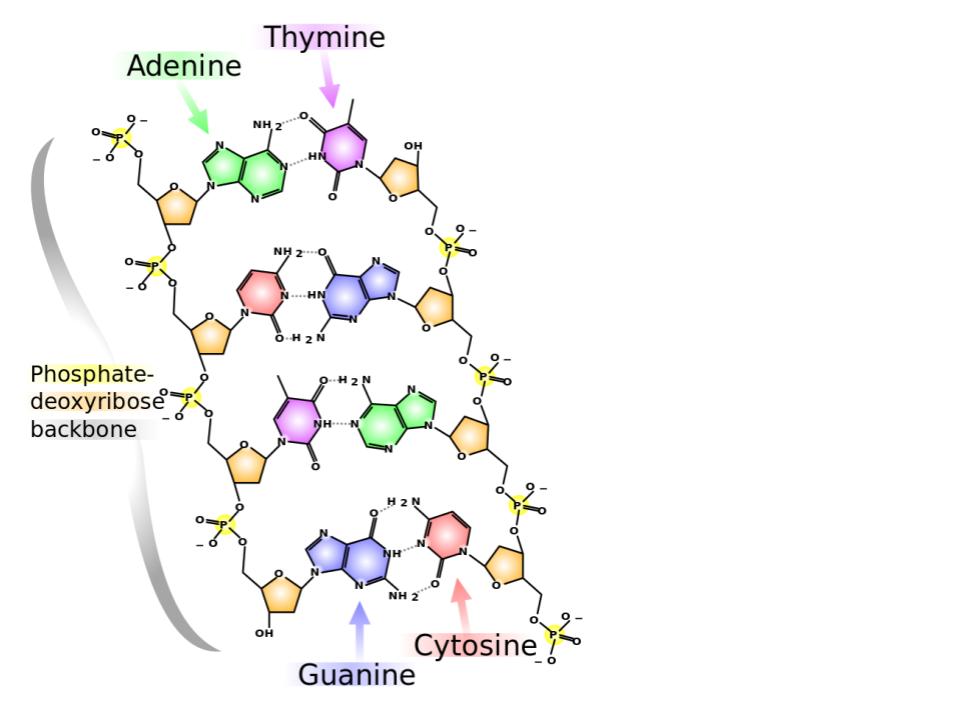
Name this structure
a)
double helix
b)
nucelotide
c)
twisted ladder
d)
hydrogen bond
208.
Which organelle is DNA usually found in?
a)
cell membrane
b)
vacuole
c)
ribosome
d)
nucleus
209.
Nucleotides are made up of a sugar, phosphate, and..?
a)
nitrogenous base
b)
nucleic acid
c)
cholesterol
d)
fatty acid
210.
Guanine bonds with ______________.
a)
Adenine
b)
Guanine
c)
Cytosine
d)
Thymine
211.
The two strands of DNA are held together by:
a)
Hydrogen Bonds
b)
Phosphodiester Bonds
c)
Glycolsyl Bonds
d)
Glycosidic Linkages
212.

Which of the following is a base pair?

a)

Adenine - Cytosine

b)

Cytosine - Thymine

c)

Deoxyribose - Cytosine

d)

Cytosine - Guanine

213.
Which of the following is not a nitrogen base found in DNA?
a)
Thymine
b)
Uracil 
c)
Guanine
d)
Adenine
214.
What is the significance of the sequence (order) of the Nitrogen Bases in DNA?
a)
The order of the Nitrogen Bases determines the number of chromosomes present in an organism.
b)
The order of the Nitrogen Bases determines the traits that an organism will possess (have).
c)
The order of the Nitrogen Bases determines the gender of an organism.
d)
The order of the Nitrogen Bases determines whether an organism is abiotic biotic.
215.
Assume that you have straight hair and your sibling has curly hair. What accounts for this difference?
a)
You have DNA and your sibling does not.
b)
The your sequence of nitrogen bases is different than your sibling.
c)
Your sibling has a weave. 
d)
Your sibling has a genetic mutation. 
216.

How is the instructions for your traits carried on a DNA molecule?

a)

Sequence of the nitrogen bases

b)

In the Deoxyribose Sugar

c)

In the bond between the phosphate and the sugar

d)

In the phosphate group

217.

How is the instructions for your traits carried on a DNA molecule?

a)

Sequence of the nitrogen bases

b)

In the Deoxyribose Sugar

c)

In the bond between the phosphate and the sugar

d)

In the phosphate group

218.

This enzyme is capable of breaking Hydrogen bonds found between the bases of DNA

a)

Topoisomerase

b)

DNA Helicase

c)

DNA Polymerase

d)

Exonuclease

219.
What is the backbone of DNA made of?
a)
Nitrogen bases
b)
Amino acids
c)
Double H
d)
Sugar & Phosphate
220.
How does RNA differ from DNA?
a)
RNA contains uracil and deoxyribose
b)
RNA contains ribose and thymine
c)
RNA contains uracil and ribose
d)
RNA contains adenine and ribose
221.
How would the DNA sequence GCTATA be transcribed to mRNA?
a)
GCUAUA
b)
CGATAT
c)
CGAUAU
d)
GCUTUT
222.
The process by which the genetic code of DNA is copied into a strand of RNA is called
a)
translation
b)
transcription
c)
transformation
d)
replication
223.

What is the correct order to make a protein?

a)

Protein, DNA, RNA

b)

RNA, DNA, Protein

c)

DNA, RNA, Protein

d)

Protein, RNA, DNA

224.

What enzyme does transcription use?

a)

DNA polymerase

b)

ligase

c)

RNA polymerase

d)

helicase

225.

Which RNA carries the message?

a)

mRNA

b)

rRNA

c)

tRNA

226.
If one strand of DNA has the sequence TTACCG, the sequence of the other strand of the same molecule will be
a)
AATGGC
b)
TTACCG
c)
AACGGC
d)
AATGGG
227.

Which of the following describes a three-base section of mRNA that codes for an amino acid?

a)

codon

b)

intron

c)

anticodon

d)

exon

228.

What is the sequence of three bases found on tRNA called?

a)

intron

b)

anticodon

c)

exon

d)

codon

229.
Translation takes place in the 
a)
ribosome
b)
chloroplast
c)
nucleus
d)
mitochondria
230.
Brings the amino acids to the ribosome
a)
mRNA
b)
tRNA
c)
rRNA
d)
DNA
231.
What would be the tRNA anticodon for the mRNA codon CAG?
a)
GTC
b)
GUC
c)
CUG
d)
CAG
232.
What is the term for a three-nucleotide sequence that codes for an amino acid?
a)
base
b)
codon
c)
amine
d)
serine
233.
Which phrase best describes translation?
a)
converts mRNA into a polypeptide
b)
catalyzes bonds between amino acids
c)
produces RNA from DNA molecules
d)
recycles tRNA molecules for reuse
234.
What type of bonds are forming during translation?
a)
Peptide bonds
b)
Hydrogen bonds
c)
Acid bonds
235.

Mutations can be negative because

a)

They can cause cancer

b)

They can cause birth defects

c)

They can help an organism thrive in its environment.

d)

They can affect offspring.

236.

Mutations can benefit humans because they can:

a)

Cause illness

b)

Make an organism more suited to live in its environment.

c)

Make organisms live shorter lives

d)

Cause organisms to grow extra limbs.

237.

A mutation is defined as:

a)

A change in the cell's structure

b)

Anything that changes in an embryo

c)

Any change in the physical features of a human

d)

A change in the DNA sequence

238.
Where do mutations occur?
a)
DNA and RNA
b)
DNA 
c)
RNA
d)
mRNA and tRNA
239.

A mutation can occur if a base pair is ____________, deleted, or substituted for another.

a)

modified

b)

added

c)

transferred

240.

Another name for a point mutation is:

a)

Substitution

b)

Frameshift

c)

Insertion

d)

Deletion