
 Worksheets
Year 11 Revision 2
Total questions: 239
Worksheet time: 5hrs 35mins
How many FADH molecules are produced by 1 molecule of glucose?
1
2
3
4
How many FADH molecules are produced by 1 turn of the Krebs Cycle?
1
2
3
4

What is decarboxylation?
Removal of water
Removal of CO2
Addition of CO2
Addition of water
Oxygen is an end product of Krebs Cycle
True
False
The waste product produced during the Krebs cycle is...
Oxygen
Water
Carbon Dioxide
ATP
After the Krebs Cycle only a small portion of the energy of glucose has been converted to ATP. At this point the majority of usable energy is contained in
NADH and FADH
Carbon Dioxide
Acetyl CoA
Citrate
Which is the correct order of aerobic cellular respiration?
glycolysis 🡪 fermentation 🡪 Krebs cycle
Krebs cycle 🡪 electron transport 🡪 glycolysis
glycolysis 🡪 Krebs cycle 🡪 electron transport
Krebs cycle 🡪 glycolysis 🡪electron transport
Acetate combines with oxaloacetate to form
Citrate
Acetyl CoA
CoEnzyme A
NADH
The Krebs Cycle song is
CONA CONA A FA FA
CONA CONA A FA NA
CONA CONA A A FA
CONA NA A FA NA
When protons are pumped outside the matrix, across the inner membrane...
water is made
a concentration gradient of H+ ions (protons) is created
NADH gets reduced
CO2 is produced
The electrons that are transferred through the electron transport chain initially belonged to
NADH
FADH
ATP
Oxygen
NADH and FADH
The movement of protons (H+ ions) through ATP synthase occurs from the...
matrix to the intermembrane space
matrix to cytoplasm
intermembrane space to the matrix
intermembrane space to the cytoplasm
cytoplasm to the intermembrane space
True or False: Water is produced as a byproduct during this stage of cell respiration.
True
False
In the electron transport chain, Oxygen acts as...
a carrier of electrons, passing electrons down the chain
a reducing agent
the final electron acceptor
a coenzyme
What is needed from the Krebs Cycle in order for the Electron Transport Chain to occur?
ATP
FADH
CO2
H20
How many ATP produced for each NADH that enter the electron transport chain from Kreb's cycle?
1
2
3
4
How many ATP produced for each FADH that enter the electron transport chain from Kreb's cycle?
1
2
3
4
The ETC makes water. To make this water, where do the hydrogen atoms come from?
glucose
pyruvate
NADH and FADH
oxygen
The effect of increased levels of hydrogen ions in the intermembrane space of the mitochondria is
Increase ATP production
Decreased levels of oxidative phosphorylation
Increased levels of water in intermembrane space
Decreased levels of chemiosmosis
Chemiosmosis occurs as H+ ions move through ____ in the cristae, making ATP.
foldings
ATP synthase
protein channels
ATP synthesis by ATP synthase is driven by
H+ movement
electron movement
NADH movement
FADH2 movement
Which of the following processes creates the most ATP during aerobic cellular respiration?
glycolysis
fermentation
electron transport chain
Citric acid cycle


In passive transport, the concentration gradient goes from..
Low to low
High to low
Low to high
High to high

Diffusion & Facilitated Diffusion are both __________ transport.
Passive
Active
Easy
Free
Passive Transport is the movement of particles across the membrane from an area of [ ___ ] to an area of [ ___ ]
high to low
low to high
low to low
high to high
Passive Transport uses ____ energy
no
a lot of
a little bit of
some
What is the movement of particles with the concentration gradient using protein "helpers"?
diffusion
facilitated diffusion
active transport
enzymatic reactions
Facilitated diffusion needs what to get particles from one side of the membrane to the other?
a membrane-spanning protein
a surface protein
a phospholipid
a carbohydrate
What is a difference between diffusion and facilitated diffusion?
movement of particles from [high] to [low]
a protein "helper"
movement of particles from [low] to [high]
energy
The general name for movement of substances across cell membranes without need of energy input
passive transport
active transport
occurs when the concentration of particles is higher in one area than another.
concentration gradient
concentration
[high] --> [low]
Diffusion is the natural movement of molecules from:
Areas of low concentration to areas of high concentration
Areas of high concentration to areas of low concentration
Cold to hot environments
Gaseous to liquid environments
What causes diffusion?
The constant, random motion of molecules
Magnetic attraction between atoms
The nuclear forces that hold atoms together
The tendency of atoms to form chemical bonds with one another
Why is diffusion so important in biology?
It's the basic power source for most types of cells
It allows substances to move across cell membranes
It prevents toxins from entering our bodies
Without diffusion, cell division could not take place
What does a 'region with high concentration' mean?
An area with a SMALL number of particles
An area with a LARGE number of particles
An area with an UNEVEN number of particles
An area with no particles
Diffusion is the movement of particles from an area of _____ concentration to an area of ______ concentration
High, Low
Low, High
Low, Low
High, High
An increase in temperature does what to diffusion?
Speeds it up
Slows it down
Nothing
Stops it all together

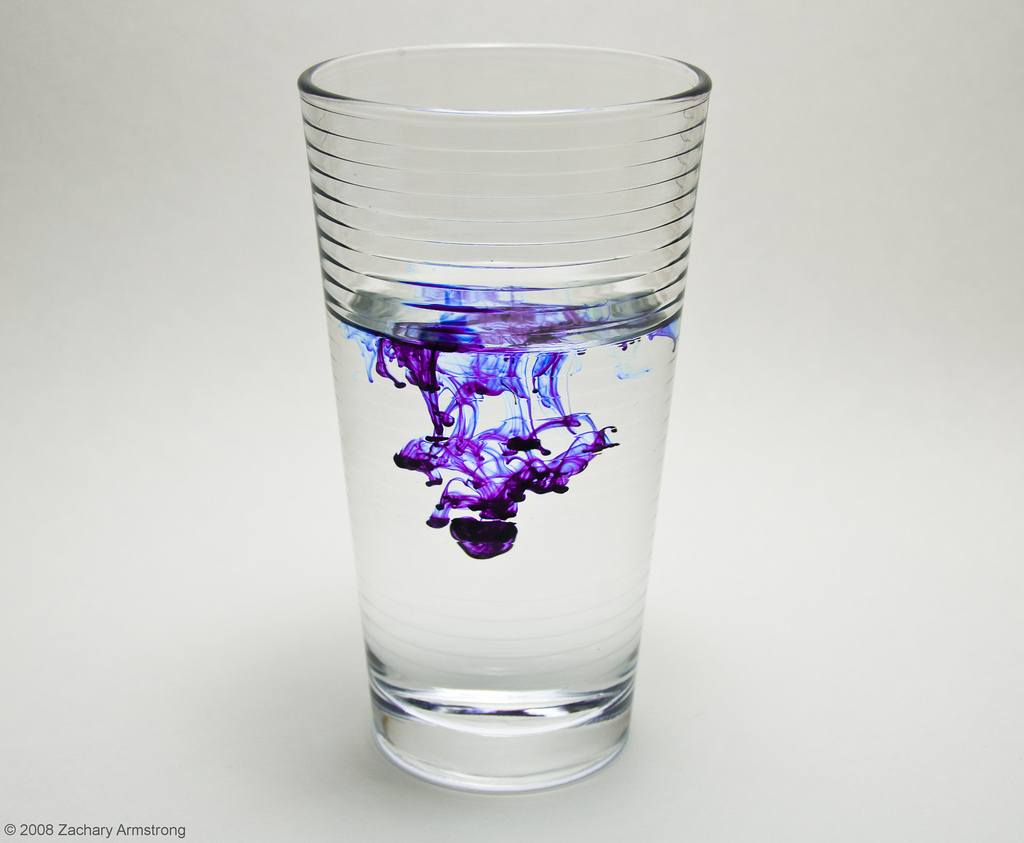
Where is there a low concentration of dye?
at the bottom of cup
in the color
at the top of cup
no concenteraion gradient




Which of these are examples of carbohydrates?
DNA, RNA
Fats, hormones
amino acids
starches, glucose, cellulose

The bond between two adjacent monomer in a polysaccharide is (a)
Select the bond that join two monosaccharides.
Glycosidic
Peptide
Phosphodiester
Hydrophobic

Which polysaccharide consists of linear β 1 -> 4 linked glucose?
Cellulose
Chitin
α - Amylose
Glycogen
Amylopectin has the same glucose links as ______ but has _______ branches.
Cellulose; alpha (1,6)
Amylose; alpha (1,4)
Amylose; alpha (1,6)
Glycogen; alpha (1,4)
Type of reaction that joins monomers to form polymers with the removal of a molecule of water
Polymerisation
Hydrolysis
Condensation
Exothermic
Starch is a mixture of which two polysaccharides?
Amylose & Amylopectin
Amylopectin & Cellulose
Amylose & Cellulose
Cellulose & Cellulite

It consists of two glucoses
maltose
sucrose
lactose
cellulose
Pentose found in DNA
fructose
lactose
deoxyribose
ribose
Which of the following polymers are made of alpha-glucose?
chitin
glycogen
cellulose
starch
amylose
Hydrolysis is when...
two maltoses combine to form glucose
sucrose breaks down to glucose and galactose
starch is broken to amylose and amylopectin
a molecule of water is added to glucose
Main differences between structure of cellulose and starch is/are:
cellulose is made of beta-glucose, whereas starch from alpha-glucose
callulose is insoluble but starch is
cellulose has structural role, whereas starch is energy storage
cellulose cannot be digested by human, but starch can

The illustration shows:
amylose
amylopectin
cellulose
maltose
Polysaccharide which is a storage of energy in plants is called:
starch
glucose
glycogen
cellulose
What monomer is found in cellulose but not in starch?
amylose
β-glucose
α-glucose
amylopectin
Tick the subunits of starch:
amylose
amylopectin
cellulose
lactose
maltose

The diagram shows part of a molecule of a carbohydrate formed by glucose. What is the name of the molecule?
amylose
cellulose
glycogen
starch

Triglycerides are types of
carbohydrates
lipids
proteins
nucleic acid
none of them

One trigyceride molecule is made up of
1 fatty acid + 1 glycerol
2 fatty acids + 1 glycerol
3 fatty acids + 1 glycerol
1 fatty acid + 2 glycerol
1 fatty acid + 3 glycerol

What is the label 1?
phosphate
hydrophobic tail
glycerol
hydrophobic head


Which diagram is a triglyceride?


How many water molecules would be required to hydrolyse a triglyceride?
One
Two
Three
None
What type of bond is being broken when a triglyceride is hydrolysed?
glycosidic
peptide
ester
phosphodiester
Which macromolecule has 2 fatty acids attached to the glycerol?
Monosaccharide
Steroid
Polysaccharide
Triglyceride
Phospholipid
Glycolysis results in the net gain of:
2 ATP
4 ATP
1 ATP
6 ATP
Which is not part of the net products of Glycolysis?
2 ATP
2 pyruvate
2 CO2
Which of the following is not a requirement for glycolysis?
Oxygen
ATP
NAD
Glucose
Glycolysis is the second stage of aerobic respiration.
True
False
Glycolysis requires oxygen
True
False
Glycolysis DOES NOT need ATP to occur.
True
False
At the END of Glycolysis, Glucose is broken down to 2 molecules of what?
pyruvate
lactic acid
hexose phosphate
ATP
The first step of glycolysis results in the formation of:
Hexose Phosphate
Triose Phosphate
ATP
Pyruvate


Hexose phosphate is broken down into
Pyruvate
Glucose
Triose Phosphate
ATP

In the Link Reaction, each pyruvate molecule loses electrons, hydrogen ions, and a carbon, forming an energy-rich molecule of
Acetyl CoA
Citrate
Oxaloacetate
Malate
In the Link Reaction, each pyruvate molecule loses electrons, hydrogen ions, and a carbon, forming an energy-rich molecule of
Acetyl CoA
Citrate
Oxaloacetate
Malate
The CO2 that is produced immediately before the Krebs cycle comes from
the removal of a C atom from glucose
the addition of a C atom to glucose
the removal of one carbon atom and 2 oxygen atoms from a pyruvate
the addition of one carbon atom and 2 oxygen atoms to a pyruvate
The link reaction takes place in the
Cytoplasm
Cristae
Matrix
D722
The final products of the link reaction are:
1 ATP, 1 Acetyl CoA, 1 NADH
1 Acetyl CoA, 1 NADH, 1 CO2
1 Pyruvate, 1 Acetyl CoA, 1 NADH, 1 CO2
1 ATP, 1 Acetyl CoA, 1 NAD
In the link reaction, the removal of CO2 from pyruvate makes
NADH
Glucose
Acetate
Acetyl CoA
Acetate + CoA =
Pyruvate
CO2
Acetate CoA
Acetyl CoA
How many bonds does carbon make?
1
2
3
4
What does the prefix penta mean?
1
3
4
5
What element is life on earth based on?
Carbon
Hydrogen
Oxygen
Nitrogen
Carbon atoms readily form bonds with other carbon atoms. This allows a sequence of carbon atoms of different lengths to be built up. These form a ? along which other atoms can be attached.
(a)
What does 'poly' mean?
Many
It's a nice girl's name
Few
Carbon can form single, double or triple bonds with other carbon atoms. It has ? electrons to share, so each carbon can form up to four bonds.
(a)
What is the symbol for carbon
C
Ca
Car
What three different types of structure can carbon make?
Straight
Branched
Ring
Coiled

How many bonds are between these two carbon atoms?
1
2
3
4
Each cell requires an energy source. In plants, this is ?. In animals, this is ?.
Light, chemical
Chemical, chemical
Light, light
Chemical, light
Definition of a monomer.
One of many small molecules that combine to form a larger one
Large molecule made up of small repeating units
Small molecule made up of small repeating units
One of many large molecules that combine to form a larger one
Monomer of proteins
Monosaccharides
Amino acids
Nucleotides
Glycerol
Polymer of nucleic acids
RNA
DNA
Polypeptides
Polysaccharides
Reaction that occurs when monomers combine to form polymers.
Condensation
Combination synthesis
Hydrolysis
Cut and paste
Reaction that occurs when polymers are broken down into monomers.
Condensation
Combination synthesis
Hydrolysis
Snipping reaction
Another word for dehydration synthesis reactions
(a)
Condensation reactions remove ?.
(a)
Biological molecule made of either monosaccharides or polysaccharides.
Proteins
Lipids
Carbohydrates
Nucleic acids
Large polymers are also known as ?.
(a)
Do you love biochemistry?
Yes. It gives me life.
Ummm. No.
Which of these are examples of carbohydrates?
DNA, RNA
Fats, hormones
amino acids
starches, glucose, cellulose
The bond between two adjacent monomer in a polysaccharide is (a)
Select the bond that join two monosaccharides.
Glycosidic
Peptide
Phosphodiester
Hydrophobic
Which polysaccharide consists of linear β 1 -> 4 linked glucose?
Cellulose
Chitin
α - Amylose
Glycogen
Amylopectin has the same glucose links as ______ but has _______ branches.
Cellulose; alpha (1,6)
Amylose; alpha (1,4)
Amylose; alpha (1,6)
Glycogen; alpha (1,4)
Type of reaction that joins monomers to form polymers with the removal of a molecule of water
Polymerisation
Hydrolysis
Condensation
Exothermic
Starch is a mixture of which two polysaccharides?
Amylose & Amylopectin
Amylopectin & Cellulose
Amylose & Cellulose
Cellulose & Cellulite
It consists of two glucoses
maltose
sucrose
lactose
cellulose
Pentose found in DNA
fructose
lactose
deoxyribose
ribose
Which of the following polymers are made of alpha-glucose?
chitin
glycogen
cellulose
starch
amylose
Hydrolysis is when...
two maltoses combine to form glucose
sucrose breaks down to glucose and galactose
starch is broken to amylose and amylopectin
a molecule of water is added to glucose
Main differences between structure of cellulose and starch is/are:
cellulose is made of beta-glucose, whereas starch from alpha-glucose
callulose is insoluble but starch is
cellulose has structural role, whereas starch is energy storage
cellulose cannot be digested by human, but starch can
The illustration shows:
amylose
amylopectin
cellulose
maltose
Polysaccharide which is a storage of energy in plants is called:
starch
glucose
glycogen
cellulose
What monomer is found in cellulose but not in starch?
amylose
β-glucose
α-glucose
amylopectin
Tick the subunits of starch:
amylose
amylopectin
cellulose
lactose
maltose
The diagram shows part of a molecule of a carbohydrate formed by glucose. What is the name of the molecule?
amylose
cellulose
glycogen
starch
Triglycerides are types of
carbohydrates
lipids
proteins
nucleic acid
none of them
One trigyceride molecule is made up of
1 fatty acid + 1 glycerol
2 fatty acids + 1 glycerol
3 fatty acids + 1 glycerol
1 fatty acid + 2 glycerol
1 fatty acid + 3 glycerol
What is the label 1?
phosphate
hydrophobic tail
glycerol
hydrophobic head
Which diagram is a triglyceride?
How many water molecules would be required to hydrolyse a triglyceride?
One
Two
Three
None
What type of bond is being broken when a triglyceride is hydrolysed?
glycosidic
peptide
ester
phosphodiester
Which macromolecule has 2 fatty acids attached to the glycerol?
Monosaccharide
Steroid
Polysaccharide
Triglyceride
Phospholipid

