
 Worksheets
Bio S1 Review for Final/ Exit Exam
Total questions: 46
Worksheet time: 27mins

Change in an organism within its own lifetime is called what?
Evolution
Growth & Development
Responsiveness
Reproduction


Which variable is the one that you measure & graph on y axis?
Independent
Control
Dependent
Experimental

What was the independent variable in the set up of this graph's experiment?
Rate of reaction
Type of Enzyme
Temperature
Time


A calorie is officially defined as the amount of energy it takes to raise the _______ of 1 gram of water by 1 degree
Celsius,
temperature
volume
mass
elevation
An atom with 14 protons and 17 electrons will have a net charge of:
-3
+3
+14
-17
If a solution has a pH of 11, what is it?
Acidic
Basic
Buffer
Neutral
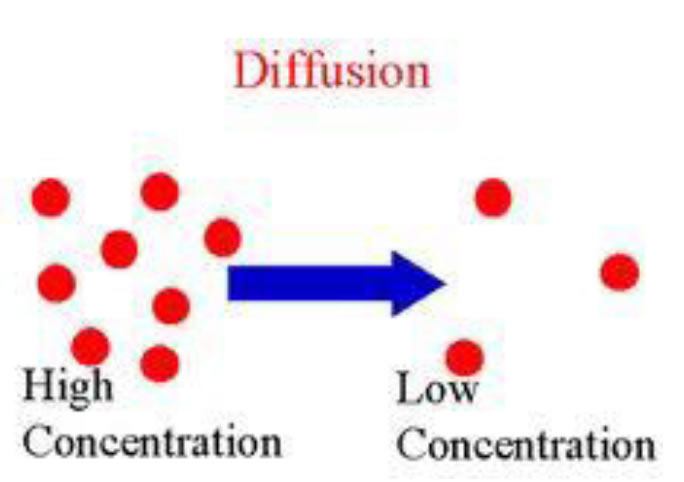
Movement of particles from high to low concentration (with the flow).
Passive Transport
Active Transport

What is labeled "2" in this picture?
The chloroplast, where cellular respiration happens.
The mitochondria, where cellular respiration happens.
The mitochondria, where photosynthesis happens.
The chloroplast, where photosynthesis happens.
What is labeled "3" in this picture?
CO2 and H20
O2 and CO2
H2O and C6H12O6
O2 and C6H12O6
How is the energy stored after the process of photosynthesis?
light energy
chemical bonds of glucose
heat energy
ATP
A triplet of mRNA (3 bases) is called a/n
codon
anticodon
amino acid
peptide bond

The DNA sequence:
GAA TCG
results in which amino acids?
LEU then ARG
ASP then ARG
ASP then SER
LEU then SER
Which of your cells contains the MOST DNA?
A muscle cell
A brain cell
A heart cell
None of these, they all have the same.
The process of making mRNA from DNA is called...
Replication
Transcription
Translation
Protein synthesis
Organism whose DNA is surrounded by a nucleus.
Prokaryote
Eukaryote
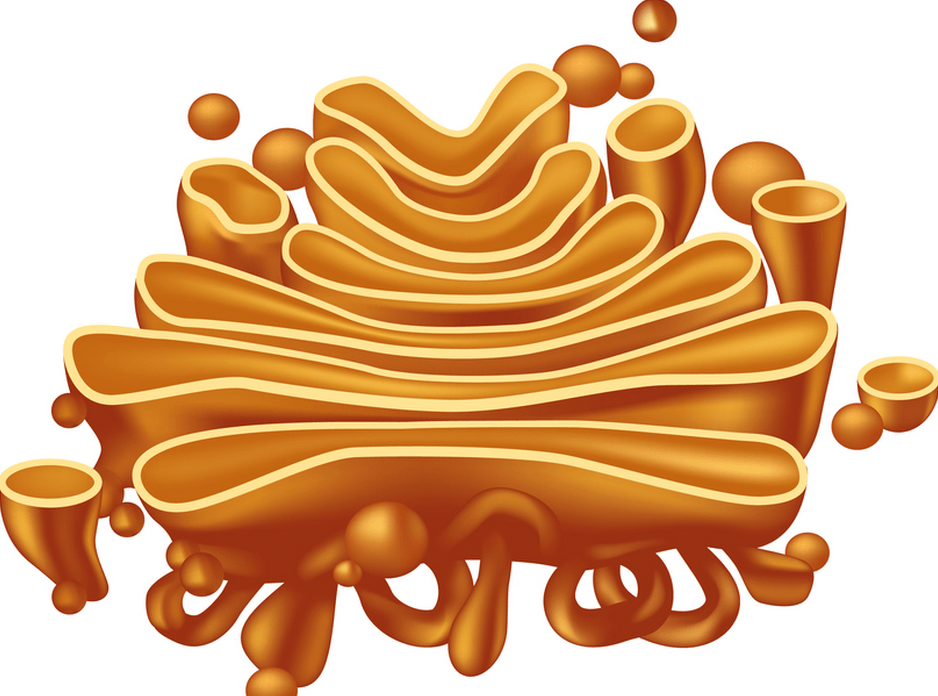
Golgi apparatus
Bacteria

Why is the mitochondria called the powerhouse of the cell?
because it releases energy from food in cellular respiration
because it creates food in photosynthesis
because it stores food for future metabolism
because it makes proteins


The graph shows the number of mitochondria in breast muscles of different birds. Which statement best explains these data?
The number of mitochondria in chickens would be higher if they could fly.
The chicken breast muscle requires the greatest amount of energy per cell.
The energy requirement of pigeon breast muscle is low.
Duck breast muscle require the least amount of energy.

Which type of transport requires an input of energy because particles move against the concentration gradient?
Passive Transport
Osmosis
Simple Diffusion
Active Transport

Which of these is given normal or natural conditions so that you can compare experimental results?
Control Group
Experimental Group
Natural Group
Dependent Group
A good scientific experiment should
make observations at regular intervals
use metric measurements
have a control group
Do all of these
Which of these should you NOT do with a microscope?
Start in low power (4x), focus, and work your way up.
When you are in high power (40x) use the coarse adjustment knob to focus.
When you are done, return the microscope to the lowest objective lens.
If you get lost, return to low power and start over.
What do both animal cells and plant cells have?
Cell membrane
Large central vacuole
Chloroplasts
Cell wall
Which of these is done by BOTH plants and animals?
cellular respiration
photosynthesis
both of these
none of these
If 2 grams of a food contained 30 calories, how many calories would you expect to be in 4 grams of that food?
30 cal
40 cal
60 cal
120 cal

What trend is shown in these results?
As temperature increased, enzyme activity steadily increased.
As temperature increased, enzyme activity steadily decreased.
As temperature increased, enzyme activity was constant.
As temperature increased, enzyme activity increased then decreased.

What process is being shown in this diagram?
DNA replication
transcription
translation
protein synthesis
Which unit from this semester do you feel least confident on?
Choose ONE only! Won't count against your points (ignore score).
See GC post for individual unit review links to practice weak topics!
U4: Cell Transport & Cell Energy
U1: Sci Method & Char. of Life
U2: Biochemistry
U3: Cells
U5: DNA

