wayground logo

Free Printable Worksheets

Font size

S
M
L
XL
Worksheets

3.3-3.4 Force Questions

Total questions: 31

Worksheet time: 21mins

Name
Class
Date
1.

Inertia is a force

a)

True

b)

False

2.

The law of inertia (Newton's first law) applies _____.

a)

to moving objects only

b)

only to objects that are not moving

c)

to both moving and nonmoving objects

3.

Inertia refers to _____

a)

the tendency of moving objects to remain in motion

b)

the force which keeps moving objects in motion with a constant velocity

c)

the force that keeps stationary objects at rest

d)

the tendency of stationary objects to remain at rest

4.

Inertia depends on ______

a)

Velocity

b)

Speed

c)

Distance

d)

Mass

5.

All objects have inertia

a)

True

b)

False

6.

More mass = More inertia

a)

True

b)

False

7.
the tendency of an object to resist a change in its motion
a)
acceleration
b)
inertia
c)
mass
d)
frame of reference
8.
push or pull acting on an object
a)
speed
b)
force
c)
position
d)
mass
9.
What is the tendency of an object to resist a change in motion?
a)
coffee
b)
motion
c)
inertia
d)
gravity
10.
If you increase the force on an object, its acceleration
a)
decreases
b)
stays the same
c)
also increases
d)
stops
11.
Objects with greater _________ also have greater inertia.
a)
speed
b)
mass
c)
temperature
d)
friction
12.
What is the unit of measurement for force?
a)
AMP
b)
Seconds
c)
Newtons
d)
Miles
13.

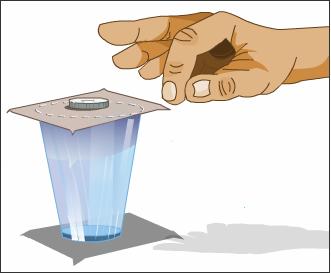
List the objects in order from least to greatest inertia.

a)

CDBA

b)

ABCD

c)

BCDA

d)

CBAD

14.

The law of inertia applies

a)

to both moving and nonmoving objects

b)

only to moving objects

c)

only to objects that are not moving

15.

When all individual forces acting on an object are balanced, it is the natural tendency of an object to _____. List all that apply in alphabetical order with no spaces between letters.

a)

maintain its state of motion

b)

eventually stop

c)

accelerate

d)

either speed up, slow down or keep the same speed

e)

keep its velocity constant (either at a zero or non-zero value)

16.

What force is always present when an object is close to the earth's mass?

a)

Applied Force

b)

Normal Force

c)

Frictional Force

d)

Gravitational force

17.

What force opposes gravity when an object is on a surface?

a)

Applied Force

b)

Normal Force

c)

Frictional Force

d)

Air Resistance

18.
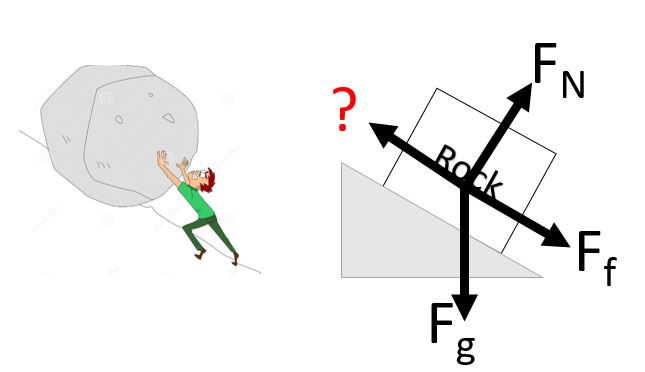
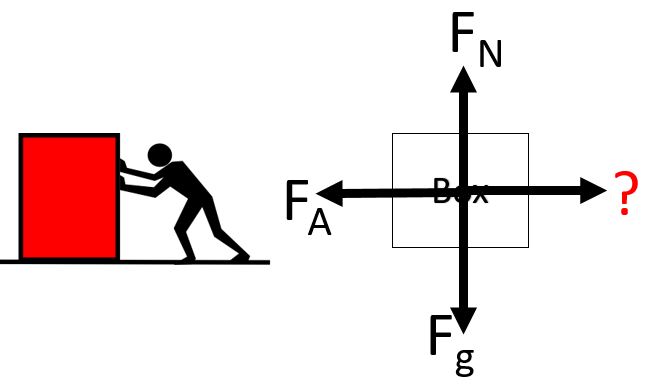
Name the missing force...
a)
applied force
b)
weight force
c)
lift
d)
normal force
19.
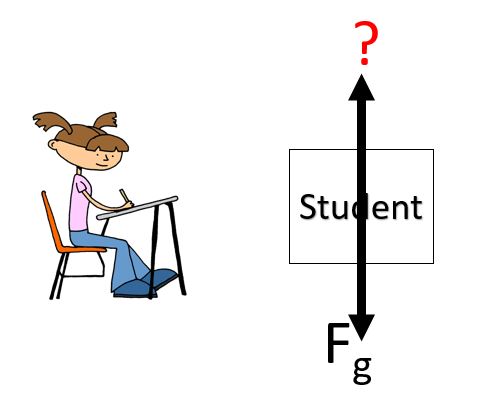
Name the missing force....
a)
weight force
b)
normal force
c)
frictional force
d)
tension force
20.
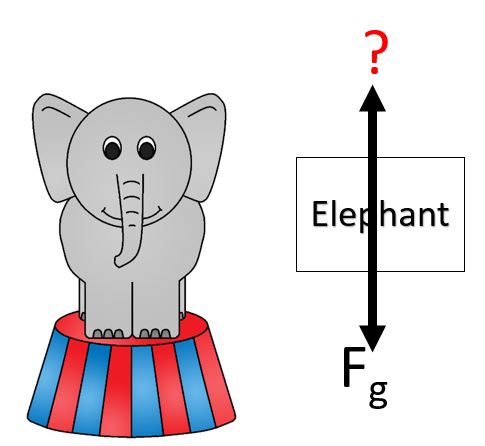
Name the missing force...
a)
weight force
b)
normal force
c)
applied force
d)
frictional force
21.
Name the missing force...
a)
frictional force
b)
weight force
c)
thrust
d)
buoyant force
22.

Forces always come in groups of

a)

One

b)

Twos

c)

Threes

d)

Fours

23.
Name the missing force...
a)

applied force

b)

frictional force

c)

normal force

d)

weight force

24.
Is this a balanced or unbalance force?
a)
Balanced
b)
Unbalanced
c)
Neither one
d)
Both
25.
Which direction will the object move?
a)
Up
b)
Down
c)
Right
d)
Left
26.
Which direction will the object move?
a)
Right
b)
Left
c)
Up
d)
Down
27.
Is this a balanced or unbalanced force?
a)
Balanced
b)
Unbalanced
c)
Neither
d)
Both
28.
What is the net force?
a)
400 N Up
b)
400 N Down
c)
- 400 N Down
d)
800 N Down
29.
What is the net force?
a)
5000 N right
b)
4000 N right
c)
40 N left
d)
4000 N left
30.
Are forces balanced or unbalanced when a car is moving at a constant speed in a straight line?
a)
Balanced
b)
Unbalanced
31.
Calculate the net force shown in the  diagram?
a)
41 N
b)
25 N
c)
16 N
d)
9 N