wayground logo

Free Printable Worksheets

Font size

S
M
L
XL
Worksheets

Weather Elements Reviews

Total questions: 130

Worksheet time: 2hrs 28mins

Name
Class
Date
1.
Which measures the force of molecules pushing on a surface?
a)
air pressure
b)
temperature
c)
precipitation
d)
wind
2.

Which instrument is used to measure wind speed?

a)

barometer

b)

psychrometer

c)

anemometer

d)

Hygrometer

3.

The weight of air causes...

a)

wind speed

b)

air pressure

c)

temperature

d)

Radiation

4.
What does this tool measure?
a)
Wind speed
b)
Wind direction
c)
Air pressure
d)
Temperature
5.
Which tool measures wind speed?
a)
Anemometer
b)
Hygrometer
c)
Barometer
d)
Wind Vane
6.
A rain gauge measures what?
a)
Air pressure
b)
Wind speed
wind speed
c)
Amount of rain fall
d)
Wind direction
7.
Which tool measures air pressure?
a)
Thermometer
b)
Barometer
c)
Wind Vane
d)
Hygrometer
8.
What tool is used to determine wind direction? 
a)
Barometer
b)
Hygrometer
c)
Anemeometer
d)
Wind Vane
9.

Earth is surrounded by an envelope of gases called the _____________.

a)

hydrosphere

b)

solar system

c)

atmosphere

d)

cloud bubble

10.

Clouds form when water vapor ________________ out of the air.

a)

condenses

b)

evaporates

c)

precipitates

d)

percolates

11.

The term used to describe the condition of Earth's atmosphere at a given place or time is ________________.

a)

climate

b)

weather

c)

systems

d)

status

12.

What do dust, smoke, salt, and chemicals have in common?

a)

They are gases in the air.

b)

They make up water vapor in the air.

c)

They are particles in the air.

d)

They are only found in pure air.

13.

Air pressure at sea level is _____________ than air pressure at the top of a mountain.

a)

lower

b)

higher

c)

the same

14.

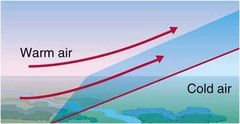
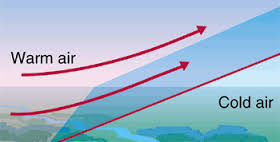
Which condition is associated with MOST warm fronts?

a)

cloud formations bringing steady precipitation

b)

violent air mass collisions

c)

low temperatures

d)

tornado formations

15.
This is the symbol for which type of front?
a)
cold front
b)
warm front
c)
occluded front
d)
stationary front
16.
This is the symbol for which type of front?
a)
cold front
b)
warm front
c)
stationary front
d)
occluded front
17.
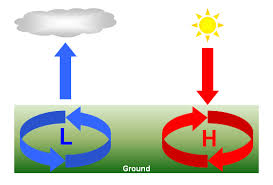
Which pressure system can produce storms?
a)
low pressure system
b)
high pressure system
18.
Which type of pressure system produces clear/fair/sunny weather?
a)
low pressure system
b)
high pressure system
19.
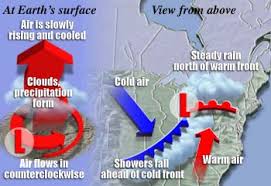
Which type of front is displayed?
a)
Cold
b)
Warm
c)
Stationary
d)
Occluded
20.
Which type of front is displayed?
a)
Cold
b)
Warm
c)
Stationary
d)
Occluded
21.
Which type of front is displayed?
a)
Cold
b)
Warm
c)
Stationary
d)
Occluded
22.
a)
Low Clouds
b)
Low Temperatures
c)
Light Wind
d)
Low Air Pressure
23.
a)
High Air Pressure
b)
High Temperatures
c)
Heavy Rain
d)
Hail
24.
Our weather generally moves in this direction...
a)
West to East
b)
East to West
c)
North to South
d)
South to North
25.
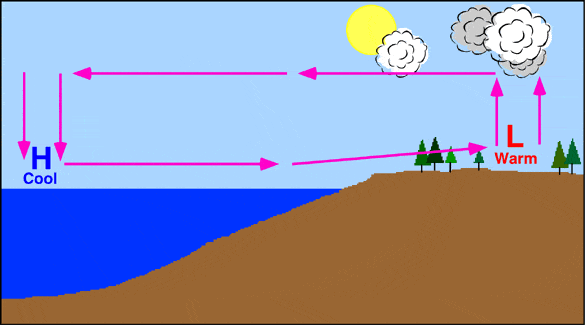
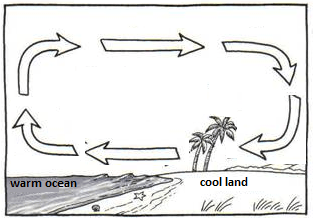
Is this a land or a sea breeze?
a)
land breeze
b)
sea breeze
26.
What causes warm air to rise?
a)
the fact that it's less dense than cold air 
b)
The fact that it weighs more than cold air 
c)
The fact that it has higher pressure than cold
d)
the fact that its more dense than cold air 
27.
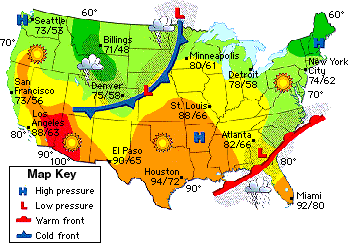
A cold front is approaching Minneapolis. What will happen to the air temperature?
a)
stay the same
b)
increase
c)
decrease
28.
A high pressure system is located north of New York City. What type of weather will be experienced there?
a)
clear, sunny skies
b)
cloudy and rainy
29.
A low pressure system is located over Georgia. What type of weather will they have?
a)
clear, sunny skies
b)
cloudy and rainy
30.
a)
There was more rain on warm days than on cool days
b)
There were fewer clouds on Thursday than on Monday
c)
The temperature decreased as the cloud cover increased.
d)
The temperature increased over the course of the week. 
31.
Clouds are made up of tiny drops of ______ or ice. The moisture in the cloud affects the weather.
a)
dust
b)
water
c)
cloud particles
d)
precipitation
32.
They are highest clouds in the sky. They look curly, white and feathery. Usually mean good weather.
a)
Cumulus
b)
Cumulonimbus
c)
Cirrus
d)
Stratus
33.
They are low in the sky and look soft and fluffy. 
a)
Cirrus
b)
Cumulonimbus
c)
Cumulus 
d)
Stratus
34.
Which cloud brings nice weather?
a)
Cumulonimbus
b)
Cumulus
c)
Stratus
35.
Low clouds (like fog), that are thick, cover the sky, and block the sun.  Usually bring continuous precipitation (rain or snow).
a)
stratus
b)
cumulus
c)
cirrus
d)
nimbo
36.
Warm air sinks, and cold air rises.
a)
True
b)
False
37.
What kind of breeze is this & what time of day/night would it form?
a)
Land breeze - daytime
b)
Land breeze - nighttime
c)
Sea breeze - daytime
d)
Sea breeze - nighttime
38.
The Coriolis effect causes ___________.
a)
the Earth to rotate on its axis
b)
continental deflection
c)
global winds and surface currents to move in a curved path instead of a straight line
d)
global winds and deep ocean currents to move in a curved path instead of a straight line.
39.

What is the name of the steady winds that flow from west to east between latitudes 30 degrees N and 60 degrees N and 30 degrees S and 60 degrees S?

a)

trade winds

b)

land breeze

c)

prevailing westerlies

d)

polar easterlies

40.

What global wind is located from 0 to 30 degrees North and South of the Equator?

a)

Trade Winds

b)

Prevailing Westerlies

c)

Polar Easterlies

d)

Doldrums

41.
What weather instrument measures air pressure? 
a)
Hygrometer
b)
Barometer
c)
Rain Gauge
d)
Wind Vane
42.
Define the purpose of a Rain Gauge:
a)
Measures rainfall
b)
Measures wind speed
c)
Measures air pressure
d)
Measures humidity
43.
Hygrometers measure:
a)
Humidity
b)
Wind Direction
c)
Air temperature
d)
Air pressure
44.
If the air pressure on a barometer is falling, what kind of weather will occur?
a)
A  drought
b)
Stormy and wet
c)
Sunny and dry
d)
Windy and cool
45.
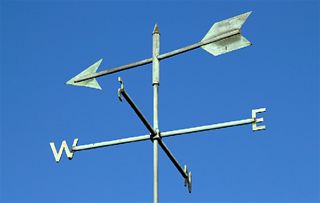
From which direction is the wind blowing in this picture?
a)
north
b)
east
c)
south
d)
west
46.
If the sky is clear, how can you describe the weather in general?
a)
fair weather
b)
stormy weather
c)
changing weather
d)
not enough information
47.
What type of clouds tell us that the weather is changing in the next couple of days?
a)
cirrus
b)
cumulus
c)
cumulonimbous
d)
stratus
48.
What type of clouds tell us that a thunderstorm is likely coming?
a)
fog
b)
cumulus clouds
c)
cirrus clouds
d)
stratus clouds
49.
If there are puffy white clouds in the sky, what type of weather can we expect?
a)
some form of percipitation
b)
thunderstorms
c)
heavy showers
d)
sunny and fair
50.
This weather instrument is a...
a)
anemometer
b)
barometer
c)
wind vane
d)
thermometer
51.
This weather instrument is a...
a)
anemometer
b)
Christmas ornament
c)
wind vane
d)
barometer
52.
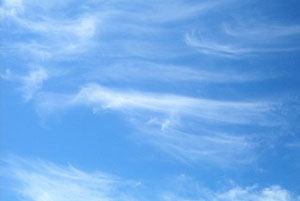
This type of cloud is thin, wispy, and made of ice crystals
a)
cumulus cloud
b)
stratus cloud
c)
cirrus cloud
d)
cumulonimbus cloud
53.
what type of cloud is shown?
a)
cumulus
b)
cirrus
c)
stratus
54.
what type of cloud is shown?
a)
cumulus
b)
cirrus
c)
stratus
55.
what type of cloud is shown?
a)
cumulus
b)
cirrus
c)
stratus
56.
Which cloud is this?
a)
cumulus
b)
cumulonimbus
c)
cirrus
d)
stratus
57.
________is the instrument used to measure air pressure.
a)
barometer
b)
thermometer
c)
mercury
d)
watch
58.
Low pressure will usually bring what kind of weather?
a)
Sunny
b)
Calm
c)
Stormy
59.
Pressure is the effect of
a)
the weight of all the air above pressing down
b)
water vapor in the atmosphere
c)
greenhouse gases
d)
solar radiation
60.
High pressure will usually bring what kind of weather?
a)
clear and dry
b)
cloudy and wet
61.
Which weather condition will most likely occur when the atmospheric pressure in an area begins falling?
a)
dry
b)
cold
c)
rainy
d)
sunny
62.
Which kind of weather change will occur with an increase in air pressure?
a)
cooler and dryer
b)
colder and rainier
c)
hotter and stormier
d)
warmer and moister
63.
_______ pressure systems are characterized by fair weather.
a)
High
b)
Low
64.
On a cold, cloudy day, the local weather forecaster predicts that a high-pressure system will be moving into the area in the next 24 hours. Which weather conditions will this system most likely bring to the area?
a)
stormy
b)
sunny
c)
snowy
d)
hot
65.
Michael observes the air pressure daily. Over the last couple of days the air pressure has been dropping. What weather will Michael most likely observe as a result?
a)
increasingly clear skies and more wind
b)
increasingly clear skies and dry weather
c)
increasingly cloudy skies and possible storms
66.
What type of air pressure is present?
a)
High 
b)
Low
67.
What type of air pressure is present?
a)
High 
b)
Low
68.
Air moves because of differences in temperature and pressure.
a)
True
b)
False
69.
The smaller the differences, the stronger the wind will be.
a)
True
b)
False
70.
Warm air sinks, and cold air rises.
a)
True
b)
False
71.
The Coriolis Effect explains why winds don’t blow north to south.
a)
True
b)
False
72.

True or False:

Land heats and cools faster than water, helping create wind and weather.

a)

True

b)

False

73.
Is this a land or a sea breeze?
a)
land breeze
b)
sea breeze
74.

Winds that blow from the west are called ____.

a)

Easterlies

b)

Polars

c)

Westerlies

d)

Temperates

75.
If you wanted to visit an area with very little wind, where might you go? 
a)
The doldrums around the equator
b)
the jet streams in the northern and southern hemisphere 
c)
the North or South Pole 
d)
the area around the Mediterranean Sea 
76.
What kind of breeze is this and when would it form?
a)
Land breeze - daytime
b)
Land breeze - nighttime
c)
Sea breeze - daytime
d)
Sea breeze - nighttime
77.

A fast-moving cold front catches up with a slow-moving warm front

a)

cold front

b)

warm front

c)

stationary front

d)

occluded front

78.

A fast-moving cold front catches up with a slow-moving warm front

a)

cold front

b)

warm front

c)

stationary front

d)

occluded front

79.

The boundary between two air

masses stalls.

a)

cold front

b)

warm front

c)

stationary front

d)

occluded front

80.

A wide blanket of clouds is created.

a)

cold front

b)

warm front

c)

stationary front

d)

occluded front

81.
What type of cloud is this?
a)
cirrus
b)
cumulus
c)
stratus
d)
fog
82.
what type of cloud is shown?
a)
cumulus
b)
cirrus
c)
stratus
d)
nimbostratus
83.
How do clouds form?
a)
Liquid water is heated and evaporates and becomes water vapor in the atmosphere.
b)
Water vapor in the atmosphere cools and condenses to become tiny liquid water droplets in the atmosphere.
c)
Tiny liquid water droplets float upwards and gather together in the atmosphere to form a cloud.
d)
Magic
84.

The picture shows what type of cloud?

a)

Cirrus

b)

Stratus

c)

Cumulus

d)

Fog

85.

The picture shows what type of cloud?

a)

Cirrus

b)

Stratus

c)

Cumulus

d)

Fog

86.
What weather instrument is pictured?
a)
Barometer
b)
Anemometer
c)
Thermometer
d)
Hygrometer
87.
What weather instrument is pictured?
a)
Anemometer
b)
Thermometer
c)
Barometer
d)
Hygrometer
88.
What weather instrument is pictured?
a)
Anemometer
b)
Wind Vane
c)
Barometer
d)
Hygrometer
89.
What weather instrument is pictured?
a)
Anemometer
b)
Wind Vane
c)
Barometer
d)
Hygrometer
90.
What weather instrument is pictured?
a)
Anemometer
b)
Wind Vane
c)
Barometer
d)
Hygrometer
91.
What weather factor does a thermometer measure?
a)
Air Pressure
b)
Air Temperature
c)
Wind Speed
d)
Humidity
92.
What weather factor does a hygrometer measure?
a)
Air Pressure
b)
Air Temperature
c)
Wind Speed
d)
Humidity
93.
What weather factor does a barometer measure?
a)
Air Pressure
b)
Air Temperature
c)
Wind Speed
d)
Humidity
94.
What weather factor does a anemometer measure?
a)
Air Pressure
b)
Air Temperature
c)
Wind Speed
d)
Humidity
95.
What weather factor does a wind vane measure?
a)
Air Pressure
b)
Air Temperature
c)
Wind Speed
d)
Wind Direction
96.
What unit is used to measure air temperature?
a)
Millibars or Inches
b)
Degrees Fahrenheit or Degrees Celsius
c)
Miles per Hour or Kilometers per Hour
d)
Cardinal Directions
97.
What unit is used to measure wind speed?
a)
Millibars or Inches
b)
Degrees Fahrenheit or Degrees Celsius
c)
Miles per Hour or Kilometers per Hour
d)
Cardinal Directions
98.
What unit is used to measure humidity?
a)
Percent
b)
Degrees Fahrenheit or Degrees Celsius
c)
Miles per Hour or Kilometers per Hour
d)
Cardinal Directions
99.
___________is the result of the weight of a column of air pushing on an area.
a)
air pressure
b)
density
c)
volume
d)
none of the above
100.
What does the air consist of?
a)
molecules
b)
helium
c)
density
d)
weather
101.
As you climb up a mountain what happens to the air pressure?
a)
decreases
b)
increases
c)
stays the same
102.
Winds are caused by differences in
a)
precipitation
b)
humidity
c)
air pressure
d)
turbulence
103.
High pressure will usually bring what kind of weather?
a)
clear and dry
b)
cloudy and wet
104.
Based on the information in the table, in which city will it most likely rain?
a)
City W
b)
City X
c)
 City Y
d)
City Z
105.
Which kind of weather change will occur with an increase in air pressure?
a)
cooler and dryer
b)
colder and rainier
c)
hotter and stormier
d)
warmer and moister
106.
_______ pressure systems are characterized by fair weather.
a)
High
b)
Low
107.
On a cold, cloudy day, the local weather forecaster predicts that a high-pressure system will be moving into the area in the next 24 hours. Which weather conditions will this system most likely bring to the area?
a)
stormy
b)
sunny
c)
snowy
d)
hot
108.
Michael observes the air pressure daily. Over the last couple of days the air pressure has been dropping. What weather will Michael most likely observe as a result?
a)
increasingly clear skies and more wind
b)
increasingly clear skies and dry weather
c)
increasingly cloudy skies and possible storms
109.
Which is the best indicator that precipitation is on the way?
a)
low pressure
b)
low humidity
c)
low temperature
110.
What type of air pressure is present?
a)
High 
b)
Low
111.
When two air masses meet, there is a _____, or boundary.
a)
thunderstorm
b)
watch
c)
front
d)
cloud
112.
name this symbol
a)
warm front
b)
cold front
c)
stationary front
d)
occluded front
113.
What does this symbol on a weather map indicate? 
a)
High pressure system
b)
Low pressure system
c)
Cold front
d)
Warm front
114.
What does this symbol indicate on a weather map? 
a)
High pressure system
b)
Low pressure system
c)
Cold front
d)
Warm front
115.
What kind of weather is usually associated with a high pressure system?
a)
Sunny weather
b)
Precipitation (rain, snow, etc.)
116.
Winds are named for the direction they are blowing from?
a)
True
b)
False
117.
Which statement correctly defines wind?
a)
Wind is the movement of air from an area of low pressure to an area of high pressure
b)
Wind is the movement of air to a colder area in the atmosphere.
c)
Wind is the movement of air from an area of high pressure to an area of low pressure.
d)
Wind is the movement of air pushed around and bouncing off Earth's surface.
118.
Which statement correctly describes the properties of cold air?
a)
less dense and less pressure than warm air
b)
more dense and more pressure than warm air
c)
more dense and less pressure than warm air
d)
less dense and more pressure than warm air
119.
What kind of breeze is this and when would it form?
a)
Land breeze - daytime
b)
Land breeze - nighttime
c)
Sea breeze - daytime
d)
Sea breeze - nighttime
120.
Winds are created by differences in ______
a)
air temperature
b)
 air pressure 
c)
altitude
d)
humidity 
121.
Air always blows from 
a)
High pressure to low pressure
b)
 Hot air to cold air
c)
 low pressure to high pressure
d)
East to west
122.
Why do sea breezes occur during the day?
a)
Water heats up faster than land, so the air above water is warmer.
b)
Water cools off faster than land, so the air above land is cooler.
c)
Land heats up slower than water, so the air stays cooler during the day.
d)
Land heats up faster than water, so the air above land is warmer.
123.
Cold air exerts _____________ pressure than warm air.
a)
the same
b)
less
c)
more 
d)
impossible to tell
124.
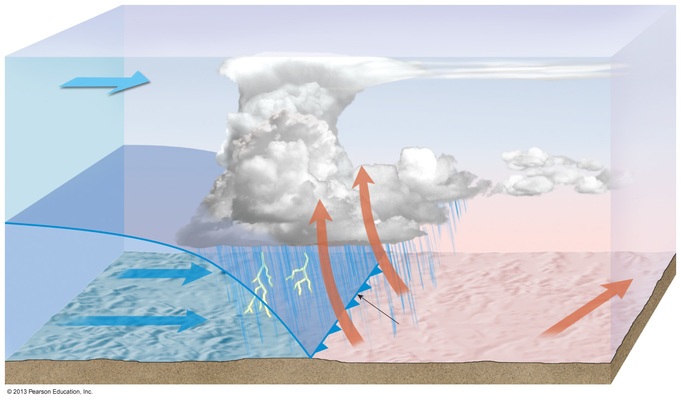
What type of storm front is this? 
a)
warm front
b)
cold front
c)
stationary front
d)
occluded front
125.
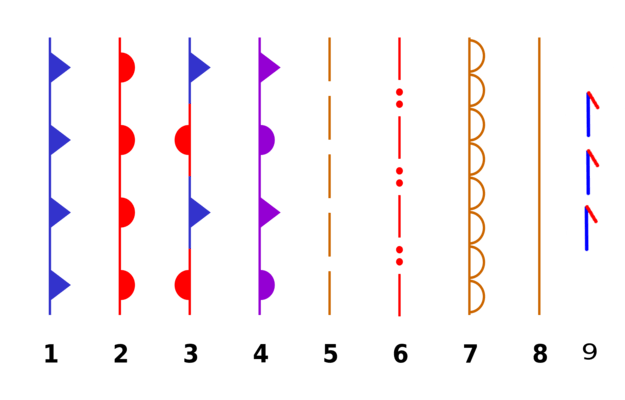
What does symbol # 3 mean?
a)
stationary front
b)
occluded front
c)
warm front
d)
cold front
126.
Which most likely produces clear, cool weather?
a)
zero air pressure
b)
stable air pressure
c)
a low pressure system
d)
a high pressure system
127.
Which type of front is pictured?
a)
Cold front
b)
Warm front
c)
Occluded front
d)
Stationary front
128.
Which system results in rainy or stormy weather?
a)
high pressure
b)
low pressure
c)
hurricane
d)
weather system
129.
Which system results in drier, fairer weather?
a)
high pressure
b)
low pressure
c)
hurricane
d)
weather system
130.
How are fronts formed?
a)
When two air masses meet
b)
when two winds meet
c)
when two clouds meet