Wayground logo

Free Printable Worksheets

Font size

S
M
L
XL
Worksheets

Midterm Review - Unit 5

Total questions: 39

Worksheet time: 26mins

Name
Class
Date
1.
In which part of the cell does photosynthesis take place?
a)
vacuole
b)
mitochondria
c)
cell wall
d)
chloroplast
2.
What gas do producers need in order to perform photosynthesis?
a)
oxygen
b)
carbon dioxide
c)
hydrogen
d)
nitrogen
3.
What gas do producers give off as a result of photosynthesis?
a)
oxygen
b)
carbon dioxide
c)
hydrogen
d)
nitrogen
4.
In which organism(s) does respiration occur?
a)
plants
b)
animals
c)
fungus
d)
all of these
5.
What gas is needed in order to perform respiration at the cellular level?
a)
oxygen
b)
carbon dioxide
c)
hydrogen
d)
nitrogen
6.
What is the chemical equation for cellular respiration?
a)
Glucose + Oxygen -> Carbon dioxide + Water + Energy
b)
Oxygen + Carbon dioxide + Energy  -> Glucose + Water
c)
Carbon dioxide + Glucose -> Oxygen + Water + Energy
d)
Water + Carbon dioxide + Energy -> Oxygen + Glucose
7.
What is the equation for photosynthesis? 
a)
Water + Carbon dioxide + Energy -> Oxygen + Glucose
b)
Carbon dioxide + Glucose -> Oxygen + Water + Energy
c)
Oxygen + Carbon dioxide + Energy  -> Glucose + Water
d)
Glucose + Oxygen -> Carbon dioxide + Water + Energy
8.
Cellular respiration is similar in both plants and animals in what way?
a)
Energy is required and oxygen is released.
b)
Nitrogen is required and energy is released.
c)
Oxygen is required and energy is released.
d)
Oxygen is required and carbon is released.
9.
Glucose is a form of ______ Energy. 
a)
Radiant
b)
Chemical
10.
What pigment in the leaf captures energy from the sun?
a)
carbon
b)
chlorophyll
c)
air
d)
chloroplast
11.
Carbon dioxide enters the leave through what opening?
a)
root
b)
stem
c)
stomata
d)
stomach
12.
In what way is photosynthesis and respiration related to each other?
a)
The reactants of photosynthesis are the reactants of respiration.
b)
The products of photosynthesis are the reactants of respiration.
c)
The products of photosynthesis are the products of respiration.
13.
In respiration, how is chemical energy stored?
a)
ATP
b)
Glucose
c)
Oxygen
d)
Carbon Dioxide
14.
How are plant cells different from animal cells?
a)
Only plant cells can grow
b)
Only animal cells can reproduce
c)
Only animal cells can store energy
d)
Only plant cells can perform photosynthesis
15.
Chlorophyll captures energy from sunlight during photosynthesis. Energy is captured from all of the colors of visible light except one. Which color of light is not captured?
a)
blue
b)
violet
c)
green
d)
red
16.
What is transpiration?
a)
Excess water being released from the leave
b)
Excess sugar being released from the leave
c)
The way a plant makes its food
d)
When the plant uses sugar for energy
17.
Which cells are responsible for opening and closing stomates to regulate water loss & gas exchange?
a)
Guard Cells
b)
Gate Cells
c)
Vascular Cells
d)
Root Cells
18.
What would happen if a plant didn't have stomates?
a)
It wouldn't be able to regulate the loss of glucose
b)
It wouldn't be able to regulate the loss of water vapor
c)
It wouldn't be able to store carbohydrates
d)
It wouldn't be able to trap sunlight
19.
Which statement BEST compares aerobic and anaerobic respiration?
a)
Less ATP is generated during anaerobic respiration than during aerobic respiration
b)
more water is generated during anaerobic respiration than during aerobic respiration
c)
more oxygen is generated during anaerobic respiration than during aerobic respiration
d)
less lactic acid is generated during anaeobic respiration than during aerobic respiration
20.

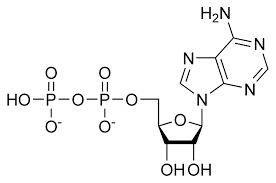
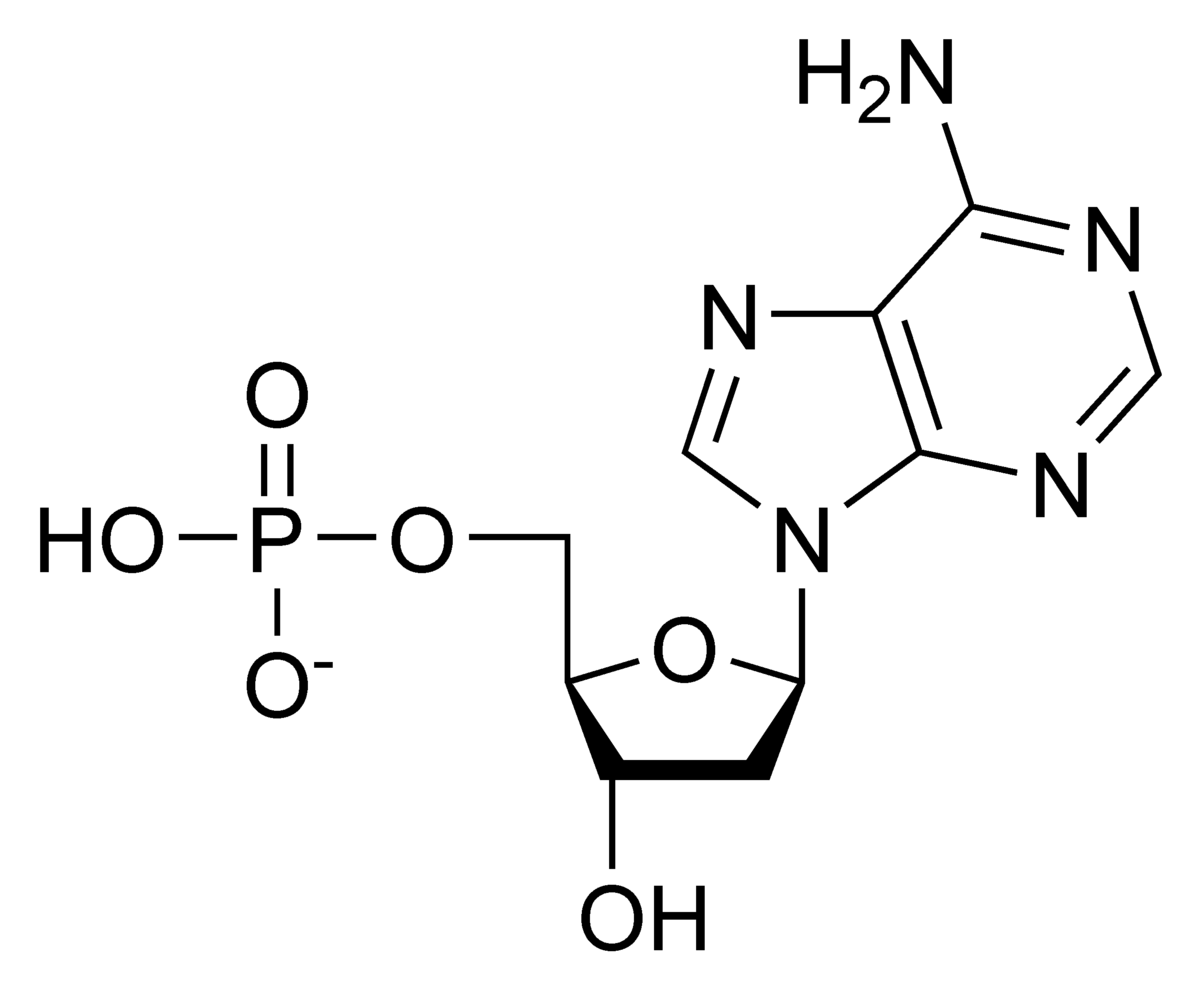
Which of the following is the correct structure of ATP?
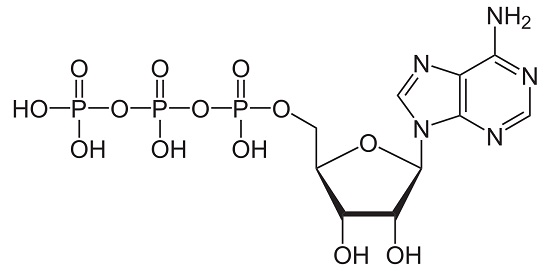
a)
b)
c)
d)
21.

How does ATP provide energy for the cell?

a)

The bond between the first and second phosphate is broken to release energy.

b)

The bond between the adenine and the sugar is broken to release energy.

c)

The bond between the sugar and phosphates are broken and release energy.

d)

The bond between the second and third phosphate are broken to release energy.

22.

Chemical energy is

a)

potential energy

b)

kinetic energy

c)

thermal energy

d)

calories

23.

Exergonic reactions are reactions that _________ energy and are part of our __________.

a)

release, anabolism

b)

store, anabolism

c)

store, catabolism

d)

release, catabolism

24.
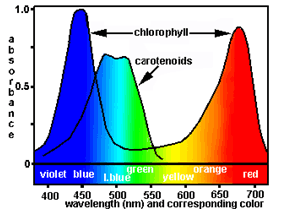
Which wavelengths of light are absorbed by carotenoids?
a)
yellow to red
b)
green to yellow
c)
violet to green
d)
red to blue
25.
What is the energy conversion during photosynthesis?
a)
chemical --> chemical
b)
thermal --> electrical
c)
chemical --> electrical 
d)
radiant --> chemical
26.
What is the main purpose of the light reactions?
a)
To provide the energy and electrons for the calvin cycle
b)
To capture energy and make sugar
c)
To reflect green light
d)
To make sugars
27.
What does NADPH do? 
a)
carries electrons to the Calvin cycle
b)
carries electrons to the ETC
28.
What is one function of the other pigments  besides chlorophyll, in the chloroplast?
a)
to block damaging wavelengths of light
b)
to absorb different wavelengths than the chloroplasts
c)
to provide different colors to the leaves
d)
to transfer energy to a separate photosystem beside the one using chlorophyll a and b.
29.
When oxygen is released as a result of photosynthesis, it is a direct by-product of
a)
reducing NADP+
b)
splitting water molecules
c)
chemiosmosis
d)
electron transfer in photosystem II and I
30.
What is the ultimate ORIGINAL source of energy for living things
a)
Sugar
b)
Sun
c)
Moon
d)
Carbon Dioxide
31.

How do C4 plants prevent photorespiration?

a)

they close the stomata during the day

b)

they fix CO2 during the night

c)

they fix CO2 in a cell that does not contain RubisCO

d)

they fix CO2 in the guard cells

32.

Rubisco binds with both carbon dioxide and oxygen in

a)

C3 plants

b)

C4 plants

c)

CAM plants

d)

C4 plants

33.

CAM plants keep stomata closed in daytime, thus reducing the loss of water. They can do this because

a)

fix CO2 into organic acids during the night

b)

fix CO2 into sugars in the bundle-sheath cells

c)

fix CO2 into pyruvate in the mesophyll cells

d)

use the enzyme phosphofructokinase, which outcompetes rubisco for CO2

34.
Glycolysis splits glucose into two molecules called-
a)
NADPH+
b)
Ferrodoxin
c)
Pyruvates
d)
Thing 1 and Thing 2
35.
The second law of thermodynamics is entropy, which means-
a)
energy cannot be created or destroyed
b)
energy can be created or destroyed
c)
energy cannot be changed without some loss of usable energy
d)
means I really should have listed better
36.

What is the ultimate goal of Fermentation?

a)

to make more ATP for the cell

b)

to make more NADH for the Electron Transport Chain

c)

to remake NAD+ for Glycolysis

d)

to make glucose for the cell

37.
Fermentation is cellular respiration without which molecule?
a)
CO2
b)
O2
c)
C6H12O6
38.

Fermentation makes ATP entirely from glycolysis. Since it takes place in the cytoplasm of the cell, the mitochondria are _____________.

a)

inactivated

b)

also involved

c)

not involved

39.

Which of the following sequences is in the correct order?

a)

Krebs->Glycolysis->ETC

b)

ETC->Krebs->Glycolysis

c)

Glycolysis->Krebs->ETC

d)

ETC->Glycolysis->Krebs