
 Worksheets
Magnetism & Electricity
Total questions: 50
Worksheet time: 29mins
Energy is measured by
Watt.hr
watt
Kilo Watt
Kilo Volt
The resistance of the ideal conductor is
very low
medium
high
very high
Insulator
doesn't allow current to pass
allows current to pass
has low resistance
has low voltage
Resistivity, the inverse of conductivity, is only dependent on which of the following? (choose one)
shape of the wire
length of the wire
cross-sectional area of the wire
type of metal
The resistance of a material
depends on its resistivity and the geometric properties of the material.
does not depend on its resistivity or the geometric properties of the material.
depends on its resistivity but not the geometric properties of the material.
does not depend on its resistivity but on the geometric properties of the material.
Which of the following aluminum wires would have the greatest resistance?
3 cm in length and 2 cm in diameter
6 cm in length and 2 cm in diameter
9 cm in length and 2 cm in diameter
12 cm in length and 2 cm in diameter
Which of the following aluminum wires would have the greatest resistance?
3 cm in length and 2 cm in diameter
6 cm in length and 2 cm in diameter
9 cm in length and 2 cm in diameter
12 cm in length and 2 cm in diameter
Which of the following statements are true?
Voltage will not exist without any current
Batteries are the source charges in a current
Currents will not exist without any voltage
Current travels through wires near light speeds
How will increasing the amount of resistance in a circuit affect the current if the voltage remains constant?
It will increase
It will not change
It will decrease
It will cease
If a light bulb burns out in a series circuit, the total current
remains unchanged
becomes zero
is increased a little
is decreased a little
What is the definition of electrical current?
The opposition to the flow of electrons
The rate of flow of charge
The work done on each coulomb of charge
Electrons moving around

create voltage from magnetic coil
resistors
capacitors
inductors
transformers

store voltage up to a point and release it
resistors
capacitors
inductors
transformers

What size resistor would produce a 3 Amp current flow with a 12 Volt battery
1 Ohm
3 Ohms
4 Ohms
12 Ohms

If the Voltage stays the same and Resistance is increased, Current will
Increase
Decrease
Stay the same
X

If the battery produced 12.6 Volts what would be the current flow for a 6 Ohm resistor?
2.1 Amps
2.4 Amps
1.71 Amps
15 Amps
Which equation can be rearranged to calculate the the electric current given?
I = Q ÷ t
Q = It
I = Qt
I = t ÷Q
Calculate the quantity of charge, Q, obtained when a current of 25 amps runs for 1 minute
Q = 1,800 C
Q = 1,500 C
Q = 1000 C
Q = 3000 C
A potential difference of 24 V is applied to a 150 resistor. How much current flows through the resistor?
0.15 A
3600 A
6.25 A
0.16 A
Which of the devices is not based on electromagnetic induction?
Generator
electrodynamic microphone
transformer
electric motor
Provide the correct statements.
1. EMF self-induction occurs when passing through a DC coil;
2. Self-induction EMF occurs when passing through an AC coil;
3. EMF self-induction counteracts current flow;
4. EMF self-induction counteracts current changes.
2 & 3;
2 & 4;
1 &3
1 & 4

The induction current in the horizontally arranged coil has the direction shown in the figure. Provide statements that do not correctly explain the occurrence of this current.
1. Top of the ring is made by the N-Pole of permanent magnet.
2. Top of the ring is made by the S-Pole of permanent magnet.
3. The N-pole of the magnet is removed from the ring upwards.
4. The S-pole of the magnet is removed from the ring upwards.
Only 1;
1 & 4;
Only 2;
2 & 3.
The coil has 500 turns. When the current is changed to 2 A, the magnetic flux through each turn changes by 4 mWb. Determine the inductance of the coil.
2 H
0,2 H
1 H
0,1 H

Which coil will have the largest flux?
A
B
C
D

If the magnetic field were increased from B = 0.5 T to 1.0T, the flux through the loop would
increase
decrease
remain the same
Electro motive force induced by motion of conductor across magnetic field is called
EMF
motional EMF
rotational EMF
static EMF
Self-induced EMF is sometimes also known as
induced EMF
deduce EMF
back EMF
both a and b
Self-induced EMF is sometimes also known as
induced EMF
deduce EMF
back EMF
both a and b
The direction of the force on a current-carrying wire placed in a magnetic field depends on
the direction of the current
the direction of the field
the direction of current as well as field
neither the direction of current nor the direction of field
The magnetic field lines due to a straight wire carrying a current are
straight
circular
parabolic
elliptical
A straight wire of length 0.5m and carrying current 1.2A is placed in uniform magnetic field of induction 2T, applied perpendicular to the length of the wire. The force on the wire is
2.4 N
1.2 N
3.0 N
2.0 N
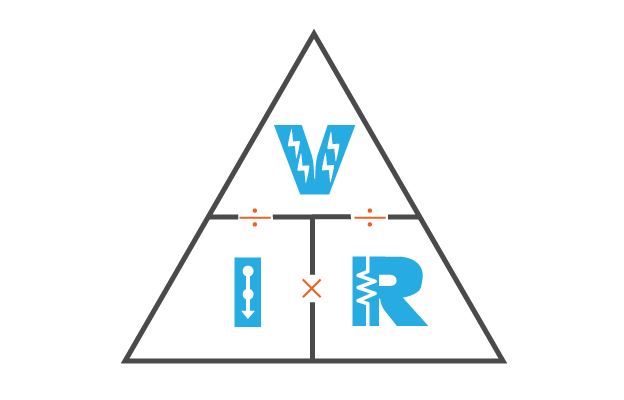
The current in a hair dryer measures 15.0 Amps. The resistance of the appliance is 8.0 ohms. What is the voltage?
120 V
0.5 V
7.0 V
1800 V

Define electromagnetic induction
Cutting of magnetic flux
Change of magnetic flux
Producing of current when there is a megnetic flux cutting
None of above three

