
 Worksheets
U5 Chemical Reactions
Total questions: 53
Worksheet time: 2hrs 38mins
Name
Class
Date
1.
When a scientist mixed two chemicals, an exothermic reaction takes place. Which of the following would be proof that the reaction was exothermic?
a)
a change of color
b)
a change of state
c)
a temperature decrease
d)
a temperature increase
2.
Which type of bond has an equal sharing of electrons?
a)
Polar Covalent
b)
Non Polar Covalent
c)
Ionic
d)
Metallic
3.
An ionic bond forms when atoms ___________ electrons.
a)
gain
b)
share
c)
increase
d)
transfer
4.
Which type of bond has an unequal sharing of electrons?
a)
Polar Covalent
b)
Non Polar Covalent
c)
Ionic
d)
Metallic
5.
Which type of bond has a transfer of an electron from on atom to another?
a)
Polar Covalent
b)
Non Polar Covalent
c)
Ionic
d)
Metallic
6.
Covalent compounds
a)
Share electrons
b)
transfer electrons
c)
contain a sea of electrons
d)
conduct electricity
7.
How many Hydrogen are in 4H2O?
a)
6
b)
8
c)
2
d)
4
8.
2H2 + O2 ----> 2H2O What is the product?
a)
------>
b)
2H2O
c)
2H2+ O2
9.
2H2 + O2 --------> 2H2O What are the reactants?
a)
----->
b)
2H2O
c)
2H2 +O2
10.
How many elements are in C6H12O6?
a)
1
b)
2
c)
3
d)
4
11.
How many atoms are there TOTAL in:
H2SO4
H2SO4
a)
6
b)
5
c)
7
d)
3
12.
A subscript is the small number below a(n) ________ that tells the number of _______ of that element.
a)
element symbol; atoms
b)
atom; element symbol
c)
subscript; protons
d)
compound; elements
13.
What is a coefficient?
a)
The small number on the right of the chemical symbol.
b)
The large number to the left of a formula.
14.
Which side of a chemical equation is the reactant side?
a)
Left (before the yields sign)
b)
Right (after the yields sign)
15.
The law of conservation of matter states that
a)
chemical reactions change matter.
b)
in chemical reactions, the identity of reactants and products is conserved.
c)
atoms are neither created nor destroyed in chemical reactions.
d)
a chemical equation must be balanced.
16.
Which of the following is an unbalanced equation?
a)
CaCO3 --> CaO + CO2
b)
PbO2 + 2H2-->2Pb + H2O
c)
2Na+ 2H2O-->2NaOH + H2
d)
CS2 + 3O2 --> CO2 + 2SO2
17.
Is the following equation balanced or unbalanced?
Fe + S --> FeS
Fe + S --> FeS
a)
balanced
b)
unbalanced
18.
__Al + __Fe3N2 -->__AlN + __Fe
a)
already balanced
b)
4,2,4,6
c)
2,1,2,3
d)
1,2,1,3
19.
__Na + __Cl2 --> __NaCl
a)
1,1,2
b)
2,1,2
c)
2,1,1
d)
already balanced
20.
Balance this reaction: ____ Na3PO4 + ____ KOH ---> ____ NaOH + ____ K3PO4
a)
1,3,3,1
b)
1,3,2,1
c)
2,3,3,1
d)
1,1,3,1
21.
Balance this reaction: ____ AlBr3 + ____ K2SO4 ---> ____ KBr + ____ Al2(SO4)3
a)
1,1,1,1
b)
2,3,6,1
c)
2,6,1,1
d)
3,1,2,2
22.
What is a reactant?
a)
a volatile chemical
b)
a dangerous substance
c)
the substances you start with in a chemical reaction
d)
the substances that are formed by a chemical reaction
23.
What is a product?
a)
a fancy word for make-up
b)
a volatile chemical
c)
the substances you start with in a chemical reaction
d)
the substances that are formed by a chemical reaction
24.
The number of atoms you begin with in a chemical reaction ...
a)
must be the same as the number of atoms you end with
b)
must be an even number
c)
can be different to the number you finish with
d)
changes depending on how much energy is formed
25.
Balance the following:
____ Fe + ____ Cl2 → ____ FeCl3
a)
1,1,2
b)
1,3,1
c)
2,2,3
d)
2,3,2
26.
Balance the following:
____ Al + ____ O2 → ____ Al2O3
a)
2,3,4
b)
4,3,2
c)
1,1,2
d)
2,1,1
27.
Which type of reaction is:
2 NaBr + Ca(OH)2 → CaBr2 + 2 NaOH
a)
Synthesis
b)
Single Displacement
c)
Double Displacement
d)
Combustion
28.
Which type of reaction is: C2H4 + 3 O2 → 2 CO2 + 2 H2O
a)
Synthesis
b)
Decomposition
c)
Single Displacement
d)
Combustion
29.
Which type of reaction is:
2 H3AsO4 → As2O5 + 3 H2O
a)
Synthesis
b)
Decomposition
c)
Single Displacement
d)
Combustion
30.
Which type of reaction is:
2 H3AsO4 → As2O5 + 3 H2O
a)
Synthesis
b)
Decomposition
c)
Single Displacement
d)
Combustion
31.
Which type of reaction is:
2 NH3 + H2SO4 → (NH4)2SO4
a)
Synthesis
b)
Decomposition
c)
Single Displacement
d)
Double Displacement
32.
Which type of reaction is:
3 Pb + 2 H3PO4 → 3 H2 + Pb3(PO4)2
a)
Synthesis
b)
Single Displacement
c)
Double Displacement
d)
Combustion
33.
Which type of reaction is:
C7H16 + 10 O2 → 7 CO2 + 8 H2O
a)
Synthesis
b)
Decomposition
c)
Single Displacement
d)
Combustion
34.
Which type of reaction is:
8 Ag2S → 8 S + 16 Ag
a)
Synthesis
b)
Decomposition
c)
Single Displacement
d)
Double Displacement
35.
Which type of reaction is:
4 (NH4)3PO4 + 3 Pb(NO3)4 → 12 NH4NO3 + Pb3(PO4)4
a)
Synthesis
b)
Decomposition
c)
Single Displacement
d)
Double Displacement
36.
Which type of reaction is:
2 K + MgBr2 → 2 KBr + Mg
a)
Synthesis
b)
Decomposition
c)
Single Displacement
d)
Double Displacement
37.
The number in front of a compound or element is a
a)
Subscript
b)
Coefficient
c)
Superscript
d)
Charge
38.
What is the Law of Conservation of mass?
a)
Mass is created in a chemical reaction
b)
Mass is created in a physical change
c)
New chemicals formed from a chemical reaction have a larger overall mass than the original reactants
d)
Mass is never created or destroyed
39.
The total amount of matter (atoms) before and after a chemical reaction remains the same.
a)
True
b)
False
40.
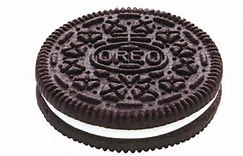
An oreo cookie weighs 20 grams. It gets crushed into crumbs for a recipe. How much do its crumbs weigh?
a)
15 grams
b)
25 grams
c)
20 grams
41.
If reaction starts with 20g of reactants it should produce...
a)
a total of 40g of product
b)
a total of 10g of product
c)
a total of 80 g of product
d)
a total of 20g of product
42.
In a reaction A + B ----> C, reactant A has 5g and product C has 9g. How many grams does reactant B should have?
a)
4g
b)
5g
c)
9g
d)
14g
43.
Is this equation balanced or unbalanced?
2Fe2O3 + 3C --> 4Fe + 3 CO2
2Fe2O3 + 3C --> 4Fe + 3 CO2
a)
balanced
b)
unbalanced
44.
If a reaction starts with a total 75g of reactants it should produce
a)
a total of 40g of products
b)
a total of 75g of products
c)
a total of 180 g of products
d)
None of the above
45.
In the reaction AB-----> A + B reactant AB has 12g and product B has 5g. How many grams should product A have?
a)
17g
b)
2g
c)
7g
d)
None of the above
46.
Endothermic reactions...
a)
release energy
b)
explode
c)
take in energy
d)
have higher energy in their reactants than the products
47.
Exothermic reactions
a)
have higher energy in their products than their reactants
b)
release energy
c)
get cold
d)
are synthesis reactions
48.
What type of reaction is shown below?
A + B --> AB
A + B --> AB
a)
Synthesis
b)
Decomposition
c)
Single Replacement
d)
Double Replacement
49.
What type of reaction is shown below?
AB --> A + B
AB --> A + B
a)
Synthesis
b)
Decomposition
c)
Single Replacement
d)
Double Replacement
50.
What type of reaction is shown below?
AB + X --> AX + B
AB + X --> AX + B
a)
Synthesis
b)
Decomposition
c)
Single Replacement
d)
Double Replacement
51.
What type of reaction is shown below?
AB + XY --> AY + BX
AB + XY --> AY + BX
a)
Synthesis
b)
Decomposition
c)
Single Replacement
d)
Double Replacement
52.
You can balance a chemical equation by changing the
a)
subscripts
b)
coefficients
c)
reactants
d)
products
53.
Which of the following coefficients correctly balances the equation below?
__F2 + __H2O --> __OF2 + __HF
__F2 + __H2O --> __OF2 + __HF
a)
2,3,2,3
b)
2,1,1,2
c)
1,2,2,1
d)
4,2,2,4
100 %

