wayground logo

Free Printable Worksheets

NEW

Font size

S
M
L
XL
Worksheets

Chapter 2 Test- Force and Motion

Total questions: 42

Worksheet time: 37mins

Name
Class
Date
1.

when an object changes its position relative to a reference point.(moves)

a)

Motion

b)

Speed

c)

Acceleration

d)

Position

2.

the speed at one point in time.

a)

Velocity

b)

Instantaneous speed

c)

Average speed

d)

Constant speed

3.

A place or object used for comparison to determine if something is in motion

a)

Velocity

b)

Acceration

c)

Position

d)

Reference Point

4.

how far something has moved

a)

Distance

b)

Displacement

c)

Position

d)

Velocity

5.

is the distance and direction of an object's change in position from the starting point.

a)

Distance

b)

Displacement

c)

Velocity

d)

Acceration

6.

the distance an object travels per unit of time.

a)

speed

b)

distance

c)

displacement

d)

position

7.

No change in speed; no calculation needed

a)

speed

b)

instantaneous speed

c)

average speed

d)

constant speed

8.

location relative to a reference point

a)

distance

b)

position

c)

velocity

d)

speed

9.

describes speed of motion when speed is changing; the total distance traveled divided by the total time of travel.

a)

speed

b)

instantaneous speed

c)

average speed

d)

constant speed

10.

the change in velocity (m/s2)

a)

Speed

b)

Direction

c)

Position

d)

Acceleration

11.

a push or pull

a)

Force

b)

velocity

c)

speed

d)

distance

12.

Forces on an object that are equal in size and opposite in direction; net force = 0

a)

net force

b)

balanced force

c)

unbalanced force

d)

instant foce

13.

pushing with unequal forces in opposite directions, a net force occurs in the direction of the larger force.

a)

balanced forces

b)

net forces

c)

unbalanced forces

d)

instant forces

14.

When two or more forces act on an object at the same time; combined forces.

a)

velocity

b)

displacement

c)

inertia

d)

net force

15.

The tendency of an object to resist any change in its motion. It will keep moving at the same speed and in the same direction unless another unbalanced force acts on it

a)

Inertia

b)

Velocity

c)

Acceleration

d)

Force

16.

the person able to state rules that describe the effects of forces on the motion of objects

a)

Madam Curry

b)

Sir Isaac Newton

c)

Albert Einstein

d)

Orville Wright

17.

Newton's first law of motion states...

a)

that an object in motion will stop motion unless an unbalanced net force acts on it.

b)

that an object in motion will stay in motion unless an unbalanced net force acts on it.

18.
Which term means speed with a direction?
a)
Speeding
b)
Acceleration
c)
Velocity
d)
Gravity
19.
The Standard Units for Speed is ?
a)
m/s (meters per second)
b)
ms (meters times seconds)
c)
mskg (meters times seconds kilograms)
d)
m/s*kg (meters per second kilograms)
20.
If an object decreases its speed each second it moves before stopping, it is...
a)
conserving momentum
b)
insane
c)
accelerating
d)
conserving energy
21.
This motorcyclist just experienced which one of newton's laws? (the one that fits best)
a)
Inertia: object in motion stays in motion unless acted on by a force
b)
F = ma
c)
Action - Reaction: for every action there is an opposite and equal reaction.
d)
4th law
22.
Runner A (blue) has the same displacement as Runner B (black).
a)
False
b)
True
23.
Runner A (blue) ran the same distance as Runner B (black).
a)
True
b)
False
24.
What is the force that causes everything to be pulled down to the Earth?
a)
friction
b)
gravity
c)
balanced
d)
unbalanced
25.
Force is measured in....
a)
Galileos 
b)
Newtons
c)
Di Vincis
d)
Einsteins 
26.
An unbalanced force is when objects move in one direction because the force is greater from that direction.
a)
true
b)
false
27.
Inertia is....
a)
for every action, there is an equal and opposite reaction
b)
larger objects take more force to move 
c)
an object in motion tends to stay in motion unless acted on by an opposite force
d)
a push that acts in the opposite direction and it slows down.
28.
Which force produces a change in motion?
a)
unbalanced force
b)
balanced force
c)
gravitational force
d)
frictional force
29.
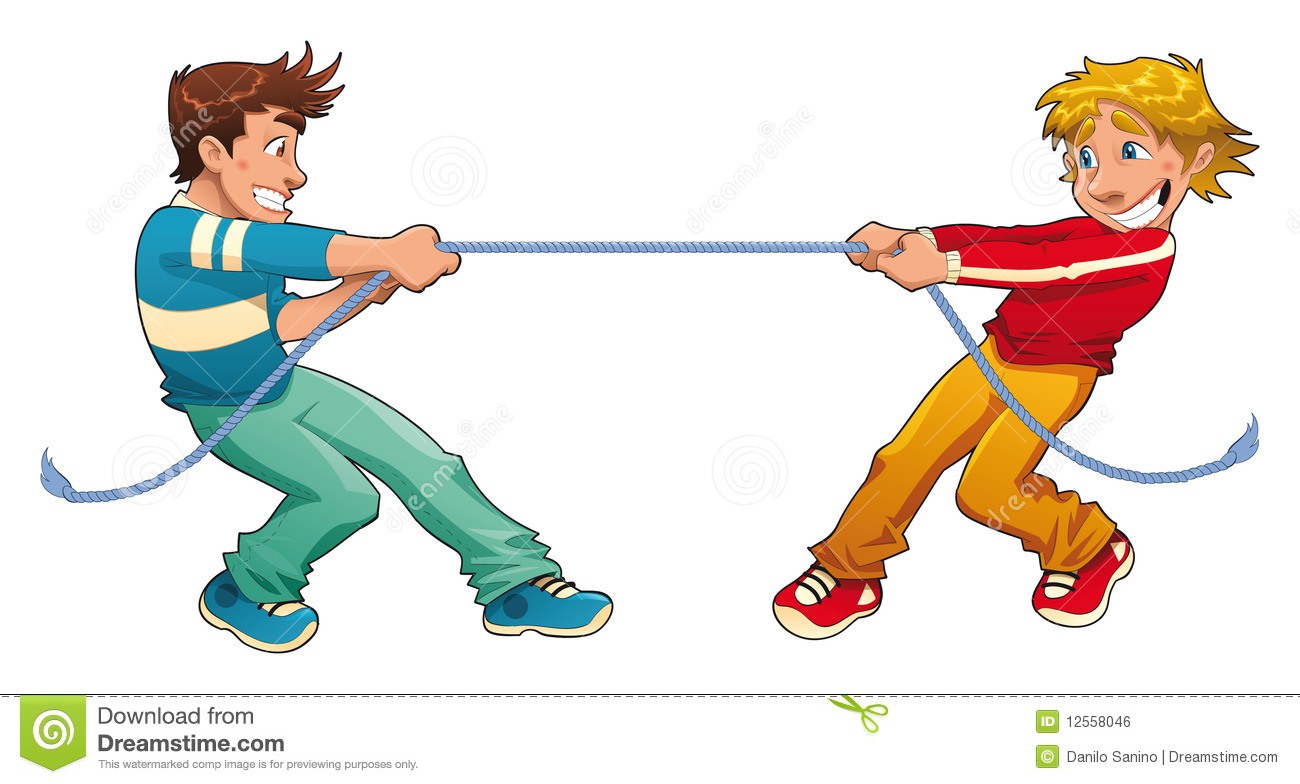
If these boys are pulling with the same amount of force.  What will happen?
a)
The boy in blue will win.
b)
They will not move at all.
c)
The boy in red will win.
d)
Both will fall down.
30.

The first law of motion says that a moving object tends to keep

a)

force

b)

speed

c)

distance

d)

moving

31.

If there was no friction, objects in motion would stay in motion forever.

a)

true

b)

false

32.

Why is it harder to push a cart full of bricks than a cart full of feathers?

a)

The bricks have more friction than the feathers.

b)

The feathers have more friction than the bricks.

c)

The bricks have more weight/mass than the feathers.

d)

The feathers have more weight/mass than the bricks.

33.

You calculate speed by dividing the distance moved by...?

a)

Time

b)

Velocity

c)

Acceleration

d)

Vector

34.

What do you need to know about an object to calculate its velocity?

a)

Speed and time

b)

Speed and direction

c)

Speed and velocity

d)

Time and direction

35.

Which of these objects is NOT accelerating?

a)

A plane slowing down to land

b)

A rocket taking off into space

c)

A hiker moving at the same speed for hours

d)

A rollerblader heading downhill

36.
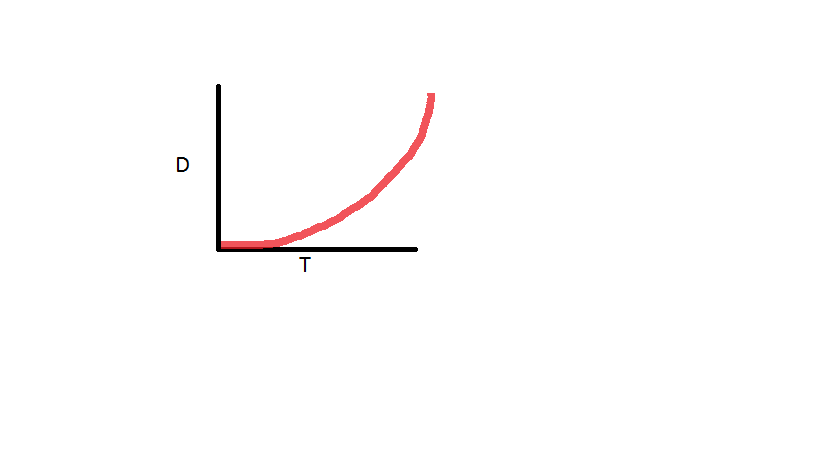
In the distance vs. time graph, what type of motion does the line represent? 
a)
Speed
b)
Velocity
c)
Acceleration
d)
Deceleration
37.
Acceleration of an object happens when things ________
a)
slow down
b)
go faster
c)
change direction (turn)
d)
All of the above
38.
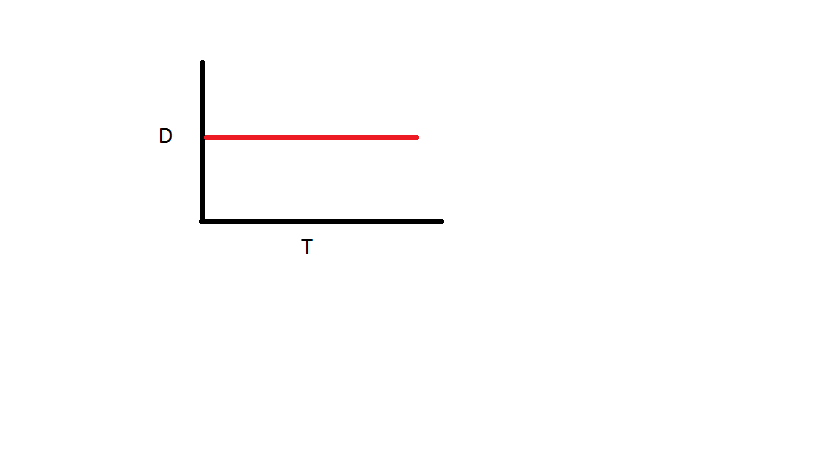
In the distance vs. time graph, what type of motion does the line represent?
a)
No motion
b)
Constant velocity
c)
Acceleration
d)
Deceleration
39.
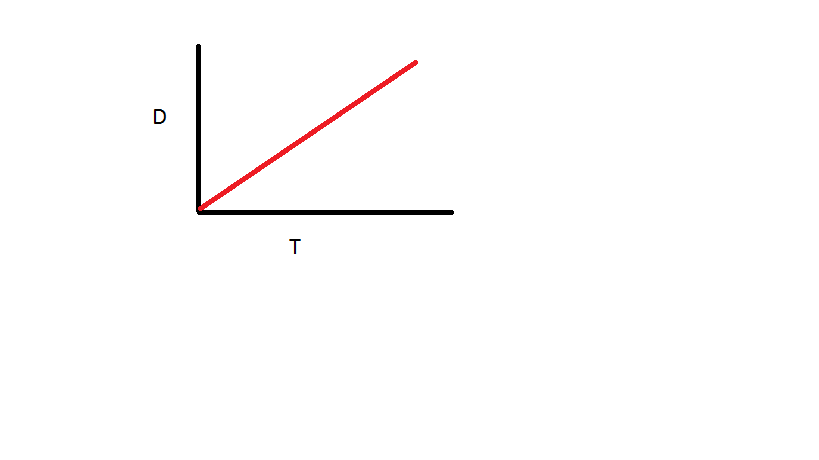
In the distance vs. time graph, what type of motion does the line represent?
a)
Acceleration
b)
No motion
c)
Deceleration
d)
Constant Velocity
40.
Describe the speed of the object from 4-6 seconds using the distance vs. time graph.
a)
Increasing speed
b)
Decreasing speed
c)
Not moving
d)
Constant speed
41.
The correct equation for acceleration is?
a)
a = d/t
b)
a = s/vf
c)
a = vf - v/ t
d)
p = m/v
42.
What is the speed of a car that travels a distance of 79 m in 8 seconds.
a)
5 m/s
b)
79 m/s
c)
9.87 m/s
d)
8 m/s