wayground logo

Free Printable Worksheets

Font size

S
M
L
XL
Worksheets

Chemistry Review

Total questions: 190

Worksheet time: 2hrs 35mins

Name
Class
Date
1.
Most elements are...
a)
Metal
b)
Nonmetal
2.
Which of the following is a Noble Gas?
a)
Hydrogen
b)
Oxygen
c)
Carbon
d)
Helium
3.
Which of the following is a compound?
a)
H
b)
C
c)
O
d)
H2O
4.
What are the reactants in an equation?
a)
What goes into a reaction
b)
What comes out of a reaction
5.
Which of the following is described as the basic unit of matter?
a)
Element
b)
Atom
c)
Molecule
d)
Compound
6.
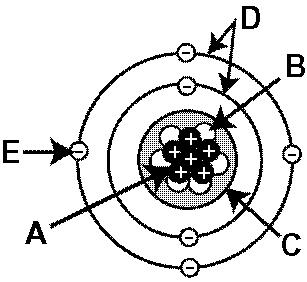
In the atom diagram shown, E is pointing to
a)
An electron
b)
a proton
c)
a neutron
d)
the nucleus
7.

In the atom diagram shown, A is pointing to the darker particles, these are known as

a)

electrons

b)

protons

c)

neutrons

d)

the nucleus

8.
B and C are found in the ______ of an atom.
a)
electron cloud
b)
Space
c)
Nucleus
d)
Outside
9.
A molecule is________
a)
two ions held together by opposite charges
b)
smaller than an atom
c)
can be physically separated into smaller atoms
d)
more than one atom bonded together by covalent bonds
10.
What charge does an electron have?
a)
Negative
b)
Positive
c)
Neutral
d)
Contrated
11.

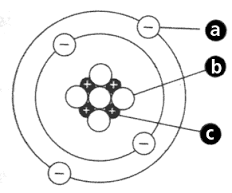
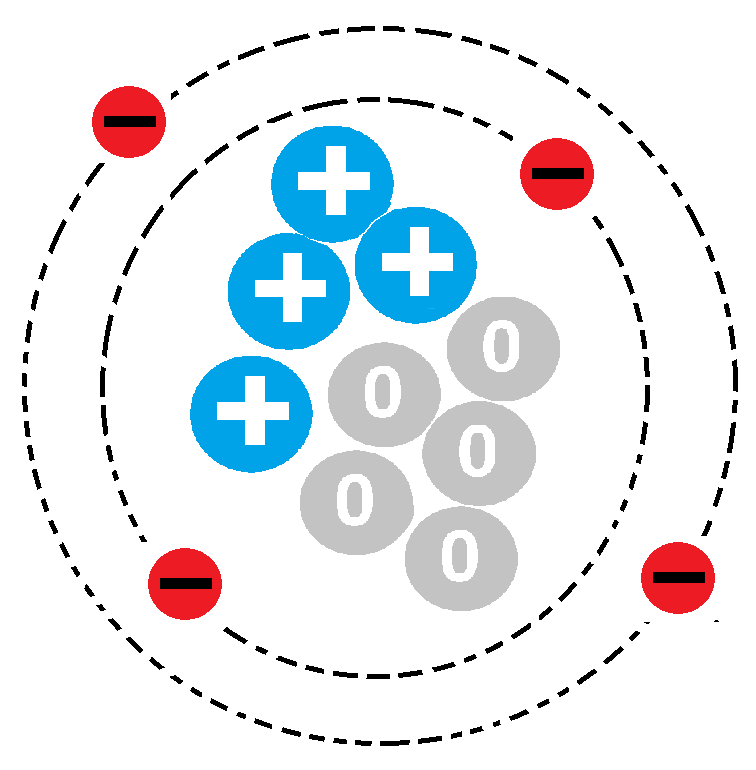
What is the atomic mass of this atom?

a)

1

b)

3

c)

4

d)

7

12.
What is the atomic number of this atom?
a)
4
b)
5
c)
9
d)
none of the above
13.
What is a valence electron?
a)
an electron that is found in the outermost orbital of an atom. 
b)
an electron found in the innermost orbital of an atom.
c)
an electron found in the middle orbital.
14.
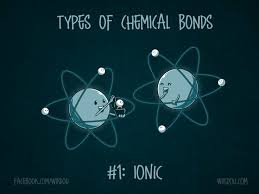
An ionic bond forms when 
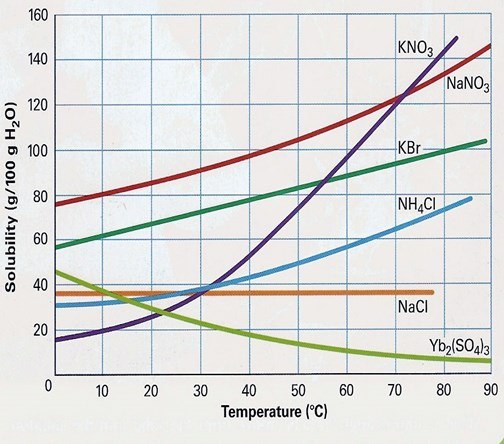
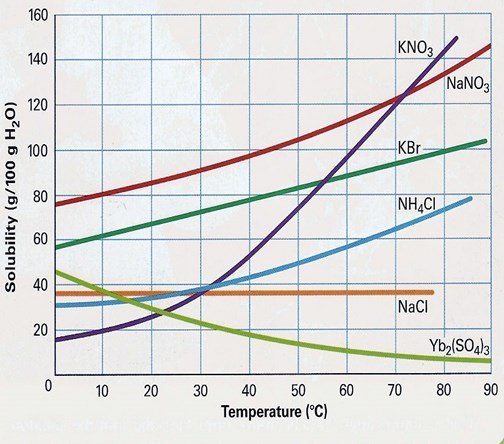
a)
Valence electrons are shared
b)
a sea of mobile electrons surround the cations
c)
valence electrons are transferred between atoms
d)
none of the above
15.
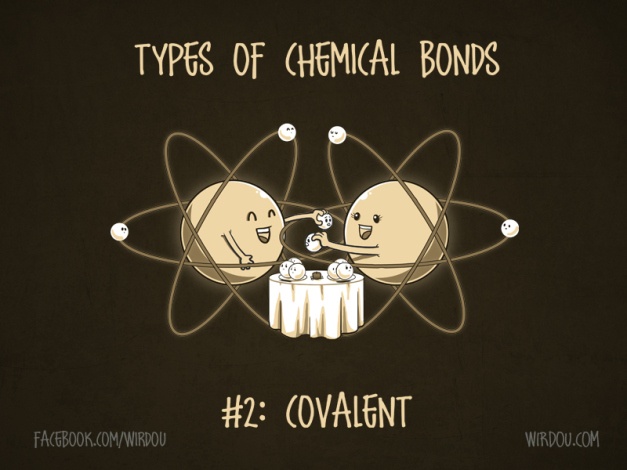
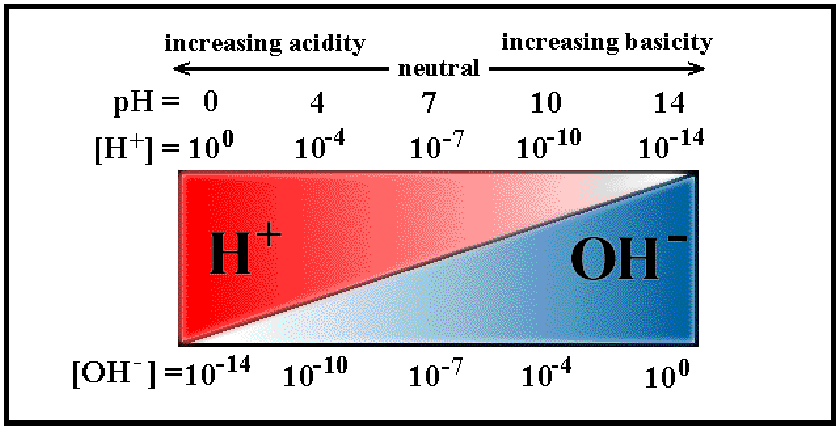
In chemical compounds, covalent bonds form when
a)
the electronegativity difference between two atoms is very large.
b)
electrons are completely transferred between two atoms.
c)
pairs of electrons are shared between two atoms.
d)
ions are held together by opposite charges.
16.
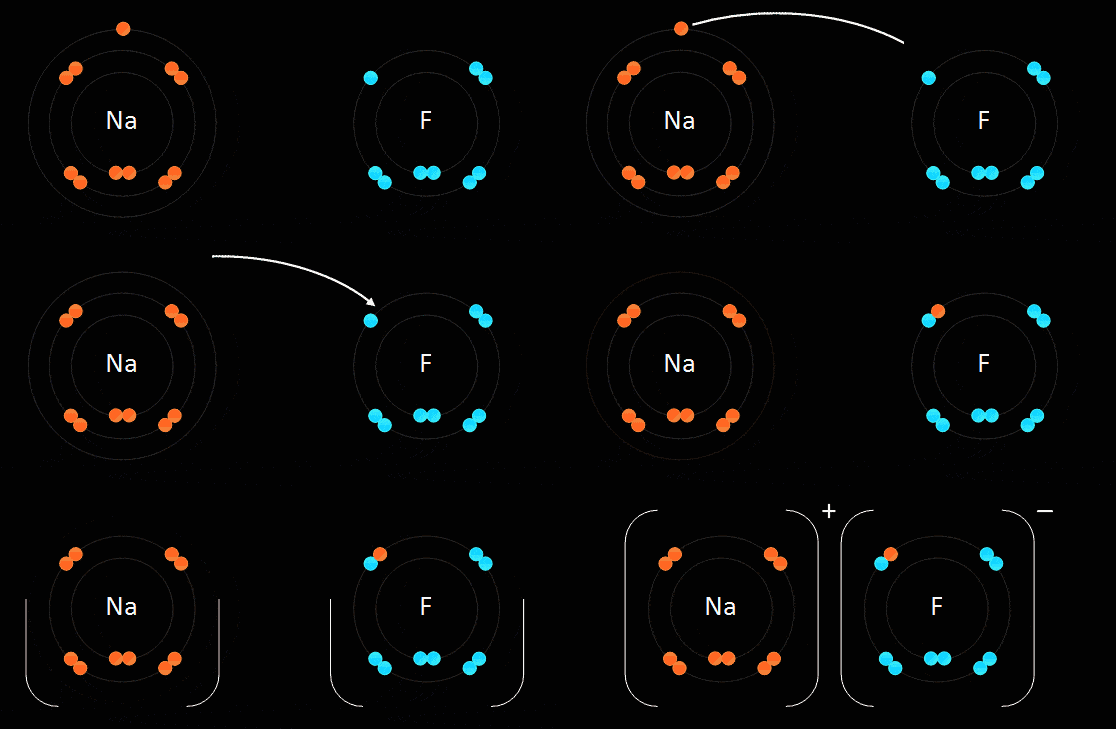
Why type of bond is forming between the atoms in the diagram?
a)
Ionic
b)
Covalent
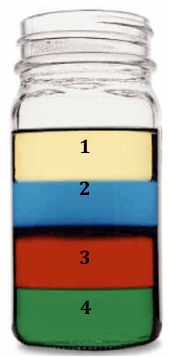
17.

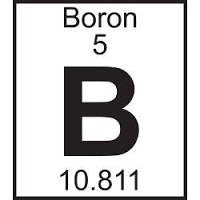
Using the information provided, determine how many electrons the a Boron atom contains.

a)

2.5

b)

5

c)

6

d)

10.81

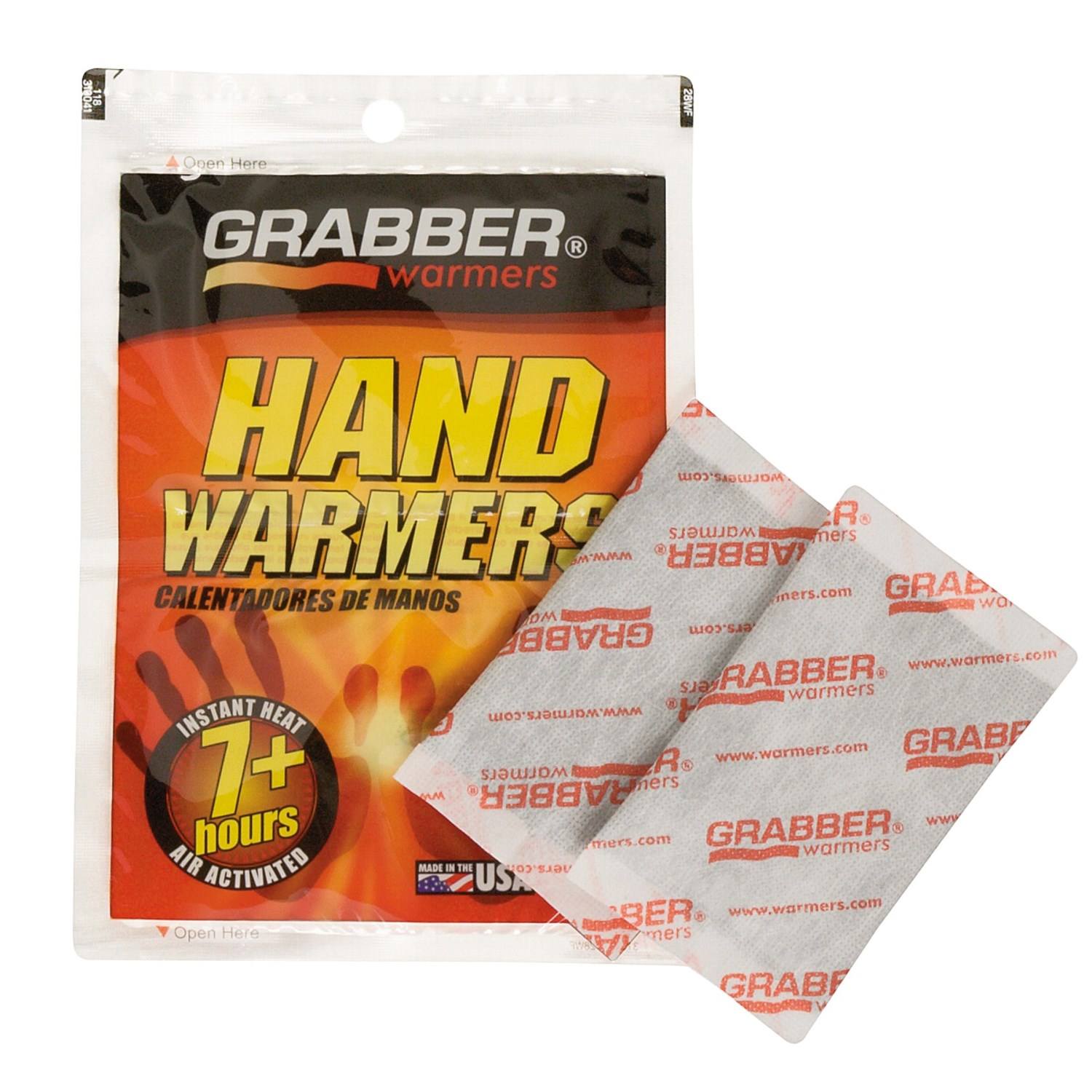
18.

What do isotopes of carbon all have in common?

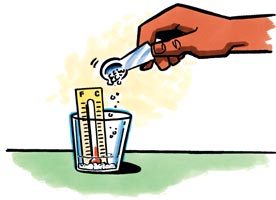
a)

They all have the same number of neutrons & mass number

b)

They all have the same atomic number and number of neutrons

c)

They all have the same atomic number and number of electrons

d)

They all have the same number of protons and neutrons

19.

How many molecules are in this formula?

a)

1

b)

2

c)

3

d)

6

20.

What information does a subscript number tell us?

a)

the number of atoms per element

b)

the number of molecules per formula

21.

An electron is located ...

a)

in the nucleus.

b)

outside the nucleus.

22.

What information does the coefficient in an equation give us?

a)

the number of atoms per element

b)

the number of molecules per formula

23.

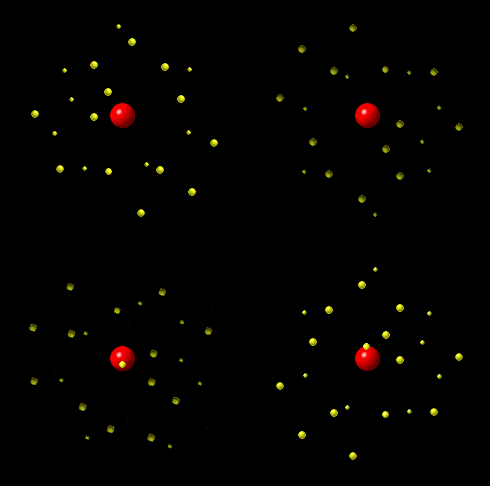
Which image shows a Bohr model for Carbon.

a)
b)
c)
d)
24.
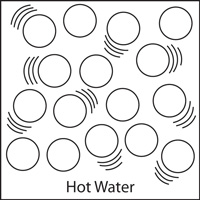
At higher temperatures
a)
particles in an object have less energy
b)
particles in an object move faster
c)
a gas contracts
25.
Freezing
a)
Solid to gas
b)
Liquid to solid
c)
Gas to solid
d)
Liquid to gas
26.
Boiling
a)
liquid to gas
b)
gas to solid
c)
gas to liquid
d)
solid to liquid
27.
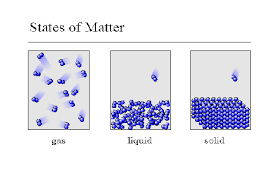
Which state of matter has tightly packed molecules?
a)
solid
b)
liquid
c)
gas
28.
Which state of matter has a definite shape?
a)
solid
b)
liquid
c)
gas
29.
What is happening when my ice cream changes from a solid to a liquid?
a)
freezing
b)
melting
c)
burning
d)
evaporation
30.
Define a liquid.
a)
Indefinite shape, indefinite volume
b)
Definite shape, definite volume
c)
Found in stars
d)
Definite volume, indefinite shape
31.
The state of matter that has no definite size or shape is
a)
Solid
b)
Liquid
c)
Gas
32.
Particles of a liquid
a)
are tightly packed together and stay in a fixed position.
b)
have no viscosity.
c)
decrease in volume with increasing temperature.
d)
are free to move around one another but still touch.
33.
What term describes a solid changing to a gas?
a)
Deposition
b)
Sublimation
c)
Evaporation
d)
Freezing
34.
What is condensation?
a)
gas to solid
b)
gas to liquid
c)
liquid to solid 
d)
solid to liquid 
35.
The speed of the molecules determines the _____.
a)
volume
b)
density
c)
pressure
d)
temperature
36.
A physical change is...
a)
a change that doesn't change the identity
b)
a change that makes something new.
c)
a chemical reaction
37.
A chemical change
a)
doesn't really change much.
b)
creates a new substance
c)
is a change in the state of matter
38.

When water sits in the freezer and freezes into ice, it is because the water has...

a)

gained mass

b)

gained energy

c)

lost mass

d)

lost energy

39.

When ice sits out on a counter and melts, it is because the ice has...

a)

gained mass

b)

gained energy

c)

lost mass

d)

lost energy

40.

The energy of MOTION is...

a)

chemical energy

b)

radiant energy

c)

potential energy

d)

kinetic energy

41.
Where are electrons of an atom found?
a)
Nucleus
b)
Electron Cloud
c)
Some are in the nucleus and some in the electron cloud.
d)
They are moving everywhere.
42.
Which of the following is a positively charged subatomic particle found in the nucleus of an atom?
a)
Electron
b)
Proton
c)
Neutron
d)
Quark
43.
What carries no charge 
a)
Neutrons
b)
Electrons
c)
Protons
44.
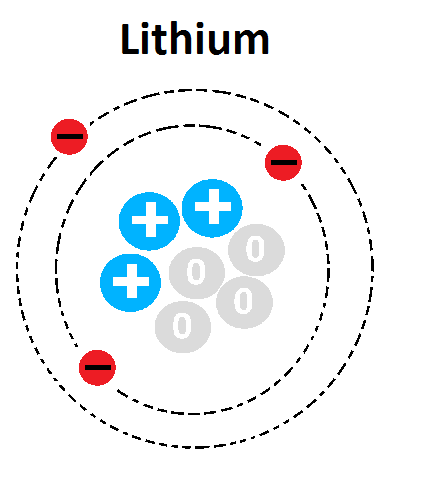
What is the Atomic Mass?
a)
6.941
b)
7
c)
3
d)
6
45.
How many Protons are in one atom of Lithium?
a)
3
b)
6
c)
7
d)
6.941
46.
Which is the smallest?
a)
electron
b)
proton
c)
atom
d)
neutron 
47.
An atom has 5 protons and 7 neutrons. What is the mass number of the atom?
a)
5
b)
7
c)
2
d)
12
48.
Most of the atom is made of...
a)
Protons and Neutron
b)
Electrons
c)
Empty space
d)
Aliens from outer space
49.
Who's atomic model is shown?
a)
Dalton
b)
Thomson
c)
Rutherford
d)
Bohr
50.

How many valence electrons does Helium Have?

a)

1 Valence electron

b)

2 Valence electron

c)

3 Valence electron

d)

4 Valence electron

e)

5 Valence electron

51.

How many valence electrons does Nitrogen Have?

a)

1 Valence electron

b)

2 Valence electron

c)

3 Valence electron

d)

4 Valence electron

e)

5 Valence electron

52.
How many electrons should Boron have around its Lewis dot model?
a)
1
b)
3
c)
5
d)
7
53.
How many electrons should Nitrogen have around its Lewis dot model?
a)
1
b)
3
c)
4
d)
5
54.
?
a)
Beryllium
b)
Boron
c)
Barium
d)
Bromine
55.
?
a)
Helium
b)
Oxygen
c)
Sodium
d)
Phosphorous
56.

This could be the dot diagram of

a)

Mg

b)

Cl

c)

C

d)

O

57.

What is the goal of the Lewis Dot Structure?

a)

To determine the electron position.

b)

To show the element's valence electrons & bonding capabilities.

c)

To find the atomic mass of an element.

d)

To search for the number of electrons in an individual atom.

58.

How many valence electrons are indicated here:

a)

2

b)

4

c)

6

d)

7

59.

Which of the following shows a correct Lewis dot structure?

a)
b)
c)
d)
60.

How would you draw a Lewis dot diagram for Magnesium?

a)
b)
c)
d)
61.

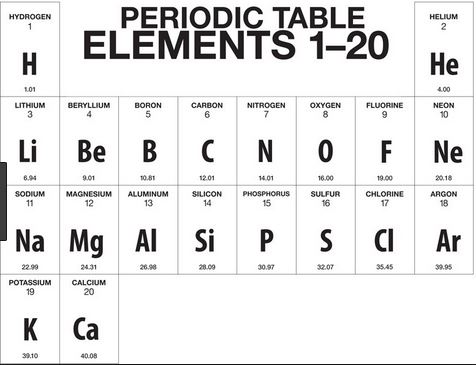
On the periodic table, Groups are

a)

Horizontal rows

b)

Vertical columns

62.

On the periodic table, Periods are

a)

Horizontal rows

b)

Vertical columns

63.

Which element is this?

a)

Nickel

b)

Neon

c)

Sodium

d)

Nitrogen

64.

Name this element.

a)

Neon

b)

Magnesium

c)

Sodium

d)

Manganese

65.

How many valence electrons?

a)

2

b)

3

c)

4

d)

5

66.

How many valence electrons?

a)

2

b)

4

c)

6

d)

8

67.
A ___________ is an arrangement of elements in columns
a)
columns
b)
rows
c)
periodic table
d)
electron shell
68.
The atomic number tells you what?
a)
number of electrons
b)
number of protons
c)
number of neutrons
d)
both electrons and protons in an atom.
69.
Which group of the periodic table is composed of inert (not reactive)  gases?
a)
alkali metals
b)
alkaline earth metals
c)
halogens
d)
noble gases
70.
Elements which are shiny, conduct electricity and heat are called
a)
metal
b)
nonmetal
c)
metalloid
d)
nonexistent
71.
The atoms along the staircase are called 
a)
metals
b)
nonmetals
c)
metalloids
d)
noble gases
72.
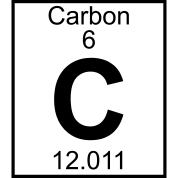
What does the 6 represent?
a)
atomic mass
b)
atomic number
c)
element name
d)
chemical symbol 
73.
What does 12.011 represent?
a)
atomic mass
b)
atomic number
c)
element name
d)
chemical symbol 
74.
What does the C represent?
a)
atomic mass
b)
atomic number
c)
element name
d)
chemical symbol 
75.
These are found on the Periodic Table.
a)
Compounds
b)
Elements
c)
Mixtures
76.
Ionic bonds are between...
a)
nonmetals and nonmetals
b)
carbon and oxygen
c)
metals and nonmentals
d)
hydrogen and chlorine
77.
Covalent bonds are between...
a)
two or more nonmetals
b)
sodium and chlorine
c)
metals and metals
d)
metals and nonmetals
78.
What kind of bond forms when atoms share electrons?
a)
ionic
b)
covalent
c)
artificial
d)
univalent
79.
What kind of bond forms when atoms exchange electrons?
a)
ionic
b)
covalent
c)
artificial
d)
univalent
80.
If an atom gains two electrons what charge will it have?
a)
-2
b)
-1
c)
+1
d)
+2
81.
If an atom loses two electrons what charge will it have?
a)
-2
b)
-1
c)
+1
d)
+2
82.
Predict the bond that will form between Be and F.
a)
Ionic
b)
Covalent
83.
Predict the bond that will form between Se and Cl.
a)
Ionic
b)
Covalent
84.

What type of diagram is this?

a)

Lewis Dot Structure

b)

Bohr Model

c)

Alkali Diagram

d)

Chemical Diagram

85.
a)

Element

b)

Compound

c)

Homogeneous Mixture

d)

Heterogeneous Mixture

86.

H2 is an example of a(n)...

a)

Element

b)

Compound

c)

Molecule

d)

Heterogeneous Mixture

87.
A substance that contains only one type of atom is a(n)
a)
compound
b)
element
c)
heterogeneous mixture
d)
homogeneous mixture
88.
Which of the following selections are the different types of mixtures?
a)
heterogenous, homogenous
b)
acid, base
c)
metal, nonmetal
d)
element, compound
89.
This type of mixture looks the same throughout. 
a)
Homogenous
b)
Heterogeneous
90.

Which statement is true about compounds?

a)

a pure substance where two or more elements are chemically combined

b)

a homogenous mixture of 2 or more elements

c)

a pure substance containing only one type of atom

d)

a heterogeneous mixture of 2 or more elements chemically combined

91.

Another name for a homogenous mixture is?

a)

colloid

b)

suspension

c)

solution

d)

compound

92.
A combination of particles of one or more substance that are distributed uniformly throughout another substance is a/an
a)
Mixture 
b)
Substance
c)
Solution
93.
Mixtures are __________ combined.
a)
Chemically
b)
Physically
c)
Magically
d)
Spontaneously
94.
In general, metals are _____. 
a)
poor conductors of heat
b)
brittle
c)
poor conductors of electricity 
d)
good conductors of heat
95.
These can only be separated by chemical means. 
a)
element 
b)
compound 
c)
mixture 
d)
stuff 
96.
The air is a _________. 
a)
element 
b)
mixture 
c)
compound 
d)
energy 
97.
Water is a ___________. 
a)
element 
b)
mixture 
c)
compound 
98.
Compounds contain a _____ set of elements.
a)
fixed
b)
random 
c)
sweet 
d)
inaccurate 
99.
These are mixtures that are not the same throughout. 
a)
homogeneous mixtures 
b)
heterogeneous mixtures 
c)
solutions 
d)
water 
100.
One cup of water is left outside for two days when it was checked there was only half a cup left. What happened?
a)
evaporation; chemical change
b)
condensation; physical change 
c)
evaporation; physical change
d)
condensation; chemical change
101.
Solubility (dissolves): Chemical or Physical Property
a)
Chemical Property
b)
Physical Property
102.
Flammability (burns): Chemical or Physical Property
a)
Chemical Property
b)
Physical Property
103.
Physical properties are
a)
properties that can be observed without changing the identity of the substance
b)
properties that describe how a substance changes into a completely different substance
104.
Which of the following is not a chemical property? 
a)
rusting 
b)
boiling 
c)
rotting 
d)
burning 
105.
What is reactivity?
a)
how a substance combines physically with another substance
b)
how a substance combines chemically with another substance 
106.
A change that alters the physical properties of a substance without changing its composition.
a)
Physical Change
b)
Chemical Change
107.
Water freezing into ice is an example of a...
a)
Physical Change
b)
Chemical Change
108.
A change in matter that forms one or more new substances with new chemical properties is a/an...
a)
Physical Change
b)
Chemical Change
109.
Physical or Chemical Change?  Logs burning in a campfire.
a)
Physical Change
b)
Chemical Change
110.
Physical or Chemical Change?  Making a paper airplane.
a)
Physical Change
b)
Chemical Change
111.
Physical or Chemical Change?
a)
Physical Change
b)
Chemical Change
112.

Chemical Reaction

a)

a substance formed as a result of a chemical reaction

b)

a change in matter that produces one or more new substances

c)

the process in which substances undergo chemical changes that result in the formation of new substances

d)

a substance that enters into a chemical reaction

113.

Chemical Equation

a)

A representation of a chemical reaction

b)

the starting materials in a chemical reaction

c)

the new substances that are formed in a chemical reaction

d)

tells how many atoms, molecules, or formula units take part in a reaction

114.

The Law of Conservation of Matter

a)

tells how many atoms of an element are contained in one molecule or formula unit.

b)

the starting materials in a chemical reaction

c)

the new substances that are formed in a chemical reaction

d)

A law stating that atoms are not created or destroyed during a chemical reaction.

115.

Is the equation balanced?: 2H2O + O2 --> 4MgO + 3Fe

a)

yes

b)

no

116.

Balance this equation

_Al +_HCl --> _H2 +_AlCl3

a)

2,6,3,2

b)

it's already balanced

c)

4,12,3,4

d)

2,1,4,5

117.

The coefficient in 3H2O is

a)

6

b)

5

c)

2

d)

3

118.
How many atoms of carbon (C) are in C6H12O6?
a)
3
b)
6
c)
12
d)
24
119.
How many Hydrogen are in 4H2O?
a)
6
b)
8
c)
2
d)
4
120.
What is the left part of a chemical equation called?
2H2 + O2 --> 2H2O
a)
Reactants
b)
Products 
c)
Yields 
d)
Chemical Equation 
121.
What is the right part of a chemical equation called...
2H2 + O2 --> 2H2O
a)
Reactants
b)
Products 
c)
Yields 
d)
Chemical Equation 
122.
How many Mn atoms are found in the following compound?
3Cr(MnO4)6
a)
3
b)
4
c)
6
d)
18
123.
What is the little number after an element in a chemical equation called.
Example: H2
a)
Coefficient 
b)
Subscript
c)
Atom
d)
Equation
124.
Which of the following equations are correctly balanced?
a)
12CO2 +H2O --> C6H12O6 + O2
b)
CO2 + 9H2O --> C6H12O6 + O2
c)
CO2 + H2O --> 3C6H12O6 + O2
d)
6CO2 + 6H2O --> C6H12O6 + 6O2
125.

Surface tension is the property of water in which...

a)

water molecules at the surface tend to stick together.

b)

water spills easily.

c)

water tends to be see-through.

126.

Describe COHESION.

a)

Water molecules attracted to other substances.

b)

Water molecules climbing upwards against the force of gravity.

c)

Water molecules dissolving many substances because of its polarity.

d)

Water molecules attracted to other water molecules.

127.
Water beads up on the surface of a penny because of this property.
a)
Adhesion
b)
High Surface Tension
c)
Universal Solvent
d)
Changes in Density
128.

Because of surface tension, you can put things into a full glass of water and...

a)

the water will immediately spill.

b)

the water won't spill for quite a while.

c)

the water will never spill.

d)

when the water spills, whatever you put in will also spill.

129.

surface tension of water can be reduced by

a)

heating

b)

Adding soap solution

c)

cooling

d)

adding salt

130.
How does a solution become supersaturated?
a)
dissolve lots of solute in it.
b)
dissolve a little solute in it. 
c)
dissolve more solute than you should be able to. 
d)
dissolve a solvent in it. 
131.
Solution where more solute can still be dissolved at the given temperature. 
a)
Saturated
b)
Unsaturated
c)
Mixture
d)
Homogeneous solution
132.
__________ are made up of solutes and solvents.
a)
Solutions
b)
Suspensions
c)
Heterogeneous Mixtures
d)
Pure Substances
133.
You can make a solution more concentrated by adding __________.
a)
solute
b)
solvent
c)
water
134.
What is able to dissolve other substances?
a)
Solute
b)
Salt
c)
Suspension
d)
Solvent
135.
If I dissolve sugar in water, what is the solute?
a)
Water
b)
Hydrogen
c)
Sugar
d)
Carbon
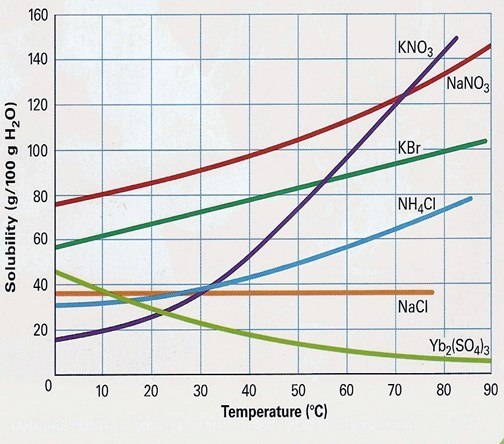
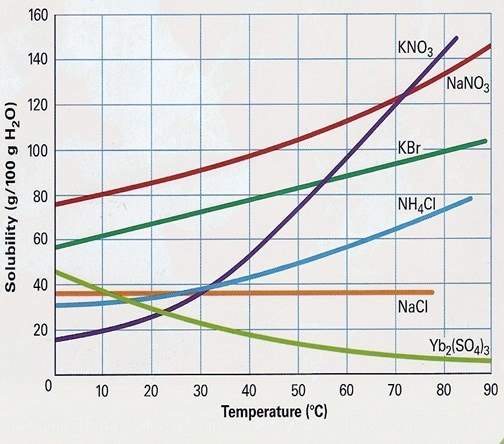
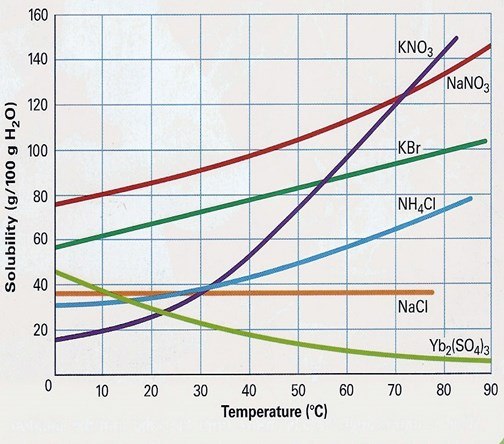
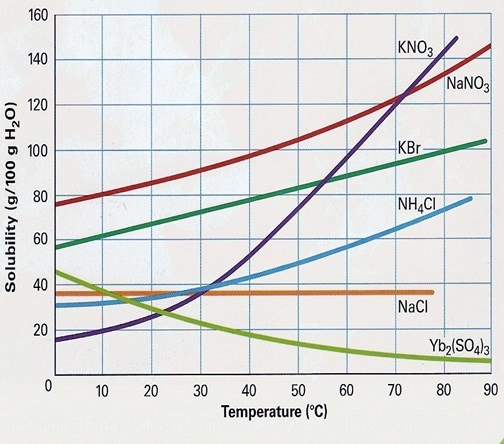
136.

At 30'C, which substance has the lowest solubility?

a)

KNO3

b)

KBr

c)

NaCl

d)

Yb2(SO4)3

137.

At which temperature do KBr and KNO3 have the same solubility?

a)

60

b)

55

c)

50

d)

Never

138.

The solubility of Yb2(SO4)3 ________________ with added temperature.

a)

increases

b)

decreases

c)

remains the same

139.

Determine the solubility for the substances at 55'C and arrange them in order from lowest to highest solubility.

a)

NaCl, NH4Cl, KBr, NaNO3

b)

NaCl, NH4Cl, NaNO3, KBr

c)

NH4Cl, NaCl, NaNO3, KBr

d)

NaNO3, KBr, NH4Cl, NaCl

140.

Identify if the following solution would be saturated, unsaturated, or supersaturated: 103 g KBr at 70'C.

a)

Unsaturated

b)

Saturated

c)

Supersaturated

141.

What is a solvent

a)

A liquid that will dissolve a solid solute

b)

Another word for solution

c)

A thing that make drinks change colour

d)

Usually the solid about to be dissolved

142.

Which substance is least soluble at 0 ºC?

a)

KI

b)

KNO3

c)

KClO3

d)

Ce2(SO4)3

143.

How many grams are soluble in 100 g of water at 100 ºC?

a)

300 grams

b)

250 grams

c)

100 grams

d)

50 grams

144.

Identify how many grams of KNO3 is required to make a saturated solution at 40'C.

a)

50 g

b)

45 g

c)

55 g

d)

33 g

145.

Stronger acids have a pH closer to...

a)

7

b)

0

c)

14

d)

9

146.

Weaker bases have a pH closer to...

a)

8

b)

0

c)

14

d)

4

147.

A pH level of 7 indicates

a)

acid

b)

base

c)

neutral

d)

none of the following

148.

The pH scale is a range from:

a)

1-7

b)

0-14

c)

1-5

d)

1-14

149.

Which of the following is an acid?

a)

soap

b)

baking soda

c)

orange juice

d)

pure water

150.

Which of the following statements is true concerning acids and bases?

a)

acids and bases don't react with each other

b)

acids mixed with bases neutralize each other

c)

acids mixed with bases make stronger bases

d)

acids mixed with bases make stronger acids

151.

Neutral solutions have a pH of:

a)

0

b)

1

c)

7

d)

14

152.

True or false: a neutral solution has equal amounts of H+ and OH-.

a)

True

b)

False

153.

Which is true?

a)

pH of less than 7 is basic; pH of more than 7 is acidic

b)

pH of less than 7 is acidic; pH of more than 7 is basic

154.

Vinegar, fruit juice, and cola are examples of:

a)

strong acids

b)

strong bases

c)

strong bases

d)

weak acids

155.

Is laundry detergent an acid or a base?

a)

Acid

b)

Base

c)

Neither (Neutral)

156.

Vinegar is an example of:

a)

An acid.

b)

A base.

c)

Neither an acid nor a base.

157.
A substance that changes color when mixed with an acid or base is a(n) ___.
a)
indicator
b)
neutralizer
c)
corrosive
d)
electricity
158.
What is this tool to get volume?
a)
triple beam balance
b)
ruler
c)
thermometer
d)
graduate cylinder
159.
What is this tool to get mass?
a)
triple beam balance
b)
ruler
c)
thermometer
d)
graduate cylinder
160.
Put the liquids in order from most dense to least dense?
a)
4, 3, 2, 1
b)
1, 2, 3, 4
c)
3, 4, 2, 1, 
d)
4, 3, 1, 2
161.
Why does ice float?
a)
Liquid water is less dense than solid water.
b)
Solid water is less dense than liquid water.
c)
Gaseous water is less dense than solid water.
d)
Liquid water is less dense than gaseous water.
162.
Jack has a rock. The rock has a mass of 14g and a volume of 2cm3. What is the density of the rock?
a)
7 mL
b)
7 g/cm3
c)
28 g/cm3
d)
1/7 g/cm3
163.
Why do the liquids form different layers?
a)
They have different densities.  
b)
They have different masses.  
c)
They have different volumes.  
d)
They are different temperatures.  
164.
What units can be used to express density?
a)
g/mL
b)
grams
c)
millimeters
d)
milliliters
165.
If an object has a density of .6 g/mL and you put it into water, will it sink or float?  
a)
sink
b)
float
166.
If an object has a density of 3.6 g/mL and you put it into water, will it sink or float?  
a)
sink
b)
float
167.
Frank has a paper clip. It has a mass of 9g and a volume of 3cm3. What is its density?
a)
3 g/cm3
b)
1/3 g/cm3
c)
27 g/cm3
d)
39 g/cm3
168.
In an exothermic reaction, heat is ...
a)
taken in or absorbed
b)
given out or released
169.
In an endothermic reaction, heat is ...
a)
taken in or absorbed
b)
given out or released 
170.
What type of reaction occurs in a hand warmer
a)
exothermic
b)
endothermic
171.
Is photosynthesis an exothermic or endothermic reaction?
a)
Endothermic
b)
Exothermic
c)
Neither
172.

____ reactions usually feel cold.

a)

endothermic

b)

exothermic

173.

What instrument would you use to detect an endothermic or exothermic reaction?

a)

triple beam balance

b)

ruler

c)

thermometer

174.
After you mix two substances together, a new substance forms.  This is an example of:
 
a)
 Physical Change
b)
 Chemical Change
175.
If a chemical reaction is EXOTHERMIC, the temperature would....
a)
Stay the same
b)
Increase
c)
Decrease
176.

The initial temperature was measured to be 20oC and the final temperature was 10oC. The reaction was

a)

exothermic

b)

endothermic

177.

The initial temperature was measured to be 20oC and the final temperature was 45oC. The reaction was

a)

exothermic

b)

endothermic

178.

How many molecules are in the Reactant?

a)

1

b)

2

c)

3

d)

4

179.
Which of the following is a chemical change?
a)
Iron rusting 
b)
Glass breaking
c)
Clothing ripping
d)
Hair cut
180.
Which of the following is evidence of a chemical change?  
a)
Change in state
b)
No new substance is formed
c)
Bubbles forming
d)
Change in shape
181.
Which of the following is an example of a physical change, and why? 
a)
Fire burns in fireplace, because a new substance is formed. 
b)
Clothes are folded, because there is a color change. 
c)
A mirror is broken, because there is a change in shape/size.
d)
cookies are baked, because there is a change in temperature
182.

The atomic number of oxygen is

a)

8

b)

15.9994

c)

16

d)

O

183.

Identify the elements in this compound.

a)

Carbon, Helium, Oxygen

b)

Chromium, Hydrogen, Oxygen

c)

Calcium, Hydrogen, Oxygen

d)

Carbon, Hydrogen, Oxygen

184.

A group of elements that are shiny, conduct heat and electricity well is called

a)

Metals

b)

Non-metals

c)

Metalloids

185.

What is made up two or more elements that are chemically combined?

a)

Atom

b)

Element

c)

Compound

d)

Mixture

186.

Which is an example of an heterogenous mixture?

a)

soy sauce

b)

salad

c)

tea

d)

guacamole

187.
When a liquid becomes a gas, that process is called ___________________.  When a gas becomes a liquid it is called ____________________. 
a)
Melting; freezing
b)
Evaporation; condensation
c)
Evaporation; melting
d)
Condensation; evaporation
188.
_____________ are characteristics that help identify substances and tell them apart
a)
Properties
b)
Qualities
c)
Reactions
d)
Molecules
189.
Which of the following is NOT a compound? 
a)
O2
b)
MgO
c)
CH4
d)
H2O
190.
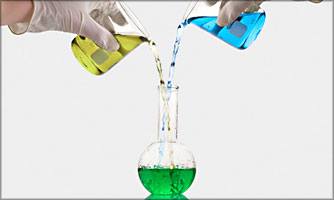
Why is bubbling often a signal that a chemical reaction is occurring?
a)
It shows that the temperature is changing
b)
It shows that a new substance (gas) is being formed
c)
It shows that the state of matter is changing
d)
It shows that a substance has reached its boiling point