wayground logo

Free Printable Worksheets

Font size

S
M
L
XL
Worksheets

Physical Science Unit 5 Review (Atomic Structure)

Total questions: 92

Worksheet time: 23hrs 0mins

Name
Class
Date
1.
Which particle contributes the negative charge to the atom?
a)
proton
b)
electron
c)
neutron
d)
nucleus
2.
Which particle does not contribute mass to the atom?
a)
Proton
b)
Neutron
c)
Electron
d)
Nucleus
3.
Bonus question: What element is this an atom of?
a)
nitrogen
b)
lithium
c)
beryllium
d)
carbon
4.
The three main subatomic particles are electrons, protons and ____________.
a)
photons
b)
neurons
c)
neutrons
d)
quarks
5.
What are the two main parts of the atom?
a)
nucleus and cytoplasm
b)
nucleus and electron cloud
c)
core and electron cloud
d)
protons and neutrons
6.
What is the standard unit of mass at the atomic level?
a)
centimeters
b)
millimeters
c)
amu
d)
milligrams
7.
Most of the mass in an atom is made up of _____________________?
a)
protons and electrons
b)
protons and neutrons
c)
neutrons and electrons
d)
electrons and quarks
8.
What is the electrical charge of a proton?
a)
1+
b)
1-
c)
neutral
d)
2-
9.
Water is an element
a)
true
b)
false
10.
DIFFERENT kinds of atoms chemically combined to form a substance are
a)
Mixture
b)
Element
c)
Compound
d)
Substance
11.
 A homogeneous mixture has the same composition of particles throughout.
a)
True
b)
False
12.
Salt water is a mixture.
a)
True
b)
False
13.
An example of a homogeneous mixture would be:
a)
salad
b)
perfume
c)
pizza
d)
chex mix
14.
A heterogeneous mixture would be:
a)
gold
b)
chex mix
c)
chocolate milk
d)
water
15.
A mixture that does not look the same throughout:
a)
heterogeneous mixture
b)
homogeneous mixture
c)
the periodic table
d)
water
16.
You are eating a pizza. What type of mixture are you consuming?
a)
homogeneous
b)
heterogeneous
c)
pure substance
d)
The Periodic Table
17.
Flammability is an example of what property?
a)
Chemical property
b)
Physical property
18.
Chicken soup is an example of what kind of substance?
a)
homogenous
 mixture
b)
solution
c)
heterogeneous
mixture
d)
compound
19.

Subatomic particles with a negative charge

a)

Electrons

b)

Neutrons

c)

Protons

d)

Quarks

20.
subatomic particles found on the outermost shell & responsible for the atom's reactivity
a)
neutrons
b)
valence electrons
c)
isotopes
d)
ions
21.
Subatomic particles with a positive charge
a)
neutrons
b)
atomic mass
c)
protons
d)
isotopes
22.
Measure mainly of the nuclear particles: protons + neutrons
a)
Subatomic Particles
b)
Atomic Number
c)
Atomic Mass
d)
Gluons
23.
Value representing the number of protons in an element
a)
Atomic Mass
b)
Mass Number
c)
Valence Electrons
d)
Atomic Number
24.
Atoms of the same element with a different number of neutrons
a)
Ion
b)
Gluons
c)
Isotope
d)
Quarks
25.
The smallest particle of an element that shows all the properties of that element.
a)
Subatomic Particles
b)
Atom
c)
Quarks
d)
Gluons
26.
Where electrons are likely to be found as they travel around the nucleus
a)
Nucleus
b)
Electron Cloud
c)
Within a Proton
d)
Within a Neutron
27.
A tiny but very dense, positively charged portion of the atom that holds most of the atomic mass
a)
Electron Shells
b)
Orbitals
c)
Electron Cloud
d)
Nucleus
28.
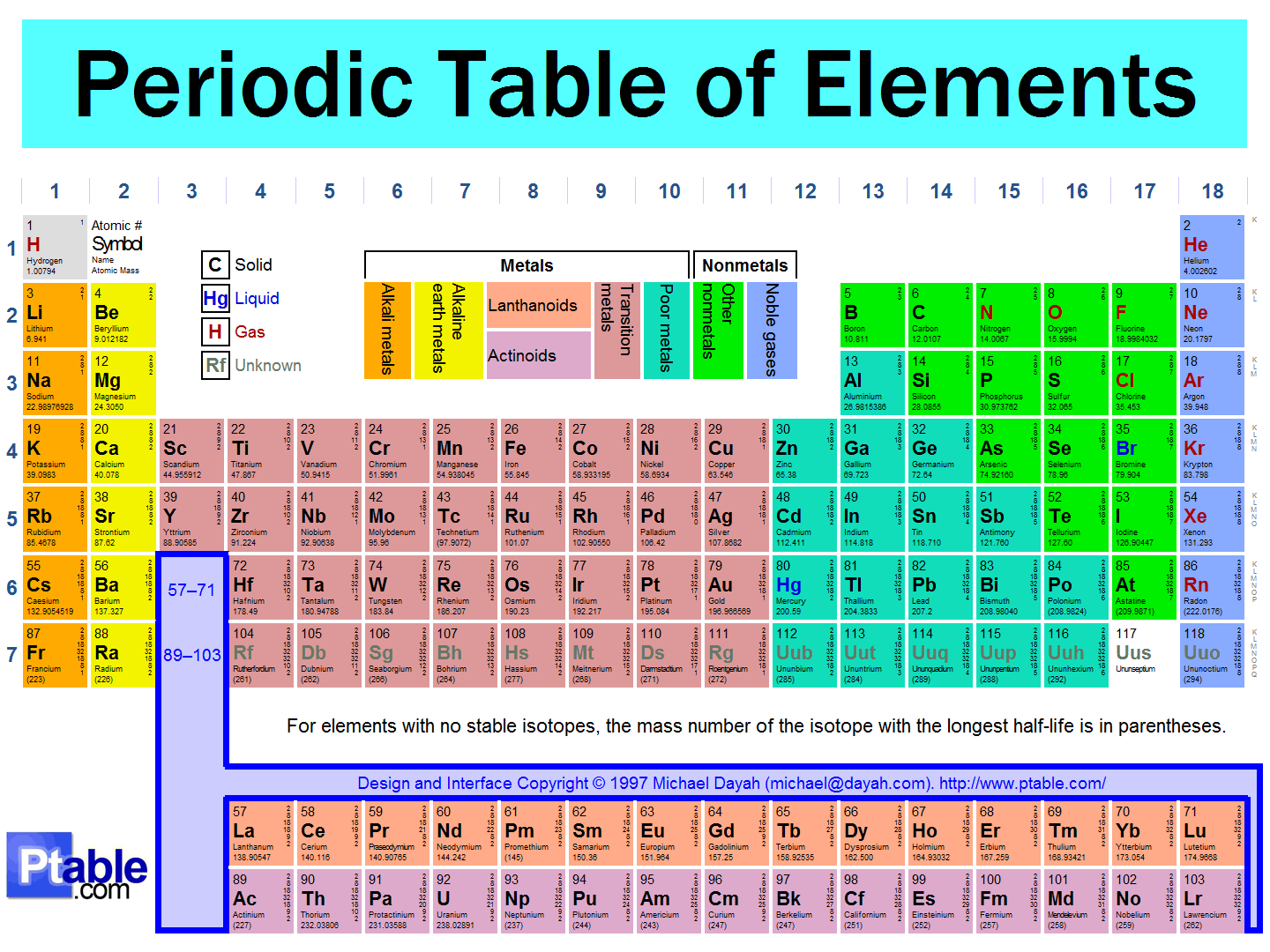
Arrangement of elements organized by atomic number
a)
Electron Cloud 
b)
Periodic Table 
c)
Electron Configuration
d)
None of these
29.
Calculation used to find the number of neutrons in an atom
a)
Atomic Mass - Atomic Number
b)
Atomic Number - Atomic Mass
c)
Atomic Mass - Electrons
d)
none of these
30.
The only element with no neutrons in its nucleus.
a)
Oxygen
b)
Helium 
c)
Hydrogen
d)
Lithium
31.

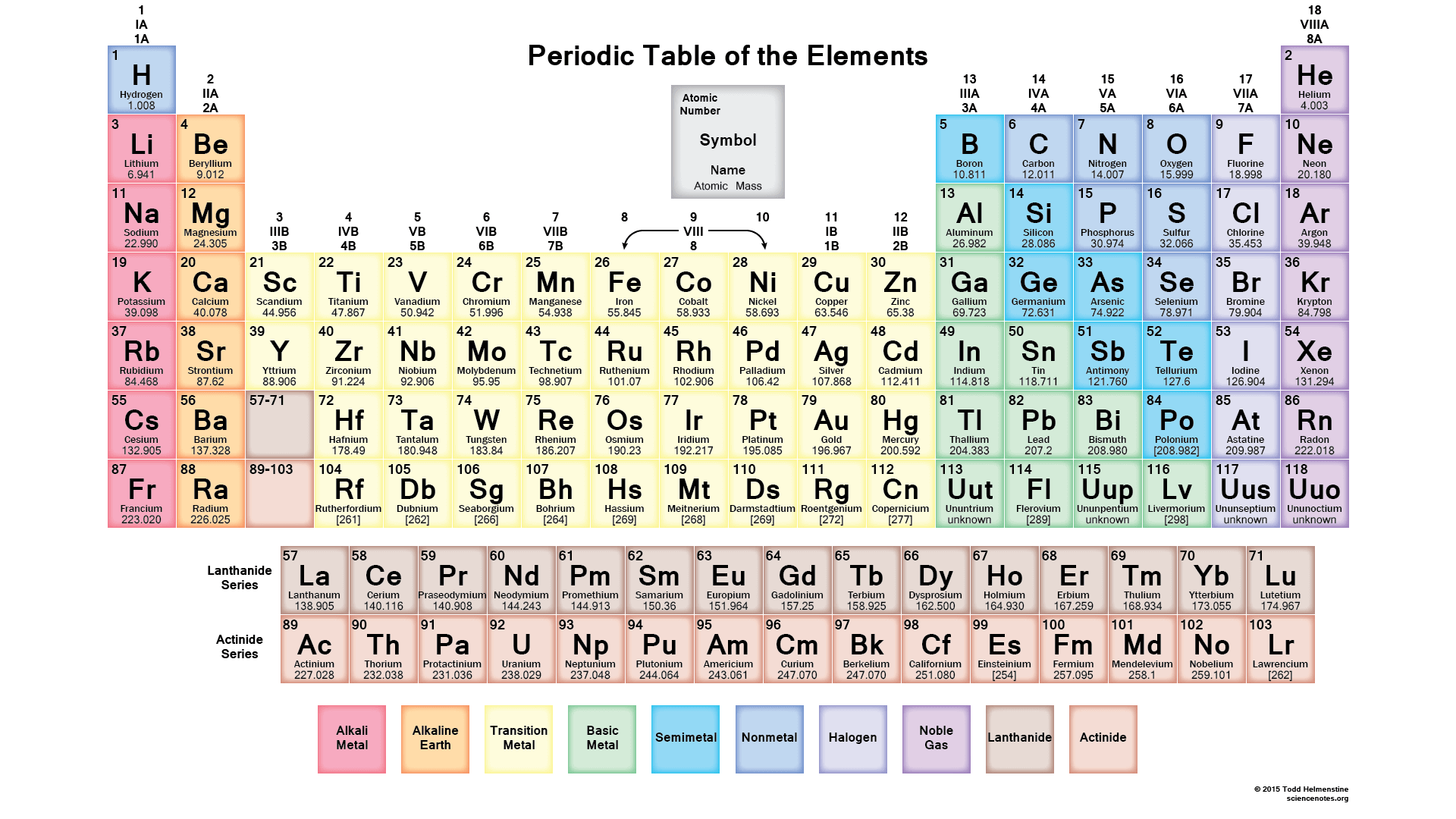
The vertical (up and down) columns in the Periodic Table are called

a)

groups

b)

towers

c)

periods

d)

atomic numbers

32.
The Modern Periodic Table of Elements is arranged by
a)
atomic mass
b)
atomic number
c)
valence electrons
d)
number of isotopes
33.
Sodium (Na) is found in period 
a)
3
b)
2
c)
4
d)
1
34.
Sodium (Na) is found in group 
a)
1
b)
2
c)
3
d)
4
35.
The atomic number tells you what?  READ THE ANSWERS CAREFULLY
a)
only the number of electrons
b)
 only the number of protons
c)
only the number of neutrons
d)
the number of both electrons and protons in an atom.
36.
What does the atomic mass tell you? 
a)
Basically,the number of electrons and protons
b)
The number of neutrons
c)
Basically, the number of protons and neutrons
d)
The number of protons.
37.
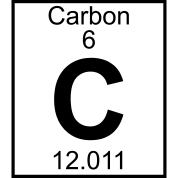
What does the 6 represent?
a)
atomic mass
b)
atomic number
c)
element name
d)
chemical symbol 
38.
What does 12.011 represent?
a)
atomic mass
b)
atomic number
c)
element name
d)
chemical symbol 
39.
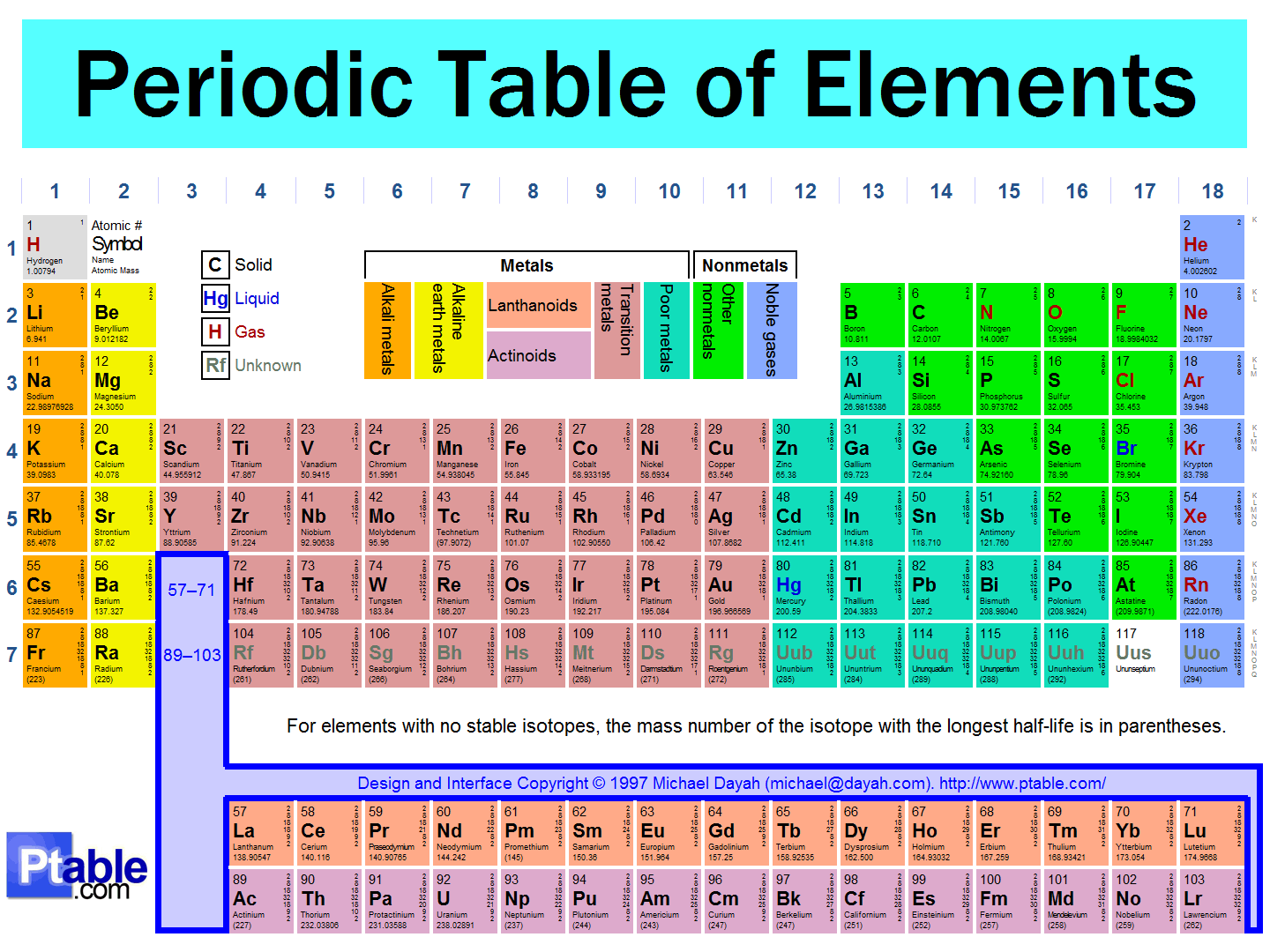
These are found on the Periodic Table.
a)
Compounds
b)
Elements
c)
Mixtures
40.

The horizontal (side to side) rows in the Periodic Table are called

a)

groups

b)

families

c)

periods

d)

atomic numbers

41.

period

a)

Elements that occur in vertical columns on the periodic table.

b)

A horizontal row of elements in the periodic table

c)

Found in group two of the periodic table; highly reactive

d)

A subatomic particle that has a negative charge

42.

neutron

a)

A subatomic particle that has a positive charge and that is found in the nucleus of an atom

b)

not able to conduct heat or electricity, little to no metallic luster

c)

A subatomic particle that has a negative charge

d)

A small particle in the nucleus of the atom, with no electrical charge

43.

A subatomic particle that has a positive charge and that is found in the nucleus of an atom

a)

Proton

b)

elecrtron

c)

groups

d)

neutrons

44.

A subatomic particle that has a negative charge

a)

nobles gases

b)

protons

c)

electrons

d)

neutrons

45.
Which group of the periodic table is composed of inert (not reactive)  gases?
a)
alkali metals
b)
alkaline earth metals
c)
halogens
d)
noble gases
46.
Elements which are shiny, conduct electricity and heat are called
a)
metal
b)
nonmetal
c)
metalloid
d)
nonexistent
47.
Which is a halogen?
a)
Helium
b)
Chlorine
c)
Oxygen
d)
Neptune
48.
Which is an alkali metal?
a)
Magnesium
b)
Iron
c)
Sodium
d)
Europium
49.
A horizontal row of elements in the periodic table.
a)
column
b)
group
c)
period
50.
A vertical column in the periodic table.  Elements share similar properties.
a)
row
b)
group
c)
period
51.
Elements in a ..................have similar chemical properties.  
a)
period
b)
group
c)
row
52.
The simplest substance is..?
a)
Carbon
b)
An element
c)
Water
d)
A simple compound 
53.
Salt dissolves in water
a)
physical Change
b)
chemical change
54.
hydrochloric acid reacts with magnesium to produce hydrogen gass
a)
physical change
b)
chemical change
55.
a piece of copper is cut in half
a)
physical change
b)
chemical change
56.
a sugar cube is ground up
a)
physical change
b)
chemical change
57.
water is heated and changed to steam
a)
physical change
b)
chemical change
58.
iron pipe rusts
a)
physical change
b)
chemical change
59.
rubbing alcohol evaporates
a)
physical change
b)
chemical change
60.
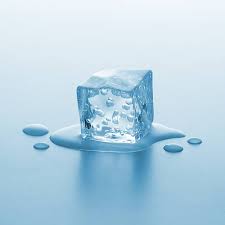
ice cube melts
a)
physical change
b)
chemical change
61.
milk sours (goes bad)
a)
physical change
b)
chemical change
62.
sodium and potassium react violently with water
a)
physical change
b)
chemical change
63.
pancakes cook on a griddle
a)
physical change
b)
chemical change
64.
food digested in the stomach
a)
physical change
b)
chemical change
65.
tire inflated with air
a)
physical change
b)
chemical change
66.

A rock with a mass of 40 grams is dropped into a graduated cylinder and the water level in the cylinder increases by 8 mL. What is the density of the rock?

a)

40 g/ml

b)

40 g

c)

8 g/ml

d)

5 g/ml

67.

What is a solid?

a)

particles that are tightly compacted

b)

particles that are not tightly compacted

68.

what is a liquid?

a)

a substance that flows freely but is of constant volume

b)

a substance or matter in a state in which it will expand freely

c)

firm and stable in shape

69.

what is a gas?

a)

a substance or matter in a state in which it will expand freely to fill the whole of a container

b)

the basic unit of a chemical element

c)

an atom or molecule with a net electric charge due to the loss or gain of one or more electrons.

70.

How would you describe the way molecules move when the molecules are solid?

a)

the molecules are moving in place.

b)

the molecules are moving around each other.

c)

the molecules are moving away from each other.

d)

the molecules are not moving

71.

Molecules are always moving no matter what phase they are in: solid, liquid, gas.

a)

True

b)

False

72.
Solid, liquid and gas are examples of?
a)
phases
b)
temperature
c)
scale
d)
refute
73.

A phase change can be observed at the molecular scale and can be explained at the macro-scale.

a)

True

b)

False

74.

What happens to molecules when the temperature drops or lowers?

a)

The molecules get closer together

b)

The molecules start moving faster.

c)

The molecules stop moving.

d)

The molecules become smaller.

75.
When a substance melts, the kinetic energy _____________.
a)
decreases
b)
stays the same
c)
increases
d)
decreases then increases
76.
What takes place when a solid changes to a liquid?
a)
condensation
b)
freezing
c)
melting
d)
evaporation
77.

Phase change going from Liquid to Solid...

a)

Melting

b)

Freezing

c)

Condensation

d)

Sublimation

78.

Phase change going from a Gas to a Liquid...

a)

Sublimation

b)

Deposition

c)

Ionization

d)

Condensation

79.

Phase change going from a Liquid to a Gas...

a)

Vaporization

b)

Deposition

c)

Condensation

d)

Melting

80.

Phase change going from a Gas to a Plasma...

a)

Melting

b)

Vaporization

c)

Ionization

d)

Freezing

81.

Phase change going from a Solid to a Gas...

a)

Deposition

b)

Sublimation

c)

Condensation

d)

Recombination

82.

Phase change going from a Solid to a Liquid...

a)

Freezing

b)

Condensation

c)

Melting

d)

Sublimation

83.

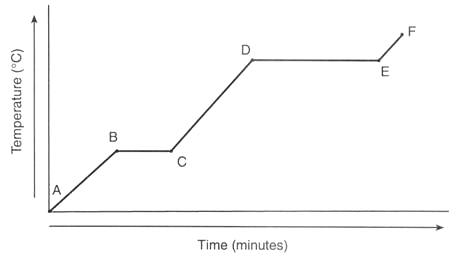
Is the substance gaining or losing energy?

a)

Gaining

b)

Losing

84.

Are the particles moving faster or slower as time goes on?

a)

Faster

b)

Slower

85.

What state/phase is the object likely from points A to B?

a)

Solid

b)

Liquid

c)

Gas

d)

Plasma

86.

Where on the graph are phase changes taking place?

a)

1

b)

2

c)

3

d)

4

e)

5

87.

Evidence of a chemical reaction includes _________.

a)

change in color

b)

production of heat

c)

bubbling/formation of a gas

d)

All of these are evidence

88.

A mixture with evenly distributed particles that appears to be a single substance is a ____________.

a)

Solvent

b)

Solution

c)

Solute

d)

Suspension

89.

Air is a ___________ made up of Oxygen, Nitrogen, and small amounts of other gases sharing space with each other.

a)

Colliod

b)

Solution

c)

Mixture

d)

Compound

90.

In a _________, two or more ________ are chemically bonded together

a)

compound, elements

b)

mixture, solution

c)

mixture, elements

d)

compound, mixtures

91.

How is Boron-10 different from Boron-11?

a)

Boron-10 has less protons

b)

Boron-11 has a higher mass

c)

They are the same

d)

Boron-11 has more protons

92.

An element looks like its atoms have 1 valence electron. When exposed to a small amount of water it begins to burn violently. What group do you assume it belongs to?

a)

Alkali Metals

b)

Alkaline Earth Metals

c)

Halogens

d)

Noble Gases