wayground logo

Free Printable Worksheets

Font size

S
M
L
XL
Worksheets

Respiration quiz

Total questions: 91

Worksheet time: 3hrs 51mins

Name
Class
Date
1.

What is cellular respiration?

a)

The process that cells obtain energy from glucose

b)

The process of when you get phone service and eat pizza

c)

The process of getting energy from the sun

2.

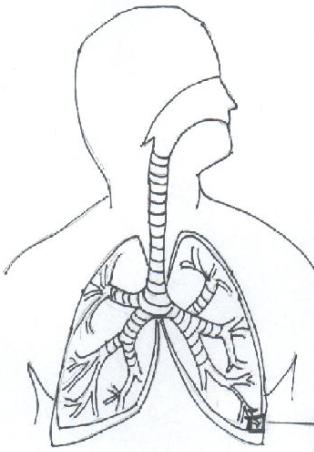
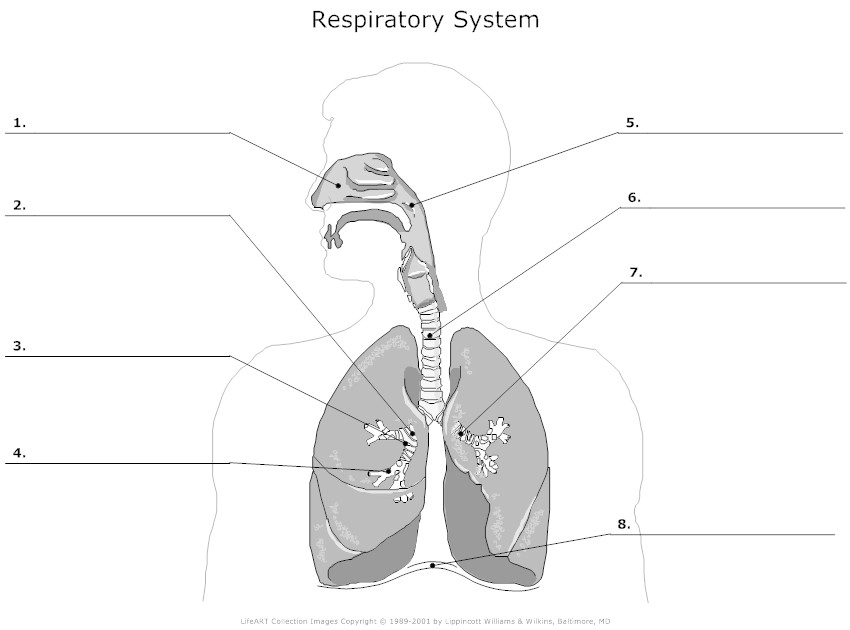
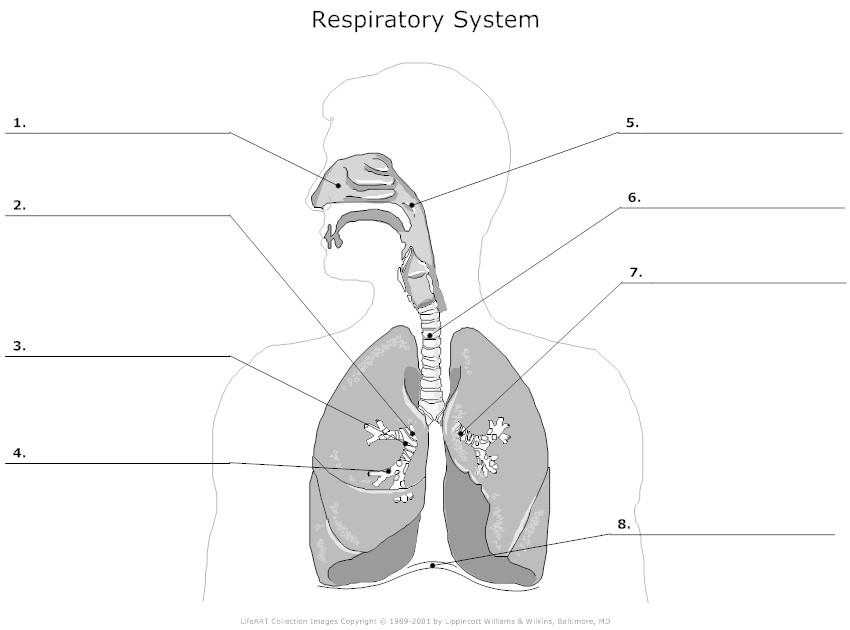
NUMBER 1:

a)

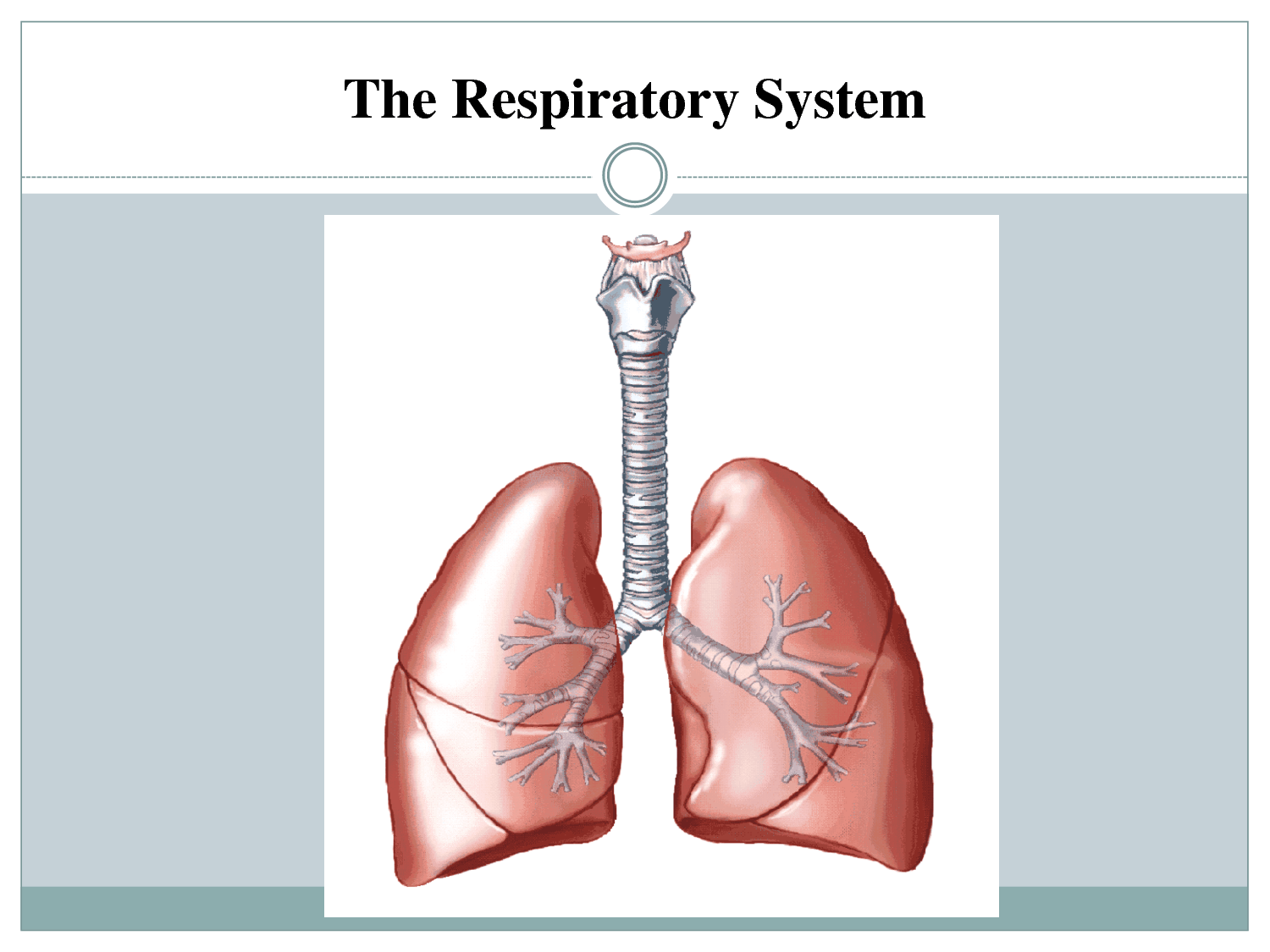
lungs

b)

pharynx

c)

mouth

d)

alveoli

3.

NUMBER 2:

a)

Pharynx

b)

Bronchi

c)

Alveoli

d)

Lungs

4.

NUMBER 6:

a)

Lungs

b)

Trachea

c)

Mouth

d)

Alveoli

5.

NUMBER 3:

a)

Pharynx

b)

Trachea

c)

Bronchi

d)

Alveoli

6.

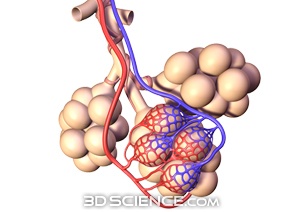
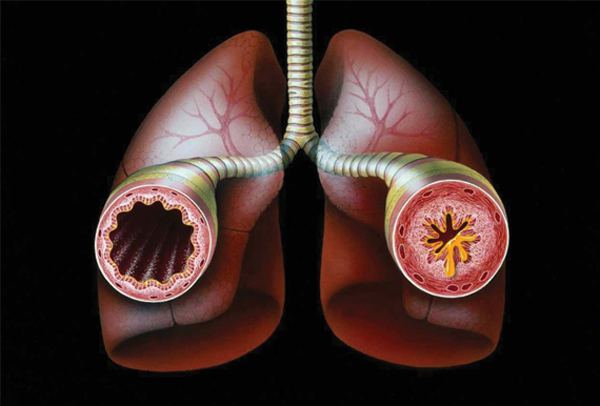
Inside the lungs, the bronchi divide into smaller tubes. At the end of these tubes, there are tiny sacs called...

a)

Pharynx

b)

Trachea

c)

Lungs

d)

Alveoli

7.

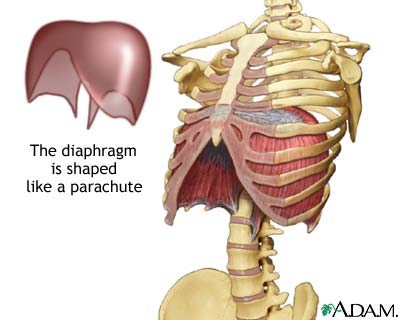
When we breath in the diaphragm...

a)

Contracts

b)

Relaxes

8.

When we breathe out, the ____________ leaves our lungs.

a)

Carbon dioxide

b)

Oxygen

9.

Which are the main organs in the respiratory system?

a)

Heart

b)

Stomach

c)

Lungs

d)

Nose

10.
The system of the body that brings oxygen into the body and releases carbon dioxide.
a)
respiratory​ ​system​
b)
skeletal system
c)
muscular system
d)
circulatory system
11.
Organs of the respiratory system that bring oxygen-rich air into​ ​the body and send oxygen-poor air out of the body.
a)
heart
b)
muscles
c)
lungs
d)
bones
12.
The process of taking in oxygen and releasing carbon dioxide from the body.
a)
transpiration 
b)
respiration 
c)
digestion
d)
relaxation
13.
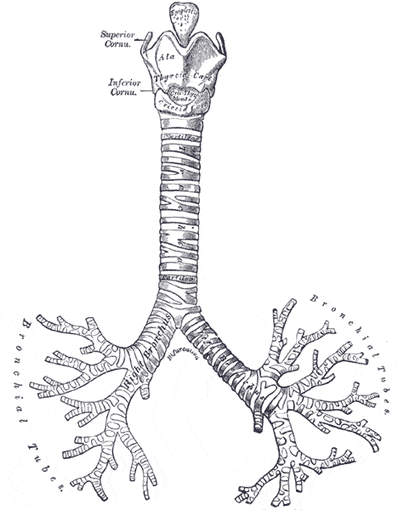
The tube in the body through which air moves as it travels to and from the lungs;the windpipe.
a)
heart
b)
bone
c)
blood vessel
d)
trachea 
14.
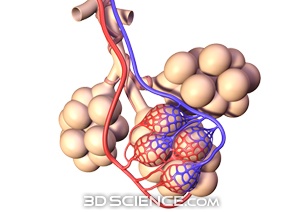
Tiny air sacs in the lungs that are the site of gas exchange between the lungs and blood.
a)
alveoli​
b)
relax
c)
diaphragm​
d)
nose
15.
A wide muscle that separates the chest cavity from the abdominal cavity and aids in the inflation of the lungs.
a)
diaphragm​
b)
heart
c)
nose
d)
trachea
16.
The beginning point of the respiratory system where air is taken into the body.
a)
lung
b)
diaphragm​
c)
nose​
d)
trachea​
17.
What is the main function of the respiratory system?
a)
to provide oxygen and remove carbon dioxide from the body
b)
to bring oxygen to the body
c)
to break down food and absorb nutrients
d)
to remove oxygen from the body and deliver carbon dioxide
18.
What is function of the dome-shaped diaphragm?
a)
This is where gas exchange happens.
b)
Air passes through the diaphragm on the way to the lungs.
c)
It attaches to the lungs to help in breathing.
d)
It is under the lungs and keeps them from falling down to your stomach.
19.
When you breathe, your lungs take in ___ and remove ___. 
a)
air/oxygen
b)
oxygen/carbon dioxide 
c)
carbon dioxide/waste 
d)
waste/air 
20.
What is the function of the bronchi?
a)
Transport air from nose to lungs
b)
Transport air from trachea to lungs
c)
Transport air from lungs to alveoli
d)
Transport air from alveoli to blood
21.
A disorder of the lungs called ____ causes the bronchi to become restricted (get smaller) so air can't get to the lungs.
a)
asthma 
b)
cold
c)
influenza 
d)
bronchitis 
22.
The two main branches from the trachea (one to each lung)
a)
bronchi
b)
alveoli
c)
capillaries
d)
bronchioles
23.
The air sacs that are covered with capillaries where gas exchange takes place
a)
bronchi
b)
lungs
c)
oxygen
d)
alveoli
24.
Within the lungs, the exchange of oxygen and carbon dioxide occurs between the ___ and the capillaries. 
a)
trachea 
b)
bronchi 
c)
alveoli
d)
diaphragm
25.
Name the organ label # 6. 
a)
alveoli 
b)
bronchi 
c)
trachea 
d)
lungs 
26.
What is tube that is also known as your wind pipe?
a)
esophogus
b)
bronchi
c)
trachea
d)
alveoli
27.
Name the structure labeled 8 
a)
lungs 
b)
trachea 
c)
diaphragm 
d)
alveoli 
28.
Flap of skin that covers the opening to the windpipe during swallowing
a)
Stomach
b)
Trachea
c)
Pancreas
d)
Epiglottis
29.
The Pharynx is the muscle that moves the lungs
a)
True
b)
False
30.

Flap of tissue that covers the opening to the windpipe during swallowing

a)

Pharynx

b)

Trachea

c)

Epiglottis

31.
What is the main function of the respiratory system?
a)
to provide oxygen and remove carbon dioxide from the body
b)
to bring oxygen to the body
c)
to break down food and absorb nutrients
d)
to remove oxygen from the body and deliver carbon dioxide
32.
Letter D is pointing to which Respiratory organ?
a)
Alveoli
b)
Diaphragm
c)
Lung
d)
Bronchi
33.

Which is not a job of the respiratory system?

a)

taking in oxygen

b)

taking in carbon dioxide

c)

moisten air

d)

transport glucose

34.

What is oxygen needed for?

a)

energy releasing chemical reactions

b)

to make glucose

c)

to take in sunlight

d)

none of the above

35.

Which one accurately describes the difference between respiration and cell respiration?

a)

respiration produces glucose while cell respiration does not

b)

cell respiration is a process in cells where energy is made, while respiration is breathing

c)

respiration occurs in cells while cell respiration produces glucose

d)

none of the above

36.

What does the respiratory system release?

a)

oxygen

b)

glucose

c)

carbon dioxide

d)

ATP

37.

Which is not a job of the nose?

a)

warm air

b)

moisten air

c)

traps particles like dust and bacteria

d)

bring in carbon dioxide

38.

Tiny hairs that move particles in the nose are called

a)

mucus

b)

vocal cords

c)

cilia

d)

flagella

39.

After the nose, air passes into the

a)

larynx

b)

pharynx

c)

bronchi

d)

bronchioles

40.

Which is known as the voice box?

a)

pharynx

b)

larynx

c)

trachea

d)

bronchi

41.

What type of cells carry oxygen in the blood?

a)

red blood cells

b)

white blood cells

42.
Given the following structures:
1. larynx
2. nasal cavity
3. pharynx
4. trachea
Which of the following is the correct order that air would flow during inhalation. 
a)
1,2,3,4
b)
2,3,1,4
c)
2,1,3,4
d)
4,2,3,1 
43.
Given the following structures:
1. alveoli
2. bronchi
3. bronchioles
Which of the following is the correct order in which air would flow after inhalation? 
a)
1,2,3
b)
2,1,3
c)
2,3,1
d)
3,2,1
44.
The actual gas exchange with the blood occurs in the 
a)
bronchi
b)
bronchioles
c)
alveoli
d)
ventricles
45.
Surfactant...
a)
decreases the surface tension of fluid in the alveoli
b)
increases the energy required to keep the lungs inflated
c)
makes the lungs tend to collapse
d)
traps foreign particles that enter the lungs
46.
Which of the following is not a characteristic of human lungs?
a)
Both right and left lungs are composed of three lobes. 
b)
Bronchi divide to form bronchioles.
c)
Capillary supply is abundant to facilitate gas exchange with the blood.
d)
The alveoli are tiny air sacs arranged in clusters.  
47.
The left lung has three lobes and the right lung has two. 
a)
True
b)
False
48.
When the diaphragm relaxes...
a)
the volume of the thoracic cavity increases and the pressure decreases, causing air to rush into the lungs.
b)
the volume of the thoracic cavity decreases and the pressure increases causing air to rush out of the lungs. 
49.

Arteries

a)

flexible, carry blood to the heart

b)

not flexible, carry blood away from the heart

c)

flexible, carry blood away from the heart

50.

Alveoli

a)

millions of tiny air pockets that exchange oxygen for carbon dioxide

b)

millions of tiny air pockets that contain oxygen

51.

Bronchi

a)

branches off from the trachea into each lung delivering oxygen

b)

branches off only to the left lung delivering oxygen

52.

How many chambers are in the heart?

a)

6

b)

2

c)

4

d)

3

53.

What is the muscle separating the right and left side of the heart?

a)

septic

b)

septum

c)

rectum

54.

What is the purpose of the AED machine?

a)

get the heart to beat and correct heart rhythm

b)

keep blood circulating

c)

help someone with a seizure

55.

What are the reactants for Cell Respiration?

a)

CO2 + H20

b)

C6H12O6 + CO2

c)

C6H12O6 + O2

d)

CO2 + H20 + 38 ATP

56.

What are the products for Cell Respiration?

a)

CO2 + H20

b)

C6H12O6 + CO2

c)

C6H12O6 + O2

d)

CO2 + H20 + 38 ATP

57.
What is the third step of Cell Respiration?
a)
Glycolysis
b)
Krebs Cycle
c)
Calvin Cycle
d)
Electron Transport Chain
58.

Common diseases of the respiratory system include all of the following, except:

a)

Asthma

b)

Lung cancer

c)

COPD

d)

Langerhans’ cell histiocytosis

59.

Highly addictive chemical compound found in cigarrettes.

a)

Radon

b)

Pyrogen

c)

Nicotine

d)

Theophiline

60.

Inflammation of the hollow muscular organ that forms an

air passage to the lungs and holds the vocal cords.

a)

Laryngitis

b)

Tracheitis

c)

Pneumonia

d)

Sinusitis

61.

Antibiotics are not an effective treatment for viral infections because viruses:

a)

Are smaller than other microbes

b)

Are larger than other microbes

c)

Lack targets, such as ribosomes, for antibiotics

d)

Only carry DNA

62.

Disease that is characterized by production of abnormally thick mucus, leading to the blockage of the pancreatic ducts, intestines, and bronchi.

a)

Emphysema

b)

Lung cancer

c)

Asthma

d)

Cystic fibrosis

63.

Bronchodilators are effective to treat some diseases of the respiratory system because they:

a)

prevent bacterial and viral infections.

b)

diminish the production of mucus.

c)

dilate the airways.

d)

constrict the airways.

64.

Associated with lower survival rates in lung cancer.

a)

Size of tumor

b)

Cause of cancer

c)

Drug use

d)

Metastasis

65.

Chronic inflammation of the lining of bronchial tubes, which carry air to and from the lungs.

a)

Asthma

b)

Cystic Fibrosis

c)

Bronchitis

d)

Bronchiolitis

66.

Corticosteroids are effective medications to treat some respiratory diseases because they:

a)

reduce number of white blood cells.

b)

eliminate infections,

c)

reduce inflammation.

d)

do not have side effects.

67.

Characterized by narrowed and swollen airways that produce extra mucus.

a)

Cystic Fibrosis

b)

Lung Cancer

c)

Asthma

d)

Sinusitis

68.

Characterized by uncontrolled growth of abnormal cells in one or both lungs.

a)

Lung Cancer

b)

Pneumonia

c)

Asthma

d)

Bronchiolitis

69.

Lung Cancer is more common in

a)

Adults younger than 45 years old

b)

Teenage males

c)

Adults 65 years old or older

d)

Pregnant patients

70.

Smoking can cause the following, EXCEPT:

a)

Bronchitis

b)

Cystic fibrosis

c)

Lung Cancer

d)

Emphysema

71.

Signs and symptoms of asthma can be triggered by all of the following, EXCEPT:

a)

Pollen

b)

Exercise

c)

Infections

d)

Hypertension

72.
The job of the red blood cell is to
a)
fight infection
b)
deliver oxygen and discard carbon dioxide
c)
form scabs
73.
The air sacs in the lungs are called
a)
bronci
b)
lasagne
c)
alveoli
74.
The main branches that lead from the trachea to the lungs are called
a)
bronchioles
b)
bronchial tubes
c)
bronchi
75.
The heart has how many chambers (rooms)?
a)
four
b)
three
c)
two
76.
Capillaries connect veins to
a)
other capillaries
b)
veins
c)
arteries
77.
Your pulse tells how fast your ___________ is beating.
a)
heart
b)
lungs
78.
The left side of the heart sends blood out of the heart to 
a)
your lungs
b)
the rest of your body
79.
There are fewer white blood cells than red blood cells.
a)
true
b)
false
80.
You have ____________lungs and _________heart(s),
a)
two, one
b)
two, two
c)
one, one
81.
White blood cells 
a)
carry oxygen and get rid of carbon dioxide
b)
form scabs
c)
fight disease
82.
The tube that is in your throat that is part of the respiratory system is called the
a)
esophagus
b)
trachea
c)
bronchial tube
83.

Arteries carry blood that is _______ in oxygen

a)

rich

b)

poor

84.

Arteries carry blood ______

a)

from the heart to the body

b)

from the body to the heart

c)

from the brain to the heart

85.

Veins carry blood ________

a)

from the body to the heart

b)

from the heart to the body

c)

veins don't carry blood

86.

Heart Attack, Stroke & Atherosclerosis are examples of?

a)

Respiratory Diseases

b)

Cardiovascular Diseases (CVD)

c)

Cholesterol

d)

Hypertension

87.

If a blood clot prevents blood from reaching the heart, we call this a ________

a)

stroke

b)

pulse

c)

heart attack

d)

hypertension

88.

Which of the following contains cholesterol?

a)

Milk

b)

Coconut Oil

c)

French Fries

d)

Avocado

89.

HDL Cholesterol is _______

a)

good cholesterol

b)

bad cholesterol

90.

What is the function of the valves of the heart?

a)

Prevent heart disease

b)

Keep blood moving in one direction

c)

Increase the heart rate

d)

Reduce the heart rate

91.

LDL Cholesterol ______

a)

carries cholesterol from the liver to the arteries

b)

carries cholesterol from the arteries to the liver

c)

carries cholesterol to the heart