wayground logo

Free Printable Worksheets

Font size

S
M
L
XL
Worksheets

H. Earth Systems Post-Test Review

Total questions: 91

Worksheet time: 1hrs 5mins
Name
Class
Date
1.
What is the name of the thin layer of solid rock that makes up the outermost part of Earth?
a)
core
b)
crust
c)
mantle
d)
biosphere
2.
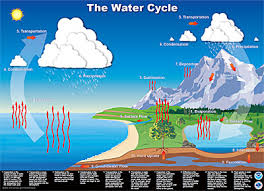
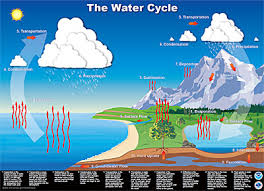
All water on Earth is recycled through ____.
a)
the water cycle
b)
pockets of nitrogen
c)
exhaled gas
d)
dead organic material
3.

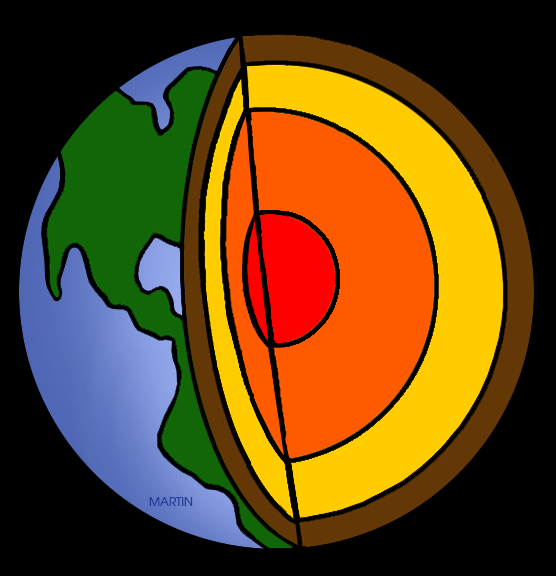
Which layer is shown in red?

a)

crust

b)

mantle

c)

outer core

d)

inner core

4.

Which layer is shown in orange?

a)

crust

b)

mantle

c)

outer core

d)

inner core

5.

Which layer is shown in yellow?

a)

crust

b)

mantle

c)

outer core

d)

inner core

6.

Which layer is shown in brown?

a)

crust

b)

mantle

c)

outer core

d)

inner core

7.

Which shows the order of the layers from COOLEST to HOTTEST?

a)

crust, mantle, outer core, inner core

b)

inner core, outer core, mantle, crust

c)

crust, outer core, inner core, mantle

d)

Trick question! All of the layers are the same temperature!

8.

Which layer of the Earth is the THINNEST?

a)

crust

b)

mantle

c)

outer core

d)

inner core

9.

Which layer of the Earth is the THICKEST?

a)

crust

b)

mantle

c)

outer core

d)

inner core

10.
Which units of measurement are used for volume?
a)
grams
b)
centimeters
c)
grams/milliliter
d)
milliliter
11.
What two types of measurements make up DENSITY
a)
Mass and Volume
b)
Temperature and Mass
c)
Grams and Centimeters
d)
Volume and Weight
12.
Look at this image.  Which object has the LOWEST density in water? How
a)
The Ping Pong Ball because it floats to the top 
b)
The bolt because it has sunk to the bottom
c)
The soda cap because it is not just full of air like the Ping Pong ball
13.
Why do the liquids form different layers?
a)
They have different densities.  
b)
They have different masses.  
c)
They have different volumes.  
d)
They are different temperatures.  
14.
Jack has a rock. The rock has a mass of 14g and a volume of 2cm3. What is the density of the rock?
a)
7 mL
b)
7 g/cm3
c)
28 g/cm3
d)
1/7 g/cm3
15.

A horizontal row of elements in the periodic table

a)

Molecule

b)

Period

c)

Family

d)

Atom

16.

The smallest particle of an element.

a)

Element

b)

Molecule

c)

Atom

17.

A substance that cannot be broken down into other substances by chemical or physical means.

a)

Covalent bond

b)

Atom

c)

Element

18.

What is one way Neutrons are different from electrons?

a)

they both are negative

b)

neutrons have no charge, while electrons have a negative charge

c)

Both are in the nucleus( center of atom)

d)

Electrons are inside nucleus and neutrons are outside the nucleus.

19.

What is the atomic number?

a)

35

b)

18

c)

17

d)

52

20.

How many protons and electrons does this element have?

a)

35

b)

18

c)

17

d)

52

21.

How many neutrons does Chlorine have?

a)

18

b)

17

c)

35

d)

52

22.

How many neutrons does calcium have?

a)

20

b)

40

c)

60

d)

0

23.

What would Au (Gold) be categorized as on the periodic table?

a)

Nonmetal

b)

Metal

c)

Transitional metal

d)

Noble gas

24.

What would He (Helium) be categorized as on the periodic table?

a)

Nonmetal

b)

Metal

c)

Noble gas

d)

Transitional metal

25.
A rock formed from fragments of other rocks is a(n)
a)
Metamorphic Rock
b)
Sedimentary Rock
c)
Extrusive Rock
d)
Igneous Rock
26.
An igneous rock containing large crystals is most likely a(n)
a)
Chemical Rock
b)
Foliated Rock
c)
Extrusive Rock
d)
Intrusive Rock
27.
A metamorphic rock in which the grains line up in parallel bands is a
a)
Clastic Rock
b)
Nonclastic Rock
c)
Nonfoliated Rock
d)
Foliated Rock
28.
If heat and pressure inside the Earth cause a rock to melt, the material that formed would be
a)
Metamorphic
b)
Magma
c)
Sedimentary
d)
Igneous
29.
You find a rock in which the grains are arranged in parallel bands of white and black crystals.  The rock is probably a(n)
a)
Igneous rock
b)
Sedimentary rock
c)
Metamorphic rock
d)
Extrusive rock
30.
As lava cools and crystallizes, what type of rock will form?
a)
Sedimentary
b)
Metamorphic
c)
Extrusive Igneous
d)
Intrusive Igneous
31.
The three groups of rocks are classified by
a)
How they form
b)
Color
c)
Grain size
d)
Chemical Composition
32.
The way in which a mineral's surface reflects light.
a)
Cleavage
b)
Fracture
c)
Density
d)
Luster
33.
The tendency of a mineral to break along smooth, flat surfaces.
a)
Cleavage
b)
Fracture
c)
Hardness
d)
Streak
34.
The color of a mineral's powder form.
a)
Streak
b)
Hardness
c)
Magnetism
d)
Luster
35.
Be2Al3SiO2
a)
Silicate
b)
Sulfate
c)
Sulfide
d)
Oxide
36.

A mineral can be scratched by gypsum and quartz.

What is the hardness range?


a)

1-2

b)

2-7

c)

2-10

d)

7-10

37.
SNICE
All mineral are N____?
a)
Nosy
b)
Nice to look at 
c)
Naturally occurring
d)
Nonsilicates
38.

SNICE

Almost all minerals are i__________?

a)

invisible

b)

inorganic

c)

imbeciles

d)

illuminating

39.
Minerals form in the following ways EXCEPT...
a)
Cooling of magma
b)
Evaporation of a solution
c)
Metamorphism by heat and pressure
d)
Depositing of sand and soil particles
40.
There are over 3,500 known minerals.  90% are...
a)
Silicates
b)
Nonsilicates
c)
Native elements
d)
Oxides
41.

Minerals have a definite chemical composition.

a)

TRUE

b)

FALSE

42.

A mineral's mass to volume ratio describe the property of...

a)

Streak

b)

Hardness

c)

Density

d)

Luster

43.

Minerals can be a pure substance or a mixture.

a)

TRUE

b)

FALSE

44.
An avalanche is an example of which process?
a)
Weathering
b)
Erosion
c)
Deposition
d)
Volcanic Eruption
45.
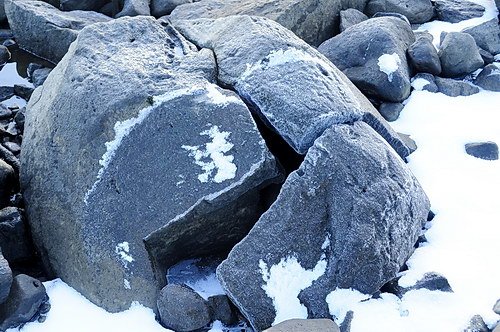
How does freezing water cause the weathering of rocks?  The freezing water—
a)
keeps the rocks in place.
b)
makes the rocks last longer.
c)
expands cracks and breaks rocks.
d)
causes rocks to fall in landslides.
46.
The process that breaks down rocks and other materials on Earth's surface is called
a)
Weathering
b)
Erosion
47.
What is the process that picks up and moves weathered rocks?
a)
Erosion
b)
Landslide
c)
Weathering
48.
What is an enormous mass of ice moving over land, causing weathering of rock and soil?
a)
A glacier
b)
An iceberg
c)
An ice wedge
d)
A sand dune
49.
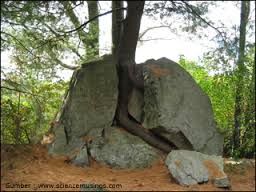
How do plants weather rocks?
a)
Plants don't weather rocks.
b)
When roots grow into cracks of rocks and expand the rock breaks.
c)
When the plant moves water from the roots to the leaves, the rock breaks.
50.

Tree roots can break down rocks.

a)

True

b)

False

51.

The flowing down of very wet soil is called a

a)

rockslide

b)

landform

c)

mudslide

52.

Which does NOT cause erosion?

a)

plants

b)

water and wind

c)

glaciers and gravity

d)

animals

53.

Animals digging holes in the ground is

a)

weathering

b)

erosion

54.
_____________happens where agents of erosion drop or lay down sediment.
a)
Weathering only
b)
erosion only 
c)
Deposition
d)
compaction only
55.
_________________happens when gravity moves sediment downhill.
a)
Weathering only
b)
Mass movement
c)
Erosion only
d)
Gravity
56.
What causes mass movement?
a)
water
b)
wind
c)
gravity
d)
weather
57.
Which is NOT a type of mass movement?
a)
landslide
b)
slump
c)
mudflow
d)
windstorm
58.
This is a picture of a ____________________
a)
slump
b)
creep
c)
windstorm
d)
mudflow
59.
Rock & soil slides quickly down steep slope in a ______________________.
a)
slump
b)
windstorm
c)
landslide
d)
mudlfow
60.
The slowest type of mass movement is called a _____________________.
a)
slump
b)
creep
c)
landslide
d)
mudflow
61.
Weathering is the  _____________ rock.
a)
bending
b)
moving
c)
melting
d)
breaking
62.
Which of these is an example of precipitation?
a)
snow
b)
air
c)
clouds
d)
vapor
63.
What is it called when plants give off water vapor as a waste product?
a)
condensation
b)
evaporation
c)
sublimation
d)
transpiration
64.
What is the water cycle?
a)
the 3 forms of water
b)
the movement of water on, above, or below the surface of the Earth
c)
when water melts
d)
when clouds form
65.
Which stages does liquid water from the ocean turn into water vapor?
a)
condensation
b)
evaporation
c)
precipitation
d)
run off
66.
Which stage does ground water try to return to the ocean or soak into the ground?
a)
condensation
b)
evaporation
c)
precipitation
d)
run off
67.
What is A?
a)
Evaporation
b)
Condensation
c)
Precipitation
d)
Runoff
68.
What is B?
a)
Evaporation
b)
Condensation
c)
Precipitation
d)
Runoff
69.
What is C?
a)
Evaporation
b)
Condensation
c)
Precipitation
d)
Runoff
70.
What is D?
a)
Evaporation
b)
Condensation
c)
Precipitation
d)
Runoff
71.

Water in its gas form is called ____________________,

a)

water vapor

b)

precipitation

c)

ice

d)

air

72.

This provides the power to keep the water cycle running.

a)

The Sun

b)

The Earth

c)

The wind

d)

living things

73.
The cracks in Earth's crust are called ___________.
a)
tectonic plates
b)
faults
c)
magma
d)
lava
74.
The area around the Pacific Ocean where lots of earthquakes and volcanoes happen is called the ____________.
a)
Ring of Earth
b)
Ring of Fire
c)
Ring of Stone
d)
Ring of Diamond
75.

This famous fault in California has a lot of earthquakes!

a)

New Madrid

b)

Denali Fault

c)

Ramapo Seismic Zone

d)

San Andreas Fault

76.

What type of boundary is shown in the diagram?

a)

Divergent

b)

Convergent

c)

Transform

77.

What type of boundary is shown in the diagram?

a)

Divergent

b)

Convergent

c)

Slide/Transform

78.

What type of boundary is shown in the diagram?

a)

Divergent

b)

Convergent

c)

Slide/Transform

79.

an instrument that detects, records, and measures the vibrations produced by an earthquake

a)

seismology

b)

seismologist

c)

seismogram

d)

seismograph

80.

vibrations in the earth caused by the sudden release of energy, usually as a result of the movement of rocks along a fault

a)

earthquake

b)

epicenter

c)

focus

d)

surface waves

81.

earthquake waves that travel on or near the surface of the earth

a)

aftershock

b)

S Waves

c)

body waves

d)

surface waves

82.

the secondary earthquake wave; travels slower and is second to reach the seismograph station

a)

P Wave

b)

S Wave

c)

surface wave

d)

body wave

83.

the primary earthquake wave that travels through the body of the earth; first to reach the seismograph station

a)

surface wave

b)

aftershock

c)

P Wave

d)

S Wave

84.
Which travels fastest, always being the first detected by seismic stations?
a)
P waves
b)
S waves
85.
Which letter represents the movement created by the P Wave?  
a)
A
b)
B
c)
C
86.

What's at the red 'X"?

a)

Fault

b)

Hypocenter...or focus

c)

Triangulation

d)

Epicenter

87.

What's being shown here?

a)

Normal fault

b)

Hypocenter...or focus

c)

Triangulation

d)

Epicenter

88.

Which wall is at "B"?

a)

Hanging wall

b)

Foot wall

c)

"Another brick in the wall"

d)

Berlin Wall

89.

Which wave shows up last?

a)

P-wave

b)

S-wave

c)

The wave

d)

Surface wave

90.

6. Tsunamis are caused by ___________.

a. Wind traveling over the surface of the ocean

b. The rotation of the Earth

c. The gravitational pull of the Moon

d. A large displacement of water

e. All of the above

a)

a

b)

b

c)

c

d)

d

e)

e

91.

True or False: Although tsunamis are sometimes called tidal waves, they have nothing to do with the ocean's tides.

a. TRUE

b. FALSE

a)

a

b)

b