Wayground logo

Free Printable Worksheets

Font size

S
M
L
XL
Worksheets

Electricity Test 1 Review

Total questions: 66

Worksheet time: 1hrs 16mins

Name
Class
Date
1.
Static electricity is:
a)
electricity flowing in a wire
b)
the buildup of electric charges on an object
c)
when protons move between objects
2.
Two objects with LIKE static charges will
a)
attract each other
b)
even out in the end
c)
repel each other
d)
cause a spark
3.
Which is an example of static dischage?
a)
a motor
b)
lightning
c)
thunder
d)
insulators
4.
Static charges build up when
a)
protons move within an object
b)
electrons move within an object
c)
neutrons move within an object
d)
the nucleus moves within an object
5.
Which subatomic particle has a POSITIVE charge?
a)
Proton
b)
Neutron
c)
Electron
d)
Nucleus
6.
Which subatomic particle has a NEGATIVE charge?
a)
Proton
b)
Neutron
c)
Electron
d)
Nucleus
7.
Which of these is NOT a way to create a static charge?
a)
Friction
b)
Induction
c)
Electroaction
d)
Conduction
8.

Is it possible to CREATE electrons?

a)

Yes, that's what static electricity is.

b)

No, you can move them, but they are never created or destroyed.

c)

Sometimes, it depends on the voltage.

d)

Sometimes, it depends on the element.

9.
If two objects with static charge are attracted, what do you know about them?
a)
They are both positively charged.
b)
They are both negatively charged.
c)
One is positively charged and one is negatively charged, but you won't be able to tell which is which.
d)
One is positively charged and one is negatively charged, and you can tell which is which by looking at them.
10.
Rubbing a balloon on hair is an example of static charge build up created by....
a)
conduction
b)
friction
c)
induction
d)
hairduction
11.
True or False:
In static electricity, charges build up on an object, but they do not flow continuously.
a)
True
b)
False
c)
11
d)
Tuesday
12.
The flow of electricity in a circuit-
a)
current
b)
flow
c)
circuit
13.
Electricity that flows in a closed path is called a
a)
path
b)
current
c)
circuit
14.
To complete a circuit the switch must be
a)
unattached
b)
open
c)
closed
15.
Two batteries in a circuit make the lights in the circuit brighter than one battery.
a)
true
b)
false
16.
In a parallel circuit the current
a)
makes one circle
b)
stays in one path
c)
splits and goes through two components
17.
Two types of circuits are
a)
parallel and magnetic
b)
electromagnetic and series
c)
series and parallel
18.
The flow of electricity requires a
a)
complete path
b)
incomplete path
c)
insulated current
19.
When socks get stuck to towels in your dryer, this is an example of________________
a)
current electricity
b)
static electricity
20.

Static means ____________.

a)

moving

b)

not moving

21.
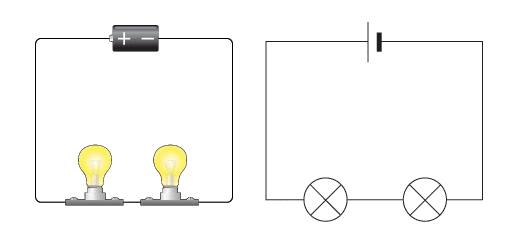
This is an example of a _______ circuit
a)
open
b)
series
c)
parallel
d)
square
22.
This is an example of a ______ circuit
a)
Series
b)
Parallel
c)
Open
d)
Dihexihedral
23.
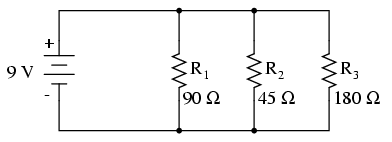
What kind of circuit is this?
a)
Series
b)
Consecutive
c)
Parallel
d)
Training
24.
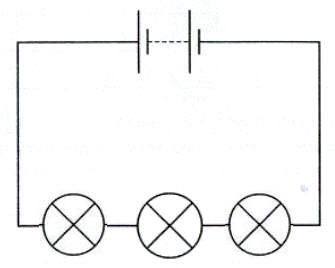
What kind of circuit is this?
a)
Series
b)
Consecutive
c)
Parallel
d)
Training
25.
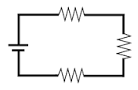
What kind of circuit is this?
a)
series
b)
parallel
26.
what kind of circuit is this?
a)
parallel
b)
series
c)
chris barton
d)
open
27.
This circuit has more than one loop. When one light goes out, the others stay on. 
a)
closed circuit
b)
series circuit
c)
parallel circuit
d)
open circuit
28.

The SI unit for electric potential is the ___________.

a)

Volen

b)

Vespa

c)

Volt

d)

Valspar

29.

The difference in electrical potential energy between two places is called …………...

a)

resistance

b)

friction

c)

induction

d)

voltage

30.

The potential difference between the terminals of a connection wire is ……..

a)

Zero

b)

greater than zero

c)

Less than zero

d)

infinity

31.

What is the unit of measurement for resistance?

a)

Voltage

b)

Ampere

c)

Watts

d)

Ohms

32.

How do you calculate total resistance in a parallel circuit?

a)

R1 + R2 + R3

b)

R1 - R2 - R3

c)

1/R1 +1/R2 + 1/R3 = 1/RT

d)

R1 = R2 = R3

33.
What is Resistance?
a)
the degree to which a circuit component opposes the passage of an electric current, causing energy dissipation
b)
How hard the energy is pushed
c)
The amount of charges that pass by a given point per second
d)
None of the above
34.

What is the equivalent or total resistance (Re) across this circuit?

a)

3 kΩ

b)

10 kΩ

c)

13 kΩ

d)

18 kΩ

35.
How does resistance affect current?
a)
less resistance - less current
b)
more resistance - less current
c)
more resistance - more current
d)
resistance does not affect current
36.

How would the equivalent resistance be determined?

a)

1 / Req = (1/5) + (1/8) + (1/3) Ω

b)

120 Ω

c)

1.5189873 Ω

d)

1 / Req = (1/5) * (1/8) * (1/3) Ω

37.

the formula to find current when the values of V and R are known is

a)

I = V2R

b)

I = V/R

c)

I = R/V

d)

I=VR

38.
What size resistor would produce a 3 Amp current flow with a 12 Volt battery
a)
1 Ohm
b)
3 Ohms
c)
4 Ohms
d)
12 Ohms
39.
The equivalent resistance in this circuit is 
a)
100 ohms
b)
450 ohms
c)
400 ohms
d)
30 ohms
40.
What would the circuit resistance be if a 7.5 Amp draw was present with the engine running and the charging system producing 15 Volts
a)
15 Ohms
b)
4 Ohms
c)
0.3333 Ohms
d)
2 Ohms
41.
If the battery produced 12.6 Volts and what would be the current flow be for a 6 Ohm resistor
a)
2.1 Amps
b)
2.4 Amps
c)
1.71 Amps
d)
15 Amps
42.

What voltage is needed to cause a 50A current flow through a 10Ω resistor?

a)

15V

b)

500V

c)

500 kV

d)

0.2V

43.
What resistance is needed to cause a 20A current flow because of a 100V battery?
a)
0.2Ώ
b)
2000Ώ
c)
120Ώ
d)
5Ώ
44.
What voltage is needed to cause a 2A current flow through a 10Ω resistor?
a)
5V
b)
0.2V
c)
20V
d)
200V
45.
If the battery produced 12.6 Volts and what would be the current flow be for a 6 Ohm resistor
a)
2.1 Amps
b)
2.4 Amps
c)
1.71 Amps
d)
15 Amps
46.
Which type of current comes from a battery?
a)
alternating current (AC)
b)
direct current (DC)
47.
What type of circuit is pictured?
a)
series
b)
parallel
48.
A circuit made of wires, a lamp, a switch, and a cell is shown at the right. What change is needed for the lamp to glow? 
a)
The switch needs to be opened.
b)
The switch needs to be closed.
c)
The cell needs an insulator.
d)
The wire needs to be connected to the bottom of the cell.
49.

Why do electricians always wrap wires in plastic?

a)

Plastic comes in many different colors

b)

Plastic is a good electrical conductor

c)

Plastic makes the wires easy to bend

d)

Plastic is a good electrical insulator

50.

Which of these materials is a good conductor of electricity?

a)

Rubber

b)

Metal

c)

Newspaper

d)

Glass

51.

The student conducted an experiment with circuits. Why was the bulb bright when he closed the switch?

a)

The switch produced an electric current

b)

Closing the switch broke the circuit

c)

Closing the switch completed the circuit

d)

The switch did not make a difference

52.

Which of the following items would conduct electricity?

a)

Aluminum ladder

b)

Metal screwdriver

c)

Wooden baseball bat

d)

Rubber flip flops

53.

How can it be explained that someone's hair can stick to a balloon?

a)

There is static electricity

b)

There is too much dust in the air

c)

A parallel circuit was too long

d)

The person needs to wash his hair

54.

A penny is an example of

a)

An insulator

b)

an electron

c)

a proton

d)

a conductor

55.

The student arrived home and turned on a light switch, so she could see how to get to her bedroom. The switch allowed electricity to flow and was transformed into-

a)

Light energy

b)

mechanical energy

c)

superior energy

d)

radiant energy

56.

which of the following materials are best used as insulators?

a)

Wood

b)

Rubber

c)

Metal

d)

Plastic

57.
If you take one light bulb out of a parallel circuit, all the lights will go out.
a)
true
b)
false
58.
Copper is a good conductor of electricity.
a)
true
b)
false
59.
Insulator or Conductor?
STEEL
a)
Insulator
b)
Conductor
60.
Insulator or Conductor?
STYROFOAM
a)
Insulator
b)
Conductor
61.
What is the purpose of a switch?
a)
To open and close the circuit.
b)
To carry the electricity through the circuit.
c)
To make a fun clicking sound
d)
To supply the power to the circuit
62.

What is the danger of broken insulation?

a)

People can get electric shock.

b)

Appliances will be damage.

c)

A lot of energy is wasted.

d)

Heat is generated.

63.

How do you calculate resistance?

a)

Current x Voltage

b)

Voltage x Power

c)

Voltage ÷ Current

d)

Current ÷ Voltage

64.

What platform do witches and wizards have to take to get to Hogwarts?

a)

Platform 9 and 3/4

b)

Platform 9

c)

Platform 6 and 1/2

d)

Platform 3 and 2/4

65.

What is the resistance if the current is 2A and the voltage is 10V?

a)

8 Ω

b)

20 Ω

c)

12 Ω

d)

5 Ω

66.

How do you calculate current from voltage and resistance?

a)

Current = voltage x resistance

b)

Current = resistance x power

c)

Current = voltage ÷ resistance

d)

Current = resistance ÷ voltage