
 Worksheets
GHW 3rd Nine Weeks Test Review
Total questions: 70
Worksheet time: 57mins
Extremely Fertile land of alluvial soil for farmers from the Himalayas which attracts 10% of the World population?
Gangetic Plain
Indus River Valley
Bengal Bay
Deccan Plateau
Choose THREE things that can result from overpopulation
increased hunger
pollution
surplus (extra) resources
inadequate housing
Choose THREE things that can result from overpopulation
poluution
densely populated cities
high life expectancy
diseases
numerous job opportunities
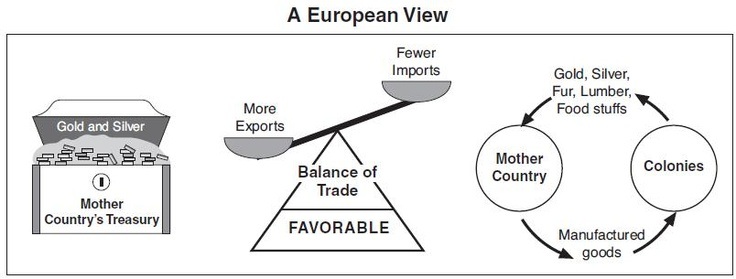
What is mercantilism?
A system where a mother countries gains money and power from natural resources that come from its colonies.
where colonies trade gold and silver with each other.
Wars that start over money.
Plantation colonies trading slaves for money.

Mercantilism is when
Raw materials were bought cheaply by the colony and sold as refined materials to the 'Mother Country'
Raw materials were bought cheaply by the 'Mother Country' and sold as manufactured products back to the colony the materials came from
When merchants sold their goods for high prices to working class citizens
When working class citizens were forced to sell their products to make profits
Gandhi was a leading figure in India to gain independence from ________ during the first half of the 1900's?
Great Britain
china
germany
america
Base your answer to the following question on the passage below and on your knowledge of social studies.
...Indeed whilst on the one hand civil disobedience authorizes disobedience of unjust laws or unmoral laws of a state which one seeks to overthrow, it requires meek and willing submission to the penalty of disobedience and therefore cheerful acceptance of the jail discipline and its attendant hardships....
Which individual is the author of this passage?
Deng Xiaoping
Mohandas Gandhi
Ho Chi Minh
Fidel Castro
Why did large numbers of Hindus and Muslims migrate immediately after India gained its independence?
Many jobs were being outsourced
overseas.
The government offered housing
incentives in newly developed areas.
Religious pilgrimages to neighboring countries were required based on their beliefs.
The subcontinent was divided into countries based primarily on the location of religious majorities.
"Struggle Continues for Control of Kashmir"
"Many Hurt in Border Clashes Between Hindus and Muslims"
Which nations have been most closely associated with the conflicts in these headlines?
China and India
India and Pakistan
Vietnam and Cambodia (Kampuchea)
Sri Lanka and Thailand
Which event was used by Mohandas Gandhi to bring world attention to the injustices of British colonialism?
Salt March
partition of India
Sepoy Mutiny
formation of the Indian Parliament
India's independence in 1947 created the 3 countries of?
India , Pakistan, Indonesia
Pakistan, Bangladesh, India
India, Nepal, Bhutan
The Partition of India was mainly because of the differences in
governments
economies
social structures
religions
Which country has rightful control over the region known as Kashmir?
India
Pakistan
Both believe they have right to Kashmir
Neither has the rights to Kashmir
What are monsoons?
seasonal wind patterns that cause it to rain year round
winds from the mountains that create dry conditions in the Summer
seasonal wind patterns that cause wet and dry seasons
wind and rain that affect India in the Spring
What occurs during the wet season of monsoons?
Winds blow into India from the Indian Ocean bringing heavy rains that can cause terrible flooding.
Winds blow into India from the Indian Ocean which forces moisture out of India and creates warm, dry winters.
Winds blow into India from the mountains bringing heavy rains that can cause terrible flooding.
Winds blow down from the mountains which forces moisture out of India and creates warm, dry winters.

How has the green revolution benefited India?
It has eliminated poverty.
It has reduced the amount of energy needed in India.
It has increased food production and prevented famine
It has made use of underused water sources.
The government of China believes that the dam will bring many benefits to the China. What are some of the benefits?
It would create thousands of jobs.
The deep lake will allow large ships to travel farther up the Yangtze than before.
The dam would also help control flooding.
It generates hydropower
All of the above
What was a negative impact for the people who lived along the Three Gorges Dam?
Many were forced to move out of the area
Many people died from a boat crashing into the dam
Fishermen's business struggled
Many people protested to the government for building the dam
The Three Gorges Dam has helped China most by
providing hydropower
providing nuclear power
providing wind power
providing solar power
How have farmers adapted to living in an area with little green space?
They use terrace farming to cut steps into mountainsides for land.
They work their fields by hand instead of large machinery.
They just import fresh foods instead of growing any.
They plant fewer crops.
What is unique about the Japanese because of limited space(high population density)?
They discouraged building skyscrapers to save space
They barely use mass transit, most drive
Their houses are smaller in size with multi-purpose rooms.
They have large yards and gardens to be able to feed themselves.

Fields in this photograph were created by
recycling trash
filling in wetlands
terracing hillsides
building underground
What were the reasons for Japan imperialism?
Resources and Land
Land and mountains
Soldiers and resources
None of the above
Where was the divide in Korea?
42nd parallel
39th parallel
38th parallel

Which of the following is NOT true about China
Government censors the media
Government is building artificial islands in the South China Sea
Government has allowed market economy reforms in recent decades
Government is communist
Government allows freedom of speech for all individuals
China's rapid industrialization and urbanization has led to
the Three Gorges Dam destruction
a major pollution problem
an increase in typhoons
an increase in the farming industry

Tokyo is the _____________
largest city in the world.
smallest city in the world.
fastest train in the world.
biggest city in Japan
Where is the Ring of Fire located?
Atlantic Plate
Pacific Plate
Japanese Plate
North American Plate
What geologic hazards are caused by Ring of Fire volcanic eruptions? (Select all that apply)
Earthquakes
Volcanic Eruptions
Mudslides
Tsunamis
Pol Pot's(Khmer Rouge) most important impact:
allied with Vietnam to create a strong and safe region
Starting Cambodia at Year Zero and eliminated small farms
committed Genocide murdering 1.5 to 2 million Cambodians
Moved all people to cities to make it easier to get foreign aid
What was Pol Pot’s goal?
to kill every Cambodian
to kill immigrants
to create a dictatorship
To form a communist farming utopia
What conflict led to the start of the Vietnam War?
China invaded Vietnam at end of WW2
A large portion of people converted to Christianity from mission work
Former French Indochina was divided into Communist and Non-Communist parts
Europeans involvement brought a larger income gap between the rich and poor

What rule was Vietnam unified under when the war ended?
Democratic
Communist
Socialist
Monarchy

What is the main consequence of conflict in Southeast Asia?
urbanization
external migration
urban heat islands
emerging markets
Which of the Following is NOT a major cause of deforestation in Southeast Asia?
illegal logging
shifting cultivation
Palm Oil Plantations
Cattle Ranchers
Which of the following types of agriculture where you clear land and then move on after a short time period is used most widely throughout the world?
intensive farming
slash-and-burn
plantation
shifting cultivation
subsistence

The main source of transportation in Southeast Asia is by
train
boat
planes
buses

He was he major leader of a Russian revolutionary group The Bolsheviks?
Lenin
Stalin
Marx
Putin
Czar Nichols II abdicated the throne in Russia due to World War 1 battle losses and
A. severe food shortages
B. Tsar Nicholas II’s abdication
C. major military desertions
D. Vladimir Lenin’s return from exile
Why did Russia join World War 1?
To defend Slavic people in Serbia
To stand by a dependable ally, Austria-Hungary
to punish Serbia for encouraging terrorism
to avoid facing Germany alone later
The main causes of World War 1:
Militarism, Alliances, Imperialism, Nationalism
Money, Alliances, Imperialism, Nativism
Militarism, Alliances, Imperialism, Nativism
Germany sent the _________ Note to ___________ proposing to them to join them in the War?
Zimmerman, Russia
Zimmerman, Mexico
Armistice, Italy
Armistice, Mexico
Why did people like communism?
Because the government has absolute power
Because there are free and fair elections
Because people are supposed to be equal
Because they have the absolute freedom of speech

Which of the following is most characteristic of the Cold War?
The growth of nuclear arsenals in the United States and the Soviet Union
The expansion of national borders by imperialistic European countries
The implementation of isolationist foreign policies in Great Britain and China
The rapid industrialization of many Southeast Asian countries
What is Communism?
A political system in which the wealth is equally divided among all citizens.
A system of government in which the people choose their leader.
A form of government in which a country is ruled by a religious leader.
None of the choices are correct.
Who were the Bolsheviks
a group of revolutionaries
Communists
a group led by Vladimir Lenin
all choices are correct
Series of campaigns to get rid of anyone Stalin saw as a threat
The Cultural Revolution
The October Revolution
The Great Purge
The Reign of Terror

To get rid of his enemies/opponents and send them to work camps what did Stalin do ?
Worked with North Korea
Created the first atomic bomb
Tested the weapons for mass killing
Controlled the secret police
Where is the primary location for Russian to farm?
Moscow
Black Earth Belt
Chernobyl
Siberia
Which of the following is why the Taiga is important to Russia's economy?
1/2 of the world's forest for new medicines
1/2 of the worlds softwood timber
provides homes for many endangered species
Its lakes provide 1/2 of the country's freshwater
Russia's uneven population distribution is due to
the physical environment
the country's standard of living
the country's economic development
government laws about housing



