
NEW
Font size
 Worksheets
Career Day Review
Total questions: 53
Worksheet time: 47mins

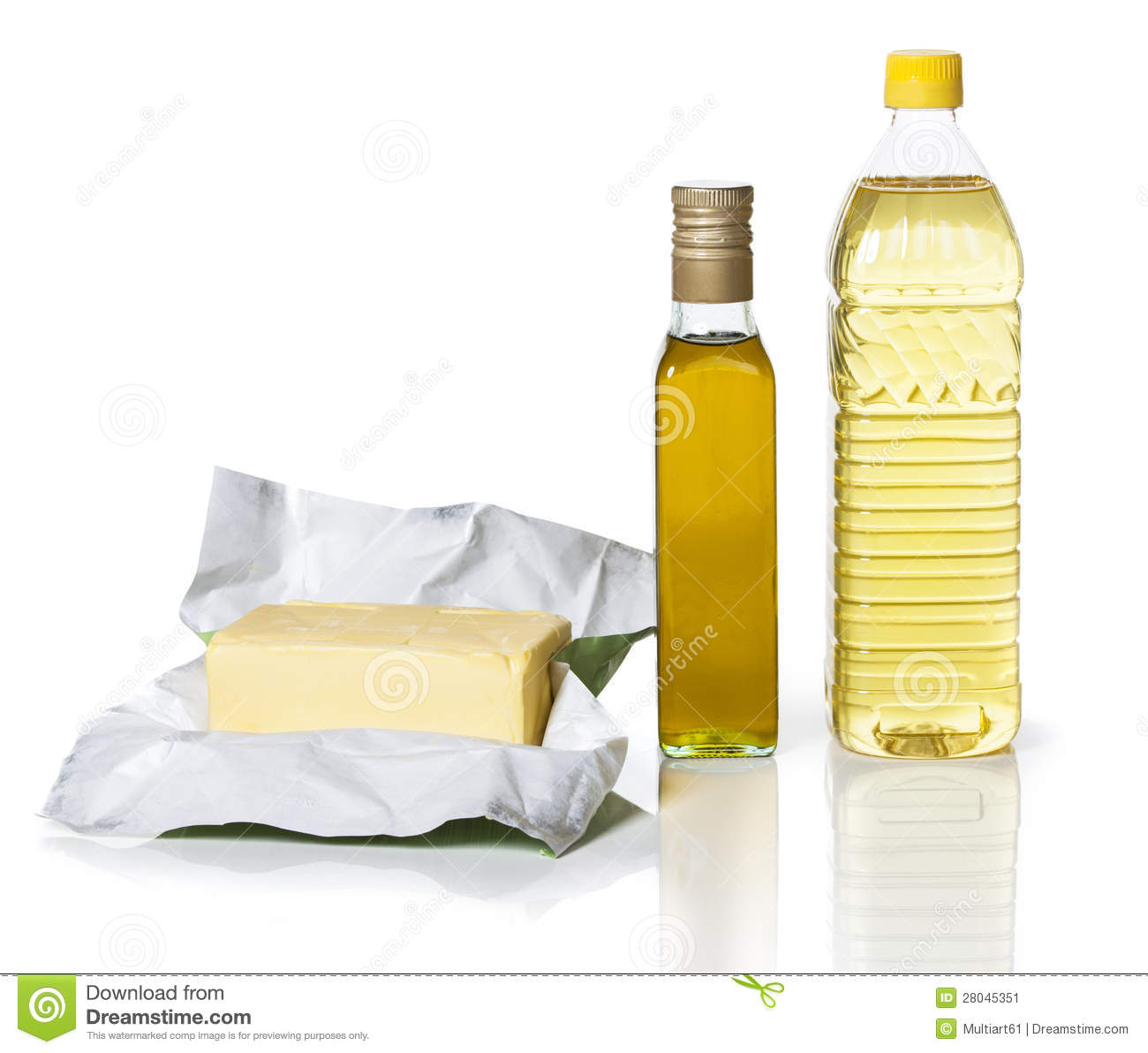
Which biomolecule helps form muscles?
Nucleic Acid
Carbohydrate
Protein
Lipids

The enzyme protease is found in the stomach and is used to help break down ingested proteins. What monomer would you expect to find after eating a protein-rich food?
Nucleotides
Monosaccharides
Fatty acids
Amino acids

The enzyme Amylase is found in saliva and is used to help break down carbohydrates like starch. What monomer would you expect to find after eating a starch-rich food?
Monosaccharides
Nucleotides
Fatty acids
Amino Acids
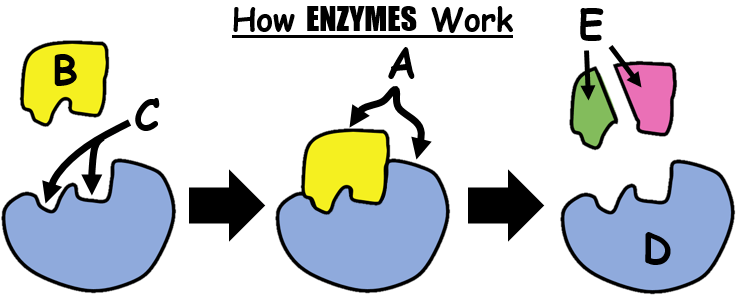
In the diagram, what is letter D?
active site
enzyme
substrate
products

The arrows show the movement of sugar through a cell membrane. Which cell is using energy to transport sugar?
The cell on the left is using energy to transport sugar.
The cell on the right is using energy to transport sugar.
Both cells are using energy to transport sugar.
Neither cell is using energy to transport sugar.
The arrows show the movement of sugar through a cell membrane. Which cell is not using energy to transport sugar?
The cell on the left is not using energy to transport sugar.
The cell on the right is not using energy to transport sugar.
Both cells are not using energy to transport sugar.
Neither cell is transporting sugar without the use of energy.

A cell in an isotonic solution will
swell
shrink
stay the same size
impossible to tell

A cell in a hypotonic solution will
swell
shrink
stay the same size
impossible to tell

Uses ATP (energy)
Passive Transport
Active Transport
With the concentration gradient.


Against the concentration gradient.

What kind of cell transport is happening to maintain homeostasis (balance) in these cells?
The movement of water by osmosis.
The movement of solutes by diffusion.
The cell takes in molecules by endocytosis.
The cell removes molecules by exocytosis.

How does a virus cause a person to develop the common cold?
invades the host cell to reproduce
removes energy from the host cell
produces toxins in the host cell
protects the host cell from bacteria

What do viruses need to reproduce?
they need genetic material
They need a host cell
They need bacteria
They need insulin

Which viral life cycle kills its host cell by lysing (exploding)?
lytic
mitosis
lysogenic
S phase

Which viral life cycle allows viral genetic material to lay dormant while the host cell reproduces?
lytic
mitosis
lysogenic
S phase
How do vaccines work against viruses?
Vaccines are like antibiotics, except they work against viruses.
Vaccines prepare the immune system to fight the virus without harming the host.
Vaccines make it impossible for a virus to enter a host cell.
Vaccines find viral DNA or RNA and cut it to pieces, making the virus unable to replicate.

How does Human Immunodeficiency Virus (HIV) replicate?
Lytic Cycle
Lysogenic Cycle
Mitosis
Binary fission

How does influenza (flu virus) replicate?
Lytic Cycle
Lysogenic Cycle
Mitosis
Binary fission
Should a doctor give a patient antibiotics to treat a disease caused by a virus?
Yes, because antibiotics will stop the cellular processes of the virus, helping the patient get better faster.
Yes, because antibiotics will kill bacteria in the body, giving the immune system an easier time fighting the virus.
No, because diseases caused by viruses are always deadly, meaning that the patient cannot be saved.
No, because viruses are not cells, and antibiotics target cellular processes.

Which shows the correct complementary base pairing for DNA?
C-A, T-G
A-G, C-T
C-G, U-A
T-A, G-C

What is responsible for holding the two strands of the DNA double helix together?
hydrogen bonds
alleles
London dispersion forces
deoxyribose sugars

DNA is a polymer made of:
Nucleotides
Ribosomes
Purines
Pyrimidines

Which organelle is DNA usually found in?
cell membrane
vacuole
ribosome
nucleus

How is information for a specific protein carried on a DNA molecule?
As a sequence of nucleotides.
In the double-helix shape of the condensed chromosome.
In the ratio of adenines to thymines.
As a pattern of phosphates ad sugars.

The process to go from mRNA to a protein is called ____
transcription
reverse transcription
replication
translation

Which component of DNA determines the traits of an organism?
Nitrogen Bases
Sugar-Phosphate Backbone
Hydrogen bonds

What mutation has occurred here?
T-G-A-C-C-A
T-G-A-G-C-A
Substitution
Deletion
Insertion
Frameshift

ATT-TGA-GCC- Original
ATT-GAG-CC - Mutated
The example above is an example of a
Insertion- Frameshift
Deletion- Substitution
Deletion -Frameshift
All of the above

Original DNA: CAT GAT CCA
New DNA: CAT TGA TCC A
What mutation occurred?
deletion
substitution
tranverse
insertion
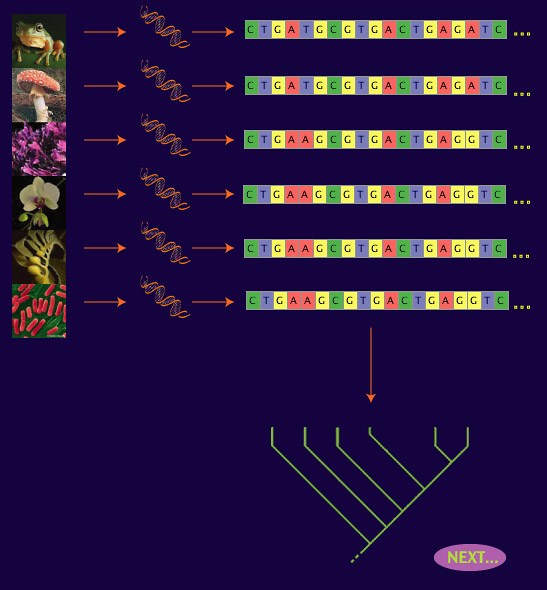

Is this showing Analogous, Homologous, or Vestigial structures?
Analogous
Homologous
Vestigial

Is this showing Analogous, Homologous, or Vestigial structures?
Analogous
Homologous
Vestigial


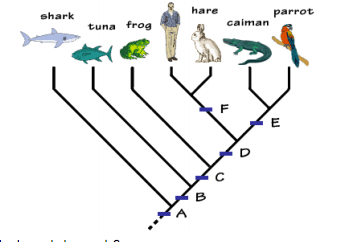
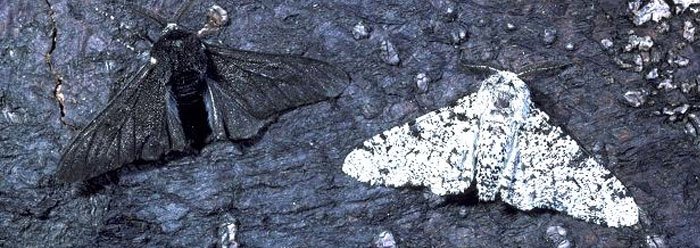

It took millions of years for giraffes to develop long necks. Slow evolution is called:
Punctuated equilibrium
Survival of the fittest
Gradualism
Selective Breeding
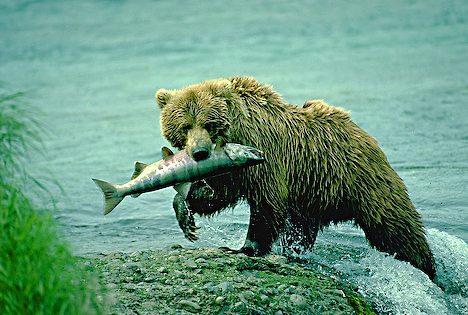
A grizzly bear survives because he is well-adapted to his environment. When he reproduces he passes on those traits to his offspring. this process is called
Natural Selection
Selective Breeding
Random mutations
Variations in a species
Heredity is:
Survival of the fittest
The passing of genetic traits from parent to offspring
Believing in false gods
Unexplained

The male and female black widow spider look very different. However, we know they are the same species because:
They reproduce creating fertile offspring
They reproduce creating infertile offspring
They cannot reproduce
They are not the same species

