
 Worksheets
Solar System Review
Total questions: 118
Worksheet time: 1hrs 17mins
True or False
There are eight planets in our solar system.
False
True
True or False
Mercury is home to the largest mountain (Olympus Mons).
False
True
True or False
Venus is the farthest planet from the Sun.
False
True
True or False
Our moon is called Luna.
False
True
True or False
The lunar month lasts 29 days.
False
True
True or False
Cosmic snowballs of frozen gases, rocks and dust are comets.
False
True
True or False
Ganymede is the smallest moon in the solar system.
False
True
True or False
There are more than 150 moons in the solar system.
False
True
True or False
Earth is the fifth planet from the Sun.
False
True
True or False
Mercury is surrounded by rings made of ice.
False
True
True or False
Mars is nicknamed the Red Planet because of a mineral on its surface.
False
True
True or False
The Sun is the center of the solar system.
False
True
True or False
The outer planets are also called "terrestrial planets."
False
True
True or False
Sir Isaac Newton discovered Pluto.
False
True
True or False
The Sun contains approximately 99.86% of the mass of the entire solar system.
False
True
True or False
Meteors are meteroids that have survived traveling through the atmosphere and have hit ground.
False
True
True or False
Dwarf planets do not clear their neighborhoods.
False
True
True or False
Saturn is the sixth planet from the Sun.
False
True
True or False
The smallest natural satellite is called Deimos.
False
True
True or False
Mercury is nicknamed the most beautiful planet.
False
True
True or False
Earth is the only planet to have an atmosphere with at least 21% oxygen.
False
True
True or False
There is only one dwarf planet.
False
True
True or False
Earth rotates around the moon.
False
True
True or False
The moon phases where we can see the most of the moon is called the New Moon.
False
True
True or False
Red dwarf stars are the most common but we cannot see many of them from Earth.
False
True
True or False
Black holes form from super giant or blue giant stars that have run out of fuel.
False
True
True or False
Neptune is nicknamed the Windiest Planet.
False
True
True or False
Jupiter has a permanent whirlpool of storms called "Jupiter's Stormy Spot."
False
True
True or False
From Earth we can only see one side of the moon.
False
True
True or False
The solar system is made up of only the Sun and the planets.
False
True
True or False
The Sun is a super giant star.
False
True
True or False
Venus is the hottest planet.
False
True
True or False
We can see three of Saturn's rings from Earth using a telescope.
False
True
True or False
Light cannot escape a black hole.
False
True
True or False
Gravity causes solar flares.
False
True
True or False
Blue giant stars die in a spectacular way, called a black hole.
False
True
True or False
The order of the planets is: Mercury, Venus, Earth, Mars, Jupiter, Saturn, Uranus, and Neptune.
False
True
True or False
Pluto orbits the Sun in just 100 days.
False
True
True or False
A spectrometer was used to measure the distance from Earth to Neptune.
False
True
True or False
Aurora Borealis can be seen in the Northern Hemisphere.
False
True


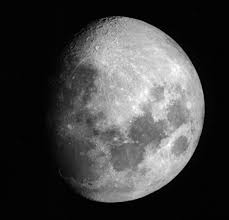
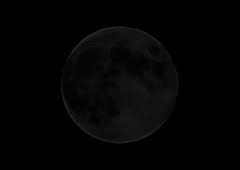
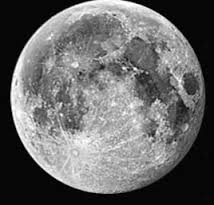
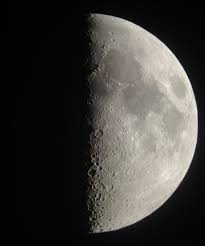
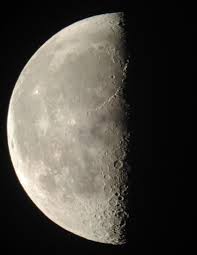


The image is an example of a(n) ____________________.
asteroid
comet
planet
star
All the planets in the solar system orbit the sun. What is the main difference between the orbits of the inner and outer planets?
The inner planets travel a greater distance than the outer planets do.
The inner planets have almost round orbits, and the outer planets do not.
The outer planets rotate as they orbit the sun, and the inner planets do not.
The outer planets take longer to orbit the sun than the inner planets do.

Select the 3 materials a comet is composed (made) of
Dust
Metal
Ice
Small rocky particles

Asteroids are found in a region called the
Kuiper Belt
Asteroid Belt
Oort Cloud
Earth's surface

The asteroid belt is located between which 2 planets?
Mercury and Venus
Jupiter and Saturn
Uranus and Neptune
Mars and Jupiter

Which object in space has a long, narrow orbit around the sun. We never see this object except once every 76 years!
Asteroid
Comet
Meteor
Meteorite

A comet forms a tail when
It is deep in outer space and begins to melt
It gets close to the sun and begins to melt

A small rock orbiting the sun in space. This object is a small broken off piece of a larger asteroid
Meteoroid
Meteor
Meteorite

A _____________ bursts through Earth's atmosphere at amazingly fast speeds and appears as a "shooting star"
Meteorite
Meteor
Meteoroid

A meteor that does not burn up in Earth's atmosphere and strikes Earth's surface forming a crater on Earth!
Meteorite
Meteoroid
Meteor

Planets, asteroids, comets and meteoroids all stay in orbit around the sun due to the sun's strong force of _________________
electricity
solar power
gravity
motion



