wayground logo

Free Printable Worksheets

Font size

S
M
L
XL
Worksheets

EXAM Study Guide 7th Grade Units 4,5,6

Total questions: 147

Worksheet time: 11hrs 56mins

Name
Class
Date
1.
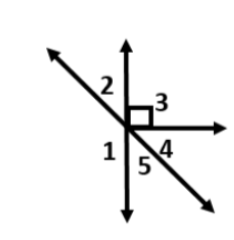
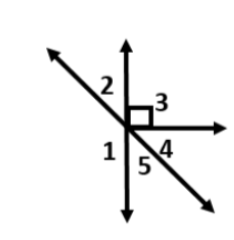
If the measure of ∠2 is 83°, what is the measure of ∠3?
a)
b)
17°
c)
83°
d)
97°
2.
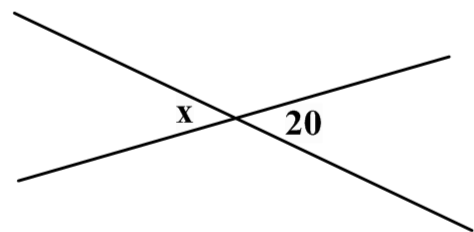
Find the missing angle.  Find x.
a)
20o
b)
70o
c)
160o
d)
180o
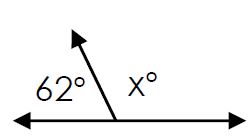
3.
a)
x = 118
b)
x = 108
c)
x = 28
d)
x = 58
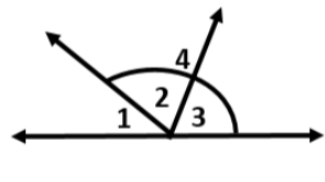
4.
∠1 and ∠3 can best be described as - 
a)
complementary angles
b)
supplementary angles
c)
vertical angles
d)
adjacent angles
5.
What kind of angles are shown?
a)
complementary
b)
supplementary
c)
adjacent
d)
corresponding
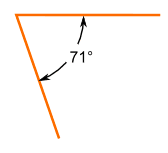
6.

Find the missing angle.

a)

43

b)

47

c)

57

d)

67

7.
What angle pair is pictured?
a)
Alternate Interior Angles
b)
Supplementary Angles
c)
Vertical Angles
d)
Corresponding Angles
8.
Pick the correct letter for:
6 > x
a)
A
b)
B
c)
C
d)
D
9.
You flip an inequality symbol when you...
a)
subtract
b)
multiply and divide only
c)
multiple by a negative number
d)
multiple or divide by a negative number
10.
Translate the following phrase: You and your friends ate more than 8 slices of pizza at the party.
a)
x > 8
b)
x < 8
c)
x ≤ 8
d)
x ≥ 8
11.
Translate the following phrase: Tom can spend no more than 20 dollars on his mom's birthday present.
a)
t > 20
b)
t < 20
c)
t ≤ 20
d)
t ≥ 20
12.
Translate the following phrase:  Jessica must be at least 48 inches to ride the roller coaster.
a)
j > 48
b)
j < 48
c)
j ≤ 48
d)
j ≥ 48
13.

Which inequality symbol has a graph with an open (empty) circle?

a)

<

b)

14.
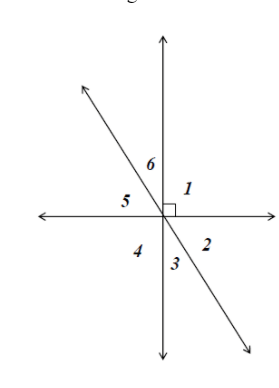
-13t > 26
a)
t > -2
b)
t > 2
c)
t < 2
d)
t < -2
15.
Do I need to flip my sign?
-3x  ≥ 12
a)
Yes
b)
No
16.

Solve

a)

n < 6

b)

n > 6

c)

n < 14

d)

n > 14

17.
Solve for t.

6t 
4 ≤ -2
a)
t ≤ -1 
b)
t ≤ 1
c)
t=1
d)
1=t
18.
When you graph an inequality, you used a closed dot when you use which symbols?
a)
≤, ≥ 
b)
<, >
19.
Does the given value make the inequality true?  x + 9 > 21, when x = 15
a)
True
b)
Not True
20.
What inequality does the number line graph represent?
a)
2x +1 < -3
b)
x + 2 < 4
c)
-x + 3 > 1
d)
x + 4 >= 2
21.
What inequality does the number line graph represent?
a)
x >= 3
b)
x > 3
c)
x < -3
d)
x <= 3
22.
Solve for x.
a)
x = 21
b)
x = 7
c)
x = −21
d)
x = 4
23.
What is the first step to solve this equation:
-11 - 3x = 44
a)
Add 3 to both sides
b)
Subtract 11 from both sides
c)
Add 11 to both sides
d)
Divide 3 on both sides.
24.
Solve   -3x + 5 = -16
a)
9
b)
8
c)
-7
d)
7
25.
w∕-2 ≥ 4
a)
w ≤ -2
b)
w ≥ -2
c)
w ≤ -8
d)
w ≥ -8
26.
x + 4 < 4
a)
x < 0
b)
x >0
c)
x < 8
d)
x > 8
27.
w/4 > 8
a)
w > 2
b)
w< 2
c)
w>32
d)
w<32
28.
3x < - 9
a)
x < 3
b)
x < -3
c)
x > 3
d)
x > -3
29.
-9p > 18
a)
p<2
b)
p<-2
c)
p>1/2
d)
p>-1/2
30.
What is the solution to 3x - 7 < 2?
a)
x < 3
b)
x < 4
c)
x < 2
d)
x < 5
31.
True or false: you flip the sign every time you multiply or divide when you're solving an inequality.
a)
True
b)
False
32.
Would your graph go to the left or right when you graph x ≥ 4?
a)
Left
b)
Right
33.

r/4 - 12 = - 5

a)

32

b)

28

c)

-28

d)

0

34.

7k - 14 = 42

a)

7

b)

-8

c)

0

d)

8

35.

-12 = 24 + 4b

a)

3

b)

0

c)

-9

d)

9

36.

9 = 4g + 13

a)

1

b)

-1

c)

0

d)

3

37.

13 = 5m - 2

a)

-3

b)

2

c)

3

d)

-2

38.

-5 + 7k = -19

a)

-3

b)

5

c)

2

d)

-2

39.

-15 = 11 -2t

a)

13

b)

5

c)

-13

d)

45

40.

10 = d/2 + 7

a)

-6

b)

6

c)

3/2

d)

-3/2

41.

4 - 3y = 31

a)

9

b)

10

c)

-9

d)

-10

42.

-1/3 y - 6 = -11

a)

15

b)

35

c)

-15

d)

35

43.
s - 10 ≤ 1
a)
s ≤ 11
b)
s ≤ 9
c)
s ≥ 11
d)
s ≥ 9
44.
10 ≥ x - 3
a)
x ≤ 13
b)
x ≥ 13
c)
x ≤ 7
d)
x ≥ 7
45.
Which is the solution of 
-6a ≥ -36
a)
a ≥ 6
b)
-6 ≥ a
c)
a ≤ 6
d)
6 ≤ a
46.
What inequality does the number line graph represent?
a)
x <= 4
b)
x>= -4
c)
x < -4
d)
x < 4
47.
Match the graph with its inequality.
a)
11 < a
b)
11 > a
c)
 11 ≤ a
d)
 11 ≥ a
48.
What inequality does the number line graph represent?
a)
-x + 4 >= -1
b)
-2x + 3 > -7
c)
-x + 1 < -4
d)
2x + 3 >= 13
49.
Pick the correct letter for:
6 > x
a)
A
b)
B
c)
C
d)
D
50.
What are two solutions to x < 8?
a)
8.6, 7.9
b)
11, 16
c)
0.8, 5.9
d)
12, 7.1
51.
Would you use a closed or open circle to graph x < 3?
a)
Closed
b)
Open
52.
a)
vertical
b)
supplementary
c)
complementary
d)
none of the above
53.
a)
vertical
b)
supplementary
c)
complementary
d)
none of the above
54.
a)
vertical
b)
supplementary
c)
complementary
d)
none of the above
55.
a)
vertical
b)
supplementary
c)
complementary
d)
none of the above
56.
a)
vertical
b)
supplementary
c)
complementary
d)
none of the above
57.
a)
45
b)
180
c)
135
d)
90
58.
a)
90
b)
115
c)
180
d)
25
59.
a)
145
b)
90
c)
180
d)
35
60.
a)
90
b)
140
c)
180
d)
50
61.
a)
55
b)
45
c)
65
d)
70
62.
a)
48
b)
90
c)
38
d)
52
63.
Find the missing angle.
a)
60
b)
70
c)
50
d)
140
64.

Find the missing angle.

a)

43

b)

47

c)

57

d)

67

65.
 Complementary angles measures _____ degrees.
a)
45
b)
180
c)
90
d)
30
66.
Supplementary Angles measure _____ degrees.
a)
180
b)
55
c)
100
d)
90
67.
Identify the type of angle shown.
a)
Complementary
b)
Supplementary
68.
Identify the type of angle shown.
a)
Complementary
b)
Supplementary
69.
What angle pair is pictured?
a)
Alternate Interior Angles
b)
Supplementary Angles
c)
Vertical Angles
d)
Corresponding Angles
70.
What is the measure of the missing angle?
a)
9
b)
109
c)
89
d)
96
71.
What is the measure of the missing angle?
a)
92
b)
102
c)
82
d)
72
72.
What is the measure of the missing angle?
a)
72
b)
92
c)
82
d)
62
73.
∠1 and ∠3 can best be described as -
a)
complementary angles
b)
supplementary angles
c)
vertical angles
d)
adjacent angles
74.
The angle relationship shown is - 
a)
complementary angles
b)
supplementary angles
c)
vertical angles
d)
adjacent angles
75.
What is an example of a pair of complementary angles?
a)
13° and 45°
b)
10° and 170°
c)
81° and 9°
d)
90° and 3°
76.
Find the missing angle.  Find x.
a)
20o
b)
70o
c)
160o
d)
180o
77.

What is the value of x?

a)

52

b)

48

c)

38

d)

128

78.

What is the value of x?

a)

122

b)

58

c)

116

d)

32

79.
What are complementary angles?
a)
Angles that add up to 180°
b)
Angles that add up to 90°
c)
Angles that are equal to each other
d)
Angles that are opposite of each other when lines intersect.
80.
What are supplementary angles?
a)
Angles that add up to 180°
b)
Angles that add up to 90°
c)
Angles that are equal to each other
d)
Angles that are opposite of each other when lines intersect
81.
Name the relationship between a and b:
complementary, supplementary, vertical
a)
Complementary
b)
Supplementary
c)
Vertical
82.
Find what the value of x.
a)
56
b)
66
c)
156
d)
166
83.
Find what the value of x.
a)
118
b)
108
c)
28
d)
58
84.
Solve for b
a)
141
b)
90
c)
180
d)
39
85.
This is what kind of angle?
a)
obtuse
b)
right
c)
straight
d)
acute
86.
Determine the unknown angle measure.
a)
A
b)
B
c)
C
d)
D
87.
Name the corresponding angle or side.
a)
A
b)
B
c)
C
d)
D
88.
Which is a correct congruence statement.
a)
A
b)
B
c)
C
d)
D
89.
Name the corresponding angle or side.
a)
A
b)
B
c)
C
d)
D
90.
What does CPCTC stand for?
a)
Congruent parts of congruent triangles are congruent
b)
Corresponding parts of congruent triangles are congruent
c)
Corresponding parts of corresponding triangles are corresponding
d)
Corresponding parts of congruent triangles are Canadian.
91.
Find the measure of x.
a)
75°
b)
30°
c)
25°
d)
20°
92.

Find the missing angle indicated.

a)

180

b)

53

c)

30

d)

97

93.

Find the missing angle indicated.

a)

53

b)

97

c)

30

d)

20

94.

Find the missing angle indicated.

a)

127

b)

97

c)

53

d)

30

95.

Find the missing angle indicated.

a)

65

b)

115

c)

40

d)

83

96.

Find the missing angle indicated.

a)

65

b)

97

c)

40

d)

83

97.

Find the missing angle indicated.

a)

55

b)

97

c)

65

d)

83

98.

Find the missing angle indicated.

a)

32

b)

180

c)

65

d)

83

99.

Identify the type of triangle.

a)

Acute

b)

Right

c)

Obtuse

100.

Identify the type of triangle.

a)

Equilateral

b)

Isoceles

c)

Scalene

101.

Solve for x.

a)

30

b)

180

c)

10

d)

50

102.

Solve for x.

a)

31

b)

180

c)

10

d)

50

103.

Solve for x.

a)

31

b)

16

c)

10

d)

50

104.
The goal of solving two-step equations is to:
a)
francine
b)
Find the coefficient 
c)
Find the value of the variable
105.
What is a 2-step problem?
a)
An equation where 2 steps are needed to solve it.
b)
An equation where only one step is needed to solve it.
c)
A problem with only one operation present.
d)
A problem where you find the square-root of a number.
106.
What is the inverse operation needed to solve for p?
765 = p - 254
a)
subtraction
b)
addition
c)
multiplication
d)
division
107.
Solve the equation:
-5x = 25
a)
x = 20
b)
x = -20
c)
x = -5
d)
x = 5
108.
x - 8 = -5 
a)
13
b)
-13
c)
3
d)
-3
109.
7.    -4y = 48
a)
x = -52
b)
x = -12
c)
x = -44
d)
x = -13
110.
x + 12 = 20
a)
x = 32
b)
x = -32
c)
x = 8
d)
x = -8
111.
how would you solve this equation: 9x=153? 
a)
multiply
b)
divide
c)
add
d)
subtract
112.
Which equation has x = 5 as the solution?
a)
x + 15 = 10
b)
2x = 5
c)
2x = 10
113.
What is the first step to solve this equation:
11 - 3x = 44
a)
Add 3 to both sides
b)
Subtract 11 from both sides
c)
Add 11 to both sides
d)
Divide 3 on both sides.
114.
10.    x / 2  - 5 = 3
a)
x = -2
b)
x = 2
c)
x = 16
d)
x = 8
115.
In the equation 4y +-9 =-36
y = -4
a)
True
b)
False
116.
Which equation has x=9 as a solution
a)
4 + x = 12
b)
5x = 45
c)
2x = 20
d)
x + 7 = 26
117.

Translate the statement into an equation:

Five less than a number is 6

a)

n - 5 = 6

b)

5 - n = 6

c)

6 - 5 = 1

118.

Two more than 4 times a number is -18.

a)

4x + 2 = -18

b)

2x + 4 = -18

c)

18 = 4x + 2

119.
The steps in solving 5b - 6 = 24 are: 
a)
Add 6 to both sides and divide both sides by 5
b)
Add 6 to both sides and multiply both sides by 5
c)
Subtract 6 from both sides then multiply both sides by 5
d)
Subtract 6 from both sides then divide both sides by 5
120.
Ashley finds masking tape in packages of 4 rolls for $4.32. What is the cost of one roll in  the package?
a)
4x = 4.32
b)
4.32x = 4
c)
4(4.324) = x
d)
4/ 4.32 = x
121.
  m - (-3) = 11
a)
-13
b)
14
c)
8
d)
-8
122.
The solution to the equation makes the equation ______.
a)
a variable
b)
an expression
c)
true
d)
false
123.
2x - 3 + 4x = 27
a)
12
b)
4
c)
5
d)
15
124.
2x + 3(5x - 7) = 47
a)
1
b)
2
c)
3
d)
4
125.

What is the first step to solve this equation?
x - 5 = 7 - 2x

a)

Add 7 to both sides of the equation

b)

Add 2x to both sides of the equation

c)

Subtract 2x from both sides of the equation

d)

Subtract 5 from both sides of the equation

126.
Solve the equation:
3(x - 1) = 2x + 9
a)
x = 12
b)
no solution
c)
x = 10
d)
x = 6
127.
Solve the equation:
3x - x + 2 = 4(2x - 1)
a)
infinite solutions
b)
x = 1
c)
x = -1
d)
no solution
128.
Solve:
3(3x - 6) = 18
a)
x = 4
b)
x = -4
c)
no solution
d)
infinite solutions
129.
2x - 3 + 4x = 27
a)
12
b)
4
c)
5
d)
15
130.
8v - 4(v + 8) = 8
a)
2
b)
10
c)
4
d)
-4 
131.
x/3+ 10 = 15
a)
75
b)
15
c)
25
d)
5
132.
Simplify the following:  
-8 + (15 - 3) ÷ 4
a)
-5
b)
1
c)
-11
d)
11
133.

∠1 and ∠4 are _____________

a)

Adjacent and Supplementary

b)

Complementary and Supplementary

c)

Adjacent and Complementary

d)

Vertical

134.

∠1 and ∠2 are _____________

a)

Complementary

b)

Supplementary

c)

Adjacent

d)

Vertical

135.

∠3 and ∠1 are _____________

a)

Nothing

b)

Vertical

c)

Complementary

d)

Supplementary

136.

∠TPU and ∠UPQ are ______________

a)

Vertical

b)

Complementary and Adjacent

c)

Supplementary and Adjacent

d)

Nothing

137.

∠7 and ∠TPU are _______________

a)

Complementary and Adjacent

b)

Supplementary and Adjacent

c)

Adjacent

d)

Vertical

138.

∠7 and ∠8 are _______________

a)

Vertical

b)

Nothing

c)

Adjacent

d)

Supplementary

139.

What angle is vertical to angle 2?

a)

∠4

b)

∠1

c)

∠2

d)

∠5

140.

What angle is complementary to angle 4?

a)

∠5

b)

∠3

c)

∠2

d)

∠1

141.

What angle is supplementary to angles 2 and 3?

a)

∠4

b)

∠1

c)

∠5

d)

∠3

142.

What angle is adjacent and supplementary to angle 5?

a)

∠4

b)

∠1

c)

∠3

d)

∠2

143.

Name a pairs of vertical angles in the figure.

a)

∠1 and ∠4

b)

∠6 and ∠5

c)

∠2 and ∠4

d)

∠1 and ∠6

144.

Which three angles are supplementary?

a)

∠6 and ∠5

b)

∠6, ∠5, and ∠1

c)

∠2, ∠3, and ∠5

d)

∠2 and ∠3

145.

Name two acute vertical angles.

a)

∠EKF and ∠HKG

b)

∠EKH and ∠GKH

c)

∠HKE and ∠GKJ

d)

∠GKH and ∠JKG

146.

Name two obtuse vertical angles.

a)

∠EKF and ∠HKG

b)

∠EKH and ∠FKG

c)

∠GKJ and ∠GKF

d)

∠GKH and ∠HKE

147.

Name an angle supplementary to ∠FKG.

a)

∠GKJ

b)

∠GKH

c)

∠HKE

d)

∠FKH