wayground logo

Free Printable Worksheets

NEW

Font size

S
M
L
XL
Worksheets

Weather Review

Total questions: 73

Worksheet time: 40mins
Name
Class
Date
1.

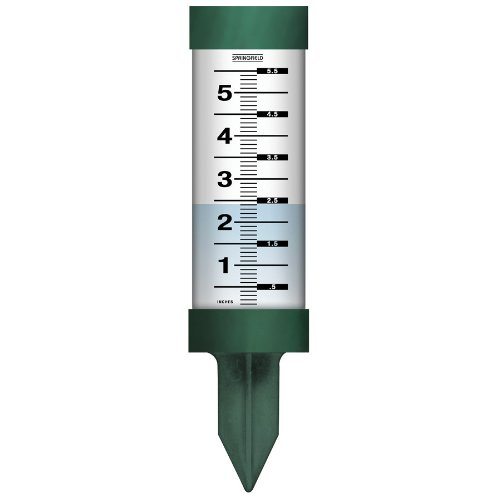
What does a rain gauge measure?

a)

a change in temperature

b)

a change in humidity

c)

wind speed

d)

the amount of rainfall

2.

The data table below shows that as the pressure of a gas sample was changed, the volume of the gas changed. The pressure was measured in atmospheres (atm) and the volume was measured in milliliters (mL).


According to the data table, as the pressure of the gas increases, the volume of the gas:

a)

decreases

b)

increases

c)

remains the same

3.

What step in the water cycle occurs when a water turns into water vapor?

a)

condensation

b)

precipitation

c)

evaporation

4.

What is the difference in air pressure at the peak of a mountain versus the base of the mountain?

a)

Air pressure is greater at the base of the mountain.

b)

The Air pressure depends on the weather.

c)

Air pressure is lower at the base of the mountain.

5.

What tool do scientists use to study wind speeds inside a thunderstorm to learn about a tornado?

a)

Fujita Scale

b)

Doppler Radar

c)

Space Satellites

6.
What atmospheric layer contains most of the mass of Earth's atmosphere?
a)
thermosphere
b)
troposphere
c)
stratosphere
d)
mesosphere
7.
What do we call the temperature at which air becomes saturated?
a)
dew point
b)
saturation
c)
fall point
d)
rain
8.
Which type of air rises faster?
a)
cold
b)
warm
c)
stormy
d)
clam
9.
They are highest clouds in the sky. They look curly, white and feathery. Usually mean good weather.
a)
Cumulus
b)
Cumulonimbus
c)
Cirrus
d)
Stratus
10.
Clouds are made up of tiny drops of ______ or ice. The moisture in the cloud affects the weather.
a)
dust
b)
water
c)
cloud particles
d)
precipitation
11.
This is sometimes called a thunderhead cloud. It looks very tall like mountains and heavy rain comes from it. 
a)
Cumulus
b)
Cirrus
c)
Stratus
d)
Cumulonimbus
12.
They are low in the sky and look soft and fluffy. 
a)
Cirrus
b)
Cumulonimbus
c)
Cumulus 
d)
Stratus
13.
what type of cloud is shown?
a)
cumulus
b)
cirrus
c)
stratus
14.

Rain, snow, sleet, and hail are all types of ______________________, which comes from some clouds.

a)
precipitation
b)
condensation
c)
evaporation
d)
runoff
15.
What is water vapor?
a)
gas
b)
solid
c)
liquid
d)
plasma
16.
Low pressure systems will bring
a)
very little wind, maybe a gentle breeze
b)
strong winds and stormy weather
17.
Wind is caused by
a)
big gusts of air moving around
b)
convection currents in the air
c)
humidity 
d)
temperature
18.
Wind blows _________ when temperature differences increase between two areas of pressure
a)
slower
b)
faster
19.
Wind speed is measured by a
a)
barometer
b)
anemometer
c)
wind vane
d)
thermometer
20.
What happens to air pressure as you move upward into the atmosphere?
a)
increases
b)
decreases
c)
stays the same
21.
Density of air is greater ________.
a)
at the top of the mountain
b)
at the bottom of the mountain
c)
at the center of the mountain
22.
Lines on a weather map that connect equal points of air pressure
a)
Dew point
b)
Fronts
c)
Air masses
d)
Isobars
23.
Which water cycle stage creates clouds?
a)
Transpiration
b)
Evaporation
c)
Condensation
d)
Runoff
24.
During the day what type of breeze brings cooler air from the ocean to the beach?
a)
sea
b)
land
c)
coastal
d)
westerlie
25.

When cold air pushes up warm air it caused thunderstorms. What type of front is this?

a)

cold

b)

warm

c)

stationary

d)

occluded

26.

Cumulionimbus clouds are usually a sign of what type of weather?

a)

thunderstorms

b)

sunny

c)

fair

d)

snow

27.
How do hurricanes get energy?
a)
warm water
b)
cold water
c)
dry air
d)
cold air
28.
Tornadoes & Hurricanes contain fast moving wind, which creates what kind of pressure?
a)
high 
b)
low
c)
stationary
d)
none of these
29.
How are global winds affected by temperature?
a)
warm air from equator rises, cold air at poles sinks
b)
cold air from poles rise, warm air from equator sinks
c)
warm & cold air stay in their zone
d)
there is no relationship between temperature and global wind
30.
How does density affect global winds?
a)
cold air is more dense so it sinks, warm air is less dense so it rises
b)
cold air is less dens so it rises, warm air is more dense so it sinks
c)
warm & cold air have the same density
d)
there is no relationship between density and global wind
31.
Why do hurricanes form over water surrounding the equator?
a)
warm air rises & evaporates creating a spiral of wind over the ocean
b)
warm water is pulled into a vortex in the ocean
c)
because there is more water than land in these regions
d)
because they are attracted to the beach/shore
32.
What is the correct sequence of the water cycle?
a)
evaporation, condensation, precipitation, run-off
b)
run-off, infilitration, condensation, evaporation
c)
precipitation, condensation, evaporation, run-off
d)
condensation, evaporation, precipitation, run-off
33.
What 2 air masses meet to form tornado alley?
a)
maritime tropical & continental polar
b)
maritime continental & continental polar
c)
martime tropical & maritime contental
d)
arctic & polar
34.

Clouds form due to what process in the water cycle?

a)

condensation

b)

evaporation

c)

precipitation

d)

transpiration

35.

What gas makes up most of the atmosphere?

a)

nitrogen

b)

oxygen

c)

carbon dioxide

d)

water vapor

36.

What happens to air pressure as you climb a mountain?

a)

it increases

b)

it does not change

c)

it decreases

d)

it neutralizes

37.

In which layer of the atmosphere does weather occur?

a)

thermosphere

b)

troposphere

c)

stratosphere

d)

ionsphere

38.

In what layer of the atmosphere is the ozone?

a)

troposphere

b)

mesosphere

c)

thermosphere

d)

stratosphere

39.

As warm air rises from the equator and cool air sinks from the poles it causes unequal heating due to differences in density called

a)

convection

b)

conduction

c)

radiation

d)

jet stream

40.

Type of breeze that occurs at night as wind blows from land to sea.

a)

land breeze

b)

sea breeze

c)

cool breeze

d)

jet stream

41.

Differences in air pressure cause

a)

currents

b)

tides

c)

waves

d)

wind

42.

Happy days with clear skies are due to what kind of pressure?

a)

Low

b)

High

c)

Stationary

d)

Under

43.

Thunderstorms are more frequent in the summer due to higher levels of moisture in the air, also called

a)

humidity

b)

rain

c)

fog

d)

air pressure

44.

The boundary between 2 air masses is called

a)

a climate zone

b)

a rift

c)

air pressure

d)

a front

45.

A flight to Colorado takes longer than the return trip home because of

a)

gulf stream

b)

jet stream

c)

trade winds

d)

global conveyor belt

46.

The amount of moisture in the air is called

a)

air pressure

b)

humidity

c)

precipitation

d)

wind

47.

New York's weather is most influenced by a warm humid air mass called

a)

maritime tropical

b)

maritime polar

c)

continental tropical

d)

continental polar

48.

If you want to go on a picnic what kind of weather forecast would be best?

a)

stationary front

b)

cold front

c)

low pressure

d)

high pressure

49.

Which of these would increase the speed of evaporation?

a)

warmer temperatures

b)

colder temperatures

c)

precipitation

d)

fog

50.
A Foucault pendulum appears to change its directions of swing because Earth
a)
is tilted on its axis
b)
is spinning on its axis
c)
has a curved surface
d)
has a density of 5.5 g/cm3
51.
At which latitude is the Sun directly overhead on certain days of the year?
a)
23.5° N
b)
66.5° N
c)
42° N
d)
90° N
52.
Which event temporarily slows or reverses surface ocean currents in the equatorial region of the Pacific Ocean, causing a disruption of normal weather patterns?
a)
tsunami
b)
El Niño
c)
volcanic eruption
d)
deforestation
53.
During the day what type of breeze brings cooler air from the ocean to the beach?
a)
sea
b)
land
c)
coastal
d)
westerlie
54.

When cold air pushes up warm air it caused thunderstorms. What type of front is this?

a)

cold

b)

warm

c)

stationary

d)

occluded

55.

What three items are necessary for a weather forecast?

a)

Temperature, Humidity, Pressure

b)

Heat, Cold, Rain

c)

High, Low, Occluded

d)

Big Macs, Whoppers, Baconators

56.

Meteorology is the study of the changes of the Earth's . . .

a)

Lithosphere

b)

Asthenosphere

c)

Atmosphere

d)

Hydrosphere

57.

Any energy coming from the Sun is called . . .

a)

Insolation

b)

Insulation

c)

Convection

d)

Interpretation

58.

Which weather instrument is most useful in measuring relative humidity?

a)

barometer

b)

anenometer

c)

psychrometer

d)

wind vane

59.

Clouds most likely form as a result of

a)

moist rising air, compressing and warming

b)

moist rising air, expanding and cooling

c)

dry rising air, compressing and warming

d)

dry rising, expanding and cooling

60.

What is the relative humidity if the dry bulb temperature is 160C and the wet bulb temperature is 100C?

a)

45%

b)

33%

c)

14%

d)

4%

61.

Which graph best shows the general relationship between altitude and air pressure?

a)
b)
c)
d)
62.

Which process primarily transfers heat by moving air?

a)

conduction

b)

convection

c)

radiation

d)

transpiration

63.

Which cross section correctly represents a cold front and the air-mass movements associated with this front?

a)
b)
c)
d)
64.

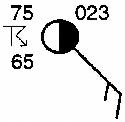
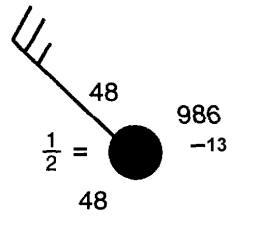
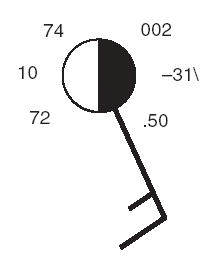
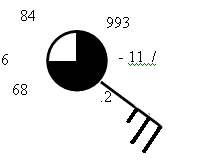
What is the dewpoint for the following station model?

a)

10 ºF

b)

23 ºF

c)

65 ºF

d)

75 ºF

65.

What is the present weather for the following station model?

a)

rain

b)

thunderstorms

c)

drizzle

d)

fog

66.

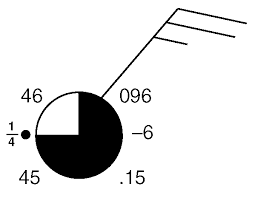
What is the amount of precipitation for the following station model?

a)

.15 in

b)

1/4 in

c)

6 in

d)

46 in

67.

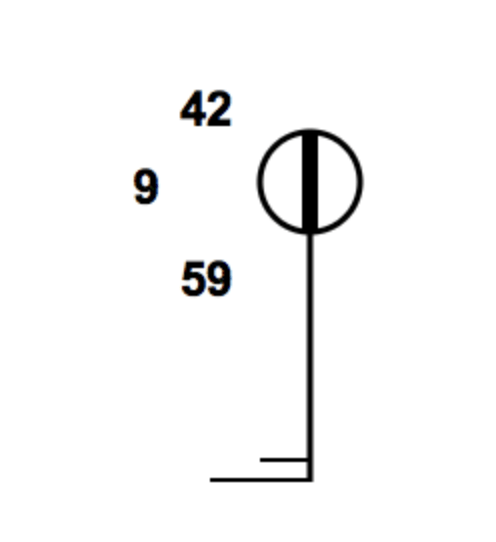
What is the visibility for the following station model?

a)

1/2 mi

b)

9 mi

c)

42 mi

d)

59 mi

68.

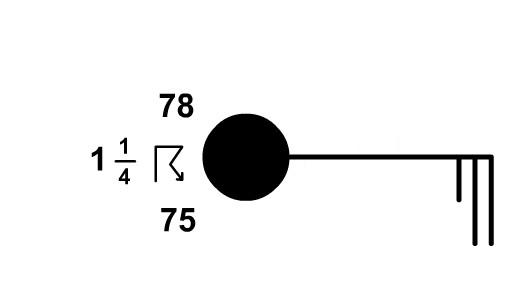
What is the wind direction for the following station model?

a)

north

b)

east

c)

northwest

d)

northeast

69.

What is the wind speed for the following station model?

a)

10 knots

b)

15 knots

c)

20 knots

d)

25 knots

70.

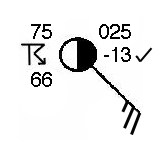
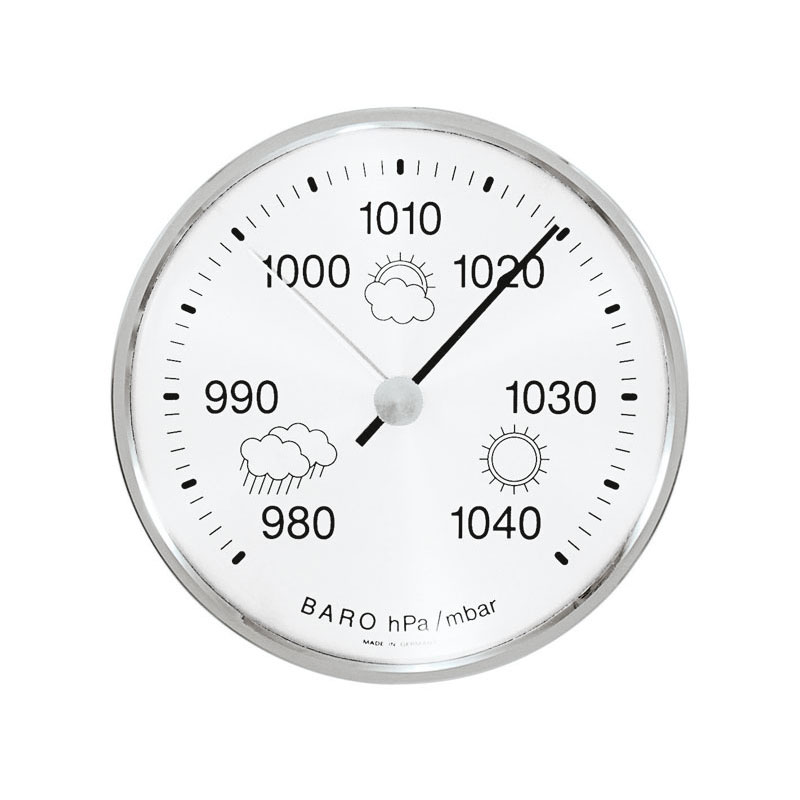
What is the station model code for a barometric pressure of 1019.5 mb?

a)

101

b)

195

c)

019

d)

119

71.

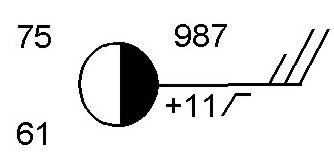
What is the barometric pressure for the following station model?

a)

987 mb

b)

998.7 mb

c)

1098.7 mb

d)

1098 mb

72.

What is the barometric trend for the following station model?

a)

steady 31 mb drop

b)

steady 31 mb rise

c)

steady 3.1 mb drop

d)

steady 3.1 mb rise

73.

What is the amount of cloud cover for the following station model?

a)

25%

b)

50%

c)

75%

d)

100%