Wayground logo

Free Printable Worksheets

Font size

S
M
L
XL
Worksheets

Key Ideas

Total questions: 151

Worksheet time: 3hrs 20mins

Name
Class
Date
1.

If fish were poisoned which organism would be affected?

a)

algae

b)

phytoplankton

c)

clams

d)

octopus

2.

The graph shows that

a)

wolf population control the rabbit population

b)

the rabbit population control the wolf population

c)

the two populations do not affect each other

d)

wolves do not hunt rabbits

3.

Using food web what is the highest trophic level?

a)

1

b)

2

c)

3

d)

5

4.

Using food web which organism is the top predator?

a)

octopus

b)

shark

c)

clam

d)

lobster

5.

What % of energy is passed from organism to organism?

a)

100%

b)

10%

c)

5%

d)

25%

6.
If the grasshopper were to be removed completely from the food web, what organism would be most effected?
a)
The squirrel
b)
The shrew
c)
The deer
d)
The rabbit
7.
True or False. In this Food Web Pyramid the consumers on each level only get about 10 percent of energy that the plants have stored.
a)
True
b)
False
8.

The diagram below represents an energy pyramid

Which area of this energy pyramid will have the least amount of energy available for use by the

organisms in that trophic level?

a)

A

b)

B

c)

C

d)

D

9.

Which best describes how energy flows through an ecosystem?

a)

Energy is most abundant at the top of the energy pyramid and flows down

b)

Usable energy is most abundant in the producers and quickly decreases as it travels through the ecosystem

c)

Energy is never lost in an ecosystem

d)

Energy is only stored in the producers

10.

Complete or Incomplete Metamorphosis?

a)

Complete because it has 3 stages

b)

Complete because it has 4 stages

c)

Incomplete because it has 3 stages

d)

Incomplete because it has 4 stages

11.
A picture of a beetle life cycle is shown.
Which letter represents the adult stage of the darkling beetle life cycle?
a)
A
b)
B
c)
C
d)
D
12.
Is the picture a vertebrate or invertebrate?
a)
Vertebrate
b)
Invertebrate
13.
All invertebrates _________
a)
Have a backbone
b)
Do not have a backbone
c)
Are really just Vertebrates
d)
Have a nerve cord
14.

Animals that have a backbone are called...

a)

Non-vertebrates

b)

Vertebrates

c)

Invertebrates

d)

Semi-vertebrates

15.

When plants grow in towards the light, this is called:

a)

Phototropism

b)

Geotropism

c)

Germination

d)

Thigmotropism

16.

Plants reacting to gravity is called:

a)

Phototropism

b)

Geotropism/Gravitropism

c)

Germination

d)

Thigmotropism

17.
What is this picture?
a)
A tadpole
b)
eggs
c)
A froglet
d)
A frog
18.
As tadpoles mature into frogs, they grow _________.
a)
gills
b)
a tail
c)
legs
d)
fingers
19.
Geothermal energy is
a)
heat energy naturally produced in earthquakes
b)
is heat naturally produced in space
c)
is heat naturally produced within Earth
d)
is heat energy naturally produced in the water
20.
An example of a biofuel is
a)
gasoline
b)
oil
c)
animal waste
d)
minerals
21.
Nonrenewable resources are natural resources, such as fossil fuels, that will eventually be used up and can never be replaced
a)
True
b)
False
22.
Hydroelectric power produces electricity using.....
a)
Wind
b)
Sunlight
c)
Moving water
d)
Dung
23.
There are 3 Main Fossil Fuels. We Know Them As --
a)
Carbon Dioxide, Oxygen, Nitrogen
b)
Cookies, Nutella, Granola
c)
Coal, Oil, Natural Gas
d)
Canyons, Oceans, Nymph
24.
Nuclear Power is a __________ energy resource.
a)
Renewable
b)
Nonrenewable
25.
__________ is an energy resource that WILL NOT run out in the next several hundred years.
a)
Renewable Energy Resource
b)
Nonrenewable Energy Resource
c)
Fossil Fuel
d)
Forever Fuel
26.
The sun produces energy using _____.
a)
fission
b)
fusion
c)
biomass
d)
geothermal
27.
Look at the graph provided. What percent of the total energy used in the United States in 2009 came from fossil fuels?
a)
16%
b)
83%
c)
46%
d)
54%
28.

Animals at the zoo weigh more than animals in the wild because

a)

zoo animals get more food than wild animals

b)

zoo animals don't get as much exercise as wild animals

c)

zoo animals get medical attention while wild animals suffer with diseases

d)

all of these reasons are true

29.
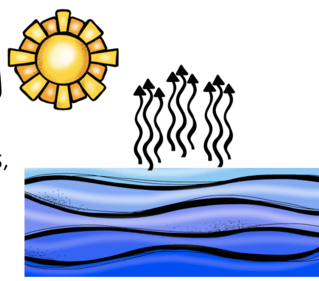
What part of the water cycle does this picture show?
a)
condensation
b)
precipitation
c)
evaporation
d)
transpiration
30.
Which of these is an example of precipitation?
a)
snow
b)
air
c)
clouds
d)
vapor
31.
What is it called when plants give off water vapor as a waste product?
a)
condensation
b)
evaporation
c)
sublimation
d)
transpiration
32.
Evaporation happens when the sun ___________ water and turns it into vapor.
a)
cools
b)
heats up
c)
freezes
d)
lights up
33.
What is the water cycle?
a)
the 3 forms of water
b)
the movement of water on, above, or below the surface of the Earth
c)
when water melts
d)
when clouds form
34.
Which best explains why runoff is important?
a)
It returns water to other locations on Earth
b)
It increases the chance of flooding
c)
It makes evaporation occur faster
d)
It increases condensation
35.

Is the water cycle an open-loop or a closed-loop system?

a)

open-loop

b)

closed-loop

36.

What is a major cause of soil erosion?

a)

Running Water

b)

Overgrazing

c)

Agricultural Activities

37.

What is soil erosion?

a)

A naturally occurring process that affects all land forms

b)

Type of soil

c)

A time period

d)

The wearing away of top soil

38.

What is erosion?

a)

The movement of sediment

b)

The breaking of sediment

c)

The dropping of sediment

39.

Water carrying sediment down a hill is an example of...

a)

weathering

b)

erosion

c)

deposition

40.

What is deposition?

a)

The movement of sediment

b)

The breaking of sediment

c)

The dropping of sediment

41.
These rocks were broken apart from the continuous freeze/thaw of water in the cracks of the rocks. This is an example of:
a)
ice wedging
b)
acid rain
c)
permeability
d)
abrasion
42.
The diagrams shows a rock with water trapped in the cracks during the day and at night. 

Which statement best explains why this process results in weathering?
a)
frozen water acts as a solute
b)
water expands when it freezes
c)
the mass of water increases when it freezes
d)
frozen water dissolves most types of rock
43.
Bobby observed that a metal trash can was covered with rust.  What type of weathering caused the rust on the trash can?
a)
Mechanical weathering 
b)
Wind weathering
c)
Chemical weathering
d)
Erosion weathering
44.

Potholes forming in the road after a cold winter is an example of what type of weather?

a)

mechanical weathering

b)

chemical weathering

45.
Temperature, light, air, water, and soil are all  _____  parts of the environment
a)
alive
b)
biotic 
c)
abiotic
d)
living
46.
Is a deer an abiotic or biotic factor? 
a)
abiotic
b)
biotic
47.
Is a fern an abiotic or biotic factor? 
a)
abiotic
b)
biotic
48.
Is a weather an abiotic or biotic factor? 
a)
abiotic
b)
biotic
49.
Is sunlight an abiotic or biotic factor? 
a)
abiotic
b)
biotic
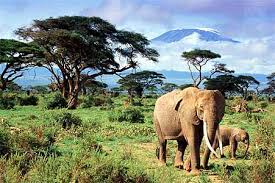
50.
What are the biotic factors in this image?
a)
sunlight, elephants, and grasses
b)
sunlight, water,  and air
c)
elephants, plants, trees 
51.
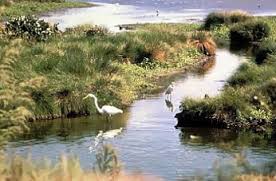
What are the abiotic factors in this image? 
a)
water, sunlight, dirt, air
b)
birds and plants
c)
water, plants, and birds 
52.

What probably caused this dam to fail?

a)

erosion

b)

deposition

c)

sedimentation

d)

porosity

53.
Which represents the distribution of water on Earth?
a)
3% freshwater, 97% salt water
b)
97% freshwater, 3% salt water
c)
71% freshwater, 29% salt water
d)
29% freshwater, 71% salt water
54.
Where is most of the freshwater found on Earth?
a)
lakes
b)
glaciers
c)
oceans
d)
rivers
55.

Water underground is stored in ____________.

a)

aquifers

b)

reservoirs

c)

wells

d)

depositories

56.

The diagram shows the distribution of water on the Earth. Which source is the most abundant supply of liquid surface water that is not salty?

a)

groundwater

b)

oceans

c)

lakes

d)

rivers

57.

The graphic shows that only 3% of the Earth's water is fresh water. The graphic also shows that of this 3%, almost all of it is contained in two reservoirs. What are the two reservoirs that contain almost all of Earth's fresh water?

a)

glaciers and groundwater

b)

streams and estuaries

c)

marshes and swamps

d)

lakes and rivers

58.
What is the center of the called?
a)
proton
b)
neutron
c)
electron
d)
nucleus
59.
which particles are located in the nucleus?
a)
protons and neutrons
b)
newtrons and electrons
c)
protons and electrons
d)
protons, neutrons, and electrons
60.
Which particles have a positive charge?
a)
protons
b)
neutrons
c)
electrons
61.
Which particles have a negative charge?
a)
protons
b)
neutrons
c)
electrons
62.
Which particles have a neutral charge?
a)
protons
b)
neutrons
c)
electrons
63.
A neutral atom of the element sodium has 11 protons and ____ electrons.
a)
22
b)
23
c)
8
d)
11
64.
Do the following atoms belong to the same element? Explain
       Aluminum-27
       An atom with 14 protons and 13 neutrons
a)
Yes because they have the same number of protons
b)
Yes because they have the same mass
c)
No because they have different number of protons
d)
No because they have different number of neutrons
65.
What is an ion?
a)
A Charged Atom
b)
A Large Atom
c)
A Small Atom
d)
A Cute Atom
66.
An atom becomes _______ when it loses electrons.
a)
Positive
b)
Negative
c)
Neutral
d)
Invinsible
67.
An atom becomes _________ when it gains electrons.
a)
Positive
b)
Negative
c)
Neutral
d)
Invinsible
68.

packages and distributes proteins

proteins may be modified here

a)

golgi body

b)

chloroplast

c)

ribosomes

d)

lysosome

69.

outermost structure that gives support and shape to plant cells

a)

cell wall

b)

cell membrane

c)

mitochrondria

d)

cytoplasm

70.

uses sunlight, carbon dioxide, and water to make glucose and oxygen

a)

chloroplast

b)

nucleus

c)

endoplasmic reticulum

d)

lysosome

71.

stores digestive enzymes and aid in digestion within plant and fungal cells

stores water and waste

a)

vacuole

b)

cytoplasm

c)

chloroplast

d)

cell wall

72.

protective barrier that encloses all cells

controls the movement of materials into and out of the cell

a)

cell membrane

b)

cell wall

c)

endoplasmic reticulum

d)

golgi body

73.

makes proteins from amino acids

a)

ribosomes

b)

mitochondria

c)

nucleus

d)

lysosome

74.

breaks down glucose to produce energy (ATP) during cellular respiration

a)

mitochondria

b)

nucleus

c)

cytoplasm

d)

chloroplast

75.

contains DNA, which has the information on how to make the cell's proteins

control center for the cell

a)

nucleus

b)

lysosome

c)

mitochondria

d)

endoplasmic reticulum

76.

detroys worn-out or damaged organelles

gets rid of waste materials and protects the cell from foreign invaders

found mostly in animal cells

a)

lysosome

b)

vacuole

c)

cell wall

d)

golgi body

77.

gel-like substance where all other organelles are found

it is constantly moving and some cellular reactions can occur here

a)

cytoplasm

b)

vacuole

c)

chloroplast

d)

golgi body

78.

site of many cellular reactions

can be rough or smooth

transports proteins

a)

endoplasmic reticulum

b)

golgi body

c)

ribosomes

d)

mitochondria

79.
How does this protist move? 
a)
Pseudopods 
b)
Cilia 
c)
Flagellum
80.
Fine hairs that allow protist to move is called what? 
a)
Pseudopods 
b)
Euglena 
c)
Flagella 
d)
Cilia 
81.
A long, whiplike structure used for movement. 
a)
motility
b)
flagellum
c)
pseudopod
d)
eye spot
82.

On Protist 2, Label C

a)

Chloroplast

b)

Nucleus

c)

Flagellum

83.
Where does an off spring get its traits in asexual reproduction?
a)
From both parents
b)
From only one parent
c)
From neither parent
d)
There are no traits handed down
84.
Sexual reproduction requires _____ parents and asexual reproduction requires ___ parents
a)
1,1
b)
2,2
c)
2,1
d)
1,2 
85.

All of the offspring of an organism have the same genetic material, which is identical to the parent organism. From this, we can conclude that this organism -

a)

makes its own food

b)

is unicellular

c)

live in a marine habitat

d)

reproduces asexually

86.

California blackworms, also known as mudworms, are able to break apart. Each body section that broke apart is able to become an identical new worm. What type of reproduction does this example represent?

a)

Sexual reproduction

b)

Asexual reproduction

87.

Reproducing asexually will produce offspring ...

a)

genetically different from each other

b)

genetically identical to the parent

88.
2 dogs reproduce, 2 sex cells join together & form offspring. The resulting offspring is likely
a)
to express only recessive traits
b)
to be identical to ONE parent
c)
to share some traits from BOTH of its parents
89.
a)
budding
b)
sporulation
c)
vegetative propagation
d)
binary fission
90.
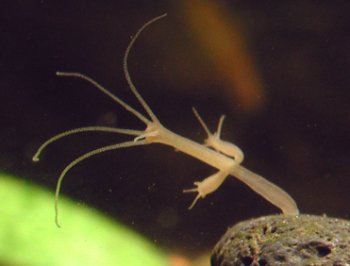
A hydra reproduces when an outgrowth, or bud, forms and continues to develop until if falls off of the parent. This is an example of:
a)
Binary Fission
b)
Sporulation
c)
Budding
d)
Vegetative Propagation
91.
This is when a new organism grows by cell division on the body of its parent. The bud, or offspring is identical to the parent. The bud, when large enough, can break off of the parent and live on its own.  Examples of this include yeast, hydra and potatoes.
 
a)
Regeneration
b)
Vegetative propagation
c)
Fission
d)
Budding
92.
In the given scenario what will happen?  An egg is placed in pure water for 48 hours.
a)
The egg will gain water and swell.
b)
Water will move in and out of the cell equally, and the cell with neither shrink nor swell.
c)
The egg will lose water and shrink.
93.
Which way will the water molecules move during osmosis?
a)
Out of the cell, so the cell shrinks.
b)
Out of the cell, so the cell swells.
c)
Into the cell, so the cell shrinks.
d)
Into the cell, so the cell swells.
94.
In the given scenario what will happen to the organism: salt is poured onto eggplant.
a)
Water will move out of the eggplant cells and the cells will shrink.
b)
Water will move out of the eggplant cells and the cells will swell.
c)
Water will move into the eggplant cells and the cells will swell.
95.
The process of photosynthesis takes place in organelles (part of cell) called ______.
a)
Phloem
b)
Xylem
c)
Stomata
d)
Cholorplasts
96.
Why do leaves look green?
a)
it reflects all colors but green
b)
it reflects yellow and blue
c)
it reflects green light
d)
it absorbs green light
97.
What two things do plants need to do the PROCESS of photosynthesis?
a)
Carbon dioxide & water
b)
Oxygen & water
c)
Sugar & water
d)
Carbon dioxide & Sugar
98.
Why do plants do photosynthesis?
a)
to make oxygen for people
b)
to make food for itself
c)
to make a flower
d)
to make carbon dioxide
99.
Plants COULD NOT survive without _____ and ______.
a)
Transpiration and Gravity
b)
Oxygen and Water
c)
Seeds and Water
d)
Carbon Dioxide and Water
100.
Small openings called ______ are found on the underside of leaves and allow gases to enter or leave the plant cells.
a)
Phloem
b)
Chloroplasts
c)
Xylem
d)
Stomata
101.

Which type of cell would be more likely to have a lot of chloroplasts?

a)

A root cell because gravity would make it flow down

b)

A leaf cell because chloroplasts are lighter

c)

A root cell because chlorophyll is very dense

d)

A leaf cell because light is needed for photosynthesis

102.

Which is more likely to have a lot of mitochondria and why?

a)

a muscle cell because it is bigger

b)

a skin cell because it is flatter

c)

a muscle cell because it requires a lot of energy

d)

a skin cell because is requires very little energy

103.

The _____________________________ states that all organisms are made of one or more cells.

a)

Cell Theory

b)

Cellular Theory

c)

Scientific Theory

d)

Life Theory

104.

The __________ is the basic unit of life.

a)

Carbohydrates

b)

Protein

c)

Lipids

d)

Cell

105.

Geologists have classified rocks into three major groups of rocks which are:

a)

inorganic, organic and chemical rocks

b)

igneous, sedimentary and metamorphic rocks

c)

metamorphic, chemical and non chemical rocks

d)

sedimentary, inorganic and igneous rocks

106.

Any rock that forms from another rock as a result of changes in heat or pressure (or both) is a:

a)

chemical rock

b)

igneous rock

c)

sedimentary rock

d)

metamorphic rock

107.

A rock that forms from many small fragments of other rocks is a(n)

a)

igneous rock

b)

metamorphic rock

c)

sedimentary rock

d)

extrusive rock

108.

If heat and pressure inside Earth cause the texture and crystal structure of a rock to change, what new material is formed?

a)

sedimentary rock

b)

metamorphic rock

c)

igneous rock

d)

chemical rock

109.
Which type of metamorphic rock has minerals in bands or stripes?
a)
Nonfoliated
b)
Coarse grained
c)
Fine grained
d)
Foliated
110.
A rock which contains a useful mineral is call a/an
a)
gem
b)
quarry
c)
ore
d)
alloy
111.
Minerals are the building blocks of _____________.
a)
elements
b)
atoms
c)
fossils
d)
rocks
112.
The flat layers are the sedimentary layers.  The curving or upright rocks are IGNEOUS intrusions.  Which three must be igneous intrusions
a)
1, 2 and 3
b)
4, 5, and 6
c)
7, 8 and 9
d)
2, 4, 8
113.
When the magma squeezes into the layers of sedimentary rock that is called "igneous intrusion."  In this picture old, cold igneous intrusions are shown in black.  New, hot, intrusions are shown in red.  Igneous intrusions are made of
a)
Lava flowing over the top of the ground
b)
magma squeezed between existing layers of rock
c)
pyroclastic flow and gases spouting into the air
114.
In this picture the igneous intrusion, that came after the rocks around it, it drawn in what color?
a)
purple
b)
brown
c)
black
d)
yellow
115.

Which seismogram shows a seismograph recording station that is closest to the epicenter of the earthquake and why?

a)

A because it's the longest

b)

B because it happens last

c)

C because it happens first

d)

A because it happens first

116.

A lot of time between P wave and S wave indicates that

a)

sometimes S waves are slower.

b)

the earthquake was far away.

c)

the earthquake was nearby.

d)

the P wave cheated. Never trust a P wave.

117.

The seismogram near the bottom has smaller waves, indicating that it was

a)

farther away from the earthquake.

b)

closer to the earthquake.

c)

in need of maintenance or repair.

d)

deeper underground.

118.
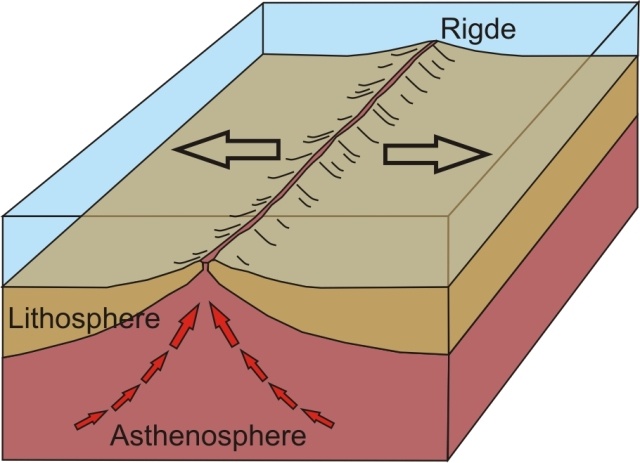
What kind of plate boundary is shown here?
a)
divergent
b)
convergent
c)
transform
d)
submergent
119.
What geologic feature/event you be most likely to find at a transform boundary?
a)
Earthquakes
b)
Volcanoes
c)
Mountains
d)
Rift Valleys
120.
What geologic feature/event you be most likely to find at a transform boundary?
a)
Earthquakes
b)
Volcanoes
c)
Mountains
d)
Rift Valleys
121.
What kind of plate boundary is shown here?
a)
divergent
b)
convergent
c)
transform
d)
subducting
122.
What geologic feature/event would you most likely to find at a divergent boundary between two pieces of oceanic crust?
a)
Rift Valley
b)
Mid-Ocean Ridge
c)
Island Arc
d)
Flat land
123.
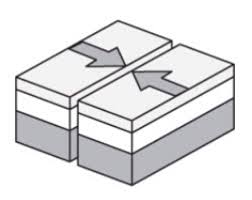
What kind of plate boundary is shown here?
a)
divergent
b)
convergent
c)
transform
d)
strike slip
124.
A subduction zone is formed...
a)
when one tectonic plate sinks below another
b)
at every type of convergent plate boundary
c)
at every type of divergent plate boundary
d)
at transform boundaries
125.
Name the boundary
a)
convergent boundary
b)
divergent boundary
c)
transform boundary
d)
sergent boundary
126.

The area around the pacific plate where boundaries form is called...

a)

death ring

b)

fire zone

c)

ring of fire

d)

zone of fire

127.
The San Andreas Fault in California is an example of a ________.
a)
divergent boundary
b)
convergent boundary
c)
transform fault
d)
subduction zone
128.
The San Andreas Fault in California is an example of a ________.
a)
divergent boundary
b)
convergent boundary
c)
transform fault
d)
subduction zone
129.

P Waves can move through which of the following?

a)

Liquids only

b)

Solids only

c)

Solids but not liquids

d)

Liquids and Solids

130.

S Waves can move through which of the following?

a)

Liquids only

b)

Solids only

c)

Liquids but not solids

d)

Liquids and solids

131.
Where do volcanoes come from?
a)
Places where plates move apart
b)
Places where plates are moving together
c)
Hot Spots
d)
All of these options
132.
What is the measure of the amount of energy released in an earthquake?
a)
Earthquake
b)
Epicenter
c)
Magnitude
d)
Seismogram
133.
Where is the point on the Earth’s surface directly above the focus of an earthquake?
a)
Epicenter
b)
Fault
c)
Hypocenter
d)
Tremor
134.
What geologic feature/event would you most likely to find at a convergent boundary between two pieces of continental crust?
a)
Volcano
b)
Mountain
c)
Rift
d)
Island Arc
135.
The Himalayas in South Asia are an example of what type of plate boundary?
a)
continental-oceanic convergent
b)
continental-continental convergent
c)
oceanic-oceanic convergent
d)
continental-continental divergent
136.

What geologic process formed the Himalayas?

a)

two continental plates converging

b)

an earthquake in a subduction zone

c)

a tectonic plate moving over a hot spot

d)

movement at a transform fault boundary

137.

What landform would you most likely find at a divergent boundary between two pieces of oceanic crust?

a)

Rift Valley

b)

Mountain

c)

Mid-Ocean Ridge

d)

Volcano

138.

What landform would you most likely find at a divergent boundary between two pieces of continental crust?

a)

Mid-Ocean Ridge

b)

Rift Valley

c)

Mountain

d)

Volcano

139.

What landform would you most likely find at a convergent boundary between two pieces of continental crust?

a)

Mid-Ocean Ridge

b)

Oceanic Trench

c)

Mountain

d)

Volcano

140.

What landform would you most likely find at a convergent boundary between two pieces of oceanic crust?

a)

Rift Valley

b)

Mid-Ocean Ridge

c)

Mountain

d)

Ocean Trench

141.

When one tectonic plate sinks under another, this is called...

a)

Convegent

b)

Divergent

c)

Subduction

d)

Transform

142.

Which picture shows material that is more dense?

a)

The picture of the left

b)

The picture on the right

143.

What does heat do when convection currents are moving?

a)

Sinks

b)

Rises

c)

Stays in place

144.

When do particles move faster?

a)

In hot water

b)

In cold water

145.

Why does ice float?

a)

Due to convection currents

b)

It is more dense than water.

c)

It is less dense than water.

146.
Hot air is ________dense than the air around it, that is how the balloon can rise. 
a)
more
b)
less
147.
Why do the liquids form different layers?
a)
They have different densities.  
b)
They have different masses.  
c)
They have different volumes.  
d)
They are different temperatures.  
148.

If new ocean crust is found around the rift valley, where do you find the olest crust?

a)

Mid Ocean Ridges

b)

Trech at a Subduction Zone

c)

Rift Valley

d)

Magma recycle center

149.

Youngest oceanic crust is found at the Mid-Ocean Ridge. Age gets progressively older as you get farther from the mid-ocean ridge. Why is the Earth not expanding in size?

a)

The older ocean crust is weathered and eroded away

b)

deposition of the older crust decreases the mass of earth

c)

The older crust is being recycled at subduction zones.

d)

The mid ocean ridge is becoming so large that it is consuming the older the crust.

150.

Over time, life on Earth has generaly become

a)

more complex.

b)

less complex.

c)

equally complex.

d)

apartment complex.

151.

Why does the mountain in the old picture of Pike's Peak look the same size as it does in the new picture of Pike's Peak?

a)

The new picture was Photoshopped.

b)

The old picture was Photoshopped.

c)

Mountains can sneak up on you like that.

d)

Mountains take a very long time to build.