wayground logo

Free Printable Worksheets

Font size

S
M
L
XL
Worksheets

Chem Review

Total questions: 62

Worksheet time: 53mins

Name
Class
Date
1.
Which of the following is NOT an example of matter?
a)
air
b)
heat
c)
smoke
d)
water vapor
2.
All of the following are physical properties of matter EXCEPT ___.
a)
mass
b)
color
c)
melting point
d)
ability to rust
3.
A vapor is which state of matter?
a)
solid
b)
liquid
c)
gas
d)
all of the above
4.
Which of the following is a physical change?
a)
corrosion
b)
explosion
c)
evaporation
d)
rotting of food
5.
Which of the following is a heterogeneous mixture?
a)
air
b)
salt water
c)
steel
d)
soil
6.
Which of the following is a homogeneous mixture?
a)
Salt water
b)
beef stew
c)
sand and water
d)
soil
7.
Which of the following items is NOT a compound?
a)
baking soda
b)
salad dressing
c)
sucrose
d)
table salt
8.
A substance that can be separated into two or more substances only by a chemical change is a(an) ___.
a)
solution
b)
element
c)
mixture
d)
compound
9.

What is in the nucleus of the atom?

a)

Protons, Neutrons, and Electrons

b)

Protons

c)

Protons and Neutrons

d)

Neutrons

10.

What is the formula for X with a charge of +3 mixing with Y with a charge of -2?

a)

X2Y3

b)

X3Y2

c)

YX

d)

X6Y6

11.

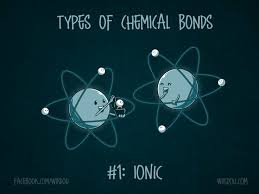
Which are the differences between a covalent bond and an ionic bond?

a)

Ionic bonds share electrons, covalent bonds transfer them

b)

Covalent bonds share electrons, ionic bonds transfer them

c)

Ionic bonds are made of metals and nonmetals, covalent bonds are made of nonmetals

d)

Ionic bonds are made of nonmetals, covalent bonds are made of metals and nonmetals

12.
How many elements are represented in the compound, Na2CO?
a)
1
b)
2
c)
3
d)
4
13.
Which of the following are examples of elements?
a)
NaCl, O, CO2
b)
C, Au, Ag, Al
c)
Hg, Al, LiF
d)
Salt, Water, Steel
14.
How many protons does this element have?
a)
40
b)
21
c)
20
d)
41
15.

How many chlorine atoms are in a molecule of Ba(ClO4)2?

a)

1

b)

2

c)

4

d)

8

16.

Which of the following has 5 valance electrons?

a)

boron

b)

carbon

c)

nitrogen

d)

oxygen

e)

fluorine

17.

What is the charge of a calcium ion?

a)

+1

b)

+2

c)

+/-4

d)

-1

18.

What is the formula for the ionic compound formed between magnesium and iodine?

a)

MgI2

b)

MgI

c)

Mg2I

d)

Mg2I2

19.

What is the formula for the ionic compound formed between potassium and sulfur?

a)

K2S

b)

KS

c)

KS2

d)

K2S2

20.
If you change a substance into a new substance...
a)
Partial Change
b)
Physical Change
c)
Chemical Change
d)
Freezing
21.
Substance with atoms that are all alike.
a)
element
b)
compound
c)
homogeneous mixture
d)
heterogeneous mixture
22.
What type of mixture is this?
a)
homogenous mixture
b)
chemical
c)
heterogeneous mixture 
d)
solid mix
23.
What is the definition of a compound?
a)
The smallest part of any substance which can exist on its own
b)
Two or more atoms chemically joined together (can be the same or can be different)
c)
A simple substance in which all the atoms are identical
d)
Two or more different elements chemically joined together
24.
What's a valence electron?
a)
electrons in the second energy level
b)
electrons in the outermost energy level
c)
the atomic number
d)
electrons in the first level
25.
The positive particles of an atom are 
a)
electrons 
b)
positrons 
c)
neutrons 
d)
protons 
26.
The atomic number of potassium is 19. Therefore, the Potassium atom has:
a)
19 protons, 39 neutrons, 19 electrons
b)
39 protons, 19 neutrons, 26 electrons
c)
19 protons, 20 neutrons, 19 electrons
27.
_______ and _______ are located inside of the nucleus.
a)
Electrons and Protons
b)
Protons and Neutrons
c)
Neutrons and Electrons
d)
Protons and nucleotons
28.
What is the atomic number for an element with twelve protons?
a)
2
b)
12
c)
24
d)
6
29.
Left of zigzag line
a)
metals
b)
nonmetals
c)
metalloid
30.
Which is a chemical change?
a)
freezing fruit juice
b)
slicing a potato
c)
boiling water
d)
copper metal turning green
31.

An electron has a

a)

Positive charge

b)

Negative Charge

c)

Neutral Charge

d)

No Charge

32.
Which of the following is an example of an element?
a)
Water
b)
Carbon 
c)
Oil
d)
Carbon Dioxide 
33.
State the type and number of atoms found in CO2:
a)
2 carbons and 2 oxygen
b)
1 Carbon and 2 Oxygen
c)
1 Nitrogen and 2 Oxygen
d)
2 Carbon and 1 Oxygen
34.
Breaking a toothpick is an example of which type of change?
a)
Chemical Change 
b)
Mechanical Change 
c)
No Change 
d)
Physical Change 
35.
An explosion is an example of a: 
a)
Chemical Change 
b)
Physical Change
36.

Pick the chemical change below:

a)

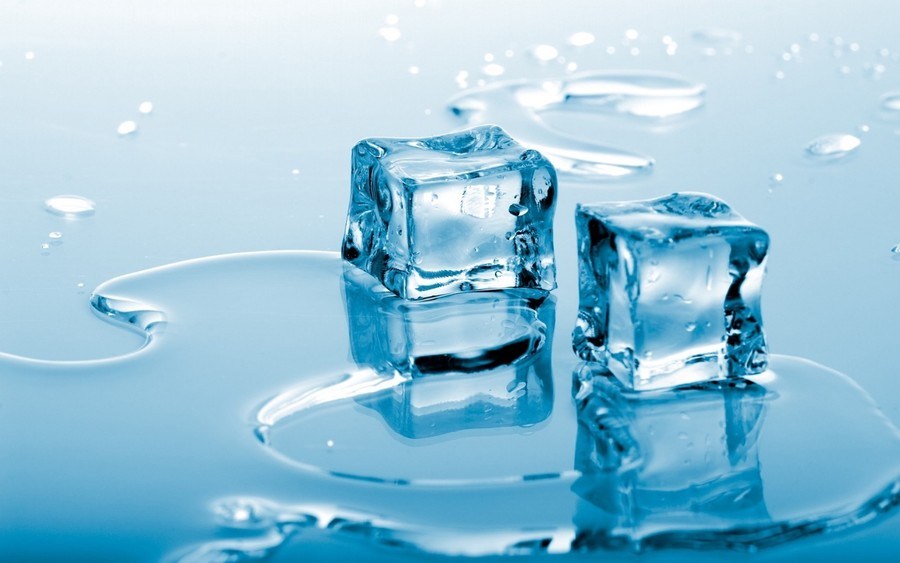
water freezing into ice

b)

clay being squished in your hand

c)

wood burning in a fire

d)

falling off the roof of a building

e)

a raft being inflated

37.

What does the atomic number of an atom indicate?

a)

the number of neutrons

b)

the number of valence electrons

c)

the number of protons

d)

the number of core electrons

e)

the mass number

38.

Atoms are in groups with other atoms that have similar properties. Which atom below would you expect to share the most similar properties with fluorine, F?

a)

sulfur, S

b)

neon, Ne

c)

oxygen, O

d)

chlorine, Cl

e)

francium, Fr

39.

What is group 8A called?

a)

noble gases

b)

fancy atoms

c)

maniacal particles

d)

elite elements

40.

Which element is in group 6A, period 2?

a)

barium

b)

carbon

c)

oxygen

d)

samarium

41.

Which of the following has a full valence shell?

a)

fluorine, F

b)

nitrogen, N

c)

sodium, Na

d)

zinc, Zn

e)

krypton, Kr

42.

What do you call an ion with a positive charge?

a)

cation

b)

anion

c)

dogion

d)

onion

e)

posion

43.

What do the dots represent?

a)

protons

b)

lone pairs

c)

bonded pairs

d)

valence electrons

e)

neutrons

44.

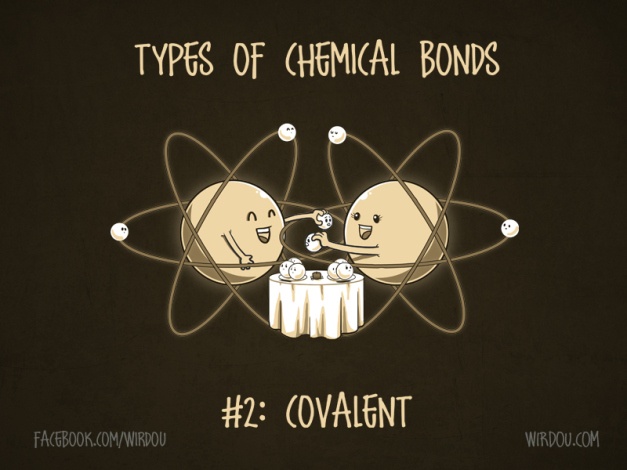
What type of bond involves 2 nonmetals sharing pairs of electrons?

a)

ionic bond

b)

covalent bond

c)

savings bond

d)

James bond

45.

How many electrons are shared by the two atoms in a triple covalent bond?

a)

1

b)

2

c)

4

d)

6

e)

8

46.
If an atom has an equal number of protons and electrons it is a...
a)
Positive ion
b)
Negative ion
c)
Isotope
d)
Neutral atom
47.
Burning a piece of paper 
a)
Chemical Change 
b)
Physical Change 
48.
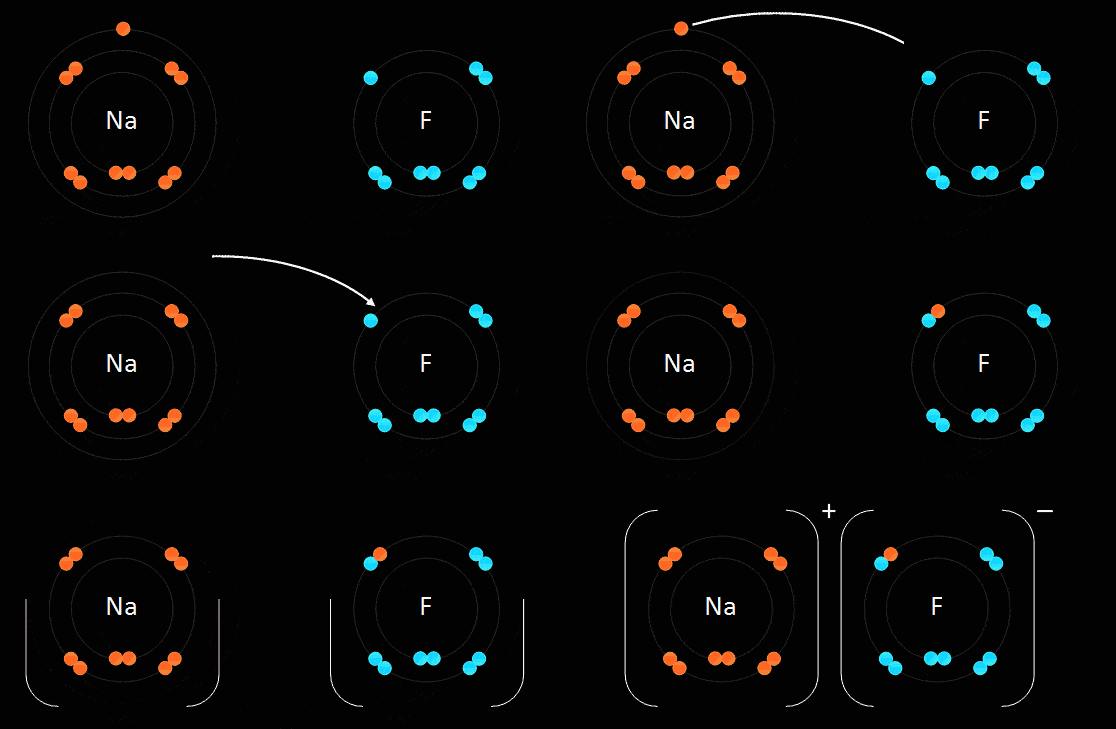
An ionic bond forms when 
a)
Valence electrons are shared
b)
a sea of mobile electrons surround the cations
c)
valence electrons are transferred between atoms
d)
none of the above
49.
In chemical compounds, covalent bonds form when
a)
the electronegativity difference between two atoms is very large.
b)
electrons are completely transferred between two atoms.
c)
pairs of electrons are shared between two atoms.
d)
ions are held together by opposite charges.
50.
Why type of bond is forming between the atoms in the diagram?
a)
Ionic
b)
Covalent
51.
What kind of change is a phase change?
a)
Physical - it's still the same substance
b)
chemical - it's made of chemicals 
52.
Two substances physically combined and that appears the same throughout is classified as
a)
A homogeneous mixture
b)
A heterogeneous mixture
c)
An element
d)
  A compound
53.
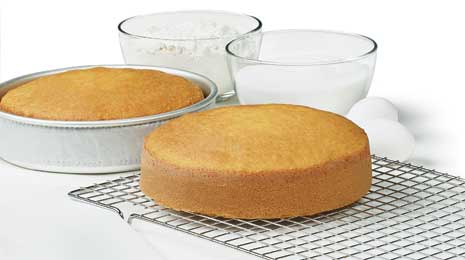
Physical or Chemical Change?  Baking a cake.
a)
Chemical Change
b)
Physical Change
54.
Which is a transition metal?
a)
cesium
b)
iron
c)
helium
d)
tellurium
55.
What kind of bond forms between two nonmetals?
a)
Chemical bond
b)
Ionic bond
c)
Covalent bond
d)
Electron bond
56.
Type of mixture that has the SAME COMPOSITION in every part.
a)
Homogenous
b)
Heterogeneous
57.
Type of mixture that DOESN'T HAVE the same composition in every part.
a)
Homogeneous
b)
Heterogeneous
58.
Two classifications of a pure substance are
a)
homogeneous and heterogeneous
b)
atoms and elements
c)
elements and compounds
d)
solutions and colloids
59.
A substance that is made up of only one kind of atom is a(an)
a)
compound
b)
homogeneous mixture
c)
element
d)
solution
60.
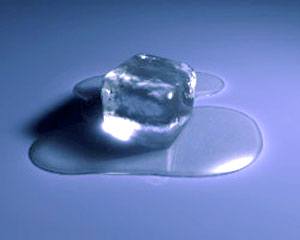
Water freezing into ice is an example of a...
a)
Physical Change
b)
Chemical Change
61.

Anions are ions with a negative charge because they-

a)

gain electrons

b)

lose electrons

62.

Cations are ions with a positive charge because they-

a)

gain electrons

b)

lose electrons