wayground logo

Free Printable Worksheets

Font size

S
M
L
XL
Worksheets

Year 8 Term 2 Exam Revision

Total questions: 95

Worksheet time: 4hrs 47mins

Name
Class
Date
1.
What type of respiration requires oxygen?
a)
Aerobic
b)
Anaerobic
2.
What are the products of anaerobic respiration?
a)
Glucose and oxygen
b)
Carbon dioxide and water
c)
Lactic acid
d)
Carbon monoxide
3.
What type of respiration does not require oxygen?
a)
Aerobic
b)
Anaerobic
4.
Which type of respiration is most efficient?
a)
Aerobic
b)
Anaerobic
5.
Which equation shows the reaction for anaerobic respiration
a)
carbon dioxide + water --> glucose and oxygen
b)
glucose + Oxygen --> lactic acid and energy
c)
glucose + oxygen --> carbon dioxide and water and energy
d)
glucose --> lactic acid and energy
6.
Aerobic respiration is different from anaerobic respiration in that aerobic respiration needs...
a)
chlorophyll
b)
carbon dioxide
c)
glucose
d)
oxygen
7.

NUMBER 1:

a)

lungs

b)

pharynx

c)

mouth

d)

alveoli

8.

NUMBER 6:

a)

Lungs

b)

Trachea

c)

Mouth

d)

Alveoli

9.

NUMBER 3:

a)

Pharynx

b)

Trachea

c)

Bronchi

d)

Alveoli

10.

Inside the lungs, the bronchi divide into smaller tubes. At the end of these tubes, there are tiny sacs called...

a)

Pharynx

b)

Trachea

c)

Lungs

d)

Alveoli

11.

Which are the main organs in the respiratory system?

a)

Heart

b)

Stomach

c)

Lungs

d)

Nose

12.
The tube in the body through which air moves as it travels to and from the lungs;the windpipe.
a)
heart
b)
bone
c)
blood vessel
d)
trachea 
13.

Arteries carry oxygen rich blood away from the heart.

a)

True

b)

False

14.

Veins carry oxygen poor blood back to the heart.

a)

False

b)

True

15.

How does the heart work?

a)

It pumps blood first to the lungs, back to the heart and then around the rest of the body.

b)

It pumps blood first to the rest of the body, back to the lungs and then to the heart.

c)

It pumps blood around the rest of the body, back to the heart and then to the lungs,
16.
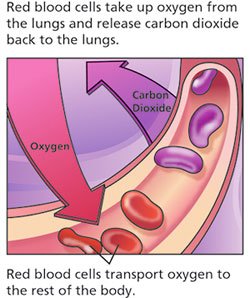
The circulatory system works with the __________ system to obtain energy from nutrients that we eat. 
a)
respiratory 
b)
digestive
c)
skeletal
d)
nervous
17.
These cells, in the blood, carry oxygen and give the blood its color.
a)
white blood cells
b)
plasma
c)
platelets
d)
red blood cells
18.
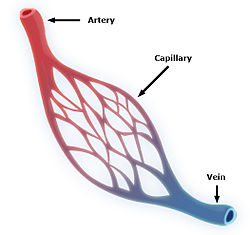
The smallest type of blood vessel is the:
a)
nerve
b)
vein
c)
capillary
d)
artery
19.
Data that can be measured with NUMBERS is...
a)
Quantitative Data
b)
Qualitative Data
20.
Data that is observed using your 5 senses and is described through the use of WORDS is...
a)
Quantitative Data
b)
Qualitative Data
21.
In an experiment, the one thing "I" change or manipulate is the...
a)
Independent Variable
b)
Dependent Variable
c)
Constant
22.
What a scientist finds out at the END of an experiment is the...
a)
Independent Variable
b)
Dependent Variable
c)
Constant
23.
In an experiment, the things a scientist purposefully keeps the same are the...
a)
Independent Variable
b)
Dependent Variable
c)
Constant
24.

What the scientist thinks will be affected; what is observed or measured to determine the effect of the independent variable.

a)

Dependent variable

b)

Controls

c)

Hypothesis

d)

Constants

25.
Research question: does the distance a person kicks a soccer ball effect how well they will do on their math test.  What is the dependent variable?
a)
How far they kick the soccer ball
b)
who the person is
c)
how well they do on the math test
d)
Type of soccer ball.
26.
What would the INDEPENDENT variable be in an experiment testing which types of paper airplane goes furthest?
a)
the paper used
b)
the type of paper airplane
c)
the distance of each plane's flight
d)
how hard the plane is thrown
27.
Research Question: Does the type of gasoline put in a car effect how fast the car can drive. What is the independent variable?
a)
Type of gasoline
b)
which car the gas is put into
c)
how fast the car can drive
d)
how much gas is put into the car
28.
An experiment is performed on plants to see how different liquids affect plant growth. Each plant in the experiment is given a different liquid; water, apple juice, or milk. Each plant has the same amount of soil, sunlight, and listens to the same music. In this investigation, the independent variable is ...
a)
The type of plant
b)
The amount of sunlight
c)
The type of music
d)
The type of liquid
29.
Ms. S set up an experiment to see how the mass of a ball affects the distance it rolls off a ramp. Identify the independent variable.
a)
Distance traveled by the ball
b)
Height of the ramp
c)
Mass of the ball
d)
Who set up the experiment (Ms. S, etc)
30.

Subatomic particles with a negative charge

a)

Electrons

b)

Neutrons

c)

Protons

d)

Quarks

31.
subatomic particles found on the outermost shell & responsible for the atom's reactivity
a)
neutrons
b)
valence electrons
c)
isotopes
d)
ions
32.
Subatomic particles with a positive charge
a)
neutrons
b)
atomic mass
c)
protons
d)
isotopes
33.
Measure mainly of the nuclear particles: protons + neutrons
a)
Subatomic Particles
b)
Atomic Number
c)
Atomic Mass
d)
Gluons
34.
Value representing the number of protons in an element
a)
Atomic Mass
b)
Mass Number
c)
Valence Electrons
d)
Atomic Number
35.
Subatomic particles that are neutral in charge
a)
Neutrons
b)
Protons
c)
Nucleus 
d)
Electrons
36.
The smallest particle of an element that shows all the properties of that element.
a)
Subatomic Particles
b)
Atom
c)
Quarks
d)
Gluons
37.
Where electrons are likely to be found as they travel around the nucleus
a)
Nucleus
b)
Electron Cloud
c)
Within a Proton
d)
Within a Neutron
38.
A tiny but very dense, positively charged portion of the atom that holds most of the atomic mass
a)
Electron Shells
b)
Orbitals
c)
Electron Cloud
d)
Nucleus
39.
Arrangement of elements organized by atomic number
a)
Electron Cloud 
b)
Periodic Table 
c)
Electron Configuration
d)
None of these
40.
Calculation used to find the number of neutrons in an atom
a)
Atomic Mass - Atomic Number
b)
Atomic Number - Atomic Mass
c)
Atomic Mass - Electrons
d)
none of these
41.
This picture represents which of the following?
a)
element
b)
compound
c)
mixture
42.
This picture represents which of the following?
a)
element
b)
compound
c)
mixture
43.
This picture represents which of the following?
a)
element
b)
compound
c)
mixture
44.
What is the picture displayed?
a)
atom
b)
element
c)
molecule
d)
compound
45.
Are these molecules also compounds?
a)
YES
b)
NO
46.
Are these molecules also compounds?
a)
YES
b)
NO
47.

In this diagram, X represents...

a)

A compound

b)

A mixture

c)

An atom

d)

An element

48.

In this diagram, Y represents...

a)

An element

b)

A molecule

c)

A compound

d)

A mixture

49.

Which example is a compound?

a)

N2

b)

O2

c)

Cu

d)

H2O2

50.

the basic structural unit of matter

a)

atom

b)

matter

c)

element

d)

nucleus

51.

a collection of atoms of one type that cannot be broken down into simpler substances by ordinary chemical or physical means

a)

element

b)

subatomic particle

c)

electron

d)

matter

52.

a grouping of elements based on similar properties, arranged by columns in the periodic table; also known as a group

a)

family

b)

period

c)

row

d)

isotope

53.

a row on the Periodic Table of Elements

a)

family

b)

period

c)

row

d)

isotope

54.
How many carbon atoms (C) are in a COmolecule?
a)
1
b)
2
c)
3
d)
0
55.
How many Oxygen atoms (O) are in a  molecule  of CO2
a)
1
b)
2
c)
3
d)
0
56.
How many Hydrogen atoms (H) are in a molecule of H2O?
a)
1
b)
2
c)
3
d)
0
57.
The small number to the right of an elemental symbol  ( H2) is called?
a)
 a subscript 
b)
a coefficient 
c)
a variable 
d)
a divisor 
58.
Which is the correct formula for:
 three hydrogen (H)
one sulfur (S)
four oxygen (O)
a)
H3SO4
b)
HSO4
c)
H4S3O
d)
H2O
59.
The blue atoms are called 
a)
metals
b)
nonmetals
c)
metalloids
d)
noble gases
60.
The atoms along the staircase are called 
a)
metals
b)
nonmetals
c)
metalloids
d)
noble gases
61.
The substances at the beginning of a chemical equation are called the ____
a)
product
b)
yield
c)
chemical symbol
d)
reactants
62.
In this image, the symbols to the right of the arrow (in black) are called the_______.
a)
Products
b)
Reactants
c)
Subscripts
d)
Coefficients
63.
Na + MgF2 -->  NaF + Mg
What are the reactants?
a)
Na + MgF2
b)
Na
c)
NaF + Mg
d)
NaF
64.
NH3 ---> N2 + H2
What are the products?
a)
N2 + H2
b)
N2
c)
H2
d)
NH3
65.
All of the following are chemical changes except
a)
iron rusting
b)
water evaporating
c)
wood burning
d)
food rotting
66.
Coal contains carbon and other elements. Carbon dioxide forms when coal burns in the presence of oxygen. Which of these is the best evidence that a chemical reaction occurs when coal burns?
a)
The shape of the coal changes
b)
Oxygen is present
c)
A new substance is produced
d)
Coal is made up of more than one element
67.
How many electrons can the first energy level hold?
a)
1
b)
2
c)
8
d)
0
68.
How many valence electrons are represented here?
a)
7
b)
5
c)
2
d)
8
69.
How many total electrons does element 15 have?
a)
5
b)
2
c)
8
d)
15
70.
What is the maximum number of electrons in the second energy level?
a)
18
b)
8
c)
32
d)
2
71.
Protons are:
a)
Positive
b)
Negative
c)
Neutral
d)
Exist outside the nucleus
72.
Electrons are: 
a)
Positive
b)
Negative
c)
Neutral
73.

Identify the element with the electron arrangement 2,8,2

a)

Neon

b)

Sodium

c)

Magnesium

d)

Aluminium

74.

Identify the element with the electron arrangement 2,8,8

a)

Neon

b)

Argon

c)

Helium

d)

Chlorine

75.
What is the atomic number of the atom pictured? 
a)
9
b)
10
c)
18
d)
19
76.

What is the mass number of the atom pictured?

a)

9

b)

10

c)

18

d)

19

77.

The force that pushes a plane forward

a)

lift

b)

thrust

c)

weight

d)

drag

78.

The force that pushes a plane upward

a)

lift

b)

thrust

c)

weight

d)

drag

79.

The force that pulls the plane downward

a)

lift

b)

thrust

c)

weight

d)

drag

80.

The force that slows the plane down

a)

lift

b)

thrust

c)

weight

d)

drag

81.

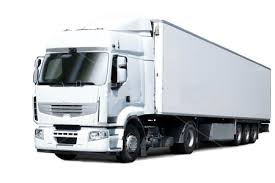
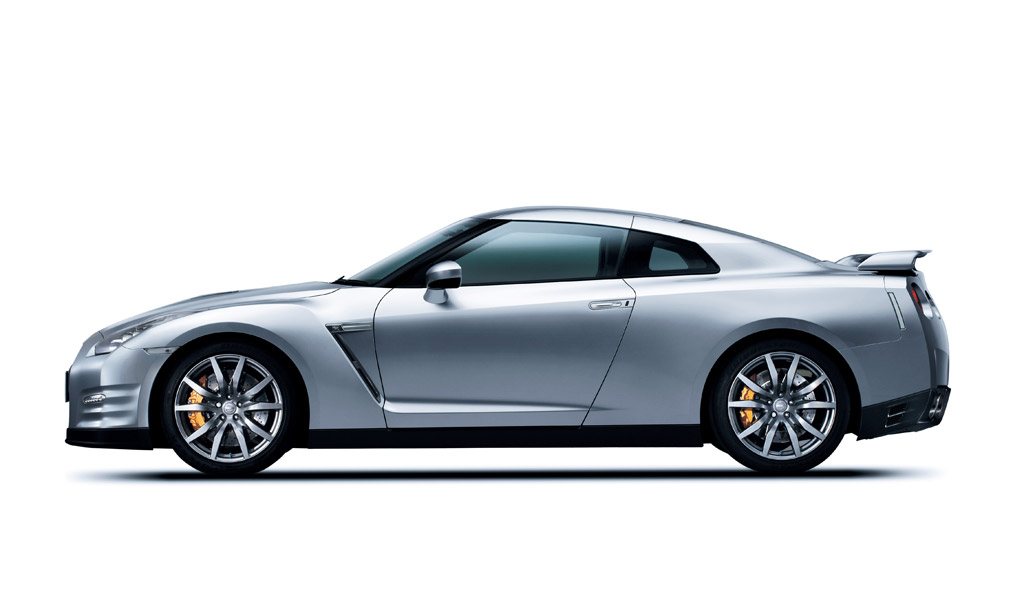
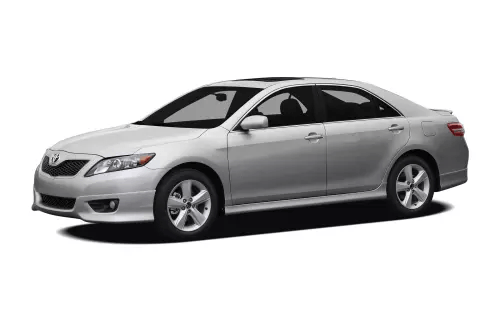
Look at the pictures of the cars. Which car will have the most air resistance force acting upon it? They will be moving at the same speed.
a)
b)
c)
d)

All will have equal air resistance force.
82.
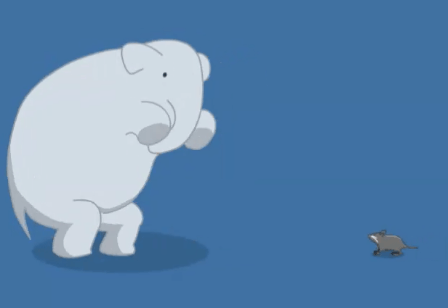
Which objects have a STRONG force of gravity?
a)
Objects with GREATER mass, like elephants
b)
Objects with LESS mass, like mice
83.
What is the SI unit used to measure force? 
a)
pounds 
b)
grams 
c)
newtons 
d)
friction
84.
The force of gravity acting on an object is the object's ______.
a)
mass
b)
matter
c)
weight 
d)
friction 
85.
The amount of matter in an object is 
a)
pressure
b)
weight
c)
mass
d)
force
86.
Which of the following never changes no matter where in the universe?
a)
weight
b)
force
c)
mass
d)
pounds
87.
A person would weigh less on on the Moon than on the Earth because . . .
a)
Moon has more mass, and therefore more gravity
b)
Moon has less mass, and therefore more gravity
c)
Moon has more mass, and therefore less gravity
d)
Moon has less mass and therefore less gravity
88.

Calculate the weight of a dog on Uranus. The dog's mass is 45kg. The Uranus' gravity is 8.87 N/kg.


weight = mass x gravity

a)

380N

b)

399.15N

c)

5.07N

d)

399.15kg

89.

Which is the correct equation for calculating weight?

a)

weight = mass + gravity

b)

weight = mass x gravity

c)

weight = mass - gravity

d)

weight = mass / gravity

90.
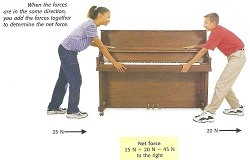
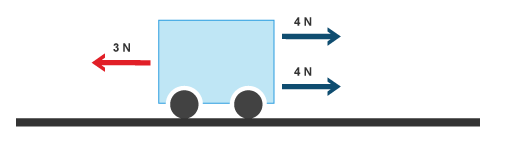
What is the net force?
a)
5 N
b)
45 N to the left
c)
5 N to the right
d)
45 N to the right
91.
What is a force?
a)
the PUSH or PULL on an object 
b)
The MOTION an object creates
c)
The objects HITTING one another
d)
Going REALLY FAST
92.
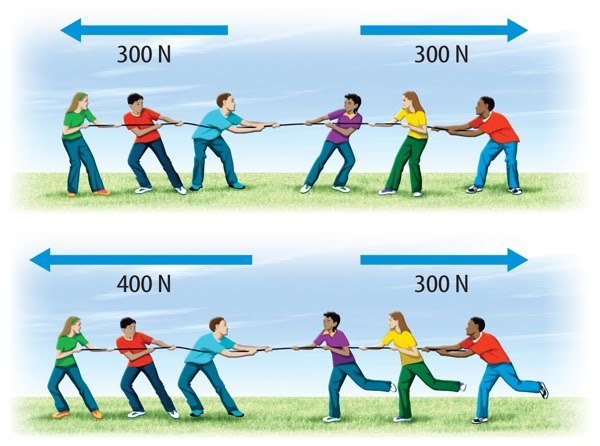
Which one is balanced?
a)
top
b)
bottom
c)
both
93.
Is it BALANCED? 
a)
Yes
b)
No
94.
If the net force is 0 the object will ... 
a)
CHANGES motion
b)
STAY the SAME, NOT Move
95.
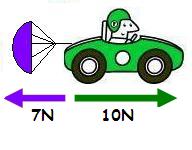
What is the net force?
a)
17 N Right
b)
3 N Right
c)
3 N Left
d)
17 N Left