
 Worksheets
DNA and RNA
Total questions: 26
Worksheet time: 16mins

DNA stands for
Deoxyriboplasmic acid
Deoxynutrient amino
Deoxyribonucleic acid
Deoxyneutron amino

Which molecule holds the code for all of the parts of the body, like eye color, organ building, hair color, height, and everything else?
Complex starch
Carbohydrate
Fatty acid
Deoxyribonucleic acid

What are the four nitrogen bases present in DNA?
adenine, lysine, guanine, cytosine
adenine, uracil, guanine, cytosine
cytosine, thymine, lysine, adenine
cytosine, guanine, thymine, adenine

What are the building blocks of DNA?
proteins
starches
nucleotides
RNA

What has to happen before DNA can be read?
It has to be unzipped into RNA strands
It has to be translated from the original Greek language it was written in
You have to learn the language of DNA, which is French
It has to be broken up into smaller pieces

A set of 3 nucleotides together is called ____________.
The Three Amigos
Triplets
A Brodon
A Codon
The sugar used in DNA is called
ribose
glucose
galactose
splenda
Which of the following is one of the 4 nucleotides?
Odenine
Thymine
Juranine
Kytosine
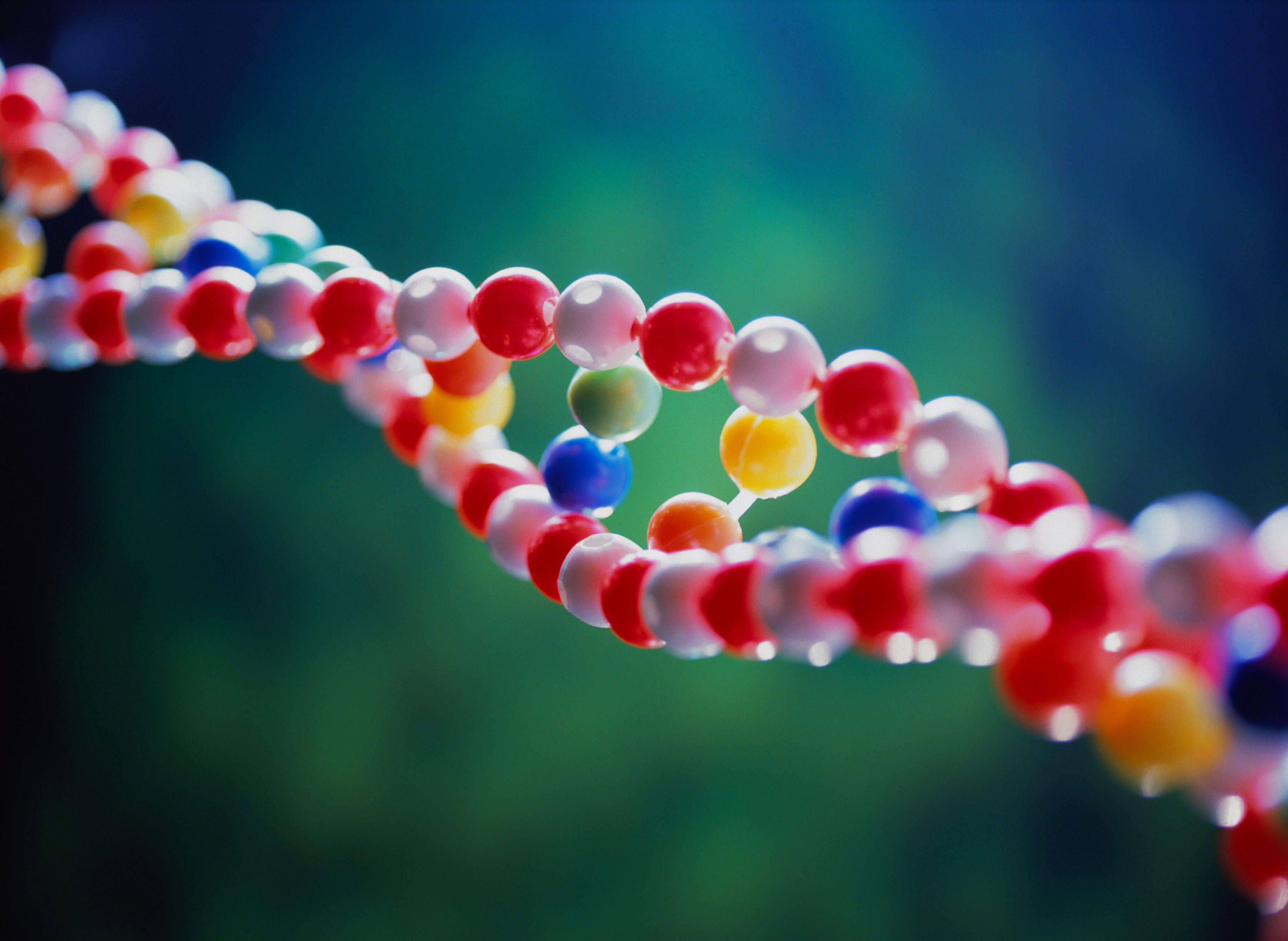


Which molecule forms the sides (backbone) of the DNA strand?
Guanine
Thymine
Cytosine
Ribose (sugar)
The molecule that holds the code for everything in our bodies is called _________________.
Deoxyribonucleic Acid
Ribonucleic Acid
Sheoxyfibronucleic Acid
Lysergic Acid
The molecule that is made from DNA and then used to build proteins from is called
Ribonucleic Acid
Deoxyribonucleic Acid
Muriatic Acid
Formic Acid
Which organelle is called the "control center" of the cell?
The nucleus
The mitochondria
The ribosome
The cytosol
What is a codon?
A section of 3 nucleotides that a ribosome can read
A full gene from the DNA
The middle section of any piece of RNA
A section of 4 nucleotides that the RNA can read
What happens to DNA during interphase?
The DNA is replicated
The RNA is created
The DNA leaves the nucleus
The RNA is used to make proteins
Which molecule leaves the nucleus and is used to make proteins?
RNA
DNA
What code does the RNA hold?
RNA holds the code for one specific protein
RNA holds the code for your hopes and dreams
RNA holds the code for a ham sandwich
RNA holds the code for everything in the entire body
When RNA is being built based on the pattern of DNA it's called
Transcription
Translation
Transition
Transmission
When RNA is being used by the ribosome to build proteins it's called
Translation
Transmission
Transportation
Transmogrification
Proteins are built from
Amino Acids
Nucleotides
Codons
Adenosine

