
 Worksheets
Imaging/Physics Review
Total questions: 210
Worksheet time: 2hrs 59mins
The distance between the x-ray focal spot and the image receptor is the:
OID
SID
MF
SOD
The inverse square law describes the relationship between __ and __.
kVp and exposure
mAs and exposure
distance and beam intensity
kVp and beam intensity
Higher kVp results in less absorption and more variation in the intensities of photons exiting the patient.
True
False
The distance between the object being imaged and the image receptor is the:
OID
SID
MF
SOD
Focal spot size affects only:
exposure
contrast
sharpness
noise
Which of the following is categorized as a geometric property?
focal spot
grid
recorded detail
heat unit
Reducing the amount of scatter radiation reaching the IR results in:
lower radiographic contrast
higher radiographic contrast
improved recorded detail
reduced recorded detail
Increasing the kVp by 15% has the same effect on exposure as
increasing the mAs by 15%.
doubling the mAs.
decreasing the mAs by 15%.
halving the mAs.
Which of the following is the correct formula for the inverse square law?
I1/I2 = D1/D2.
I1/I2 = D2/D1.
I1/I2 = (D1)2/(D2)2.
I1/I2 = (D2)2/(D1)2.
As the SID increases, the x-ray photons in the beam become less perpendicular to the object being imaged.
True
False
The relationship between kVp and the quantity of remnant radiation is known as the:
kVp-exposure rule
15% rule
115% rule
kVp-quantity rule
As kVp is increased, more radiation energy is produced, resulting in more scattered radiation, which increases density to the film.
True
False
What type of relationship do mAs have with the quantity of x-rays produced?
direct proportional
direct but not proportional
inverse proportional
inverse but not proportional
To maintain the same amount of radiation reaching the IR, if the kVp is increased by 15% the mAs needs to:
remain the same
be doubled
be halved
be decreased by a minimum of 30%
Increasing the kVp:
increases the energy of the x-ray photons
increases the quantity of x-ray photons
increases the penetrating power of x-ray photons
all of these

During a photoelectric interaction,
an inner-shell electron is ejected
an outer-shell electron is ejected
no electrons are ejected
electrons for all levels are ejected
The distance between the x-ray focal spot and the object being imaged is the
OID
SID
MF
SOD
What are density and contrast categorized as?
radiographic densities
photographic densities
mangification properties
focal spots

Air is considered:
radiopaque
hard to penetrate
radiolucent
more likely to absorb radiation
The ability of the imaging system to distinguish between two structures is
latitude
resolution
contrast
distortion
The degree of difference between adjacent densities or brightness levels is called
density
detail
contrast
magnification
The positive electrode of the x-ray tube is termed the
anode
cathode
glass envelope
filament
Beam filtration does not influence density and contrast.
True
False
Which of the following refers to the degree of information or definition that may be seen in the anatomy or the resolution or sharpness of lines that separates one structure from another?
recorded detail
distortion
focal-spot size
receptor distance
____________ are the primary factor controlling recorded detail.
focal spots
intensifying screens
SID receptor distance
large focal spots
_____________ can tolerate increased heat generated by longer exposure times.
Large Focal Spots
focal spots
subject contrast
Intensifying Screens
Used to minimize the amount of scattered radiation that reaches the film
object-to-image receptor distance (OID)
cones
grid
beam filtration
Pair production occurs when the incident photon interacts with
an inner-shell electron
an outer-shell electron
inner- and outer-shell electrons
the nucleus of the atom

A positron is
the same as an electron
a positively charged electron
the same as a proton
a positively charged neutron
Added to the radiation beam to eliminate nonuseful, soft, low-energy (long wavelengths) radiation
cones
grids
beam filtration
object-to-image receptor distance (OID)

Radiation interacting with air is more likely to be __, resulting in that area of the image being darker.
absorbed
transmitted
attenuated
scatter
The probability of Compton scattering depends on the energy level of the incident x-ray photon.
True
False
Photoelectric interactions are more likely to occur in
air
soft tissue
bone
they occur equally in all types of tissue

All Compton scatter photons travel in the direction of the image receptor.
True
False

Without differential absorption, the image would be a single shade of gray.
True
False

The x-ray photons that are produced as a result of a characteristic cascade during a Compton interaction
are characteristic x-ray photons
are brems x-ray photons
are Compton x-ray photons
are “braking” x-ray photons

Coherent scattering involves
an x-ray photon with high energy
an x-ray photon with low energy
ionization

The higher the atomic number of an atom, the greater the probability of a photoelectric interaction.
True
False
Excessive absorption is the result of
using a mAs that is too low for the examination
using a kVp that is too low for the examination
using a kVp that is too high for the examination

The major source of radiation exposure to technologists is due to
coherent scattering
classical scattering
photoelectric interactions
Compton interactions
The energy of the photoelectron is equal to
the binding energy of the orbital electron minus the energy of the incident photon
the energy of the incident photon minus the binding energy of the orbital electron
the binding energy of the orbital electron plus the energy of the incident photon

The greater the absorption of radiation
the greater the differential absorption
the better the image quality
the greater the patient dose
The probability of Compton scattering depends on the atomic number of the atom.
True
False
Which of the following will step up or step down the current coming into an x-ray machine?
Radiator
Collimator
Transformer
Filter
Which of the following removes the low-energy, long wavelength energy from the beam?
Filter
Collimator
Transformer
Radiator
Which is the location where thermionic emission occurs?
Positive cathode
Positive anode
Negative cathode
Negative anode
What is remnant radiation?
Radiation striking the patient
Radiation striking the target
Radiation striking the IR
Radiation leaving the patient
When electrons strike the target what percentage of x-rays is produced?
99%
50%
10%
1%
What is a grid?
A device to monitor radiation dose
Device used to control scatter
The overall darkness on the image
A device used to modify the radiation field
Reducing the amount of scatter radiation reaching the IR results in:
lower radiographic contrast
higher radiographic contrast
improved recorded detail
reduced recorded detail
Which of the following is a phenomenon related to the structure of the x-ray tube’s target (anode) angle?
contrast
fog
heel effect
density
Which of the following would possess the highest L.E.T.?
alpha
beta
gamma
x-ray
The x-ray interaction that results in all the photon energy being transferred to tissue is:
compton
thompson
classical
photoelectric
For an atom of tungsten, which would possess the greatest amount of binding energy
k-shell electron
m-shell electron
n-shell electron
l-shell electron
The quality of an x-ray beam can be expressed as:
inherent filtration
half value layer
output in mR per minute
mAs
Increasing the SID with compensation of mAs to maintain the exposure to the IR will increase
contrast
spatial resolution
magnification
kVp
The anode heel effect is most evident when using a:
large IR and long SID
small IR and long SID
large IR and short SID
small IR and short SID
What characteristic x-rays are useful for image production?
n-shell
p-shell
k-shell
o-shell
The ability of a system to record detail, expressed in lines per mm
quality assurance
detail factor
spatial resolution
exposure indicator
The portion of the rotating anode x-ray tube that doesn't move
stator
rotor
stem
target
Which is true about SID
Increasing SID decreases contrast
Increasing SID increases spatial resolution
Decreasing SID increases photoelectric absorption
Decreasing SID decreases receptor exposure
Which transformers work on self induction?
step up transformers
step down transformers
autotransformers
optimus prime
The air-gap technique uses a ___ SID and a ___ OID
short; short
short; long
long; short
long; long
As the patient size increases it produces an increase in receptor exposure.
true
false
As the filtration increases the contrast becomes a:
longer scale decreasing contrast
longer scale increasing contrast
shorter scale increasing contrast
shorter scale decreasing contrast
As tissue density decreases, the amount of scatter increases.
True
False
As the patient size increases it produces a decrease in:
size distortion
scatter radiation
shape distortion
none of the above
As tissue density decreases, the amount of scatter decreases.
true
false
A destructive pathological condition will cause an increase in ________.
spatial resolution
distortion
receptor exposure
none of the above
What is the unit of binding energy?
amps
volts
kVp
e-volt
What is the distance between two similar points on two successive waves called?
Wavelength
Frequency
Velocity
Energy level
Radiolucent refers to that portion of a processed radiograph that is:
Black
White
Gray
Coated with an emulsion
With all other factors unchanged, if the OID is increased, overall exposure at the image receptor plate will:
decrease as a direct result
increase as a direct result
not change at all
may be affected indirectly, but is not directly controlled by it
atom # or z # is
an atom
the process of adding and removing an electron
x rays
the number of protons located in the nucleus
ionization is the
process of adding or removing an electron from the atom
oxidation of metal
a chemical
orbital shell
binding energy is
the amount of energy to remove the electron from the atom
the orbital shell
mass
wavelength is
the distance between any 2 successive points on a wave
the intensity of the wave
the number of waves that passes a particular point in a giving time frame
the number of cycles per second
amplitude is
the intensity of the wave defined by its maximum height
distance
EM radiation
which shell in the atom is the most important in the production of x rays?
K
L
O
Q
Which electron shell in the electron has the greatest binding energy?
K
L
M
N
the penetrating power of an x ray beam is determined by its energy as expressed in its
quantity
velocity
wavelength
atomic number

What is a beta particle made of?
One proton
A helium particle
One electron
One proton and one neutron
The atomic number of a given element is
equivalent to which of the following?
Proton number in the nucleus
Neutron number in the nucleus
Sum of the protons and neutrons in the
nucleus
Sum of the protons, neutrons and electrons


A charged atom is called a(n) __________.
proton
neutron
electron
ion
Electric current is measured in ____________.
Newtons (N)
Amperes (A)
Hertz (Hz)
A _____________ transforms mechanical energy into electrical energy.
generator
electromagnet
circuit
magnetic field
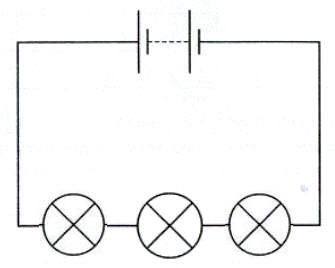
One Ampere equals
one volt
one milliamp
C/sec
all of them equal an Ampere
Which of the following is the unit for electric potential?
ohms
voltage
Joule/Coulomb
Both voltage and Joule/Coulomb
Electrons flow from _______ to _________.
negative to negative
negative to positive
positive to positive
positive to negative
The ratio of electric potential across a circuit element to the current flowing through it is called:
voltage
current
resistance
power
Electric fields point ______ a positive charge, and _____ a negative charge.
from, from
toward, toward
from, toward
toward, from
What is the fundamental unit of an electric charge?
volt
Joule
Coulomb
Ampere
In Coulombs Law for electromotive force of charges, the product of the charges has a(n) ________ relationship to the square of the distance between them.
direct
indirect
equal
inverse
Magnetic fields are directed _____ north poles, and _______ south poles.
towards, away from
towards, towards
away from, away from
away from, towards
Magnetic field lines inside a bar magnet travel from _____ pole to ____ pole.
south, north
north, south
positive, negative
negative, positive
When two coils are used, the first coil is referred to as a _____ coil, and the second is referred to as a ______ coil.
main, secondary
primary, secondary
input, output
both 2 and 3 are correct
Step-Up Transformers:
are also called filament transformers
are also called high voltage transformers
have a variable turns ratio
used to supply high currents to the tube filament
1 Tesla equals:
1,000 G
10,000 G
100,000 G
100 G
1C equals
9 x 10⁸ m/s
6.18 x 10¹⁸ J/C
6.3 x 10¹⁸ electron charges
9,54 x 10¹⁵ electron charges
1 ampere equals
one Joule/kg
one Joule/coulomb
one coulomb/kg
one coulomb/sec
Current flows:
from north to south
from positive to negative
from south to north
from negative to positive
Electric fields point:
into positive charges and outward from negative charges
into negative charges and outward from positive charges
into the south pole and out of the north pole
into the north pole and out of the south pole
When grid ratio increases, contrast:
increases
decreases
no change
both
As collimation increases, field size
increases
decreases
stays the same
1. As the volume of tissue ___________, the amount of scatter production ___________.
decreases, increases
increases, decreases
decreases, decreases
decreases, remains the same
A factor that affects the amount of scatter produced is ___________.
kilovoltage
grid
air gap technique
all of hte above
1. Which grid would most effectively reduce scatter?
6:1
8:1
12:1
15:1
When filtration is ____, technical factors must be ____ to maintain the same density.
increased; decreased
decreased; increased
increased; increased
decreased; remain the same
Patient dose decreases as:
SID decreases
SID inreases
SOD decreases
OID increases
A radiographer can reduce the amount of scatter radiation from reaching the receptor by
collimating
beam restriction
utilizing a grid
all of the above
The AFS is always larger than the EFS.
True
False
An increase in x-ray beam filtration:
increases the scale of contrast
reduces contrast
increases the average photon energy
all of the above
What is the grid conversion factor for a 12:1 ratio grid?
6
4
3
5
As wavelength increases:
velocity increases
frequency deceases
frequency increases
energy increases
Matter that allows x-ray photons to pass through easily is:
Low anatomic density, high radiographic density, radiolucent
High anatomic density, low radiographic density, radiolucent
High anatomic density, low radiographic density, radiopaque
Low anatomic density, high radiographic density, radiopaque
In the diagnostic range, the majority of the x-ray photons produced during the x-ray production process are termed:
Compton
Characteristic
Brems
Photoelectric
Protective housing of an x-ray tube reduces the intensity of leakage radiation to less than:
100 R/hr@1m
100 mR/hr@10m
10 mR/hr@10m
100 mR/hr@1m
A radiograph that demonstrates considerable differences between densities is referred to as:
short scale
long scale
high contrast
a and c are correct
What is the relationship between receptor exposure and SID?
directly proportional
inversely proportional
directly proportional to the square of the distance
inversely proportional to the square of the distance
The ratio of electric potential across a circuit element to the current flowing through it is called:
voltage
resistance
current
power
In electrodynamics, which of the following is the correct expression?
I=QT
I=R/V
R=I2V
R=V/I
Coulomb’s Law states that electrostatic force is:
inversely proportional to the square of the distance between charges
directly proportional to the square of the distance between charges
inversely proportional to the product of charges
directly proportional to the square of the product of charges
The force of attraction or repulsion is referred to as:
electric potential
electromagnetic force
electrostatic force
electromotive force
Which of the following accurately represents the transformer law for current?
Is/Ip=Np/Ns
Ip/Is=Ns/Np
Is/Ip=Vs/Vp
both a and b
The _______ operates on the principle of self-induction.
autotransformer
step up transformer
step down transformer
both b and c
The output current of a step-up transformer is:
the same as the input current
higher than the input current
lower than the input current
independent of the input current
As shown in Coulomb’s Law, the electrostatic force is given in the unit of:
coulombs
newtons
volts
amps
Frequency is:
the rate of the rise and fall of a sine wave
measured in wavelengths per minute
measured as the distance from one crest to another
none of the above
A transformer functions mainly to change or transform electric:
energy
amperage
voltage
resistance
Diamagnetic materials:
have a north and south pole
cannot be broken down into smallest units
cannot be artificially magnetized
have slight attractions to magnets
Current always flows in one direction, which is:
positive to negative
negative to positive
north to south
south to north
72. Magnets that are produced by charging them in the field of an electromagnet are referred to as:
naturally occurring
electromagnets
artificially induced permanent magnets
solenoid
In a step-down transformer, which of the following is true?
the secondary voltage is higher than the primary voltage
the output voltage is higher than the primary voltage
the primary voltage is lower than that secondary voltage.
the secondary current is higher than the primary current.
In a transformer with a turns ration greater than one, which of the following is true?
the primary voltage is higher than the secondary voltage
the secondary current is lower than the primary current
the input voltage is greater than the output voltage
the primary current is lower than the secondary current
In a series circuit:
The total current is the sum of the individual currents
The voltage across each circuit element is the
same
The total resistance is the sum of the
individual resistances
Only three circuit elements are allowed
Which of the following is not true regarding parallel circuits?
IT = I1 + I2 + I3
VT = V1 = V2 = V3
RT = R1 + R2 + R3
Contains elements that bridge conductors
If there is a decrease in outgoing amperage, what type of transformer is it?
step up transformer
step down transformer
neither of the above is correct
All of the following are correct except:
Vs/Vp=Ns/Np
Is/Ip=Vp/Vs
Is/Ip=Np/Ns
Vp/Vs=Ns/Np
Iron would be classified as a:
diamagnetic
paramagnetic
non-magnetic
ferromagnetic
The term electromagnetic induction refers to the induction of:
electromagnetic radiation
a magnetic field
an electric curent
a static charge
A substance that exhibits no resistance below a critical temperature is known as a:
insulator
conductor
semiconductor
superconductor
The fundamental unit of the electric charge is
electron charges
coulomb
voltage
ampere
Any charged particle in motion creates a magnetic field.
true
false
A _____ relationship exists between the voltages across the primary and secondary coils and the number of turns of wire on the primary and secondary coils.
direct
inverse
Which of the following would describe the volt?
amps x resistance
potential difference
one amp transmitted through one ohm of resistance
all of the above
Which of the following does not increase contrast?
increasing grid ratio
increasing FOV
decreasing filtration
decreasing kVp
For every ____ of part thickness, the radiographer should adjust the mAs by a factor of two:
8 to 9 cm
6 to 7 cm
4 to 5 cm
2 to 3 cm
In a stationary anode tube, the target is embedded in an anode made of:
tungsten
molybdenum
copper
rhenium
The two bi-products of a Compton interaction are ______.
compton electron and compton secondary electron
compton electron and compton recoil electron
compton electron and compton scattered photon
recoil electron and recoil photon
The energy of characteristic x-rays increases with:
incresing kVp
increasing the atomic mass of filament material
increasing the atomic number of the target material
increasing added filtration
Tube filaments are made of:
molybdenum
thoriated tungsten
copper rhenium
rhenium tungsten
As the angle of the anode increases and the incident electron beam size remains the same, the effective focal spot size ____.
increases
remains the same
decreases
cannot be determined
X-ray intensity is higher
on the cathode side than on the anode side because of which of the
following?
the focusing cup
the line focus principle
the space charge effect
anode heel effect
As the angle of the anode increases, ____________________________.
EFS increases, AHE incresases
EFS decreases, AHE decreases
EFS increases, AHE decreases
EFS decreases, AHE increases
The wavelength of an x-ray photon has a(n) _________ relationship with its penetrability.
direct
inverse

