Wayground logo

Free Printable Worksheets

Font size

S
M
L
XL
Worksheets

B002 Botany Midterm

Total questions: 80

Worksheet time: 1hrs 16mins

Name
Class
Date
1.
Which type of plant tissue covers the outer surface of the plant and acts as a protective layer?
a)
Dermal
b)
Vascular
c)
Ground
d)
Connective
2.
What type of vascular tissue is responsible for transporting the sugars made in photosynthesis from the leaves to the roots?
a)
Cuticle
b)
Phloem
c)
Stomata
d)
Xylem
3.
What type of vascular tissue is responsible for transporting water from the roots to the leaves?
a)
Cuticle
b)
Phloem
c)
Stomata
d)
Xylem
4.
Xylem and phloem are examples of what tissue type?
a)
Vascular tissue
b)
Root tissue
c)
Dermal tissue
d)
Ground tissue
5.

Has its vascular tissue in bundles scattered throughout a stem cross section or sometimes with bundles forming a ring

a)

Dicots

b)

Monocots

c)

Woody trunks

d)

Ferns

6.

Has vascular tissue concentrated in bundles in the center of the stem or root cross section

a)

Dicots

b)

Monocots

c)

Ferns

d)

Corn

7.

How old is this tree?

a)

14

b)

19

c)

17

d)

16

8.

How old was this tree when it was cut down?

a)

12

b)

11

c)

10

d)

13

9.

When pruning a shrub, you should always

a)

Carefully clip just above the buds

b)

Clip just beneath the buds

c)

Clip diagonally so you cut the bud in half

d)

Clip your fingernails instead

10.
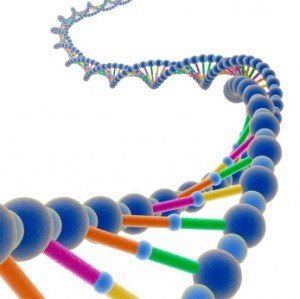
Which of the following best describes a DNA molecule?
a)
double helix
b)
contains ribose
c)
made of amino acids
d)
contains Uracil
11.
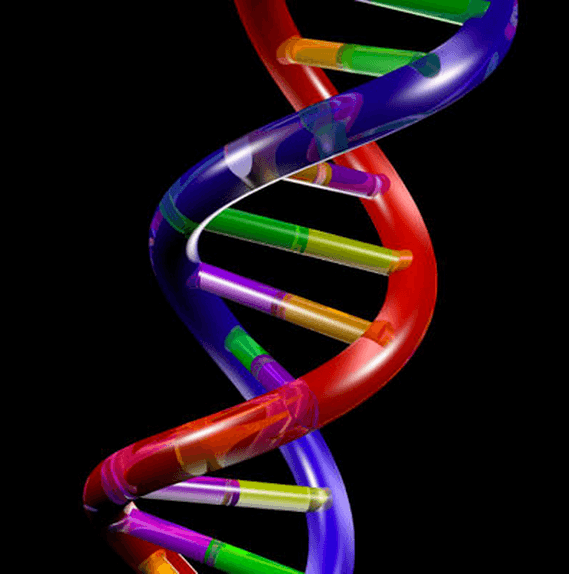
Which of the following best describes a DNA molecule?
a)
double helix
b)
contains ribose
c)
made of amino acids
d)
contains Uracil
12.
In a molecule of double-stranded DNA, the amount of Adenine present is always equal to the amount of
a)
cytosine
b)
guanine
c)
thymine
d)
uracil
13.
Adenine bonds with ______________.
a)
Guanine
b)
Thymine
c)
Cytosine
d)
Adenine
14.
Guanine bonds with ______________.
a)
Adenine
b)
Guanine
c)
Cytosine
d)
Thymine
15.
The enzyme that unzips the DNA to prepare for replication
a)
helicase
b)
replicase
c)
polymerase
d)
synthase
16.
DNA replication results in two DNA molecules,
a)
each one with two original strands
b)
each one with two new strands
c)
each one with one new strand and one original strand
d)
one with two new strands and the other with two original strands
17.
What are the three components of a nucleotide?
a)
sugar, hydrogen, nitrogen base
b)
sugar, oxygen, nitrogen base
c)
sugar, phosphate, nitrogen base
d)
sugar, phosphate, protein
18.
What type of RNA carries the DNA message out of the nucleus to the ribosomes?
a)
mRNA
b)
tRNA
c)
RNA
d)
DNA
19.
When DNA is transcribed to RNA.... 
a)
A pairs with U
b)
C pairs with U
c)
A pairs with T
d)
C pairs with T
20.
Which of the following is the sugar found in RNA?
a)
Ribose
b)
Maltose
c)
Deoxyribose
d)
Amylose
21.
Which RNA bases would pair with TACGAA in transcription? 
a)
AUGCUU
b)
ATGCTT
c)
GCATCC
d)
GCAUCC
22.

Where is DNA and RNA made?

a)

nucleus

b)

cytoplasm

c)

mitochondria

d)

ER

23.
Which process is used to copy DNA in the nucleus?
a)
replication
b)
transcription
c)
translation
24.
One difference between DNA and RNA is that....
a)
Only RNA has the base Uracil
b)
only RNA contains the base Thymine
c)
only RNA contains the base Cytocine
d)
only RNA contained the base Guanine
25.

RNA does not have...

a)

Uracil

b)

Cytosine

c)

Guanine

d)

Adenine

e)

Thymine

26.

Which one leaves the nucleus?

a)

mRNA

b)

tRNA

c)

DNA

27.

This suffix indicates the substance is an sugar:

a)

-ase

b)

-ose

c)

-ice

d)

-ene

28.
In Chargaff's Rule, adenine pairs with ________, and cytosine pairs with _________.
a)
thymine, guanine
b)
guanine, thymine
c)
uracil, guanine
d)
thymine, uracil
29.
What determines the code, or information, of a DNA molecule?
a)
the shape (structure) of the nitrogen bases
b)
the order (sequence) of the nitrogen bases
c)
the color of the nitrogen bases
d)
the frequency (number) of nitrogen bases
30.

In which of the following plants DO NOT store food?

a)

leaves

b)

stem

c)

fruit

d)

roots

e)

xylem

31.

In roots, where are phloem and xylem located?

a)

In the center

b)

Arranged in rings

c)

In the root cap

d)

Immediately under the surface cells

32.

Part of the plant that absorbs water.

a)

Roots

b)

Flowers

c)

Petals

d)

Leaves

33.

Part of the plant that has chlorophyll

a)

Roots

b)

Flowers

c)

Petals

d)

Leaves

34.

Part of the plant that is colorfull

a)

Roots

b)

Flowers

c)

Petals

d)

Leaves

35.

Green substance that turn the leaves green

a)

Chlorophyll

b)

Roots

c)

Green Paint

d)

Spore

36.
What is the male part of the flower used during reproduction?
a)
Pistil
b)
Stigma
c)
Stamen
d)
Pollination
37.
What is the female part of the flower used during reproduction?
a)
Pistil
b)
Petal
c)
Stigma
d)
Stamen
38.
The new plant is started in the ______ as a seed.
a)
Stamen
b)
Stigma
c)
Pistil
d)
Ovule
39.
What is the sticky part at the top of the flower used for?
a)
Holding seeds
b)
Collecting pollen
c)
Supporting the stigma
d)
Connecting petals
40.
What are the white parts of the flower below?
a)
Pistil
b)
Petals
c)
Stamen
d)
Stigma
41.
What is this a picture of?
a)
Pistil
b)
Stamen
c)
Stigma
d)
Ovule
42.
What is the sticky part of the flower that catches pollen?
a)
style
b)
stigma
c)
ovary
d)
petal
43.
Which does not belong in the female part of the flower?
a)
style
b)
stigma
c)
filament
d)
ovaries
44.
The yellow, powdery stuff on the stamens
a)
Pollen
b)
Dust
c)
Mites
d)
Germs
45.
What is #1 pointing to?
a)
ovary
b)
petal
c)
stigma
d)
stamen
46.

Tube-shaped cells inside of a stem, which carry food down from the leaves

a)

leaf scar

b)

Stolon

c)

bulb

d)

phloem

e)

apical meristem

47.

Actively growing tip found inside a terminal or lateral bud

a)

leaf scar

b)

Stolon

c)

bulb

d)

phloem

e)

apical meristem

48.

Area on a stem that lies between two leaves or buds

a)

lenticel

b)

internode

c)

bud scale

d)

tuber

e)

bud scale scar

49.

Small protective structure that can be seen on the outside of a bud

a)

lenticel

b)

internode

c)

bud scale

d)

tuber

e)

bud scale scar

50.

Specialized stem that has a tip that is swollen with stored food

a)

lenticel

b)

internode

c)

bud scale

d)

tuber

e)

bud scale scar

51.

Cells on the inside of a stem that carry water and minerals up from the root

a)

Xylem

b)

cambium

c)

rhizome

d)

lateral bud

e)

corm

52.

Area on the inside of a stem where new xylem and phloem are made

a)

Xylem

b)

cambium

c)

rhizome

d)

lateral bud

e)

corm

53.

A specialized stem that is thick and runs horizontally underneath the soil

a)

Xylem

b)

cambium

c)

rhizome

d)

lateral bud

e)

corm

54.

A bulb-shaped specialized stem that is made of solid stem with no leaves

a)

Xylem

b)

cambium

c)

rhizome

d)

lateral bud

e)

corm

55.

Which type of plant has its xylem and phloem arranged in a circle?

a)

monocot

b)

dicot

56.
Examine this seed. Would you expect it to produce a dicot or monocot plant?
a)
monocot
b)
dicot
c)
Neither
d)
Cotyledon
57.
Examine this seed. Would you expect it to produce a dicot or monocot plant?
a)
monocot
b)
dicot
c)
Corn
d)
WI Fast Plant
58.
What is the name for the outermost layer of a seed that helps to protect it?
a)
angiosperm
b)
radicle
c)
cotyledon
d)
seed coat
59.
The three parts of a seed are the:  
a)
seed coat, cotyledon, embryo
b)
roots, stem, flower
c)
seed coat, flower, cotyledon
d)
radicle, coleoptile, fibrous
60.

What is are functions of seeds?

a)

Helps make new plants

b)

Photosynthesis production

c)

Protection for young plant

d)

Calvin Cycle

e)

Food for the young plant

61.

Dicot

Point of attachment; Seed receive food

a)

Radicle

b)

Hilum

c)

Epicotyl

d)

Hypocotyl

62.

What is the correct definition of a seed?

a)

a seed is the offspring of a fully mature plant

b)

a seed is the structure from which new plants grow

c)

a seed is the smallest part of a plant

d)

a seed is a living organism that requires the suitable conditions to grow

63.

The________supplies food to the embryo

a)

Seed coat

b)

Embryo

c)

Endosperm

d)

Plant

64.

Which is the first leaves of the plant?

a)

Epicotyl

b)

Hypocotyl

c)

Radicle

d)

Cotyledon

65.

The first root of the plant is______

a)

Epicotyl

b)

Radicle

c)

Cotyledon

d)

Hypocotyl

66.

The flowers from plants turn into _________.

a)

Fruits

b)

Trees

c)

Leaves

d)

Vegtables

67.

Students are instructed to place leafy celery stalks into color water in a beaker overnight. The following day, the students observed the color of the celery leaves changed from green to red. The students cut across the edge of the celery and observed the small tube openings along the edge are also red.


How do the plant systems work together to make the movement of the liquid possible?

a)

The roots absorb the water, minerals move up the stem, while the stem moves food produced in the leaves down to the roots.

b)

The roots anchor the plant into the soil and the stem holds the leaves up.

c)

The roots absorb their own water and minerals and the leaves push out CO2.

d)

The roots lose water vapor to the soil and the stem loses water vapor through the leaves.

68.
Where do angiosperms produce their seeds?
a)
pollen
b)
cones
c)
flowers
69.

What is the female reproductive part of a flower called?

a)

anther

b)

pistil

c)

sepal

70.
Examine the leaf. Would you expect this plant to be classified as a dicot or monocot?
a)
monocot
b)
dicot
c)
Neither
d)
Both
71.
Identify the type of vascular bundles (inside look of stem) as a dicot or monocot.
a)
monocot
b)
dicot
c)
Neither
d)
Both
72.
Examine this seed. Would you expect it to produce a dicot or monocot plant?
a)
monocot
b)
dicot
c)
Neither
d)
Cotyledon
73.
Examine this seed. Would you expect it to produce a dicot or monocot plant?
a)
monocot
b)
dicot
c)
Corn
d)
WI Fast Plant
74.
Which of the following describes a monocot?
a)
two cotyledons
b)
circular vascular tubes lined up in pairs
c)
3 petals or multiples of 3
d)
wide leaves, branching veins
75.

Flower parts in dicots are in multiples of?

a)

4 or 5

b)

7

c)

3

d)

2

76.
What is the name for the outermost layer of a seed that helps to protect it?
a)
angiosperm
b)
radicle
c)
cotyledon
d)
seed coat
77.
The three parts of a seed are the:  
a)
seed coat, cotyledon, embryo
b)
roots, stem, flower
c)
seed coat, flower, cotyledon
d)
radicle, coleoptile, fibrous
78.

Choose the right answer.

This is a

a)

Angiosperm

b)

Gymnosperm

79.

Select the angiosperm

a)
b)
c)
d)
80.

Choose the right answer.

This is a

a)

Angiosperm

b)

Gymnosperm