wayground logo

Free Printable Worksheets

NEW

Font size

S
M
L
XL
Worksheets

benchmark #2 review

Total questions: 40

Worksheet time: 57mins

Name
Class
Date
1.

Which viral life cycle kills its host cell by lysing (exploding)?

a)

lytic

b)

mitosis

c)

lysogenic

d)

S phase

2.
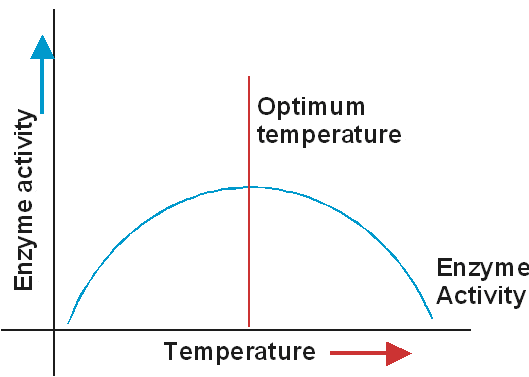
At high temperatures enzyme activity declines because of:
a)
Denaturation
b)
Decreased Kinetic Motion
c)
Increased H-Bonding
d)
Dissociation of Ionic Compounds
3.
a)
Cytokinesis
b)
Interphase
c)
Anaphase
d)
Metaphase
4.
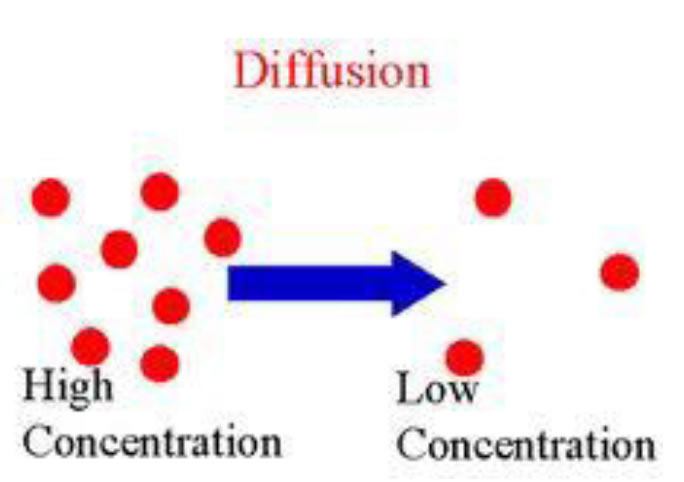
Movement of particles from high to low concentration. 
a)
Passive Transport
b)
Active Transport
5.

This cell is a -

a)

PROKARYOTIC

b)

PLANT

c)

ANIMAL

d)

PROTIST

6.

WHAT ELEMENTS DO ALL BIOMOLECULES (LIPIDS, PROTEINS, NUCLEIC ACIDS, CARBS) HAVE IN COMMON?

a)

CARBON, HYDROGEN, FLOURINE

b)

CARBON, HYDROGEN, CHLORINE

c)

CARBON, HYDROGEN, IODINE

d)

CARBON, HYDROGEN, OXYGEN

7.
This picture shows which process?
a)
mitosis
b)
meiosis
c)
the cell cycle
8.

What type of ecological succession begins with no soil, no life, only bare rock.

a)

primary succession

b)

secondary succesion

9.

Which of the following lists the phases of mitosis in order?

a)

PMAT

b)

MPAT

c)

TMAP

d)

AMPT

10.

A symbiotic relationship where both species benefit

a)

mutualism

b)

commensalism

c)

parasitism

d)

predation

11.

What trophic level has the most energy?

a)

producers

b)

primary consumers

c)

decomposers

d)

tertiary consumers

12.

A symbiotic relationship where one organism is neither helped nor harmed; it is neutral.

a)

commensalism

b)

mutualism

c)

parasitism

d)

predation

13.

If two species have a similar DNA sequence, we can conclude...

a)

that they share a recent common ancester

b)

that they are not related

c)

that they both carry out the same functions

d)

that they were/are alive at the same time

14.
How do viruses reproduce?
a)
They copy their own genetic material inside a protein coat.
b)
They kill a cell and reproduce inside it.
c)
They invade a living cell and use the cell's functions to replicate their genetic material.
d)
They do not reproduce because they are not technically living things.
15.
Below is a food web diagram. Based on the diagram, it is reasonable to conclude that energy could follow which of the following paths as it cycles through this ecosystem?
a)
Sun ---> plant seeds ---> deer
b)
Plant seeds ---> field mouse ---> robin
c)
Eagle ---> deer ---> plant seeds
d)
Grass ---> deer ---> mountain lion
16.
Three-spined sticklebacks that harbor a tapeworm are less likely to perform courtship behavior correctly and are less successful reproducing. Which one of the following terms classifies the tapeworm's relationship to sticklebacks?
a)
Competition
b)
Mutualism
c)
Commensalism
d)
Parasitism
17.

The image shows part of the humerus bone in different genera of primates.

Which statement is best supported by the observable structures of the different humerus bones?

a)

The primates lived in similar environments.

b)

The primates shared a common ancestor.

c)

The primates interbreed with similar organisms in a population.

d)

The primates had diets that consisted of similar types of foods.

18.

Scientists can determine relatedness among organisms by comparing partial amino acid sequences. The table shows four partial amino acid sequences from four organisms.


Which organism is the LEAST related to the other three organisms?

a)

Organism 1

b)

Organism 2

c)

Organism 3

d)

Organism 4

19.

The diagram shows light- and dark-colored beetles that live on a tree.

Which result is most likely to occur to the beetle population due to predation over time?

a)

The number of light-colored beetles in the population will increase.

b)

There will be more dark-colored beetles than light-colored beetles.

c)

The number of light-colored beetles will decrease.

d)

The dark-colored beetles will move to a different type of tree.

20.
a)

A

b)

B

c)

C

d)

D

21.
a)

A

b)

B

c)

C

d)

D

22.
a)

A

b)

B

c)

C

d)

D

23.

Scientists around the world use a standardized taxonomic system. Why would scientists want to use a taxonomic system that is standardized?

a)

In order to avoid confusion with the identification of organisms

b)

Because Linnaeus established the system

c)

So that Latin names can be applied for a practical purpose

d)

In order to place organisms in different groups
24.
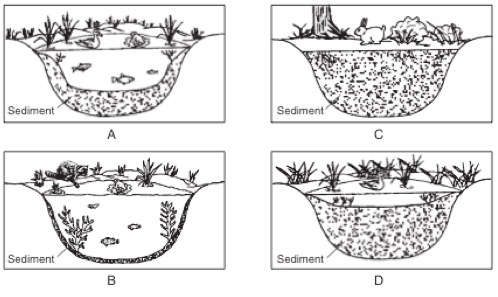
What is the correct order from oldest (happened first) to youngest (happened last) in this pond succession?
a)
A, B, C, D
b)
D, C, B, A
c)
B, A, D, C
d)
C, D, A, B
25.
If the grasshopper were to be removed completely from the food web, what organism would be most effected?
a)
The squirrel
b)
The shrew
c)
The deer
d)
The rabbit
26.
After a volcanic eruption, lava covers the land. What is the order that plants grow to repopulate the area?
a)
Lichens → Shrubs → Grasses → Trees
b)
Lichens → tree → shrubs→Grasses
c)
Grasses → Lichens → Shrubs → Trees
d)
Lichens → Grasses → Shrubs → Trees
27.
A clownfish uses a sea anenome as a safe place to live. While living there, the clownfish lures in food for the anenome. This is an example of what type of relationship?
a)
Predator-Prey
b)
Commensalism
c)
Mutualism
d)
Parasitism
28.
A mosquito feeds off of the blood of different organisms. This usually causes discomfort to the organism and sometimes disease and death. This is an example of:
a)
Parasitism
b)
Decomposition
c)
Commensalism
d)
Mutualism
29.
An organism that needs to use chemicals to make its own food is known as a(n):
a)
Heterotroph
b)
Autotroph
c)
Decomposer
d)
Consumer
30.
A group of particular organisms that belong to the same species that live in the same habitat is known as a:
a)
Population
b)
Ecosystem
c)
Community
d)
Biome
31.
If the amount of food or resources available increases, the carrying capacity for an animal:
a)
Stays the same
b)
Increases
c)
Decreases
d)
Fluctuates
32.
If the carrying capacity of a predator decreases, what will happen to the carrying capacity of the prey?
a)
Will Increase
b)
Will Decrease
c)
Will stay the same
d)
Will fluctuate
33.
Nitrogen fixation processes nitrogen from which of the following sources?
a)
lightning
b)
fertilizers
c)
dead plants
d)
atmosphere
34.
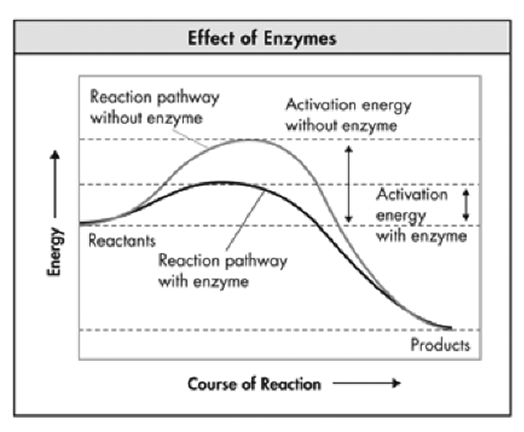
The graph shows how enzymes affect reactions in cells. Which statement best summarizes the information shown in the graph?
a)
Enzymes increase the energy of the reactants.
b)
Enzymes decrease the energy level of the products.
c)
Enzyme decrease the activation energy of the reaction.
d)
Enzymes reverse the direction of the reaction.
35.
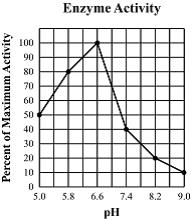
Which of the following conclusions can be drawn from this graph?
a)
The optimum pH of the enzyme is 6.6.
b)
The optimum pH of the enzyme is 5.8
c)
The enzyme’s activity increases as pH increases 5.0 to 9.0
d)
The enzyme’s activity is greater around pH of 8.0 .
36.
What type of feedback loop is shown?
a)
Positive
b)
Neutral
c)
Negative
37.
Homeostasis
a)
allows for a wildly fluctuating internal environment
b)
is impossible in vertebrates
c)
is the maintenance of a relatively stable internal environment and often incorporates a form of feedback regulation
d)
is the maintenance of a relatively stable external environment and often incorporates a form of feedback regulation
38.
what did Charles Darwin observe in finch populations of the Galapagos Islands off the coast of South America?
a)
different species on different islands
b)
all species on one of the islands
c)
identical species on all the islands
d)
the same species as North America
39.

What does this picture model?

a)

DNA structure of the horse

b)

Evolution of the horse

c)

Extinction of the horse

d)

Singular trait of the horse

40.
The structures in this picture are ____________.  Although they look different they are similar in origin.
a)
analogous
b)
homologous
c)
vestigial
d)
ancestral