
Font size
 Worksheets
Practice Test Life Cycle of Stars, HR Diagram and The Sun
Total questions: 40
Worksheet time: 29mins


sort of cool, dim (not too much light), and red?


Using the HR diagram, choose the color of Zeta Eridani
blue
white
yellow
red

Which star is the hottest?
Betelguese
Rigel
The Sun
Aldebaran
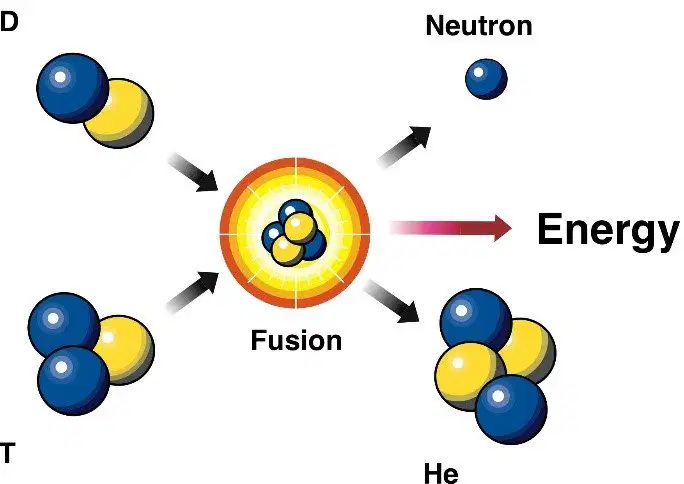
a nuclear reaction in which atomic nuclei of low atomic number fuse to form a heavier nucleus with the release of energy.
gravity
nuclear fusion
nebula
blackhole

Which phase of the stars life cycles have the greatest luminosity?
Blue giants
Red Super Giants
White Dwarfs
Main Sequence Stars
What are the stages in the life cycle of star much larger than the Sun?
nebula → protostar → main sequence → red giant → supernova → neutron star or black hole
nebula → protostar → main sequence → red giant → white dwarf → black dwarf
nebula → protostar → main sequence → red supergiant → supernova → neutron star or black hole
protostar → nebula → main sequence → red supergiant → neutron star or black hole → supernova
What determines whether a star will eventually form a black hole or a neutron star?
Its mass
Its temperature
Its colour
Its age

The layer of the sun that produces visible light-
Photosphere
Solar flare
Core
Chromosphere
Which of the following lists some of the layers of the Sun in order from the center of the Sun outward?
radiation zone, convection zone, chromosphere, core
radiation zone, convection zone, core, photosphere
core, radiation zone, convection zone, photosphere
corona, photosphere, chromosphere, core
Which of the following correctly describes the rotation of the Sun?
All parts of the Sun rotate together.
The Sun rotates faster at its equator than at its pole.
The Sun rotates slower at its equator than at its pole.
The Sun does not rotate at all.


What are the two most abundant elements in a main sequence star?
a) carbon and hydrogen
b) hydrogen and helium
c) helium and carbon
d) carbon and heavy metals

The life cycle path followed by a star is determined by the star’s initial:
a) mass & size
b) temperature & origin
c) luminosity & color
d) luminosity & structure

What is the Sun’s luminosity?
1
102
-102
105

The distance between stars is measured in
light years (ly).
nuclear fusion.
dark energy.
astronomical units (AU).

The Hertzsprung-Russell diagram shows that main-sequence stars
are mostly hot and dim.
are mostly cool and bright.
increase in brightness as they increase in temperature.
decrease in brightness as they increase in temperature.

Look at the diagram: Compared to our Sun, Alpha Centauri A would be
hotter and brighter
cooler and brighter
hotter and dimmer
cooler and dimmer
What are the two most abundant elements in a main sequence star?
a) carbon and hydrogen
b) hydrogen and helium
c) helium and carbon
d) carbon and heavy metals
The life cycle path followed by a star is determined by the star’s initial:
a) mass & size
b) temperature & origin
c) luminosity & color
d) luminosity & structure
What is the Sun’s luminosity?
1
102
-102
105
The distance between stars is measured in
light years (ly).
nuclear fusion.
dark energy.
astronomical units (AU).

Our Sun is considered average because its temperature and absolute magnitude place it near the center in the ____ _________ of the H-R diagram.
white dwarf
red giant
main sequence
supergiant

Look at the diagram: According to the HR diagram, what is the approximate absolute magnitude of Rigel?
0
+1
-2
-5
Look at the diagram: Compared to our Sun, Alpha Centauri A would be
hotter and brighter
cooler and brighter
hotter and dimmer
cooler and dimmer

A neutron star is
One possible end phase of a massive star.
A star made up of only protons.
The type of star you have before it turns into a supergiant.

