Wayground logo

Free Printable Worksheets

Font size

S
M
L
XL
Worksheets

Revision Measurements, Force and Motion I

Total questions: 60

Worksheet time: 42mins

Name
Class
Date
1.

Define vector quantity.

a)

Quantity which has magnitude.

b)

Quantity which has both magnitude and direction

c)

Quantities that cannot be defined in term of other physical quantities

d)

Quantities derived from combination of base quantities through multiplication or division or both

2.

Choose TWO(2) examples of base quantity

a)

Mass and density

b)

Length and area

c)

Length and mass

d)

Mass and velocity

3.

Define physical quantity

a)

Quantities that cannot be defined in term of other physical quantities

b)

Quantities derived from combination of base quantities through multiplication or division or both.

c)

Quantity that cannot be measured

d)

Quantity that can be measured

4.

Find SI unit of density

a)

g/m2

b)

g/m3

c)

kg/m2

d)

kg/m3

5.

What is the SI unit of weight?

a)

kilograms

b)

grams

c)

newtons

d)

kg

6.

Electric current is a vector quantity

a)

True

b)

False

7.

Which of the following are examples for basic quantities?

a)

Length, velocity, mass, time

b)

Current, acceleration, pressure, luminous intensity

c)

Temperature, Current, Time, Mass

d)

Frequency, Area, Length, Time

8.

Which one of these options is NOT a fundamental quantity?

a)

Time

b)

Electric current

c)

Energy

d)

Luminous Intensity

9.

What is the SI unit of electric current?

a)

Ampere (A)

b)

Volt (V)

c)

Ohm

d)

Mole

10.

Which one of these options is NOT a derived quantity?

a)

Area

b)

Volume

c)

Density

d)

Temperature

11.

What is the SI unit of speed?

a)

m/s

b)

cm/s

c)

km/hour

d)

kg/m

12.
Which of the following quantity is base quantity ?
a)
voltage
b)
electric current
c)
electric energy
d)
electric power
13.
Which of the following pairs of physical quantity and SI unit is correct ?
a)
Mass - SI unit : Gram
b)
Time - SI unit : Hour
c)
Electric current - SI unit : Volt
d)
Temperature - SI unit : Kelvin
14.
What is derived quantities ?
a)
a tendency to do nothing or to remain unchanged.
b)
combination of two or more base quantities
c)
the quantity of motion of a moving body, measured as a product of its mass and velocity.
15.
______________________ is any push or pull on an object.
a)
Force
b)
Mass
c)
Gravity
d)
Air Resistance
16.
Which tells the VELOCITY of an object?
a)
75 mph
b)
75 mph traveling south
17.
Which scientist gave us the laws of motion?
a)
George Washington
b)
John Adams
c)
Sir Isaac Newton
18.
If I kick a soccer ball across the field, what vocabulary word tells me why the ball would slow down in the grass?
a)
acceleration
b)
friction
c)
gravity
19.
Which is harder to stop - an 18 wheeler or a motorcycle?
a)
motorcycle
b)
18 wheeler
20.

If the man and the ball travels 90 m in 9 seconds, what is their average speed?

a)

10 m/s

b)

180 m/s

c)

99 m/s

d)

10 meters

21.

If a lizard can run 8 m across the water in 4 seconds, how fast is he traveling?

a)

32 m/s

b)

2 m/s

c)

2 seconds

d)

34 meters

22.

A force that opposes motion is

a)

friction

b)

inertia

c)

acceleration

d)

momentum

23.

7. A car traveling at 90 kilometers/hour when it suddenly stops. The passengers in the car will

a)

continue to move in a straight line and will slide forward in the car.

b)

come to a stop at the same time the car stops

c)

be pushed against the door on the passenger side

d)

be pushed against the door on the driver's side

24.

What is the acceleration of an object that takes 20 seconds to change from a speed of 200 meters/second to 300 meters/second?

a)

5 m/s squared

b)

5 m/s

c)

100 m/s

d)

100 m/s squared

25.

What effect does friction have on a moving object?

a)

it causes the moving object to slow and eventually stop

b)

it causes the moving object to speed up

c)

it keeps the moving object moving in the same direction forever

d)

it causes the moving object to turn around and move in the opposite direction

26.

If you draw a distance/time graph and place units of seconds on the horizontal axis, you would place units of ________ on the vertical axis.

a)

grams

b)

meters

c)

Newtons

d)

kilograms

27.

When an object is sitting on the Earth, what do you call the force of gravity that is acting on the object?

a)

weight

b)

mass

c)

magnetism

d)

momentum

28.

This motion graph represents:

a)

constant speed

b)

acceleration

c)

body at rest

d)

slowing down

29.
the tendency of an object to resist a change in its motion
a)
acceleration
b)
inertia
c)
mass
d)
frame of reference
30.
The SI unit for force
a)
distance
b)
Newton (N)
c)
frame of reference
d)
inertia
31.
Inertia is the tendency of an object to resist a change in its ___________. 
a)
temperature
b)
shape
c)
size
d)
motion
32.
Objects with greater _________ also have greater inertia.
a)
speed
b)
mass
c)
temperature
d)
friction
33.
Because of inertia, a resting object will remain at ________.
a)
rest
b)
a constant speed
c)
school
d)
inertia 
34.
Because of inertia, a moving object will keep ________.
a)
at rest
b)
moving
c)
in one spot
d)
inertia 
35.
What kind(s) of objects have inertia?
a)
all objects with mass
b)
only objects at rest
c)
only objects in motion
d)
only objects whose motion is being changed
36.
The law of inertia (Newton’s First Law) applies
a)
to both moving and nonmoving objects
b)
only to moving objects
c)
only to objects that are not moving
37.
Inertia refers to ___.
a)
The force that keeps stationary objects at rest
b)
The force which keeps moving objects in motion with a constant
c)
The tendency of moving objects to remain in motion
d)
All of the above
38.
You push on a car and it does not move.  What is true about the inertia?
a)
The inertia is changing
b)
The inertia of the car is too great 
c)
The inertia of the person is equal to the car
d)
There is not inertia because of no movement
39.
The momentum of an object depends upon the object's ___________&_____________.  
a)
size and shape
b)
mass and speed
c)
mass and veloctiy
d)
mass and energy
40.
The equation to calculate momentum is
a)
p=mv
b)
p=1/2mv2
c)
p=mgh
d)
p=mg
41.
Which has more momentum: a car stopped at a red light or a bike moving at 15 mph?
a)
car
b)
bike
c)
they are equal
d)
cannot determine using the info provided
42.
Momentum is a ____________________ quantity
a)
science
b)
scalar
c)
vector
d)
energy
43.
The impulse is ______ the change in momentum
a)
Greater than
b)
Equal to
c)
less than
d)
always double
44.
In any collision (crash) the ______ is ALWAYS constant
a)
Total Momentum
b)
total speed
c)
total Velocity
d)
Energy
45.
When two objects collide, the Pbefore is ____________ the Pafter.
a)
more than 
b)
less than 
c)
equal to
d)
unrelated to
46.
When the speed of an object is doubled, its momentum
a)
remains unchanged in accord with the conservation of momentum.
b)
doubles
c)
quadruples
d)
decreases
47.
What is the unit for momentum?
a)
m/sec
b)
kg/sec
c)
kg/m
d)
kg m/sec
48.
Softer landings tend to
a)
increase impact force
b)
increase force
c)
increase collision time
d)
increase change in momentum
49.
The difference between a car hitting a wall vs. a car hitting a hay stack is
a)
the Impulse on the car hitting the wall is greater
b)
the change in momentum of the car hitting the wall is greater
c)
the force on the car hitting the hay stack is greater
d)
the collision time of the car hitting the hay stack is greater
50.
The units for Impulse are
a)
N/s
b)
N.s
c)
N
d)
m/s
51.
The purpose of crumble zones on a car is to
a)
decrease time of impact.
b)
increase force of impact.
c)
increase the time of impact.
d)
decrease the impulse during impact.
52.
The law of conservation of momentum states that, 
a)
p before is less than p after
b)
p before is the same as p after
c)
p before is more than p after
53.
In this type of collision, objects tend to "stick" together.
a)
elastic
b)
inelastic 
c)
They "stick" together in both types of collisions
54.
It takes more force to accelerate the iron man on the left than the iron man on the right because the iron man on the left has more mass. This best describes
a)
Newton's first law, the law of inertia
b)
Newton's second law, the law of acceleration
c)
Newton's third law, the law of action reaction 
d)
The law of universal gravitation
55.
The formula 
? = mass x acceleration
or 
? = m x a 
is used to find 
a)
Force
b)
Velocity
c)
Momentum
d)
Gravity
56.
For every action, there is an equal and opposite reaction.
a)
Newton's
1st
Law of Motion
b)
Newton's
2nd
Law of Motion
c)
Newton's
3rd
Law of Motion
57.
An automobile you are riding in suddenly stops, but you continue to go forward.
a)
Newton's
1st
Law of Motion
b)
Newton's
2nd
Law of Motion
c)
Newton's
3rd
Law of Motion
58.
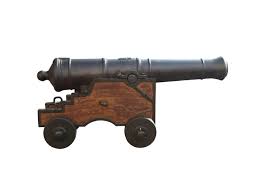
When a cannon fires a cannonball we observe Newton's third law. Which force is the reaction force?
a)
The cannon moving forward
b)
The cannonball moving forward
c)
The cannon moving backward
d)
The cannonball moving backward
59.
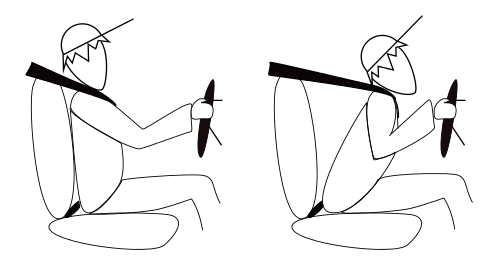
What Newtons law does this picture represent
a)
Newtons 2nd law 
b)
Law of gravity 
c)
Newtons 1st law
d)
Newtons 5th law
60.
When you push a boat off from the dock, you are demonstrating Newton's 3rd Law of Motion. It simply states that for every action there is an equal and opposite _______________?
a)
Motion
b)
Change
c)
Reaction
d)
Push