wayground logo

Free Printable Worksheets

NEW

Font size

S
M
L
XL
Worksheets

Chapter 17 Review - Properties of Atoms & Periodic Table

Total questions: 44

Worksheet time: 25mins

Name
Class
Date
1.

True or False? The correct way to write chemical symbols is to capitalize the first and second letter

a)

True

b)

False

2.

Which of the following elements has the symbol Ba?

a)

Bismuth

b)

Barium

c)

Bromine

d)

Boron

3.

What is the chemical symbol for Carbon?

a)

Ca

b)

Cl

c)

Cr

d)

C

4.

What is the chemical symbol for gold?

a)

G

b)

Au

c)

Ag

d)

Go

5.

Which of the following elements has the symbol Hg?

a)

Neon

b)

Mercury

c)

Magnesium

d)

Lithium

6.

Which of the following elements has the symbol Sn?

a)

Zinc

b)

Sulfur

c)

Tin

d)

Sodium

7.

Subatomic particles with a negative charge

a)

Electrons

b)

Neutrons

c)

Protons

d)

Quarks

8.
Subatomic particles with a positive charge
a)
neutrons
b)
atomic mass
c)
protons
d)
isotopes
9.
Measure mainly of the nuclear particles: protons + neutrons
a)
Subatomic Particles
b)
Atomic Number
c)
Atomic Mass
d)
Gluons
10.
Value representing the number of protons in an element
a)
Atomic Mass
b)
Mass Number
c)
Valence Electrons
d)
Atomic Number
11.
Subatomic particles that are neutral in charge
a)
Neutrons
b)
Protons
c)
Nucleus 
d)
Electrons
12.
Atoms of the same element with a different number of neutrons
a)
Ion
b)
Gluons
c)
Isotope
d)
Quarks
13.
The smallest particle of an element that shows all the properties of that element.
a)
Subatomic Particles
b)
Atom
c)
Quarks
d)
Gluons
14.
Where electrons are likely to be found as they travel around the nucleus
a)
Nucleus
b)
Electron Cloud
c)
Within a Proton
d)
Within a Neutron
15.
A tiny but very dense, positively charged portion of the atom that holds most of the atomic mass
a)
Electron Shells
b)
Orbitals
c)
Electron Cloud
d)
Nucleus
16.
Arrangement of elements organized by atomic number
a)
Electron Cloud 
b)
Periodic Table 
c)
Electron Configuration
d)
None of these
17.
Calculation used to find the number of neutrons in an atom
a)
Atomic Mass - Atomic Number
b)
Atomic Number - Atomic Mass
c)
Atomic Mass - Electrons
d)
none of these
18.

Which of the following is held within the nucleus?

a)

Protons and Neutrons

b)

Protons and Electrons

c)

Electrons and Neutrons

d)

Protons

19.

What are the small particles that make up protons and neutrons?

a)

Electrons

b)

Neutrons

c)

Quarks

20.

Who discovered that the atom had an small, dense, positively charged center? Beehive Model

a)

Ernest Rutherford

b)

J.J Thomson

c)

Robert Millikan

d)

John Dalton

21.

Place the following atomic models in order, from earliest to latest:


A) Rutherford B) Thomson C) Dalton

a)

B, C, A

b)

C, A, B

c)

A, C, B

d)

C, B, A

22.

Who proposed that electrons move around the nucleus in circular orbits?

a)

Dalton

b)

Thomson

c)

Rutherford

d)

Bohr

23.

In the model nicknamed "the solar system model" what are the electrons like?

a)

the sun

b)

the nucleus

c)

the planets

d)

the moon

24.

This was the first model of the atom ever proposed. It was simple and described atoms as tiny spheres that could not be broken down into smaller pieces.

a)

Democritus's model of the atom

b)

The "Chocolate Chip Cookie Model" of the atom

c)

The "Beehive Model" of the atom

d)

The "Solar System Model" of the atom

25.

What model states that atoms contain negatively charged particles that are evenly spread? Chocolate Chip Cookie Model

a)

Rutherford

b)

Bohr

c)

Thomson

d)

Democritus

26.

the basic structural unit of matter

a)

atom

b)

matter

c)

element

d)

nucleus

27.

The vertical (up and down) columns in the Periodic Table are called

a)

groups

b)

towers

c)

periods

d)

atomic numbers

28.
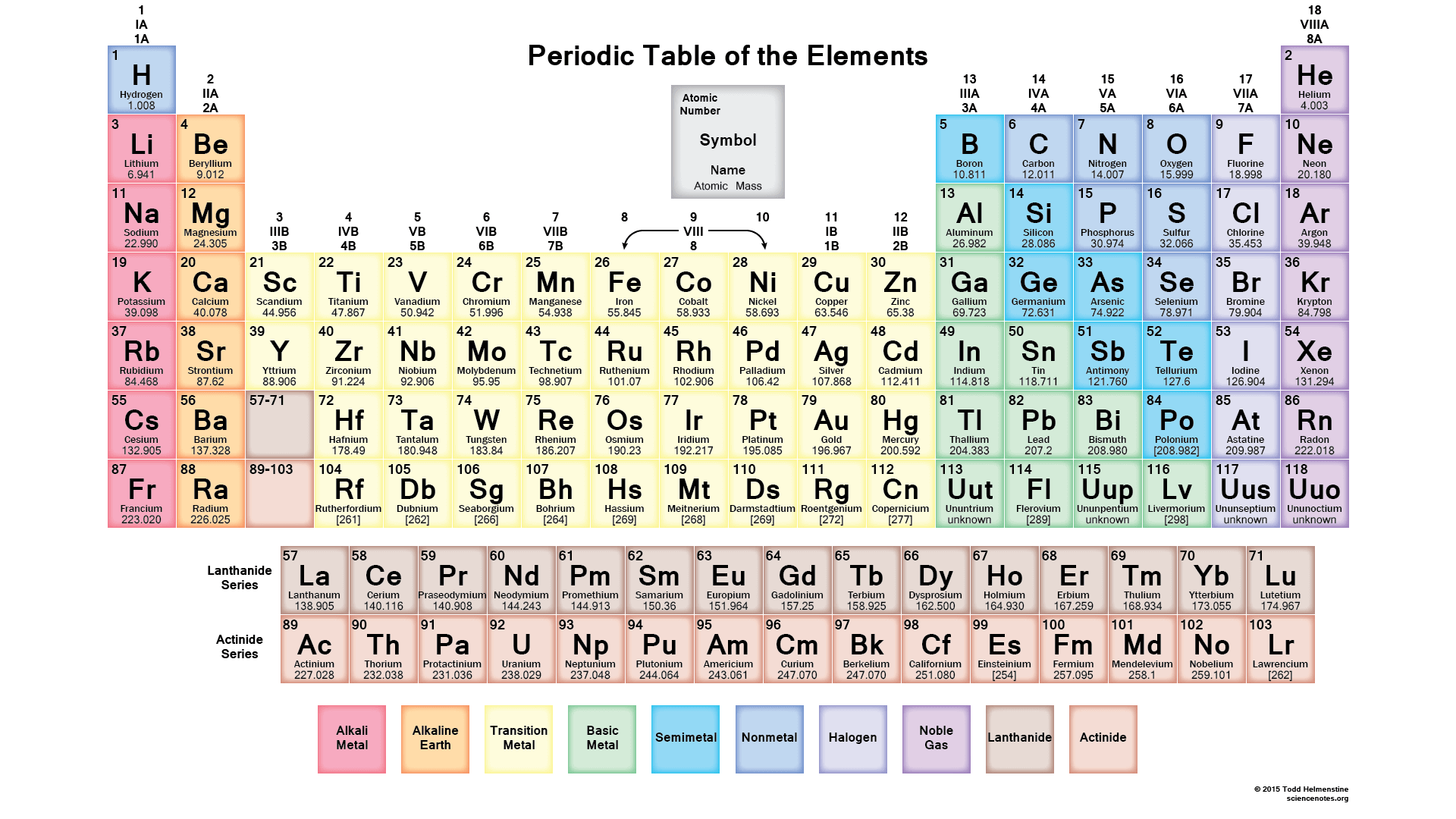
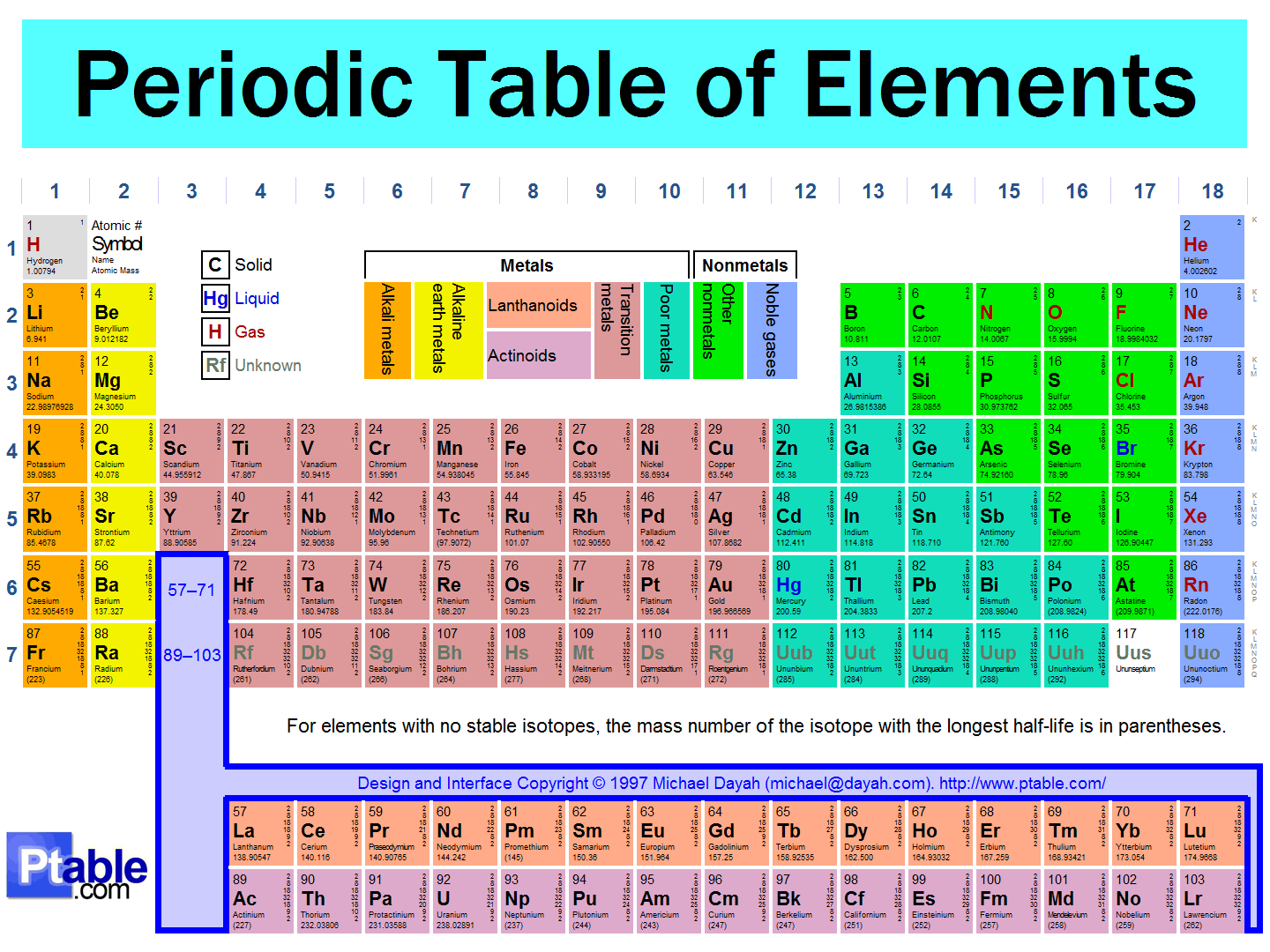
Sodium (Na) is found in period 
a)
3
b)
2
c)
4
d)
1
29.
Sodium (Na) is found in group 
a)
1
b)
2
c)
3
d)
4
30.
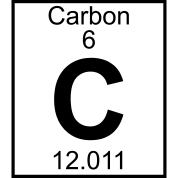
What does the 6 represent?
a)
atomic mass
b)
atomic number
c)
element name
d)
chemical symbol 
31.
What does 12.011 represent?
a)
atomic mass
b)
atomic number
c)
element name
d)
chemical symbol 
32.
What does the C represent?
a)
atomic mass
b)
atomic number
c)
element name
d)
chemical symbol 
33.

The horizontal (side to side) rows in the Periodic Table are called

a)

groups

b)

families

c)

periods

d)

atomic numbers

34.

how many periods/rows are on the table

a)

4

b)

5

c)

6

d)

7

35.

how many groups/families are on the table

a)

15

b)

16

c)

17

d)

18

36.

what is the small group of elements called that include C,N,O

a)

metals

b)

nonmetals

c)

metaloids

d)

noble gases

37.

What are the electrons that are furthest away from the nucleus?

a)

Protons

b)

Neutrons

c)

Valence Electrons

d)

Electrons

38.

What diagram uses dots to represent valence electrons?

a)

Bohr Diagram

b)

Electron Dot Diagram

39.

Who was the first person to publish the periodic table?

a)

Mendeleev

b)

Moseley

c)

Bohr

d)

Democritus

40.
Silicon is a semiconductor and has properties of both metals and nonmetals. What type of element is Silicon? 
a)
Metal
b)
Nonmetal
c)
Metalloid
d)
Pretty
41.
Iron is a good conductor, malleable and magnetic. What type of element is Iron? 
a)
Metal
b)
Nonmetal
c)
Metalloid
d)
Pretty
42.
Which elements are found on the left to middle of The Periodic Table? 
a)
Metals
b)
Nonmetals
c)
Metalloids
d)
Candles
43.
Which elements are found on the right side of The Periodic Table?
a)
Metals
b)
Nonmetals
c)
Metalloids
d)
Water
44.

What is an exploding star called? This spreads the elements throughout the universe

a)

Supernova

b)

Nebula

c)

Protons

d)

Neutrons