wayground logo

Free Printable Worksheets

NEW

Font size

S
M
L
XL
Worksheets

Chem Review Part 1

Total questions: 43

Worksheet time: 2hrs 9mins
Name
Class
Date
1.
The positive particles of an atom are 
a)
electrons 
b)
positrons 
c)
neutrons 
d)
protons 
2.
all matter is made of what 
a)
energy 
b)
atoms 
c)
electrons 
d)
compounds 
3.
Particles in an atom that are neutral and have no charge are 
a)
negatrons 
b)
electrons 
c)
neutrons 
d)
protons 
4.
The particles that are found in the nucleus of an atom are
a)
neutrons and electrons
b)
electrons only
c)
protons and neutrons
d)
protons and electrons
5.
electrons have this type of charge?
a)
negative
b)
positive
c)
neutral
6.
The horizontal row on the periodic table is called a
a)
group
b)
family
c)
period
d)
atomic number
7.
A vertical column is called...
a)
group
b)
tower
c)
period
d)
crew
8.
Which of these element is the least metallic?
a)
Potassium (K)
b)
Carbon (C)
c)
Sulfur (S)
d)
Neon (Ne)
9.
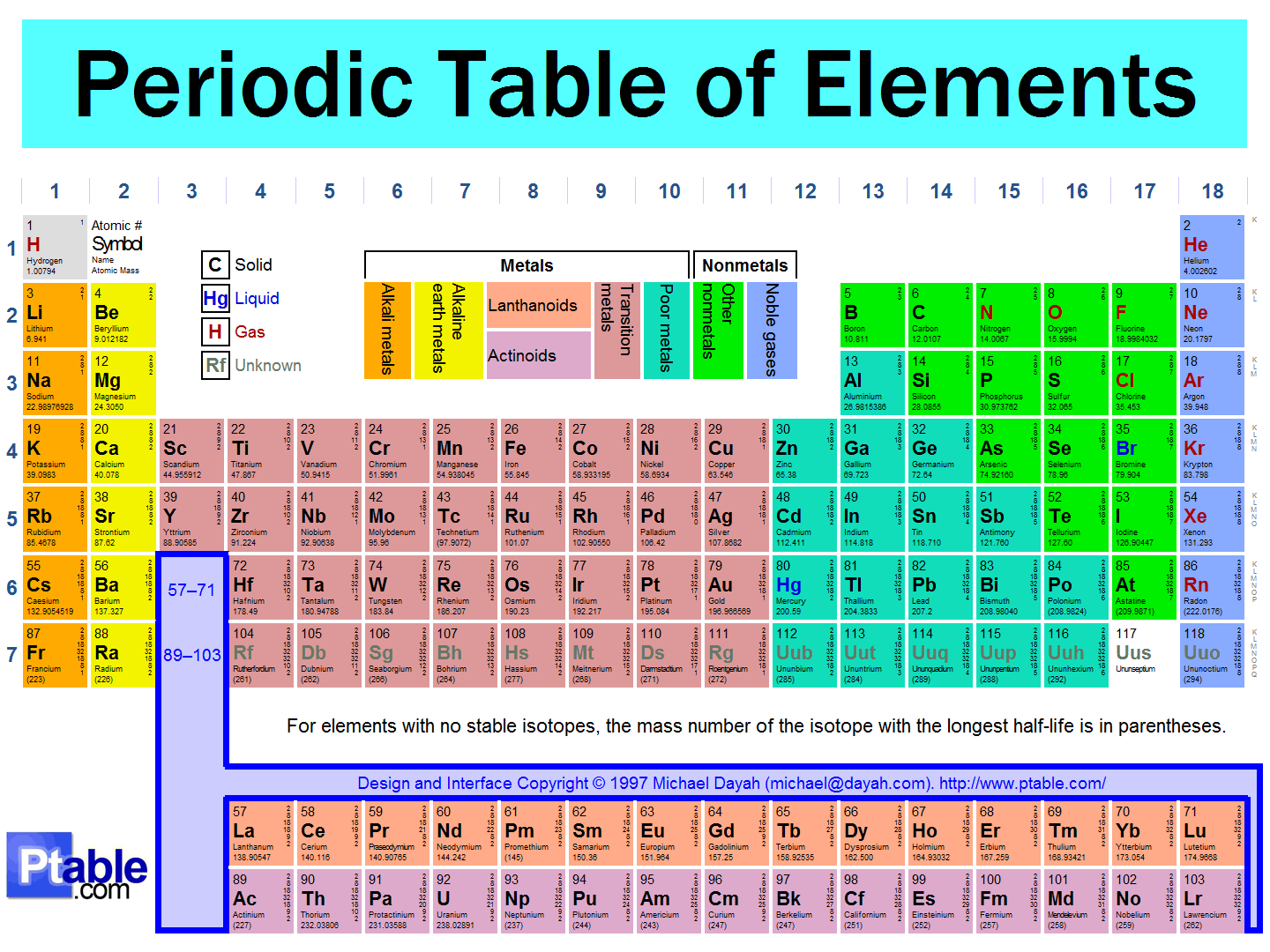
The number at the bottom of each square on the periodic table is the ...
a)
atomic number
b)
atomic mass
c)
chemical symbol
d)
element name
10.
The number at the top of each square on the periodic table is the ...
a)
atomic number
b)
atomic mass
c)
Chemical Symbol
d)
Element Name
11.
What is the chemical symbol for Lithium?
a)
H
b)
He
c)
Li
d)
N
12.
Pure forms of these elements are stored in oil so they won't react with oxygen and water in the air.
a)
Alkali Metals
b)
Alkaline-earth metals
c)
Halogens
d)
Noble Gases
13.

a unique number for each element that equals the number of protons in an atom of that element

a)

element name

b)

element symbol

c)

atomic number

d)

atomic mass

14.
How many protons are in this element?
a)
79
b)
196
c)
117
d)
Cannot be determined
15.
How many neutrons are in a Gold atom?
a)
79
b)
196
c)
118
d)
275
16.
What is the formula to solve for the neutron?
a)
Mass + Atomic Number= Neutrons
b)
Mass x Atomic Number = Neutrons
c)
Mass - Atomic Number = Neutrons
d)
Mass + Number of Protons = Neutron
17.
How many neutrons does the an element with an atomic number of 3 and a mass of 6.9 contain?
a)
6.9
b)
4
c)
3
d)
7
18.
Valence electrons are the...
a)
Innermost electrons
b)
Middle electrons
c)
Outermost electrons
d)
Any electrons
19.
Elements in the same column of the periodic table always have the same # of _______ as one another.
a)
Protons
b)
Neutrons
c)
Electrons
d)
Valence Electrons
20.
Valence electrons are: 
a)
Electrons farthest away from the nucleus
b)
Electrons closest to the nucleus
c)
Electrons that just come and go - they don't stay with the atom
d)
Electrons in the second shell
21.
What two types of measurements make up DENSITY
a)
Mass and Volume
b)
Temperature and Mass
c)
Grams and Centimeters
d)
Volume and Weight
22.
Jack has a rock. The rock has a mass of 14g and a volume of 2cm3. What is the density of the rock?
a)
7 mL
b)
7 g/cm3
c)
28 g/cm3
d)
1/7 g/cm3
23.
What units are used to measure mass?
a)
g
b)
cm3
c)
g/cm3
d)
cm3/g
24.
What is the formula for density?
a)
density = mass x volume
b)
density = mass / volume
c)
density = mass + volume
d)
density = mass - volume
25.
True or False:  The density of a specific type of material never changes.  
a)
True
b)
False
26.

An example of a pure substance would be...

a)

Hydrogen

b)

Water

c)

Salt

d)

A Sandwich

27.

An example of a compound might be...

a)

Ammonia (NH4)

b)

Milk

c)

Oxygen (O)

d)

Iron (Fe)

28.

An example of a heterogeneous mixture might be...

a)

Subway Sandwich

b)

Water

c)

Milk

d)

Blood

29.

An example of a homogeneous mixture might be...

a)

Chocolate

b)

Lithium

c)

Carbon Dioxide (CO2)

d)

Trail Mix

30.
The pH scale is a range from:
a)
1-7
b)
0-14
c)
1-5
d)
1-20
31.
A(n) ______ is a substance with a pH less than 7
a)
Acid
b)
Alkaline
c)
Base
d)
Buffer
32.
A(n) _______ is a substance with a pH greater than 7.
a)
Base
b)
Acid
c)
Buffer
d)
Water
33.

The item pictured below is an example of which type of classification?

a)

Compound

b)

Heterogeneous Mixture

c)

Homogeneous Mixture

d)

Pure Substance

34.

The item pictured below is an example of what type of classification?

a)

Homogeneous mixture

b)

Heterogeneous mixture

c)

Pure substance

d)

Compound

35.

Which set of properties, intensive or extensive, are based on the size of a sample?

a)

intensive

b)

extensive

36.

What kind of physical property is this? Color

a)

intensive

b)

extensive

37.

What kind of physical property is this? Mass

a)

intensive

b)

extensive

38.

What is the phase change of a solid to a liquid?

a)

freezing

b)

melting

c)

boiling

d)

condensation

39.
7. All phase changes (changing states) requires energy to be added or taken away.
a)
True
b)
False
40.
Change from gas to liquid...
a)
condensation
b)
evaporation
c)
expansion
d)
movement
41.

Change from Liquid to Solid is called ...

a)

fusion

b)

Freezing

c)

sublimation

d)

evaporation

42.

Change from liquid to gas is called....

a)

expansion

b)

evaporation

c)

condensation

d)

sublimation

43.

What happens to particles when energy is added (heated)?

a)

They speed up and spread out

b)

They slow down and compress

c)

They stop moving

d)

They move closer together and speed up