wayground logo

Free Printable Worksheets

Font size

S
M
L
XL
Worksheets

Adaptation

Total questions: 64

Worksheet time: 32mins

Name
Class
Date
1.

An inherited trait that helps those organisms that have it to survive

a)

niche

b)

structure

c)

characteristic

d)

adaptation

2.

What is the advantage of having different shaped beaks?

a)

To look different from other species.

b)

To be able to eat the food readily available in the environment.

c)

To protect itself against predators.

d)

To protect itself against prey.

3.

Beak shape depends on...

a)

where birds live

b)

who they hang out with

c)

diet (fish or seeds)

d)

exercise

4.

What adaptation is represented by the image?

a)

Reproduction

b)

Camouflage

c)

Hibernation

d)

Seed Dispersal

5.

This is any variation that makes an organism better suited to its environment.

a)

Evolution

b)

Graduation

c)

Species

d)

Adaptation

6.
Which feature helps an animal hide from other animals?
a)
looking like a dangerous animal
b)
being the same color as the place it lives (camoflauge)
c)
having sharp claws or a strong shel
d)
having only a few young and caring for them
7.

A giraffe has a long neck in order to better reach leaves to eat. This is an example of _____.

a)

an adaptation

b)

environment

c)

response

d)

stimulus

8.

How do adaptations help animals?

a)

To escape animals

b)

to hunt for food

c)

to survive in their habitats

d)

All of these are correct

9.

Plants with spines and waxy leaves are well suited for life in which environment?

a)

Desert

b)

Temperate forest

c)

Grassland

d)

Tropical Rainfroest

10.

Adaptation that refers to how an organism behaves and how interacts with other.

a)

adaptations

b)

mimicry

c)

behavioral

d)

camouflage

11.

An organism that hunts and feeds on another organism is a ______________________.

a)

prey

b)

producer

c)

predator

d)

decomposer

12.

An animal that is hunted as food

a)

prey

b)

predator

c)

decomposer

d)

producer

13.
When an organism copies a characteristic of something else in order to better its chances for survival and reproduction
a)
hibernation
b)
camouflage
c)
mimicry
d)
migration
14.
The seasonal movement of an organism from one place to another
a)
camouflage
b)
migration
c)
hibernation
d)
function
15.

Structural adaptation

a)

are physical features of an organism like the bill on a bird or the fur on a bear

b)

Mental adaptation, of the thinking of the animal

16.
Which feature of a rose helps it grow without being eaten by large animals?
a)
flowers with bright colors
b)
sharp thorns
c)
small seeds
d)
deep roots
17.
Which adaptation (for the underlined animal) serves the function of defense?
a)
A walking stick looks like the twig on which it rests.
b)
A porcupine’s quills cause a predator to seek another meal.
c)
A whale filters plankton and krill from the water in which it swims.
d)
A penguin is dark on top and white below to blend in with the water.
18.
Which of the following is a physical adaptation for the underlined animal?
a)
A butterfly has bright colors to warn predators that it is poisonous.
b)
A hognose snake rolls over, slows its breathing, and hangs its tongue out to play dead.
c)
A herd of buffalo encircle their young to protect them from a pack of wolves.
d)
A dung beetle rolls a piece of dung across the desert.
19.
How do adaptations help animals?
a)
To escape animals
b)
to hunt for food
c)
to survive in their habitats
d)
All of these are correct
20.
Dandelions have light furry seeds that allow them to spread easily. 
a)
True
b)
False
21.
Why do animals use camouflage?
a)
To look pretty
b)
To stay safe
c)
To play Hide and Go Seek
d)
To eat food
22.
How an animal protects itself Adaptation: Skunk and its spray
a)
Defense
b)
Hibernation
c)
Locomotion
d)
Migration
23.
The space, conditions and all the living and non-living things around an organism is its _________________.
a)
home
b)
environment
c)
neighborhood
d)
ecosystem
24.
True or false: When an animal hibernates, its body temperature drops and its heartbeat and breathing slows down.
a)
True
b)
False
25.
Polar bears have compact ears, a small tail, and thick fur to keep themselves warm. Are these examples of physical (structural) or behavioural adaptations?
a)
Physical
b)
Behavioural
26.
The goal of every species on earth is...
a)
to survive and reproduce 
b)
divide and conquer 
c)
survive and conquer 
d)
reproduce and die 
27.
Lions often hide in the tall grass while stalking their prey.  This is an example of...
a)
camouflage
b)
warning coloration
c)
mimicry
d)
hibernation
28.
Why is a spider spinning a web an innate behavior?
a)
It learns how to spin the web from its mother.
b)
It learns how to spin a web through insight learning.  
c)
It is born knowing how to spin a web.
d)
It learns how to spin a web through observational learning.
29.
Why is a spider spinning a web an innate behavior?
a)
It learns how to spin the web from its mother.
b)
It learns how to spin a web through insight learning.  
c)
It is born knowing how to spin a web.
d)
It learns how to spin a web through observational learning.
30.
A rabbit is running away from a fox. What is the stimulus for this behavior?
a)
avoiding a predator
b)
food
c)
migration
d)
estivation
31.
A rabbit is running away from a fox. What is the stimulus for this behavior?
a)
avoiding a predator
b)
food
c)
migration
d)
estivation
32.
An octopus can change its color to match its surroundings. This is an example of which type of behavior?
a)
camouflage
b)
mimicry
c)
cooperative behavior
d)
estivation
33.
An octopus can change its color to match its surroundings. This is an example of which type of behavior?
a)
camouflage
b)
mimicry
c)
cooperative behavior
d)
estivation
34.
A pine snake moves it tail quickly in pine needles so it sounds like a rattle snake. This is an example of which type of behavior?
a)
camouflage
b)
mimicry
c)
estivation
d)
migration
35.
A pine snake moves it tail quickly in pine needles so it sounds like a rattle snake. This is an example of which type of behavior?
a)
camouflage
b)
mimicry
c)
estivation
d)
migration
36.
Which of these choices is an example of something that is needed for survival?
a)
Adaptation
b)
Food 
c)
Water
d)
All of the above
37.
Which of these choices is an example of something that is needed for survival?
a)
Adaptation
b)
Food 
c)
Water
d)
All of the above
38.
The ears of this fox are an example of...
a)
A behavioral adaptation
b)
Poor breeding
c)
A physical adaptation
d)
Plastic surgery gone horribly wrong
39.
Which of the following is a physical adaptation for the underlined animal?
a)
A snake unhinges its jaw to eat a rabbit it just caught.
b)
A hognose snake rolls over, slows its breathing, and hangs its tongue out to pretend to be dead.
c)
A herd of buffalo encircle their young to protect them from a pack of wolves.
d)
A dung beetle rolls a piece of dung across the desert.
40.
How do adaptations help animals?
a)
to hide from predators
b)
to hunt for food
c)
to survive in their habitats
d)
All of these are correct
41.
How do adaptations help animals?
a)
to hide from predators
b)
to hunt for food
c)
to survive in their habitats
d)
All of these are correct
42.
An animal's color or pattern that helps it blend into its surroundings
a)
Environment 
b)
Mimicry
c)
Camouflage
d)
Habitat
43.
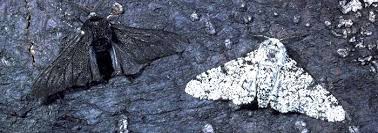
Predict which moth would increase in population
a)
light 
b)
dark
44.
Cactus has spines instead of leaves. The spines reduces water loss through the stomata.
a)
Structural
b)
Behavioural
45.

A cactus a thick, waxy leaves that help hold in water. This is an example of _____________________________ adaptation.

a)

behavioral

b)

structural

c)

physiological

46.
An example of a physical adaptation is...
a)
a turtle hiding inside its shell
b)
The spikes on a porcupine fish
c)
a rabbit burrowing underground
d)
a viper biting when threatened
47.
A Porcupine has sharp quills.  Why would a porcupine need this adaptation?
a)
to protect itself
b)
to keep warm
c)
to kill its prey
d)
to cover its skin
48.

A plant is adapted to a forest with little sunlight. Identify the BEST adaptation this plant might have to ensure its survival.

a)

extremely long root system

b)

thick, waxy, spike covered leaves

c)

ability to climb and trail upwards on taller trees

d)

shallow root system near the surface

49.

An oak tree losing its leaves during the winter is an example of

a)

Hibernation

b)

Homeostasis

c)

Dormancy

d)

Seed dispersal

50.

What adaptation is represented by the image?

a)

Homeostasis

b)

Dormancy

c)

Hibernation

d)

Pollination

51.
What adaptation does this squirrel have that allows it to glide through the air?
a)
Extra skin under the arms and legs to capture air as it falls.
b)
Big ears to capture are as it falls
c)
Small eyes to see where it will land
d)
A short thin tail
52.
The polar bear's white fur allows it to hide in the cold arctic. This adaptation is called________________.
a)
White on white
b)
Camouflage
c)
Color matching
d)
behavioral adaptation 
53.
Polar bears have an adaptation that allows them to swim. What is most likely this adaptation?
a)
White coat
b)
Fat belly
c)
Small eyes
d)
Webbed Feet
54.
Most desert plants have spines. How does this adaptation help them survive in a harsh environment?
a)
The spines capture water
b)
The spines make it colder
c)
The spines will make it rain
d)
The spines will protect the plant from animals that want to eat it
55.
What is the function (job) of fish gills?
a)
To absorb water from the water
b)
To make the fish faster
c)
To make the fish lighter
d)
To absorb oxygen from the water
56.
The feet of this bird tell us that this animal can...
a)
Run fast
b)
Swim 
c)
Fly fast
d)
Climb rocks 
57.
What adaptation most likely helps this bird fly?
a)
A strong beak
b)
Small feet
c)
Hollow bones 
d)
The color of the bird
58.
Why do hollow bones help birds during flight?
a)
Hollow bones make the birds weigh less
b)
Hollow bones are full of heavy blood
c)
Hollow bones store water
d)
Hollow bones are made of feathers 
59.
Xylem is a plant adaptation that allows plants to transport ______________ up the stem.
a)
Salt 
b)
Sugar
c)
Water
d)
Coffee
60.
Anteaters have a long thin snout and even longer tongue. What is this adaptation most likely for?
a)
To reach through small tunnels in the ground where it can find insects.
b)
To reach for fruits in trees
c)
To fight off predators 
d)
'to lick himself after eating 
61.
If a fishes gills are small, what might this say about the oxygen in the water?
a)
The water has no oxygen
b)
The water must have a high concentration of oxygen. 
c)
The water must have a low concentration of oxygen
d)
The water is clear and cold
62.
The Great Horned Owl has his eyes in the front of his head. What can you conclude about this fact?
a)
The Horned Owl is a prey
b)
The Horned Owl is a predator
63.
Goats have eyes on the side of the head. What does this adaptation say about the animal?
a)
He is a prey, and it allows goats to have a wide viewing range
b)
He is a prey, and it allows goats to have a smaller viewing range.
c)
Goats are predators 
d)
Goats are predators, and this allows them to see more
64.
This stick insect is using ________________ to blend in to it's environment. 
a)
air 
b)
terra
c)
camouflage 
d)
synthesis