
 Worksheets
Asexual & Sexual Reproduction
Total questions: 29
Worksheet time: 15mins

What is reproduction?
a play
making of the next generation
to do something over
none of the others


A mode of reproduction by which an organism arises from a single organism and inherit the identical genes of that parent
Asexual Reproduction
Sexual Reproduction
Genetic Variation
Alleles
Which of these statements about asexual reproduction is false?
Asexual reproduction requires only one parent.
Asexual reproduction increases variations in a population.
Asexual reproduction is carried out by bacteria.
Asexual reproduction can produce more offspring faster than sexual reproduction can.
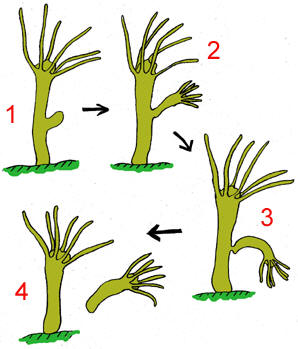
When an offspring grows off from the body of a parent organism it is called __________________.
budding
fission
fragmentation
sporulation

A mode of reproduction in which an organism arises from two organisms and inherits half of its DNA from each parent
Sexual Reproduction
Asexual Reproduction
Cloning
Fragmentation
____________________ occurs when a male gamete (sperm) combines with a female gamete (egg).
sporulation
fertilization
fission
regeneration

How many parents are required for sexual reproduction?
0
1
2
3
What are the advantages of sexual reproduction? Choose all that apply.
fast and efficient reproduction
offspring genes are identical to parent
offspring genes vary from parent
can better adapt to environment and disease
takes very little time and energy to reproduce

:
A scientist is observing a new species of organism. She observes that from generation to generation many of the organisms’ offspring have adaptations that their parents did not have. This organism is most likely reproducing through __________.
budding
asexual reproduction
sexual reproduction
binary fission
If a sexually reproducing organism has 20 chromosomes in its body cells, how many chromosomes did it inherit from each parent?
40
20
10
5
Which is the best example of sexual reproduction?
DNA is 100% the same
Offspring receive genetic material from two parents.
A bacterium divides into offspring identical to the parent.
Daughter cells receive all the genetic material of a parent cell.

The Monarch butterfly mates in the spring just before it migrates north. The male transfers a capsule filled with sperm and food. The female butterfly flies north then lays her eggs on milkweed plants. The leaves of the milkweed plant nourish her newly hatched larvae. Which reproductive strategy does the monarch butterfly exhibit?
Sexual Reproduction
Asexual Reproduction
Both Types of Reproduction

The whiptail lizard is an all-female species and is able to reproduce without a male to fertilize her eggs through a process called parthenogenesis. After a false mating , the female will lay eggs. The daughters are genetically identical to their mom. What type of reproduction?
Sexual
Asexual
Both sexual and asexual

The sea horse is unique among fish: it mates for life with the same partner. It is the dad who gets pregnant. The female deposits her eggs in the male's pouch which are then fertilized.( The pouch is an external structure that grows on the body of the male) What type of reproduction?
Asexual reproduction
Sexual reproduction
Both Sexual and Asexual reproduction

The garden strawberry plant grows modified stems, called runners. Along the runners, tiny new strawberry plants take root. Each new plant is identical to the parent. Insect pollinators also visit strawberry flowers. Pollen from one flower join the eggs of another to form seeds that cover the strawberry fruit. What type of reproduction?
Sexual Reproduction
Asexual Reproduction
Both asexual and sexual reproduction

The common earthworm has both male and female reproductive parts. To reproduce, two worms come together to exchange sperm. each worm deposits its own eggs and the donated sperm into a gooey cocoon that if leaves in the soil. Baby worms emerge a few weeks later. What type of reproduction?
Asexual reproduction
Sexual reproduction
Both axexual and sexual reproduction

Pollen grains produced by a flower are carried by a be to the stigma of another flower. What type of reproduction
Sexual reproduction
Asexual reproduction
Both sexual and asexual reproduction

A stem is cut from a plant and grows its own roots and leaves. A process called vegetative propagation (cutting)
What type of reproduction?
Sexual reproduction
Asexual reproduction
Both asexual and sexual reproduction

While fishing the fisherman cuts an earthworm in half. The head of the earthworm lives and the tail decays. What type of reproduction?
Asexual reproduction
Sexual reproduction
Both asexual and sexual reproduction
neither type of reproduction (attempted murder)

A female salmon lays eggs on a stream bed (spawn) to be fertilized by the male.
Sexual reproduction
Asexual reproduction
Both sexual and asexual reproduction
Neither type of reproduction

A male cockroach deposits a sperm sack inside the female cockroach. The sack fertilizes several batches of eggs. What type of reproduction?
Sexual
Asexual
Both sexual and asexual reproduction
Neither type of reproduction

Offspring are produced by growing out of the parent through a process called budding. The DNA are 100% the same.
Sexual reproduction
Asexual reproduction
Both asexual and sexual reproduction
Neither type of reproduction

An amoeba divides itself into two cells.
What type of reproduction?
Asexual reproduction
Sexual reproduction
Both asexual and sexual reproduction
Neither type of reproduction

