
Font size
 Worksheets
Weather and Climate
Total questions: 50
Worksheet time: 44mins
Which statement best describes climate?
Average atmospheric conditions prevailing over 30 years
Actual atmospheric conditions usually over a daily period.
Actual atmospheric conditions at a particular place and time
Average atmospheric conditions usually prevailing over 24- hour period
What is weather?
Average atmospheric conditions over a long period of time.
Average precipitation at a certain time and place.
Average temperature at a certain time and place.
Actual atmospheric conditions at a particular place and time over a daily period.
Annul rainfall for the Equatorial Climate commonly occur between
1000- 1500 mm
1500- 2000 mm
2000- 4000 mm
4000- 5000mm
A force applied by the weight of the atmosphere.
cold front
air pressure
barometer
humidity
How hot or cold the weather is
Sunshine
Temperature
Winds
Humidity

The climate shown on the map represents
Tropical Continental
Equatorial
Tropical Marine
Polar Zone

These are the highest clouds in the sky. They look white, thin and wispy. They usually mean good weather.
Cumulus
Cirrus
Stratus
Precipitation is
Rain, sleet, snow or hail.
Only rain.
Only snow and hail.
Only rain and snow
The amount of water vapor in the air is known as
Temperature
Climate
Precipitation
Humidity

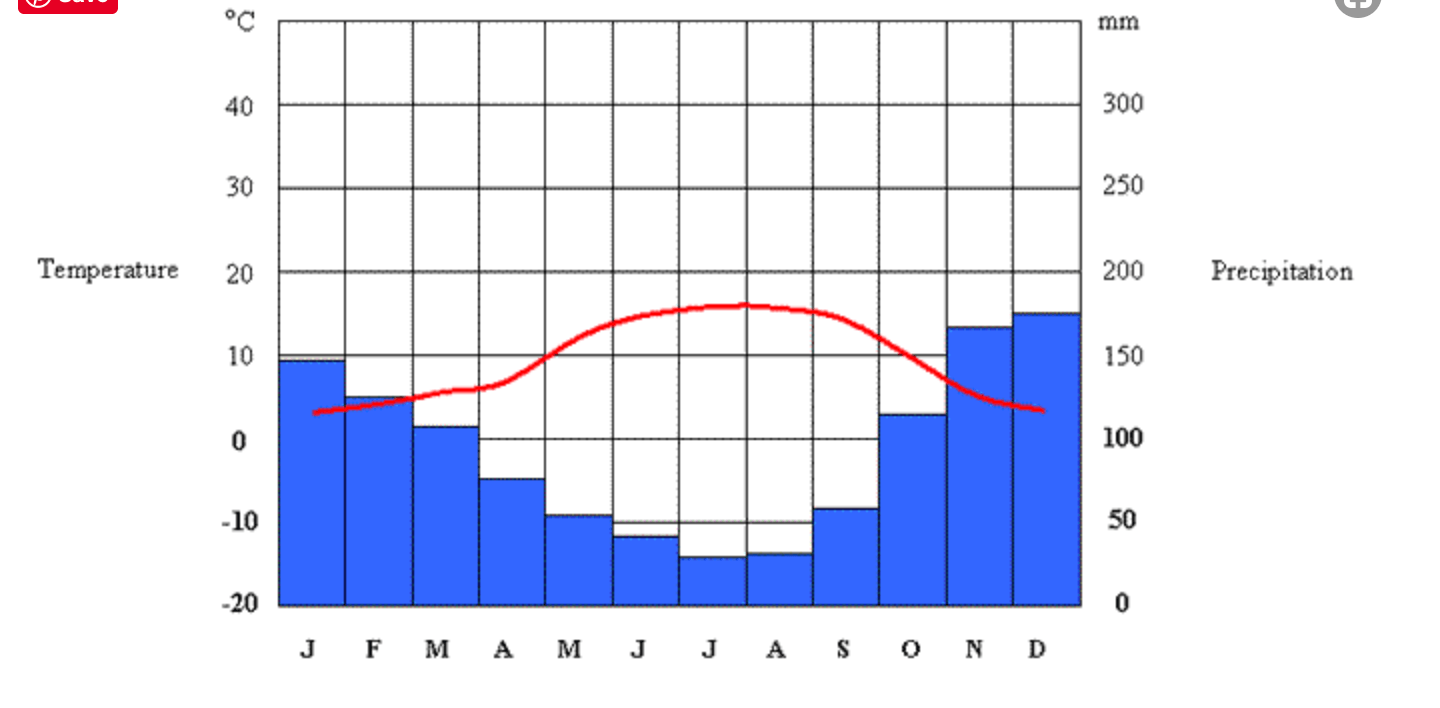
What are the hottest temperatures in this climate graph:
June, July and August
January, February, and March
October, November, and December
April, May, and June
Condensation occurs when
liquid turns to gas.
vapor heats up.
water vapor cools.
water vapor turns into liquid.


An instrument used to measure the amount of precipitation in called a
barometer
thermometer
rain guage
wind sock

Which of the following is not a factor that affects climate?
Latitude
Longitude
Oceans
Relief (mountain)


An instrument used to show the direction of the wind is unknown as
Rain gauge
Thermometer
Barometer
Wind sock

Average annual rainfall for Tropical Marine Climates are between
500-1000 mm
1000-1500 mm
1200- 2000 mm
2000- 3500 mm

Low clouds , that are formed in layers.
Stratus
Cumulus
Cirrus
Equatorial Climates occur between
0 ° - 5 ° North and South of Equator
0 ° - 10 ° North and South of the Equator
10 ° - 20 ° North and South of the Equator
10 ° - 20 ° North of the Equator

_______ affects weather because the further North or South you go from the Equator, there are less solar energy (heat).
Altitude
Latitude
Sunlight
Atmosphere

The map shows
Tropical climates
Tropical marine climates
Equatorial climates
Tropical marine and Equatorial climates


Select the incorrect statement about Tropical Marine Climates
No rainfall occurs outside of the wet season
Relief rainfall can occur during the dry season
The ITCZ brings rain during the wet season
Prevailing winds bring warm air into the region year- round
The Amazon and Congo Basins both have
A Tropical Marine Climate
An Equatorial Climate
The temperature range of Equatorial Climate is usually
approximately 3 ° C

These clouds are low in the sky and look soft and fluffy. They mean fair weather.
Cirrus
Cumulus
Stratus

During which part of the water cycle do clouds form?
condensation
transpiration
precipitation
evaporation

The leeward side of the mountain has this type of climate.
dry climate
wet climate
cold climate
average climate
Which characteristics affect a region's climate?
number of animals in the regions, altitude, distance from equator
altitude, availability of natural resources, landforms, distance from equator
altitude, distance from equator, landforms, proximity to large bodies of water
proximity to large bodies of water, number of plants per square miles, landforms
Air is ____________ at higher altitudes.
a) thicker
b) thinner
What effect does vegetation have on the climate?
The amount of wind an area receives
The amount of precipitation an area receives
The amount of energy an area receives
The amount of wind an area receives
The wind blows over the cold ocean current
brings heavy rainfall.
brings less rainfall.
rises the temperature .
releases more moisture.
What is he prevailing of the Caribbean?
South- east trade winds
Southerly winds
North-east trade winds
Northerly winds
Which factor does not influence climate
Ocean currents
Vegetation
Cloud cover
Precipitation
The amount of water in the atmosphere given as a percentage
Pressure
Relative humidity
Absolute humidity
Precipitation

