wayground logo

Free Printable Worksheets

NEW

Font size

S
M
L
XL
Worksheets

1st Quiz - Thermodinamics

Total questions: 46

Worksheet time: 46mins

Name
Class
Date
1.
A(n) _____________ is a device for measuring temperature.
a)
thermometer
b)
barometer
c)
anemometer
d)
psychrometer 
2.
Temperature is a measure of the...
a)
total energy in a substance
b)
total kinetic energy in a substance
c)
average potential energy in a substance
d)
average kinetic energy of molecules in a substance
3.
A slower particle has a lower energy than an identical, faster particle.
a)
True
b)
False
4.
The transfer of thermal energy between objects of different temperatures is called...
a)
temperature
b)
heat
c)
internal energy
d)
none of these
5.
It is possible to reach absolute zero
a)
true
b)
false
6.
When thermal energy is added to a substance, the substance's particles move:
a)
More rapidly at an increased diestance from each other.
b)
More rapidly with less distance between each other.
c)
More slowly with a greater distance between each other.
d)
More slowly with a reduced distance between each other.
7.
Heat transfer by conduction occurs when...
a)
particles bump into each other
b)
large numbers of atoms move from place to place
c)
atoms give off heat in the form of electromagnetic waves
d)
electromagnetic waves travel from place to place through a vacuum
8.
Heat transfer by convection occurs when...
a)
electrons bump into other electrons
b)
large numbers of atoms move from place to place
c)
atoms give off heat in the form of electromagnetic waves
d)
electromagnetic waves travel from place to place through a vacuum
9.
A substance with a high specific heat:
a)
Is always extremely hot.
b)
Requires a lot of energy to become hot.
c)
Is not heavy.
d)
Does not requires a lot of energy to become hot.
10.
Thermal energy always moves:
a)
From a high temperature object to a lower temperature object.
b)
From a lower temperature object to a higher temperature object.
c)
From an object with lower kinetic energy to an object with higher kinetic energy.
d)
From an object of higher mass to an object of lower mass.
11.
The second  law of thermodynamics states that entropy of a system  tends to ______________. 
a)
increase
b)
decrease
c)
stay constant
d)
fluctuate wildly
12.
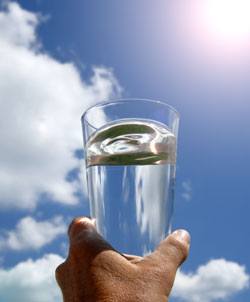
The temperature of a glass of cold water will eventually...
a)
Match the temperature of the surrounding environment.
b)
Always be colder than the surrounding environment.
c)
Become warmer than the surrounding environment.
d)
Never change temperature.
13.
The first law of thermodynamics states that energy is
a)
created
b)
destroyed
c)
conserved
d)
created and destroyed
14.
Which law of thermodynamics states that absolute zero cannot be reached?
a)
1st
b)
2nd
c)
3rd
15.
What is thermodynamics?
a)
movement of heat
b)
it's magic
c)
measurement of heat
d)
none of them
16.
How many laws of thermodynamics are there?
a)
a lot
b)
3
c)
4
d)
1
17.
Energy is created by....
a)
running
b)
boiling ice
c)
touching slime
d)
none of them
18.
Which way does heat flow?
a)
hot to cold
b)
cold to hot
c)
it doesn't 
19.
What is absolute zero?
a)
0 K
b)
273 K
c)
0oC
20.
I can't be created nor destroyed. What am I?
a)
energy
b)
air
c)
nothi
d)
a unicorn
21.
What are examples that show heat moving from cold to hot?
a)
refrigerator
b)
freezer
c)
it's impossible
d)
the refrigerator and freezer
22.
Energy can be less than zero
a)
true
b)
false
23.
Which of the following is an example of convection?
a)
A hair dryer is drying up your hair.
b)
When the AC or heater changes the temperature.
c)
When a car engine turns hot after being turned on.
d)
When you are making soup and the water is rising and lowering.
24.
What heat transfer happens when you burn your hand by touching a fire?
a)
Radiation
b)
Conduction
c)
Convectio
d)
I don't know!!!!!!!!!!!
25.
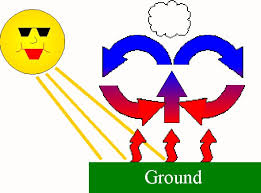
Warm air rises and the cool air sinks demonstrates this type of heat transfer. 
a)
conduction
b)
convection
c)
radiation
d)
Insolation 
26.
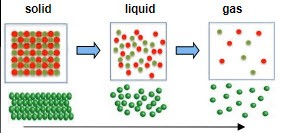
Entropy increases from solid, liquid to gas. Why?
a)
Molecular disorder increases
b)
Molecular randomness decreases
c)
Molecules are more energetic
d)
Molecules are more reactive
27.
Heat is
a)
hot
b)
the energy that is transferred between objects because of a temperaturedifference
c)
the quantity measure from the average kinetic energy of vibrating molecules in a substance
28.
The _____ Law of Thermodynamics says that heat always flows from an object with a higher temperature to an object of lower temperature naturally
a)
Zeroth
b)
First
c)
Second
d)
Third
29.
The 1st Law of Thermodynamics says that temperature exists
a)
True 
b)
False
30.
In physics, there is no such thing as
a)
heat
b)
cold
c)
energy
d)
temperature
31.

regulator binds to a region of the target protein that is not the active site, causing the target protein to change shape and affecting its activity

a)

feedback inhibition

b)

noncompetitive inhibition

c)

competitive inhibition

32.

regulator binds to the active site of an enzyme, blocking the substrate

a)

feedback inhibition

b)

competitive inhibition

c)

noncompetitive inhibition

33.

An adiabatic process occurs at constant

a)

Temperature

b)

pressure

c)

heat

d)

none of these

34.

What is the First Law of Thermodynamics?

a)

Energy cannot be created or destroyed; it can only change forms.

b)

Energy can be created, but it cannot be destroyed.

c)

Energy cannot be created, but it can be destroyed.

d)

Energy can be created, destroyed, or change forms.

35.

_____ is a form of energy transport consisting of electromagnetic waves traveling at the speed of light. It does not require matter to transfer heat.

a)

Conduction

b)

Convection

c)

Radiation

36.

A metal spoon placed in a cup of hot cocoa will become hot to the touch. This is an example of _____.

a)

conduction

b)

convection

c)

radiation

37.

Warm air and steam will rise above a pot of boiling water. This is an example of _____.

a)

conduction

b)

convection

c)

radiation

38.

A material that does not easily allow energy - such as heat, electricity, light, or sound - to pass through it.

a)

insulator

b)

conductor

39.

The amount of energy required to raise the temperature of 1 gram of a substance by 1oC is known as:

a)

Specific heat capacity (C)

b)

Heat (q)

c)

Change in temperature (ΔT)

d)

Mass (m)

40.
What is the movement of heat in the summer?
a)
ground to air in home
b)
air in home to ground
c)
heat will not flow
41.
Which will have the greatest entropy: ice, water, or water vapor? 
a)
ice
b)
water
c)
water vapor
42.
An object with the lowest entropy level will have the lowest or highest temperature?
a)
lowest
b)
highest
43.
A snake is laying on a rock in the sun. Which heat transfers are affecting him? 
a)
conduction
b)
conduction and convection
c)
radiation
d)
conduction and radiation
44.
A hot object is dropped into a container of cold water. What happens to the molecular motion of the hot object? What happens to the molecular motion of the cold object? 
a)
the molecules in both objects will slow down until they come to rest
b)
the molecules of the hot object slow down while the cold speed up
c)
the molecules of the hot speed up while the cold slows down
d)
the molecules in both objects will speed up until they reach identical speeds
45.
The kinetic energy is equivalent to what?
a)
mass
b)
entropy
c)
temperature
d)
heat
46.
How much heat must be absorbed by 2.30 kg of water to raise the temperature from 12.0 °C to 55.0 °C?
a)
185 J
b)
413,000 J
c)
989,000 J
d)
1,200,000 J