
NEW
Font size
S
M
L
XL
 Worksheets
Disease Unit Review
Total questions: 35
Worksheet time: 31mins
Name
Class
Date
1.
Cancer creates abnormal cells by disrupting
a)
the cell cycle
b)
red blood cell formation
c)
DNA replication
d)
ATP synthesis
2.
HeLa cells were special because they were the first known cells that could
a)
live outside the human body.
b)
conduct electricity.
c)
clone sheep cells.
d)
none of these.
3.
Unlike most cancer cells, HeLa cells
a)
can be kept for 100s of years under special conditions.
b)
continue to reproduce.
c)
are still used in scientific research.
d)
all of the above.
4.
The chromosomes that pair up during meiosis, are called __________ chromosomes.
a)
homozygous
b)
asexual
c)
homologous
d)
genes
5.
Compared to the number of chromosomes contained in a body cell, how many chromosomes would normally be contained in a gamete?
a)
The same number
b)
One-fourth as many
c)
Twice as many
d)
Half as many
6.
Crossing over helps promote
a)
male genotype
b)
genetic variation
c)
DNA replication
d)
mitosis
7.

What phase is shown in the picture?
a)
anaphase 1
b)
anaphase 2
c)
metaphase 1
d)
telophase 1
8.
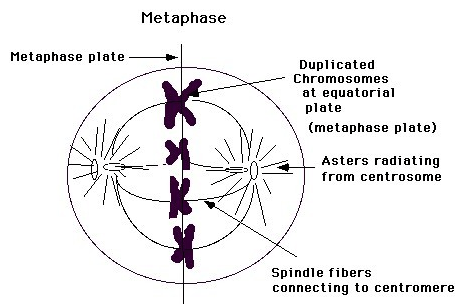
Which of the following phases of mitosis is represented by the diagram below?
a)
prophase
b)
metaphase
c)
anaphase
d)
telophase
9.

What is the name of the step in the diagram above?
a)
Interphase
b)
Prophase I
c)
Metaphase I
d)
Anaphase I
10.

What type of cells does meiosis produce?
a)
2 Genetically identical cells
b)
2 Genetically different cells
c)
4 genetically identical cells
d)
4 genetically different cells
11.

What happens to a cells DNA amount at the end of TelophaseI/cytokinesis I?
a)
DNA/ genetic material stays the same amount
b)
DNA/genetic material is reduced in half
c)
DNA/genetic material is doubled
d)
There is NO DNA/genetic material
12.

Identify the stage of the cell cycle while looking at the picture.
a)
Prophase
b)
Metaphase
c)
Anaphase
d)
Telophase
13.
The sister chromatids of each chromosome are separated (come apart) and move to opposite ends of the cell. Name that Stage!
a)
Prophase
b)
Metaphase
c)
Anaphase
d)
Telophase
14.
The cytoplasm is divided between the cells splitting the cell into two. Name that Stage!
a)
Cytokinesis
b)
Interphase
c)
Prophase
d)
Metaphase
15.

*Identify the stage of the cell cycle while looking at the picture.
a)
Prophaese
b)
Metaphase
c)
Anaphase
d)
Telophase
16.

Identify the stage of the cell cycle while looking at the picture.
a)
Interphase
b)
Prophase
c)
Metaphase
d)
Anaphase
17.

a)
Prophase
b)
Interphase
c)
Anaphase
d)
Telophase
18.

a)
Anaphase
b)
Cytokinesis
c)
Telophase
d)
Metaphase
19.

a)
Cytokinesis
b)
Interphase
c)
Anaphase
d)
Metaphase
20.

a)
Anaphase
b)
Cytonkinesis
c)
Interphase
d)
Prophase
21.

a)
metaphase
b)
Anaphase
c)
Telophase
d)
Prophase
22.
the two halves of the doubled chromosome structure
a)
centromeres
b)
sister chromatids
c)
spindle
d)
tissues
23.

Why would it be important to replicate DNA before a cell divides in mitosis or meiosis?
a)
In order for genetic information to be transferred into daughter cells.
b)
In order for the cell to be able to increase in size.
c)
In order for the DNA to be contained in the nucleus.
d)
In order for the cell to re-order the DNA sequencing in the new cells.
24.

In mitosis, the two resulting cells are
a)
different from the starting cell and identical to each other.
b)
different from the starting cell and different from each other.
c)
identical to the starting cell and different from each other.
d)
identical to the starting cell and identical to each other.
25.
Which sequence of DNA bases would pair with this partial strand
CAT TCA CTG
CAT TCA CTG
a)
ATG TGA CAG
b)
TAC ACT GTC
c)
GTA AGT GAC
d)
CAT TCA CTG
26.
The enzyme that unwinds the DNA to prepare for replication
a)
helicase
b)
replicase
c)
polymerase
d)
synthase
27.
Why does DNA replicate?
a)
To create another copy for the new cell
b)
To create a duplicate copy in case the original gets damaged
c)
To create a new copy to replace the damaged original
28.

Which of the following best describes a DNA molecule?
a)
double helix
b)
contains ribose
c)
made of amino acids
d)
contains Uracil
29.
Adenine bonds with ______________.
a)
Guanine
b)
Thymine
c)
Cytosine
d)
Adenine
30.
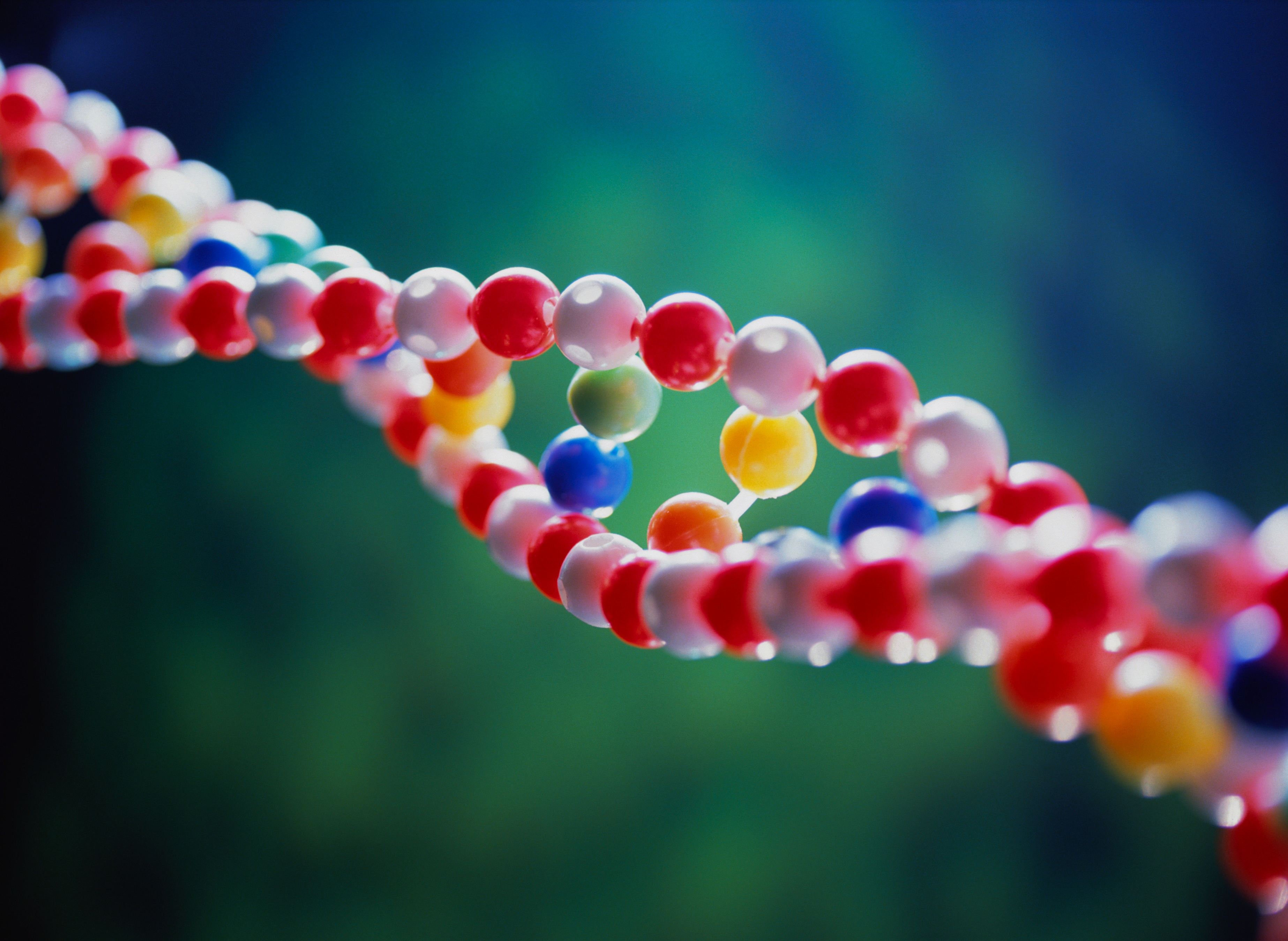
Why is DNA important?
a)
it is very small and very complicated
b)
it's in everything
c)
it serves as the blueprint for traits of all living things
d)
because we eat it every day for energy
31.
Which 2 molecules forms the sides (backbone) of the DNA ladder?
a)
deoxyribose and adenine
b)
deoxyribose and a hydrogen bond
c)
sugar and the nucleus
d)
deoxyribose (sugar) and phosphate
32.
Which organelle is DNA usually found in?
a)
cell membrane
b)
vacuole
c)
chloroplast
d)
nucleus
33.
Which sequence of DNA bases would pair with this partial strand
ATG TGA CAG
ATG TGA CAG
a)
ATG TGA CAG
b)
TAC ACT GTC
c)
GTA AGT GAC
d)
CAT TCA CTG
34.
A process in which DNA has the unique ability to make an exact copy of itself.
a)
Replication
b)
Translation
c)
Transcription
35.
The sugar in DNA is ?
a)
sucrose
b)
glucose
c)
deoxyribose
d)
fructose
Reset

