
 Worksheets
Homeostasis and System Interactions Review
Total questions: 63
Worksheet time: 40mins
The diaphragm links the respiratory to the muscular system because...
it is made of skeletal muscle tissue that helps you breath.
it is made of smooth muscle tissue that helps you breath.
it is made of cardiac muscle tissue that helps you breath.
The digestive and respiratory rely on the ___ systems to transport needed materials to the cells.
circlatory and excretory
circulatory and muscular
nervous and digestive
nervous and skeletal
The immune system fights diseases. The circulatory system pairs with the immune system because ___.
blood is made in the bones.
plasma carries nutrients.
red blood cells carry oxygen.
white blood cells fight infection.
What tissue type carries information from your brain to the heart telling it to pump blood.
nerve tissue
epithelial tissue
muscle tissue
connective tissue
Why are the lungs, the major organ of the respiratory system, also considered an excretory organ?
They get rid of carbon dioxide, a cellular waste
They get rid of oxygen, a cellular waste
They get rid of urea, a cellular waste
They get rid of salt, a cellular waste
What is the correct relationship between the digestive system and the muscular system?
Most organs of the digestive tract are made of skeletal muscle.
Peristalsis is controlled by smooth muscle tissue.
The stomach has three layers of cardiac muscle tissue.
How do the skeletal and circulatory systems relate to each other?
Bone marrow produces blood.
The heart is made of cardiac muscle tissue.
The heart is held in place in the chest by ligaments.
The blood brings carbon dioxide and glucose to the cells of the bones.

Many people across the globe suffer from seasonal allergies. What body system would produce the symptoms of allergies?
Circulatory
Nervous
Endocrine
Immune

When you eat food, a hormone is secreted by the pancreas to control the amount of sugar or glucose levels in your blood, called insulin. What systems work together to produce and transport this hormone?
Digestive and Nervous
Circulatory and Endocrine
Immune and Endocrine
Muscular and Nervous

Why do we sweat?
Response to an increase in heart rate
Response to an increase in appetite
Response to an increase in body temperature
Response to an increase in blood pressure

In order for a female to reproduce, she must release an egg for fertilization. Which two systems are involved in this process?
Nervous and Endocrine
Reproductive and Endocrine
Muscular and Circulatory
Skeletal and Digestive

What systems would be involved in kicking a soccer ball?
Muscular, Endocrine, Respiratory
Digestive, Circulatory, Integumentary
Immune, Circulatory, Endocrine
Muscular, Skeletal, and Nervous
Which function is shared by the immune and integumentary system?
exccretion
movement
protection
storage
An example of a positive feedback loop is ____________.
Childbirth
Blood Pressure regulation
Body Temperature regulation
All of the above
Homeostasis
allows for a wildly fluctuating internal environment
is impossible in vertebrates
is the maintenance of a relatively stable internal environment and often incorporates a form of feedback regulation
When you get cut, your skin cells release hormones that signal platelets to come and stop the bleeding. Platelets then release more hormones that signal even more platelets to help stop bleeding. The hormone signals continue until the cut is closed. This is an example of what type of feedback?
Positive Feedback Response
Negative Feedback Loop
_____________ is released by your pancreas when blood glucose levels get too high.
glucose
glucagon
oxygen
insulin
When glucose levels in the blood rise, your brain sends a signal to your pancreas. The pancreas releases insulin, which opens channels in cell membranes to allow glucose to enter the cell, lowering blood sugar levels. This is an example of a:
Positive Feedback Loop
Negative Feedback Loop

In humans, the gases oxygen and carbon dioxide must be exchanged between the environment and cells. During this exchange, oxygen is delivered to the red blood cells so that they can function properly in the blood stream. Which two body systems are working together to achieve this goal?
Endocrine and Reproductive
Skeletal and Muscular
Respiratory and Circulatory
Digestive and Excretory
Negative feedback loops
amplify processes
prevent small changes from getting larger
are initiated during childbirth
are found only in plants
What are the levels of organization starting from simple to complex?
cells- tissues- organs- organ systems- organisms-
organisms- organ systems- organs- tissues- cells
cells- organs- tissues- organ systems-
tissue- cells- organs- organ systems- organisms-
What organs make up your nervous system?
Mouth, esophagus, stomach
Brain, stomach, small intestine
Brain, spinal cord and nerves
Lungs, diaphragm and stomach
The respiratory system consists of what organs?
Mouth, stomach, small intestine, large intestine
Heart, cells, lungs
Brain, spinal cord, nerves
Mouth, nose, trachea, lungs
The digestive system is made up of which of the following organs?
Brain, nerves and spinal cord
Lungs, trachea and mouth
Esophagus, stomach, small intestine and large intestine
Mouth, brain, cells and large intestine
Which systems are interacting when the blood carries nutrients to other parts of the body?
Nervous System
Digestive System
Skeletal System
Endocrine System
Circulatory System
Which systems are interacting when you have small hairs in your nose that prevent foreign particles from entering the nasal passage?
Respiratory System
Immune System
Integumentary System
Endocrine System
Circulatory System
Which systems are interacting when the hormone insulin is released by the pancreas and is carried throughout the body by the blood?
Nervous System
Immune System
Excretory System
Endocrine System
Circulatory System
Which systems are interacting when it's hot outside and your skin releases sweat to prevent you from overheating?
Integumentary System
Muscular System
Excretory System
Endocrine System
Circulatory System
Which systems are interacting when the brain stimulates a fever in response to an infection.
Excretory System
Nervous System
Immune System
Endocrine System
Circulatory System
Which systems are interacting when the muscles in the esophagus contract to move food to the stomach?
Digestive System
Nervous System
Muscular System
Endocrine System
Circulatory System
Which systems are interacting when wastes are filtered from the blood and are excreted from the body as urine?
Digestive System
Integumentary System
Muscular System
Excretory System
Circulatory System
Which systems are interacting when the bone marrow produces white blood cells, which fight infection?
Immune System
Integumentary System
Muscular System
Skeletal System
Circulatory System
Which systems are interacting when calcium is absorbed through our diet and used to strengthen bones.
Immune System
Digestive System
Muscular System
Skeletal System
Circulatory System
Which systems are interacting when hormones such as testosterone and estrogen are released during puberty.
Reproductive System
Digestive System
Endocrine System
Nervous System
Circulatory System
Which systems are interacting when the brain regulates the position of bones by controlling the muscles.
Reproductive System
Endocrine System
Muscular System
Nervous System
Skeletal System
Which systems are interacting when you touch a hot stove and your spinal cord stimulates a reflex that moves your hand away from the heat source.
Integumentary System
Reproductive System
Muscular System
Nervous System
Skeletal System
Are bacteria good or bad?
Good
Bad
Both
The are bacteria in my digestive system are extremely harmful and I should take meds to get rid of them.
false
true
What two systems where the primary function to rid the body of wastes resulting from cellular energy is production?
circulatory
digestive
respiratory
excretory
How do nutrients, absorbed by the small intestine, travel to the individual cells of the human body?
nutrients move from the small intestines to liver, to lyhphatic system to body cells
small intestines force nutrients into kidneys, where they are dissolvged in fluids & used by body cells
body cells send nerve impulse indicating lack of nutrients to sm intestines and then sends nutrients back to cell
nutrients are absorbed by small intestines into blood stream & move through circulatory system to all cells
How does the respiratory and the circulatory system work together?
absorbing nutrients from food
exchanging gases with the environment
protecting the body from infection
responding to stimuli in the environement
Organize the hierarchy of cells to organisms from smallest structure to largest.
cell
tissue
organ
organism
cell
organ
tissue
organ system
organism
cell
tissue
organ
organ system
organism
cell
tissue
organ
organ system
What organs make up your nervous system?
Mouth, esophagus, stomach
Brain, stomach, small intestine
Brain, spinal cord and nerves
Lungs, diaphragm and stomach
What is a major role of the endocrine system?
release hormones to control many body functions
digest and absorb food
transport nutrients through the blood
first line of defense from infection
Check all that apply. Which of the following are examples of an organism maintaining homeostasis?
Shivering when cold
Sweating when hot
Fever - an immune response when sick
Vomiting - releases toxins and wastes
Define stimulus.
Change in an organism’s environment that causes it to react.
How the organism reacts to the stimulus.
What are the two types of stimuli?
External and internal stimuli
External and intermediate stimuli
Internal and extraterrestrial stimuli
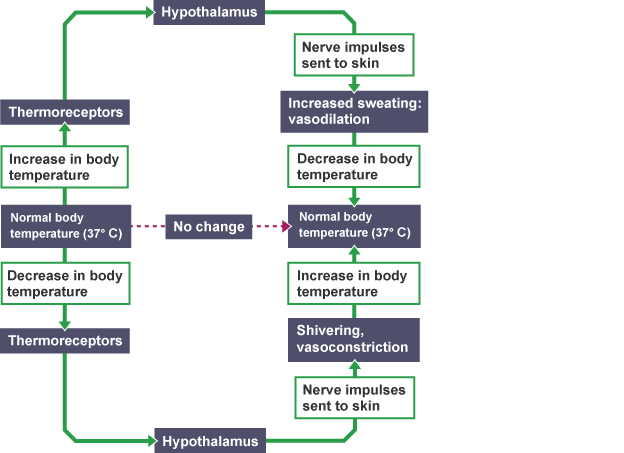
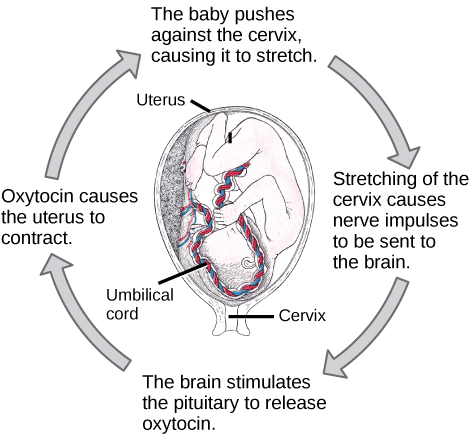
In a positive feedback loop, each action creates a consequence that _____________________ the other action.
decreases
has no effect on
amplifies
In a negative feedback loop, each action creates a consequence that _____________________ the other action.
decreases
has no effect on
amplifies

