
 Worksheets
Biology A Exam Review
Total questions: 58
Worksheet time: 47mins
Name
Class
Date
1.
Brings the amino acids to the ribosome
a)
mRNA
b)
tRNA
c)
rRNA
d)
DNA
2.
Which phrase best describes translation?
a)
converts mRNA into a polypeptide
b)
catalyzes bonds between amino acids
c)
produces RNA from DNA molecules
d)
recycles tRNA molecules for reuse
3.

What amino acid is represented by the codon AUG?
a)
Aspartic Acid
b)
Histidine
c)
Glutamine
d)
Methionine
4.
Translation takes place in the
a)
ribosome
b)
chloroplast
c)
nucleus
d)
mitochondria
5.
In mRNA, each codon specifies a particular
a)
nucleotide
b)
amino acid
c)
purine
d)
pyrimidine
6.
Which process is used to make mRNA from the DNA in the nucleus?
a)
transcription
b)
translation
c)
replication
7.
Where does transcription take place?
a)
nucleus
b)
cytoplasm
c)
ribosome
8.
what does mRNA do?
a)
carry info from genes to ribosomes
b)
carry amino acids to ribosomes
c)
help with RNA splicing
d)
make up ribosomes
9.
The central dogma states that information flows from
a)
RNA to DNA to polysaccharide
b)
DNA to RNA to proteins
c)
RNA to DNA to proteins
d)
DNA to polysaccharides to RNA
10.
I include the bases guanine, cytosine, and adenine.
a)
DNA
b)
RNA
c)
Both DNA and RNA
11.

Small segments of DNA made on the lagging strand are called:
a)
Okazaki Fragments
b)
ERVs
c)
Transposable Elements
d)
Telomeres
12.

The term used to describe DNA Replication is:
a)
Semi-Conservative
b)
Conservative
c)
AntiParallel
d)
Dispersive
13.
In what phase of the cell cycle does DNA replication take place?
a)
G1
b)
S
c)
G2
d)
M
14.
The enzyme that unzips the DNA to prepare for replication
a)
helicase
b)
replicase
c)
polymerase
d)
synthase
15.
During DNA replication, the enzyme _____ bonds together the new side of the DNA
a)
helicase
b)
ligase
c)
synthase
d)
polymerase
16.
On the lagging strand in replication, the Okazaki fragments must be joined by which enzyme?
a)
DNA polymerase
b)
primase
c)
ligase
d)
helicase
17.
How can a person's muscle cells have the same exact DNA sequences as their nerve cells even though the look and perform completely different?
a)
The two different cells become mutated
b)
The proteins expressed in each cell are different
c)
They actually have different DNA in the two types of cells.
d)
The genome of the different cells changes
18.
what does a promoter do?
a)
it allows a gene to be transcribed
b)
it creates a DNA segment
c)
it is another word for ribosomes
d)
it is another word for RNA
19.
what is an operon?
a)
a part of a ribsome
b)
a part of a Rna
c)
a unit made up of linked genes that code for proteins needed to do a specific task
d)
needed for dna replication
20.
An operon consists of all the the following EXCEPT
a)
operator
b)
promoter
c)
regulatory gene
d)
genes of the operon
21.
A protein that binds to the operator and blocks the RNA polymerase
a)
regulator
b)
repressor
c)
activator
d)
corepressor
22.
a change in the nucleotide sequence of DNA
a)
is a mutation
b)
can be a mutation or an epigenetic change
c)
is an epigenetic change
d)
always leads to a permanent change in DNA
23.
which of the following mutations results in the loss or addition of a single nucleotide, changing the DNA triplets
a)
missense
b)
nonsense
c)
frameshift
d)
silent
24.
a change in one nucleotide to another is known as a/n
a)
frameshift mutation
b)
missense mutation
c)
somatic mutation
d)
point mutation
25.
mutations are
a)
always bad
b)
never bad
c)
only bad if the mutation makes it more difficult for the organism to survive
26.
Which enzyme pairs nucleotides together during replication and also "proofreads" the new DNA strand and corrects any mistakes?
a)
DNA polymerase
b)
Ligase
c)
Helicase
d)
Primase
27.
The enzyme that unzips, or unwinds the double helix in order for replication to begin is called:
a)
ligase
b)
polymerase
c)
helicase
d)
lactase
28.
Which model of base pairing is correct?
a)
A=T and C=G
b)
A=T=C=G
c)
A+T and G+C
d)
A=G and T=C
29.
What does it mean that DNA replication is a "semi-conservative" process?
a)
They are political
b)
Both strands are reused to make one new DNA molecule
c)
Both of the strands in a new DNA molecule are new
d)
It uses one of the original strands when making a new strand
30.
What shape best describes DNA
a)
helix
b)
double helix
c)
triple helix
d)
circular
31.
When molecules are attracted to molecules of another substance it is called....
a)
cohesion
b)
adhesion
c)
surface tension
d)
ionic bonding
32.
When molecules are attracted to each other (themselves) it is called.....
a)
cohesion
b)
adhesion
c)
self liking
d)
ionic bonds
33.
Products are on which side of a chemical reaction?
a)
Right
b)
Left
c)
Both
d)
Neither
34.
Proteins are made up what kind of monomer?
a)
Sugars
b)
Amino Acids
c)
Enzymes
d)
Substrates
35.
A chemical reaction that releases energy would be considered......
a)
endothermic
b)
exothermic
c)
catalytic
d)
enzymatic
36.
The four main types of carbon-based molecules in organisms are carbohydrates, lipids, nucleic acids, and
a)
starches.
b)
fatty acids.
c)
monosaccharides.
d)
proteins.
37.
What is the use/function of carbohydrates?
a)
transmit genetic information
b)
source of energy
c)
to make proteins
d)
to build body structures
38.
What is the use/function of lipids?
a)
transmit genetic information
b)
make carbohydrates
c)
store energy, insulation
d)
builds DNA
39.
What is the use/function of proteins?
a)
makes RNA
b)
builds cell membrane
c)
builds body structures (ie. bones & muscles
d)
causes surface tension
40.
Which is an example of a nucleic acid?
a)
sucrose & lactose
b)
hormones & antibodies
c)
DNA & RNA
d)
steroids
41.
B=brown eyes
b= blue eyes
What is true about these two brothers that have brown eyes:
One has genotype BB the other Bb.
b= blue eyes
What is true about these two brothers that have brown eyes:
One has genotype BB the other Bb.
a)
they have same phenotype and genotype
b)
they have different genotypes and phenotypes
c)
they have same phenotype but different genotypes
d)
they have same genotype but different phenotypes
42.
Two brown eyed parents (Bb) have a baby. What is the chance the baby is blue eyed?
a)
0 %
b)
25%
c)
50%
d)
75%
43.
Which of the following is a phenotype?
a)
Aa
b)
red hair
c)
heterozygous genes
d)
mutated DNA
44.
How many alleles (letters) does a child get from each parent for each trait?
a)
1
b)
2
c)
3
d)
4
45.
Which of the following genotypes is heterozygous?
a)
Bb
b)
BB
c)
bb
d)
B
46.

What genotype is missing from this Punnett Square?
a)
RrYy
b)
RRYY
c)
rryy
d)
RrYY
47.

Meiosis makes sperm and egg cells. In humans, sperm and egg cells each have _____ chromosomes. Therefore a fertilized human egg cell (sperm and egg cell combined) would create a cell with _____ chromosomes.
a)
23, 46
b)
46, 23
c)
2, 4
d)
50, 100
48.

When an area of a chromatid is exchanged with the matching area on a chromatid of its homologous chromosome, _________________ occurs
a)
crossing over
b)
mutagenesis
c)
hybridization
d)
fertilization
49.
Crossing over helps promote
a)
male genotype
b)
genetic variation
c)
DNA replication
d)
mitosis
50.
A male shark has 40 chromosomes in each of its sex cells. How many would be present in its body cells?
a)
20
b)
40
c)
80
d)
160
51.
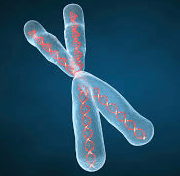
Each identical side of a chromosome is the
a)
centromere
b)
chromatin
c)
centriole
d)
chromatid
52.

The structure that holds two chromosomes together until they separate for cell division is the
a)
chromatid
b)
chromatin
c)
centromere
d)
cytoplasm
53.

Structure (a) is a ____.
a)
chromosome
b)
chromatid
c)
centromere
54.

Structure (c) is a ____.
a)
chromosome
b)
chromatid
c)
centromere
55.
If cells accumulate too much DNA damage, they have 3 choices. which choice involves the cell programming its death?
a)
apoptosis
b)
senescence
c)
repair
d)
cancer
56.
Where, in the eukaryotic cell, is DNA located?
a)
ribosomes
b)
nucleus
c)
E.R.
d)
cytoplasm
57.
What is it called when a sperm and egg meet?
a)
meiosis
b)
fertilization
c)
cell division
d)
mitosis
58.
1. A female egg that has been fertilized.
a)
Amniotic Sac
b)
Placenta
c)
Infant
d)
Zygote
100 %

