
 Worksheets
CIS Physio: Blood and Respiratory System
Total questions: 35
Worksheet time: 16mins
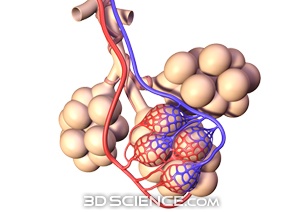
The process of diffusing oxygen from the blood, into the interstitial fluid and into the cells.
inspiration
expiration
internal respiration
external respiration
1. alveoli
2. bronchi
3. bronchioles
Which of the following is the correct order in which air would flow after inhalation?
First to go to an area of infection or injury to destroy microorganisms
Basophil
Monocyte
Lymphocyte
Eosinophil
Neutrophil
Largest leukocyte, remove dead cells
Basophil
Monocyte
Lymphocyte
Eosinophil
Neutrophil
Responsible for stopping bleeding in a vessel
RBCs
WBCs
Platelet
Responsible for the transportation of O2 and CO2
RBCs
WBCs
Platelet
Erythropoietin is produce and filtered by what?
liver
kidneys
gallbladder
spleen
Where are antibodies located?
plasma
red blood cells
white blood cells
arteries
whole blood consists of
plasma and formed elements
serum and intra-cellular elements
white and red-blood cells
plasma and white blood cells
formed elements in the blood is produced by
hemolysis
hemopoiesis
diapedesis
erytrocytosis
What is the shape of a healthy red blood cell?
spherical
sickle-shaped
biconcave
cylindrical
This best describes positive cooperativity of hemoglobin
As 1 O2 binds to a heme group, it causes a sudden shift of polarity, attracting more O2
As 1 O2 binds to a heme group, a conformational change occurs, making it more likely for additional O2 to bind
As 1 O2 binds to a heme group, hemoglobin becomes slightly less hydrophilic
As 1 O2 binds to a globin group, the binding site of O2 within the molecule becomes more exposed

In what point in the graph shows the condition of Hb within the alveoli?
Point 1
Point 2
Point 3

What explains the steep slope of the curve?
Binding of O2 within the heme groups
O2 loading into hemoglobin
Unloading of O2 from hemoglobin
Positive cooperativity
Which of the following is not true of hemoglobin?
it contains iron
it has a quaternary structure
each heme group can bind with one oxygen atom
it forms oxyhemoglobin when it attaches to oxygen
Which of the following is true of a normal adult hemoglobin oxygen dissociation curve?
I. it is sigmoidal
II. it is easier for the last O2 to bind than the second and third
III. at lower partial pressures of oxygen, hemoglobin has a lower affinity for oxygen
I and II only
I and III only
II and III only
I, II and III
How is fetal hemoglobin different to adult hemoglobin?
it contains magnesium instead of iron
it has a lower affinity for oxygen
its oxygen-dissociation curve is to the right of adult hemoglobin
it has a different amino acid sequence
Which of the following is true about formation of oxyhemoglobin?
it forms when pO2 is low and dissociates when pCO2 is low
it forms when pO2 is low and dissociates when pCO2 is high
it forms when pO2 is high and dissociates when pCO2 is high
it forms when pO2 is high and dissociates when pCO2 is low
Which of the following best describes the respiring tissues?
pO2 is high and pCO2 is high
pO2 is high and pCO2 is low
pO2 is low and pCO2 is low
pO2 is low and pCO2 is high
Which of the following describe or contribute to the Bohr-Shift at respiring tissues?
I. the partial pressure of CO2 increases
II. less oxygen is released at the same partial pressure of oxygen
III. blood pH decreases
I and II only
I and III only
II and III only
I, II and III
Which of the following are true of high altitudes?
I. the partial pressure of oxygen is higher
II. hemoglobin is less saturated with oxygen as it passes through the lungs
III. acclimatisation causes erythrocytes to contain more hemoglobin
I and II only
I and III only
II and III only
I, II and III
This is a yellowish liquid containing electrolytes, nutrients, and vitamins.
Platelets
Plasma
Red Blood Cells
White Blood Cells
the bodies “defense” part of the immune system and they contain a nucleus
Platelets
Plasma
Red Blood Cells
White Blood Cells
leukocytes is another name for ?
Platelets
Plasma
Red Blood Cells
White Blood Cells
An infection in the body might result in a sudden
decrease in the activity of antigens produced by the mitochondria
decrease in the amount of DNA present in the nuclei of cells
increase in the activity of white blood cells
increase in the number of red blood cells
Humans breathe more rapidly during exercise than before it because during exercise the blood contains
an increased level of oxygen
a decreased number of red blood cells
an increased level of carbon dioxide
a decreased amount of hemoglobin

