
 Worksheets
Chapter 12 Test - Chemical Reactions and Equations
Total questions: 51
Worksheet time: 40mins
What happens in a chemical reaction?
Bonds between atoms break and/or are formed
New atoms are created and/or removed
Protons move from one atom to another
Electrons change into protons
Which of the following would indicate that a chemical reaction has occurred?
A new element has been created
A different substance has formed
The total mass has either increased OR decreased
The total number of elements has either increased OR decreased

BEFORE the equation is balanced, how many Hydrogen atoms are present on the reactant side?
6
2
12
8

What coefficient should go in the last blank space in order for the equation to be balanced?
1
2
3
4

How many sulfur atoms are present in this molecule?
4
3
12
1
What does the Law of Conservation of Mass state?
No new substances can be made or destroyed
No new compounds can be made or destroyed
No new atoms can be made or destroyed
Mass cannot be lost from a physical reaction
In a chemical reaction, ________________________ are changed into _______________________.
Reactants; Products
Electrons; Molecules/Compounds
Coefficients; Subscripts
New Elements; Old Elements
Which type of reaction pulls in thermal energy from the environment around it?
Endothermic
Exothermic

The y-axis shows the energy that is being stored/released during the reaction. What type of reaction is this?
Exothermic
Endothermic


List four factors that affects the rate of a reaction
temperature
concentration
surface area
volume
catalysts
A temperature increase causes the particles ......
to slow down
move faster
collide higher
in the right order
How does a catalyst work in speeding up a reaction?
By lowering the activation energy or reaction
by giving them more energy
by making them more available
Why does a higher temperature increase the rate of a reaction?
it increases both the frequency and energy of particle collisions
it only increases the frequency of particle collisions
it only increases the energy of particle collisions
it reduces the activation energy of the reaction
The ______________is required to break the bonds of the reactants.
Carbonic energy
Activation energy
Plutonic energy
Energi Gaib
The minimum amount of energy needed for colliding particles to react is called
Chemical Energy
Kinetic Energy
Activation Energy
Potential Energy
In an equation, the subscript...
speeds up a reaction
is the number of atoms in a chemical formula
is a measure of how fast a reaction occurs
PbCl2 + AgNO3 → Pb(NO3)2 + AgCl
NH3 + HCl → NH4Cl
Al(OH)3 → Al2O3 + H2O
A substance that slows down a chemical reaction
concentration
catalyst
inhibitor
activation energy
What is a function of inhibitor?
They act as hormones
Carry genetic information
used to slow the spoilage of food
Control temperature
What happens when a chemical bond breaks?
Energy is absorbed from the surrounding area
Energy is created that didn't exist before
Uses energy and then disappears
Energy is released into the surrounding area
What happens when a chemical bond is formed?
Energy is absorbed from the surroundings.
Energy is created.
Energy is destroyed.
Energy is released into the surroundings.
Chemical reactions
release more energy than they absorb
absorb more energy than they release
release and absorb the same amount of energy
release or absorb more energy depending on the type of reaction
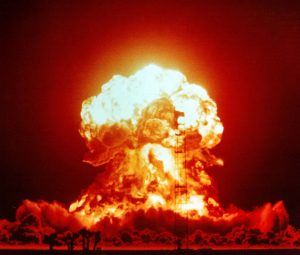
Endothermic reactions
release more energy than they absorb
absorb more energy than they release
release and absorb the same amount of energy
can either absorb or release more energy based on the type of reaction.
Exothermic reactions
absorb thermal energy
release thermal energy
constantly needs new energy
needs more energy than it releases.
Meter
measurement
large
one
middle
Meso
large
one
middle
small
Mono
large
small
measurement
one
Micro
one
large
small
middle
Macro
large
middle
measurement
small

