
Font size
 Worksheets
Protein Structure
Total questions: 18
Worksheet time: 41mins
Which of the following bond(s) do(es) NOT exist in a secondary structure?
Peptide bond
Hydrogen bond
Disulphide bond
Ionic bond
The difference between tertiary and quartenary structure is:
Tertiary structure has double bond whereas quartenary structure does not have double bond
Tertiary structure consists of one polypeptide chain whereas quartenary structure consists of more than one polypeptide chains
Tertiary structure is fibrous whereas quartenary structure is globular
Tertiary structure is water-soluble whereas quartenary structure is lipid soluble
The repeating units of protein are
Amino acids
Glucose
Fatty acid
Peptides

The polypeptide in the diagram consists of;
3 amino acids and 3 peptide bonds
3 amino acids and 2 peptide bonds
4 amino acids and 2 phosphodiester bonds
3 amino acids and 2 phosphodiester bonds
Which of the following bond(s) can be found in a tertiary structure?
hydrogen bond
disulphide bridge
hydrophobic interaction
all of the above
Haemoglobin is a quartenary protein because;
It has more than one peptide bonds
Its shape is globular
It consists of more than one polypeptide chains
It has iron in each heme group
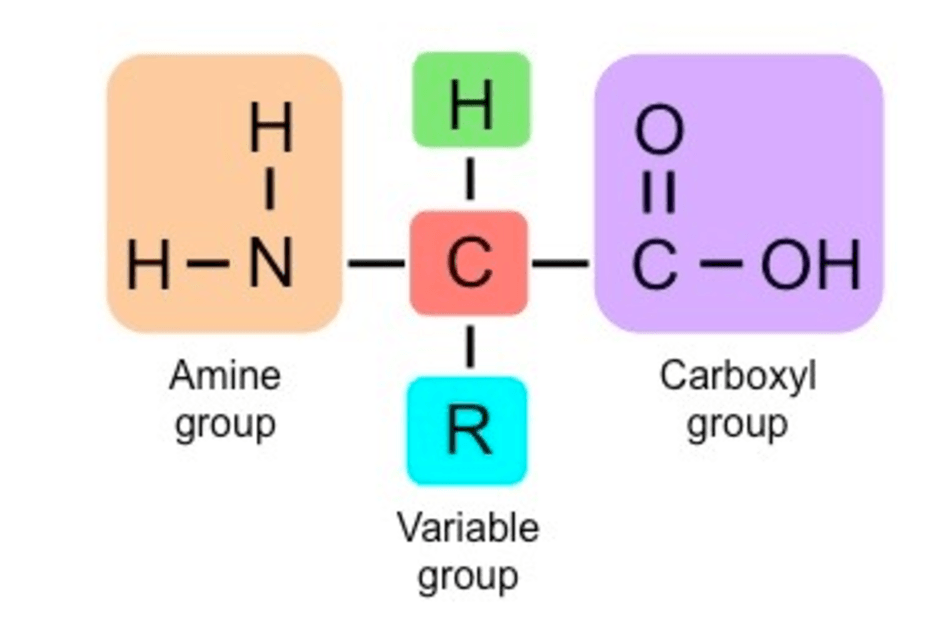

Which of the following describes the secondary structure of proteins?
The sequence of amino acids
The α-helix and β-pleated sheet folding
The folding of the polypeptide chain due to the 'R' groups
The joining of different protein molecules to make one big molecule
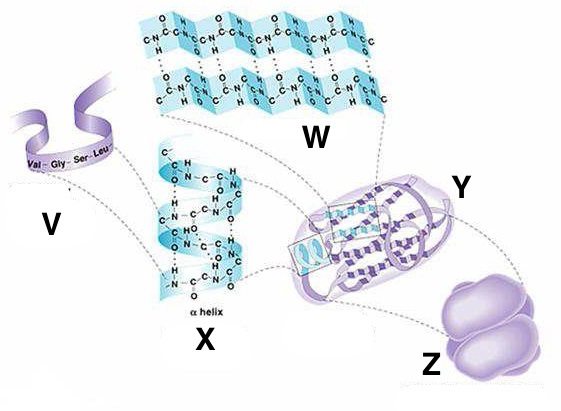
What is one of the functions of a protein?
cell energy
enzymes
long term energy storage
contain genetic information
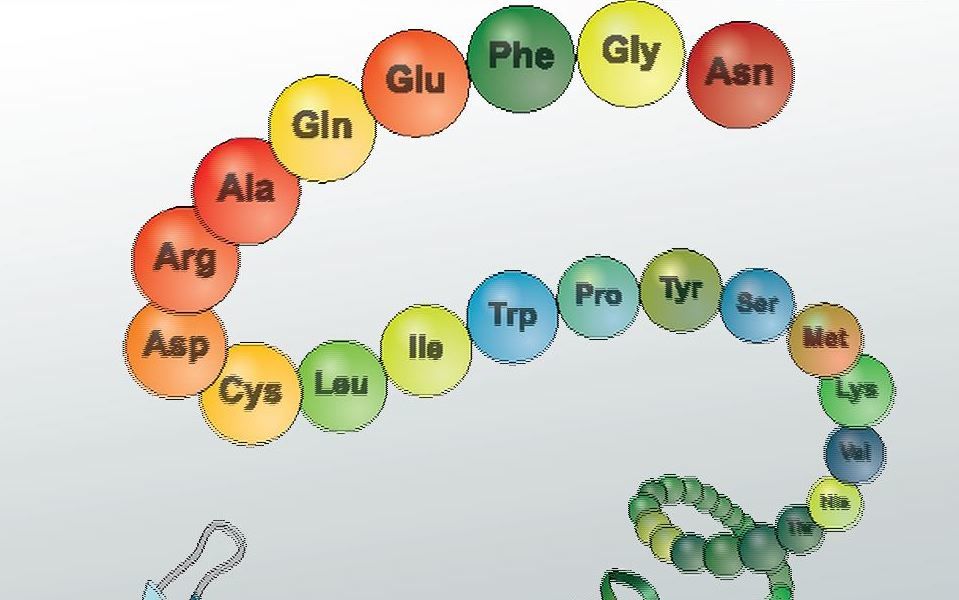

Why is folding so important in proteins?
It gives them a unique, functional shape
It makes them look tidier
It makes every protein molecule different from the next even if they are the same type
The folding is random so is not that important at all

The main bonding in the secondary structure of a protein is due to.....
covalent bonding
ionic bonding
hydrogen bonding
polar bonding

The tertiary structure folding in proteins is primary due to the interactions of....
the 'R' groups
the 'P' groups
the 'A' groups
the 'S'

What gives a protein its unique shape?
the unique sequence of amino acids in its polypeptide chain
the unique folding due to the sequence of amnio acids in the polypeptide chain
hydrogen bonding & unique interactions between the 'R' groups
all of these
Chain of amino acids is called...
Amino Acid
Polypeptide
Monomer
Polymer
Protein
Proteins that are roughly spherical
globular proteins
fibrous proteins
enzymatic proteins
storage proteins
motor proteins
Proteins that are long and thin
globular proteins
fibrous proteins
enzymatic proteins
storage proteins
motor proteins
Two or more polypeptides attached together and work as one unit
Primary
Secondary
Tertiary
Quaternary

