
 Worksheets
AP Euro: Industrial Revolution and Responses
Total questions: 79
Worksheet time: 51mins
Where did the Industrial Revolution begin?
Russia
United States
Germany
Great Britain
This concentrated labor in a single location and led to the division of labor
domestic system
cottage industry
factory system
globalization
Invented the steam engine
Thomas Edison
James Watt
James Hargreaves
Henry Bessemer
Invented a process for cheaply mass producing steel
Henry Bessemer
Thomas Edison
Eli Whitney
James Hargreaves
The first industry to be mechanized
textiles
precision machinery
canned food
pencils
The Enclosure Movement forced poor English peasants off their land, with many moving to cities to find work.
True
False
Scottish economist who wrote The Wealth of Nations (1776)
J.S. Mill
Jeremy Bentham
David Hume
Adam Smith
Free market capitalists favor this policy
community cooperatives
mercantilism
laissez faire
maximum regulation
Adam Smith compared the forces of supply and demand in a free market to
the foundation of a house
a revolving wheel
a hammer and nail
an invisible hand
Who wrote the pamphlet The Communist Manifesto in 1848?
Adam Smith and David Hume
Karl Marx and Friedrich Engels
George Bernard Shaw
Batman and Robin
The "second industrial revolution" from 1850 to 1900 featured all of the following EXCEPT
steel
computers
chemicals
electricity

The combination of resources, improved transportation, and technological breakthroughs all led to the
industrial revolution
adoption of gold standard
era of good feelings
formation of agricultural cooperatives
Mass Production led to:
products being more superior in quality
laborers received higher wages
goods became less expensive
industries moved to rural areas
What is the movement from rural to urban areas called?
moving
inflation
colonization
urbanization
Which statement is true?
Children were not allowed to work in the mines during the Industrial Revolution.
Work conditions were closely regulated
There were no labor laws that prevented children from working
Children were allowed to work but they were treated fairly
How was the Agricultural Revolution a CAUSE of the Industrial Revolution?
New farming methods led to a population increase which made a greater demand of textiles
New farming methods produced bigger harvests with less farmers
Which of the following was a major effect of the Industrial Revolution?
Poverty was completely eliminated.
Societies moved from agriculture to industry.
The number of wars between countries decreased dramatically.
Unemployment increased dramatically.
How did the move from farm to factories change peoples lives?
land owners had to share their land
urbanization was a myth
cities grew as people moved to work in factories
the cottage industry thrived
Why was England the first to Industrialize?
It already had large cities
It had tons of natural resources like coal, iron and rivers
It had very little natural resources
It was located in the middle of Europe
What is major affect did the agricultural revolution have on population?
population decreased
population increased
population didn't change
population barley changed
What invention moved factories away from rivers?
the train
the spinning jenny
the canal
the steam engine
Which of the following is social affect of the Industrial Revolution?
the increase in air pollution
people dying from lack of food
an increase in deaths by road accidents
the rise of the industrial middle class and industrial working class


Which of the following was NOT true of poor urban neighborhoods?
They were filled with overcrowded tenements.
The living conditions were dirty and squalid.
Most urbanites lived in factory-owned apartments.
The incidence of diseases was increasing.

Adam Smith, who took up for laissez-faire economics, believed that:
mercantilism was the only way to insure a truly free trade.
the government should regulate the economy.
the government should not interfere with the economy.
colonies were an important source of conpetition.

How did industrialization impact women?
Many women entered the paid workplace.
Many women practiced traditional economic activities.
It had no impact on the lives of women.
Women moved from cities to rural areas.
The Industrial revolution created a new ____________ class.
Upper
Poor
Lower
Middle

__________ is known as the Father of modern economics, who theorized Laissez-Faire, the idea that the market should have no political interventions?
Adam Smith
Karl Marx
Thomas Malthus
Frederick Engels

Some of the machines invented in the 18th and 19th centuries are:
telephones, geographic positioning system, radios, airplanes
steam engine, railroads, flying shuttle, phonograph, steam ships, light bulb
sailboats, automobiles, wheel barrels, clocks, word processors
automatic washer, hair dryer, rockets, space shuttles

Which of the following is considered an impact of Industrialization during the 18th and 19th centuries?
Increased competition between industrialized nations
Rise of global inequalities
Transformation of society.
All of the above

Capitalism is
An economic system in which the means of production are privately owned and money is invested to make profits.
An economic system in which the means of production are owned by the public (government) and operate for the welfare of all.
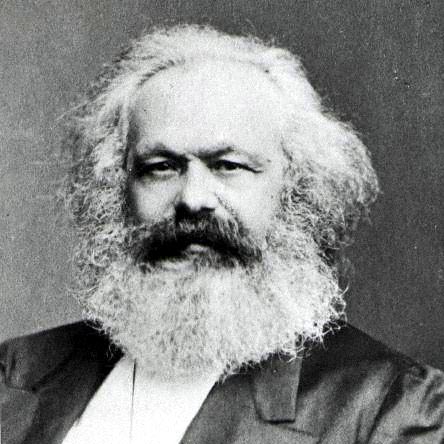
__________________ predicted a violent revolution that would result in the working class taking over in a classless political and economic systems known as communism.
John Adams
Thomas Smith
Karl Marx
Edward Jenner
This economist believed in utopianism.
Karl Marx
Adam Smith
Saint-Simon
Robert Owen
This economic theory says that the government should not interfere in the economy.
Capitalism
Socialism
This economist believed in communism.
Karl Marx
Adam Smith
Saint-Simon
Robert Owen
This economic theory states that wealth should be distributed equally among everyone. Everyone gets what they need.
Capitalism
Socialism
This economist believed in socialism.
Karl Marx
Adam Smith
Saint-Simon
Robert Owen
This economic theory states that there should be no economic classes (ex. no rich, no poor).
Capitalism
Socialism
This economic theory states that competition and supply and demand will determine the prices of goods.
Capitalism
Socialism
These were groups of workers that tried to improve working conditions, pay, and remove child labor.
Parliament
Labor Unions
Worker's Governmen
Voters
This economist was a capitalist.
Karl Marx
Adam Smith
Saint-Simon
Robert Owen
The Industrial Revolution began in England, in what countries did the Industrial Revolution spread to quickly? (Choose 3)
Belgium
Germany
Italy
United States
France
What were the reasons why the Industrial Revolution started in England? (select 2)
Abundant natural resources.
Better army.
Stable government and economy.
They had overthrown the monarchy.
Historians generally agree that the Industrial Revolution began
before 1700
between 1700 and 1750
sometime after 1750
shortly after 1800
shortly before 1850
Britain's emergence as a first industrial power was aided by all of the following EXCEPT
a rapid population growth and a surplus pool of labor
the agricultural revolution of the eighteenth century
a ready supply of domestic and colonial markets
Parliament's heavy and controlling involvement in private enterprise
a developed financial system
The water frame spinning machine was invented by
James Hargreaves.
James Watts.
Benjamin Franklin.
Richard Arkwright.
Matthew Boulton.
The development of the railroads in the Industrial Revolution was important in
increasing British supremacy in civil and mechanical engineering.
increasing the size of markets and the price of goods
bringing about the demise of joint-stock companies
defeating Napoleon.
making London a great port city.
The new set of values established by factory owners during the Industrial Revolution
was rejected by evangelical religions as being "unchristian."
was basically a continuation from the cottage industry system
was never adopted by the working class.
relegated the worker to a life of harsh discipline and the rigors of competitive wage labor
was inspired by the examples of Belgium and France
The rise of the industrial factory system deeply affected the lives and status of workers who now
were often paid in kind
no longer owned the means of economic production and could only sell their labor for a wage
were less vulnerable to more rapid cycles of economic boom and bust
got both good wages and many fringe benefits unknown before
became serfs, legally tied to factories
One of the chief reasons why Europe initially lagged behind England in industrialization was a lack of
banking facilities
roads and means of transportation
manpower
capital for investment
lack of manpower
The Luddites
received little support in their areas of activity
destroyed industrial machines that destroyed their livelihood
were composed of the lowest unskilled workers in Great Britain
was the first movement of working-class consciousness of the Continent
demanded the establishment of a socialist economy
By 1850, all of the following countries were close to Britain in industrial output except
Germany
Belgium
The United States
France
Russia
The Industrial Revolution's effect on the standard of living
especially benefited the middle classes
led to much increased disparity between the richest and poorest classes in society
eventually led to an overall increase in purchasing power for the working classes
All of these are correct
None of these are correct
The new social class of industrial workers in the early Industrial Revolution
did not include women
worked under dangerous conditions for long hours
excluded children from factory work
unionized and achieved a good amount of political power
demanded a socialist economic system
Efforts at industrial reform in the 1830s and 1840s in Great Britain achieved all of the following except the
establishment of a national system of trade unions by 1847
reduction of working hours for children to no more than 12 hours a day
outlawing of women and children in coal mines
requirement of daily education for working children
appointment of government factory inspectors
The English Poor Law Act of 1834
established workhouses where jobless poor people were forced to live
placed a tax rate of 50 percent on the wealthy and redistributed that money to the poor
never got out of parliament
reclassified people with less than one hundred pounds annual income as poor
forced the poor into the British navy
Urbanization in the first half of the nineteenth century
was more dramatic for the Continent than Great Britain
caused over fifty percent of the Russian population to live in cities by 1850
was a phenomenon directly tied to industrialization
accounted for widespread poverty in rural areas of Europe
reduced the cost of the central governments

