wayground logo

Free Printable Worksheets

NEW

Font size

S
M
L
XL
Worksheets

Chapter 6 Lesson 6 The water cycle review

Total questions: 52

Worksheet time: 32mins

Name
Class
Date
1.
In the water cycle, what happens during evaporation?
a)
Water vapor changes to liquid water.
b)
Water falls to the ground from clouds.
c)
Liquid water changes to water vapor. 
d)
Water flows over the ground. 
2.
In the water cycle, the sun provides
a)
energy for water to evaporate from oceans, lakes and rivers.
b)
water for evaporation to happen. 
c)
energy to produce electricity. 
d)
water for condensation to happen. 
3.
Rain, sleet, snow and hail are all examples of 
a)
evaporation.
b)
condensation. 
c)
weathering. 
d)
precipitation. 
4.
What makes Earth different from any other planet we know of?
a)
Lava
b)
Air
c)
Water
d)
Hydrogen
5.
What is the water cycle?
a)
When water rides a bike. 
b)
The movement of water between Earth's surface and atmosphere. 
c)
How water is created. 
d)
How water is destroyed. 
6.
How many main steps does the water cycle have?
a)
Unlimited
b)
None
c)
4
d)
100
7.
What is condensation?
a)
the change of water from a gas to a liquid. 
b)
the change of water from a liquid to a gas. 
c)
the change of water from a solid to a gas. 
d)
the change of water from gas to a solid. 
8.
Why is the sun important to the water cycle?
a)
The sun provides electricity for the water to flow to earth. 
b)
The sun provides Earth with light and heat energy to make the cycle work. 
c)
The plays no role in the water cycle. 
d)
The sun creates runoff for the water cycle to begin. 
9.
What is the energy source for the water cycle?
a)
the sun
b)
the earth
c)
water
d)
the moon
10.
What part of the water cycle does this picture show?
a)
condensation
b)
precipitation
c)
evaporation
11.
When water condenses, the water vapor in the air gets ___________ and changes back into liquid.
a)
cold
b)
hot
c)
warm
d)
solid
12.
Precipitation happens when clouds of water droplets are too ______________.
a)
cold
b)
light
c)
heavy
d)
hot
13.
Which of these is not an example of precipitation?
a)
rain
b)
clouds
c)
sleet
d)
snow
14.
Which of these is an example of precipitation?
a)
snow
b)
air
c)
clouds
d)
vapor
15.
Does precipitation happen before or after condensation?
a)
before
b)
after
c)
during
16.

What process is happening in number 6?

a)

transpiration

b)

evaporation

c)

condensation

d)

accumulation

17.

What is number 1 in the diagram?

a)

condensation

b)

evaporation

c)

runoff

d)

precipitation

18.

What is number 3 in the diagram?

a)

evaporation

b)

precipitation

c)

surface runoff

d)

condensation

19.

The process by which molecules of water vapor become liquid water.

a)

transpiration

b)

evaporation

c)

condensation

d)

accumulation

20.

Any form of water that falls from clouds and reaches Earth’s surface.

a)

accumulation

b)

precipitation

c)

condensation

d)

surface runoff

21.
The process by which water moves through the atmosphere and back to Earth’s surface 
a)
Erosion
b)
Precipitation
c)
The Water Cycle
d)
Condensation
22.
What powers the water cycle?
a)
water
b)
oceans
c)
sun
d)
moon
23.
What percentage of the Earth’s water is fresh?
a)
97%
b)
2.3%
c)
<1%
d)
3%
24.
What percentage of the Earth’s fresh water is available for drinking?
a)
10%
b)
<1%
c)
3%
d)
15%
25.
What are the 3 states of matter?
a)
solid, freezing, thawing
b)
solid, liquid, gas
c)
Georgia, Florida, South Carolina
26.
What is it called when rainwater contributes to the flow of rivers and streams?
a)
Transformation
b)
Runoff
c)
Irrigation
d)
Desertification
27.

Where do fertilizer runoffs most frequintley happen?

a)

oceans

b)

rivers

c)

lakes

d)

aquifers

28.

Fertilizer runoffs are created by humans

a)

true

b)

false

29.
The change of a liquid to a gas; the sun heats energy up and turns water into vapor (gas)
a)
evaporation
b)
vapor
c)
precipitation
d)
condensation
30.
Part of the water cycle where an excess of water runs down and does not sink into the soil and eventually makes it to the rivers, lakes, and oceans.
a)
aquifer
b)
hydro
c)
vapor
d)
runoff
31.
Which best explains why runoff is important?
a)
It returns water to other locations on Earth
b)
It increases the chance of flooding
c)
It makes evaporation occur faster
d)
It increases condensation
32.

What is water vapor doing when it changes to liquid water?

a)

evaporating

b)

condensing

c)

precipitating

d)

runoff

33.
This type of cloud is thin, wispy, and made of ice crystals
a)
cumulus cloud
b)
stratus cloud
c)
cirrus cloud
d)
cumulonimbus cloud
34.
This type of cloud is thin and flat, and the edges are not clearly defined
a)
cirrus cloud
b)
cumulus cloud
c)
stratus cloud
d)
cumulonimbus cloud
35.
This type of cloud is thick and puffy on top, and generally flat on the bottom. It has well-defined edges and can change shape rapidly.
a)
cumulus cloud
b)
stratus cloud
c)
cirrus cloud
d)
cloud 9
36.
Cumulus and cirrus clouds can signal what type of upcoming weather?
a)
fair skies
b)
hot, sunny weather
c)
windy weather
d)
rainy weather
37.

Characteristics of a Cirrus cloud..

a)

Thin clouds that look like feathers, high in the sky

b)

High in the sky, look like cotton balls bunched together

c)

usually mean rain

d)

Flat on bottom

38.

Characteristics of a Stratus cloud are..

a)

high clouds, look like tiny cotton balls

b)

low, puffy, gray clouds

c)

low level clouds, usually bring rain, form in layers

d)

flat on bottom, fair weather

39.
a)

fluffy cloud, flat on the bottom

b)

dark gray, means rain

c)

Thunderstorm cloud, very big

d)

low, puffy, gray clouds, produce rain

40.

What is fog?

a)

clouds that form high in the sky

b)

clouds that form close to the ground

c)

clouds that form around the sun

d)

clouds that produce snow

41.

What is a cloud?

a)

a puffy pillow birds use to sleep on

b)

puffs of air that shade us from the sun

c)

dew that rises from plants

d)

tiny droplets of water

42.

How do clouds help meteorologists?

a)

they let them know how hot it is going to be

b)

they tell them how cold it is going to be

c)

they help them predict the weather

d)

they don't help them at all

43.
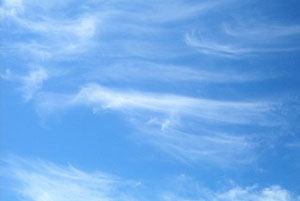
what type of cloud is shown?
a)
cumulus
b)
cirrus
c)
stratus
44.
How do clouds form?
a)
Liquid water is heated and evaporates and becomes water vapor in the atmosphere.
b)
Water vapor in the atmosphere cools and condenses to become tiny liquid water droplets in the atmosphere.
c)
Tiny liquid water droplets float upwards and gather together in the atmosphere to form a cloud.
45.
Cirrus clouds mean ...
a)
fair weather (nice)
b)
thunderstorms
c)
rain/storms coming
d)
long periods of rain
46.
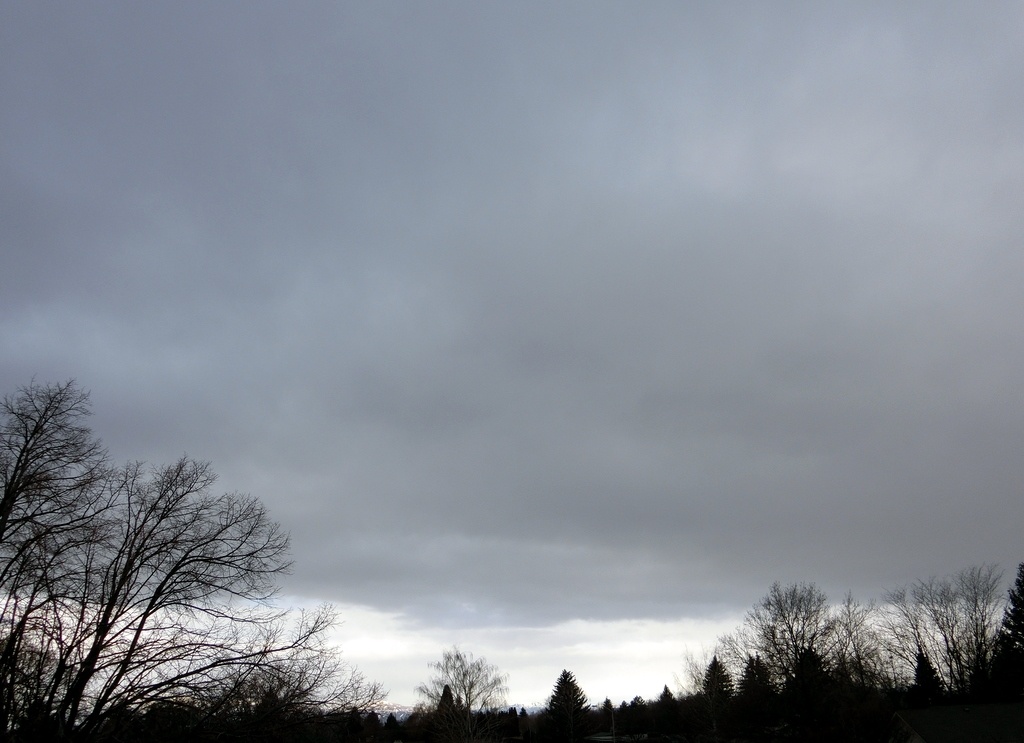
Which cloud is this?
a)
cumulus
b)
cumulonimbus
c)
cirrus
d)
stratus
47.
Which cloud forms layers in the sky?
a)
stratus
b)
cumulus
c)
cirrus
d)
cumulonimbus
48.
_______ look like cotton balls. 
a)
stratus
b)
cirrus
c)
cumulus
d)
cumulonimbus
49.
Which clouds form near the ground?
a)
Fog
b)
Cirrocumulus
c)
Nimbostratus 
d)
Altocumulus 
50.
Clouds form in which step of the Water Cycle?
a)
Evaporation
b)
Condensation 
c)
Precipitation 
d)
Run Off
51.
The 3 main types of clouds are classified by...
a)
altitude 
b)
color 
c)
shape
d)
weather
52.
Stratus clouds do not produce rain. 
a)
true
b)
false