
Font size
 Worksheets
Earth's Interior Test Review 2021
Total questions: 41
Worksheet time: 26mins
The thin layer of rock on Earth's surface is the
atmosphere
hemisphere
hydrosphere
lithosphere

The diagram shows 2 locations where fossils of Mesosaurus have been found. Which statement best explains why these freshwater fossils are found today in some rock layers in both South America & Africa?
Mesosaurus swam across the ocean between the continents
The continents were once connected as a single landmass
Global warming has been raising sea level in the Atlantic Ocean
The remains of Megasaurus were carried across by predators.

Use this diagram from your reference table that shows a cross section of Earth's layers and their density differences. Which layer of the Earth is most dense?
plastic mantle
stiffer mantle
outer core
inner core

Convection currents, which may be the driving force for the movement of lithospheric plates, are mostly found in Earth's
crust
plastic mantle
outer core
inner core

In which diagram are the layers of the Earth correctly labeled?
1
2
3
4

The map below indicates the possible location of some of Earth's continents in the past. Which evidence best supports the idea that the landmasses on Earth were once in these positions?
North America & India have matching rock layers
Madagascar & India have similar shapes
Matching rock layers can be found in Africa & South America
Bedrock in Australia & Greenland have glacier scratches.

Base your answer to this question on the diagram that shows a model of Earth's interior. What information did scientists study in order to develop this model.
recordings of earthquake waves (seismic waves)
locations of recent volcanic activity
core samples from seafloor drillings
fossils found in rocks
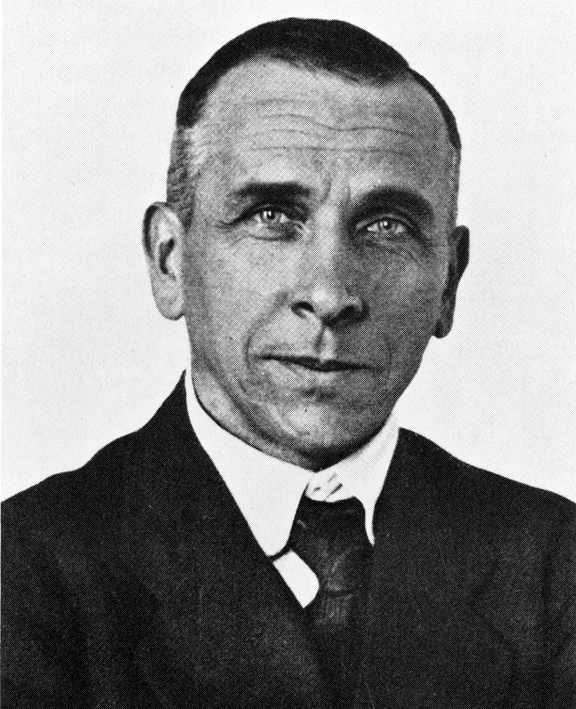
Why did no one believe Wegener's ideas about continental drift? (Choose 2)
He could not successfully explain HOW the continents moved
He didn't have evidence that supported his ideas that the continents had once been connected
They were biased against his ideas because he was German and a meteorologist
He didn't use the right technology to gather data
What is the name of the super continent that existed about 250 million years ago?
Plate tectonics
Convection
Pangaea
Gonwandaland
Convection currents in the Earth's mantle cause _________ ________ to move.
gravity
tectonic plates
magnetic forces
lava
What is the least dense layer of the Earth?
mantle
crust
inner core
outer core
How are the crust and mantle different?
The mantle is less dense than the crust.
The mantle is thinner than the crust.
The mantle is cooler than the crust.
The mantle is hotter than the crust.
Sea floor spreading occurs at a divergent boundary. What do the plates do at a divergent boundary?
come together
move apart
move up and down
slide past each other
Two plates with different densities meet. What is this process called and what will happen?
magnetism, the less dense plate will push beneath the more dense plate
subduction, the more dense plate will push beneath the less dense plate
reduction, one plate will lose density
subduction, the less dense plate will push beneath the more dense plate.
At what plate boundary do the plates slide or scrape past each other?
rift valley
divergent boundary
convergent boundary
transform boundary
Which layer is solid iron and nickel?
crust
outer core
inner core
mantle
What layer of the earth do we live on?
mantle
inner core
asthenosphere
crust
How are mountains produced?
volcano-volcano collisions
continental -continental plate collisions
oceanic-oceanic plate collisions
continental-oceanic plate collisions
The movement of lithospheric plates can cause
volcanic eruptions
earthquakes
thunderstorms
whirlpools
What happens to density, pressure, and temperature as you travel from the crust to the inner core?
increases
decreases
stays the same
goes up, then down

What is the Ring of Fire?
A section along the pacific ocean where a hot spot of volcanoes are located.
The most deadly volcano in the world
The section of a volcano which the most activity takes place in
What geologic process occurs at transform boundaries?
volcanoes
earthquakes
thermal vents
deltas
Suppose you found a polar bear fossil in the desert. What would most likely be the reason this fossil was in a warm area?
The area used to have a cold climate
the polar bear swam there
the fossil was carried there by a current of water
the whole earth used to be cold

What type of plate boundary does the picture show?
divergent boundary
convergent boundary
transverse boundary
transform boundary

What type of plate boundary is shown?
divergent boundary
transform boundary
convergent boundary
transverse boundary

What type of plate boundary does the picture show?
divergent boundary
transverse boundary
convergent boundary
transform boundary

The bold line in the map indicates the San Andreas fault. The San Andreas fault is the result of
overpopulation
a large glacier
weathering & erosion
crustal plate movement
The breaking down of rocks and other materials on the Earth's surface.
Weathering
Erosion
Deposition
Exfoliation
The process by which rock and soil are moved from one place to another is called-
Chemical weatherin
Erosion
Mechanical weathering
Deosition
This type of weathering in which rock is physically broken into smaller pieces.
Chemical weathering
Erosion
Mechanical weathering
Deposition
What do we call the process in which rock is broken down by changes in its chemical makeup.
Chemical weathering
Mechanical weathering
Erosion
Deposition
Over millions of years, the shape of mountains on Earth's surface can change to low hills and then rolling plains. These changes are most likely caused by-
Folding and faulting
Volcanoes and Earthquakes
Human activity
Weathering and Erosion

Which statement best explains why this process results in weathering?
water, ice, wind or gravity
moves fragments of rock
and soil.
water, ice, wind or gravity
deposit rock sediments
and soil in a new place.
Earth’s crust into smaller
and smaller pieces.

Which of the following is NOT a cause of weathering, erosion, and deposition?
Wind
ice
fire
water

After hit with acid rain, tiny cracks form. Does this make it more likely or less likely to break apart?

Which rock weathered faster?
stone A
stone B

Which rocks will weather faster?
Boulder
Pebbles


