
 Worksheets
Waves Revision Quiz
Total questions: 40
Worksheet time: 20mins
Waves transfer (a) _____________
matter
molecules
energy
atoms
Which waves require a medium (matter) to travel?
X-ray
microwave
sound
water
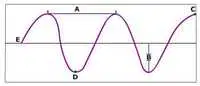
Which letter represents amplitude? (a)
A
B
C
D
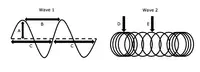
What property of a wave is represented by letter B? (a)
Wavelength
Amplitude
Speed
Frequency
Which of the following can act as media for a wave? (a)
solid only
Liquid only
Gases only
Solids, liquids, and gases
What do all waves transfer?
(a)
In the Balloon and nut hummer investigation, what changed as you swirled the balloon faster?
The pitch changed.
There were more vibrations.
Nothing changed.
The nut spun faster.
What are ALL the Science Light Primary Colours?
Red
Yellow
Green
White
Blue

Shorter wave lengths can carry more energy. Which of these probably carries the MOST energy:
Infrared light
Visible light
X-rays
UV light

What is another name for wave height?
Frequency
Wavelength
Origin
Amplitude
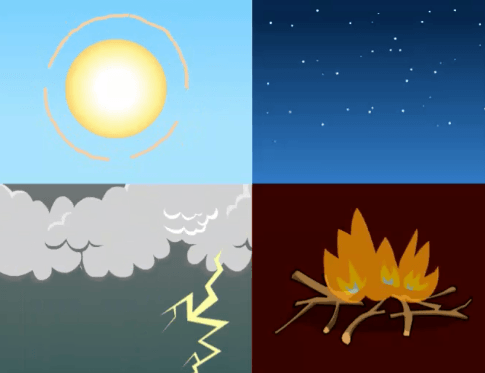
Energy can be __________ from one object to another. (2 answers)
Transported
Teleported
Transformed
Translated

#1 refers to the
wavelength
amplitude
crest
trough
The number of waves that pass somewhere in a second is:
amplitude
frequency
wavelength

If a wave has a greater frequency, what happens to the wavelength?
Increases
Decreases
Stays the same

Which type of waves have the longest wavelength?
Visible light
Radio waves
X-rays
Gamma-Rays

The law for reflection is...
angle of incidence = angle of reflection
incident ray = reflected ray
light rays bounces back the same way
light rays reflect at the same angle from the mirror

What property does the orange arrow (A) represent?
Crest
Trough
wavelength

What does #2 represent?
Period
Frequency
Wavelength
Amplitude

Wavelengths are usually measured in ....
seconds
Hz
inches
meters

What is the number of complete waves passing a fixed point in a given amount of time?
Amplitude
Intensity
Wavelength
Frequency
The pitch of a sound is most closely related to the
frequency of the sound waves
distance from the sound source
medium through which the sound travels
intensity of the sound
How loud or soft a sound is, is related to the _____________ of the wave
amplitude
frequency
wave length
rest position
Waves that have vibrations that move perpendicular to the direction the wave are called:
Electromagnetic Spectrum
Transverse Waves
Medium
Light Waves
Sound waves are...
cool
not cool
transverse waves
longitudinal waves
Waves that require a medium are called
mechanical waves
transverse waves
light waves
gamma rays
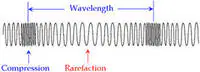
Which type of wave is pictured here?
Transverse
Electromagnetic
Light
Longitudinal

If someone is standing to the left of this wave, they would hear a ______ pitch than someone standing to the right of it.
uglier
prettier
higher
lower
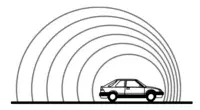
If you are standing in front of this car, the wavelengths nearest you would have a _______ frequency
quieter
louder
higher
lower

Which BEST describes this sound?
Starts low pitch and quiet and gets higher pitch and loud
Starts high pitch and quiet and get lower pitch and loud
Starts low pitch and loud and gets higher pitch and quiet
Starts low pitch and quiet and gets higher pitch
Sound is made when a source of energy forces the matter to _________.
shake
vibrate
move
stay still
A back-and-forth motion causing particles to move close together generates a _______.
rarefaction
surface wave
transverse wave
compression
A rarefaction is generated when particles move ______.
together
closer
under
apart
Sound waves cannot travel through which of these ____.
paper
milk
outer space
hydrogen
In which of these types of media will sound travel faster?
solid
liquid
gas
vacuum
The elasticity of a substance describes how fast or slow its particle bounce back-and-forth as ______ move through the object.
vibrations
chemicals
electrons
surface waves
Which physical property of a medium is defined by how close the particles of the substance are to each other?
elasticity
temperature
density
amplitude
The amount of energy a sound wave carries per sound through a unit of area is its ____.
pitch
amplitude/intensity
loudness
frequency
Frequency of waves is measure in _____.
Hertz
Decibels
Watts
Meters/second

