
 Worksheets
Level 1 Acids and Bases
Total questions: 40
Worksheet time: 44mins
Highly acidic solutions have a pH closer to...
7
1
14
9
A pH level of 7 indicates
acid
base
neutral
none of the following
What is the only substance with a neutral pH of 7?
Milk
Orange Juice
Pure water
Bleach
Slightly basic solutions have a pH closer to...
8
0
14
4
Which property is not associated with acids?
Sour taste
strong acids can burn you
turns litmus paper blue
reacts with metals
What type of paper is used to test for acids and bases?
Red paper
Blue paper
Lined paper
Litmus paper
Tastes sour
Acids
Bases
None of the following
Acids & Bases
Forms hydrogen ions (H+) in water.
Acids
Bases
All
Forms hydroxide ions (OH-) in water.
Acids
Bases
All
A substance is found to have the following characteristics:
Very bitter taste
Feels slippery to the touch
Produces OH- ions when dissolved in water
In what category would the substance be classified?
acid
base
enzyme
fatty acid
.............................. + sodium hydroxide --> sodium chloride + water
Nitric acid
Sulphuric acid
Hydrochloric acid
Ethanoic acid
Sulphuric acid + potassium hydroxide --> ........................ + water
potassium sulphate
kalium sulphurate
potassium nitrate
magnesium hydroxide
What type of reaction occurs when you react an acid with a base (an alkali)?
combustion
decomposition
no reaction
neutralisation
What colour is Universal indicator when the solution is neutral?
Red
Green
Blue
Purple
What is the salt formed when nitric acid is added to aluminium hydroxide?
Sodium chloride
Aluminium nitrate
Sodium nitrate
Aluminium chloride

Which of these is the symbol for calcium?
C
Ca
Cu
Cl

How many protons does a Lithium atom have?
3
6
7
6.941
What gas is released when an acid reacts with a metal carbonate?
Oxygen
Hydrogen
Helium
Carbon dioxide
Hydrochloric acid + magnesium hydroxide -->
Which subatomic particle has a positive charge?
electron
orbital
proton
neutron
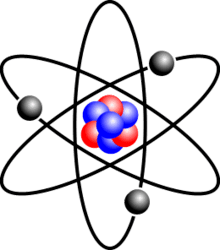
Which subatomic particle has a negative charge in the atom?
proton
neutron
electron
quark

How many electrons does an Oxygen atom have?
8
24
16
15.99

An atom becomes _________ when it loses electrons.
Positive
Negative
Neutral
Invinsible
Mg atom has 12 protons. what is the electron arrangement of an Mg atom?
2.8
2.8.8
2.8.2
2.10

what is the electron arrangement of atom N (atomic number = 7)?
2,7
2,8
2,5
7
If an ion has a 2+ charge, what does this mean?
The atom has gained 2 protons
The atom has gained 2 electrons
The atom has lost 2 protons
The atom has lost 2 electrons
A temperature increase causes the particles ......
to slow down
move faster
collide higher
in the right order
What makes a successful/effective collision?
When molecules collide.
When molecules collide with the correct orientation.
When molecules collide with the correct orientation and enough energy.
High Temperature.

Which of these is the symbol for Copper?
C
Ca
Cu
Cl

Which of these is the symbol for sodium?
S
So
N
Na

Which of these is the symbol for potassium?
P
Ka
K
Pt
Which one of these is the symbol for iron?
Ir
Fe
I
F

