wayground logo

Free Printable Worksheets

NEW

Font size

S
M
L
XL
Worksheets

Weathering and Erosion by Water

Total questions: 38

Worksheet time: 19mins
Name
Class
Date
1.
How does freezing water cause the weathering of rocks?  The freezing water—
a)
keeps the rocks in place.
b)
makes the rocks last longer.
c)
expands cracks and breaks rocks.
d)
causes rocks to fall in landslides.
2.
The process that breaks down rocks and other materials on Earth's surface is called
a)
Weathering
b)
Erosion
3.
A cliff formed near the ocean.  Which statement best describes how this cliff formed?
a)
Warm air melted the rock.
b)
Sun rays evaporated the rock.
c)
Ocean waves washed away rock.
d)
Plant roots pushed away the rock.
4.
What is the process that picks up and moves weathered rocks?
a)
Erosion
b)
Landslide
c)
Weathering
5.
What causes the greatest erosion effect on our beaches?
a)
Waves
b)
Gravity
c)
Glaciers
d)
Wind
6.
The process by which water, ice, wind, or gravity moves weathered rock and soil from one place to another.
a)
Weathering
b)
Erosion
c)
Deposition
d)
Crop Rotation
7.
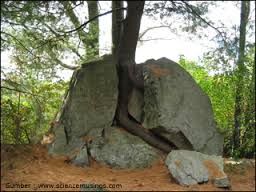
How do plants weather rocks?
a)
Plants don't weather rocks.
b)
When roots grow into cracks of rocks and expand the rock breaks.
c)
When the plant moves water from the roots to the leaves, the rock breaks.
8.
What is the wearing away or breaking down of rocks called?
a)
Weathering
b)
Erosion
c)
Glaciers
9.
Flood water pounding against a canyon wall and wearing it down is an example of
a)
Weathering
b)
Erosion
c)
An avalanche
10.
Weathering and erosion are the same thing.
a)
True
b)
False
11.
The process of carrying away weathered bits of rocks is called
a)
weathering
b)
erosion
12.
The process of slowly breaking rocks into smaller pieces is called
a)
weathering
b)
erosion
13.
Flood water pounding against a canyon wall and wearing it down
a)
Weathering
b)
Erosion
14.

Which would most likely increase the erosion caused by a stream?

a)

Increased Rainfall

b)

Decreased animal life

c)

Decreased temperature

d)

Increased Evaporation

15.

Many processes that shape Earth happen over thousands of years. Some processes happen much more quickly. Which of the following has the potential to change Earth's landforms quickly?

a)

The carving of a valley by a glacier

b)

The formation of a canyon by a river

c)

The erosion of sand on a beach by storms

d)

The weathering of rocks by wind

16.

Dalton noticed that recent rain had loosened up the dirt in his backyard. As a result, much of the dirt had moved around. There were holes and mounds where the dirt had been level before. This is an example of which of the following?

a)

An earthquake

b)

Weathering

c)

A mudslide

d)

Erosion

17.

Which type of stream is most likely to cause the greatest amount of erosion?

a)

A slowly moving stream with a small amount of water.

b)

A quickly moving stream with a small amount of water.

c)

A quickly moving stream with a large amount of water.

d)

A slow moving stream with a large amount of water.

18.

On a recent field trip to a local river, the science class collected several rocks from the river bed. The rocks were all smooth and rounded. Why were the rocks in the river bed smooth?

a)

Rushing water in the river wore away any jagged edges.

b)

The minerals from which the rocks are made cannot form jagged edges.

c)

Over centuries, the action of the wind caused the rocks to become smooth.

d)

Plants along the river released substances that mixed with the water to smooth the rocks.

19.

Hailey and her brother made a sand castle at the beach. Hailey slowly poured water on top of the sand castle. Some of the sand ran down the side of the castle with the water. What type of phenomenon did Hailey demonstrate?

a)

Weathering by temperature change.

b)

Erosion by heat.

c)

Weathering by water.

d)

Erosion by water.

20.

Underground caverns are an example of weathering and erosion. Their formation might be best explained by which choice?

a)

Wind weathers and erodes rock particles.

b)

Cold temperatures cause ice to form and break rock apart.

c)

Groundwater dissolves minerals, forming underground cavities.

d)

Gravity moves particles of rock downhill.

21.

Bobby observed that a metal trash can was covered with rust. What type of weathering caused the rust on the trash can?

a)

Mechanical weathering

b)

Wind weathering

c)

Chemical weathering

d)

Erosion weathering

22.
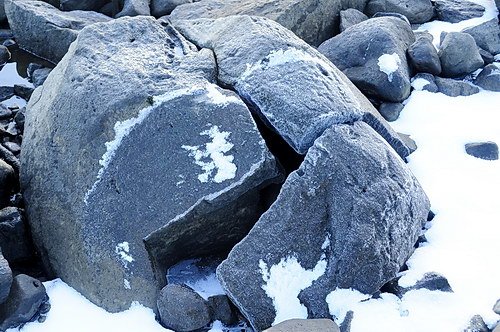
These rocks were broken apart from the continuous freeze/thaw of water in the cracks of the rocks. This is an example of:
a)
ice wedging
b)
acid rain
c)
permeability
d)
abrasion
23.
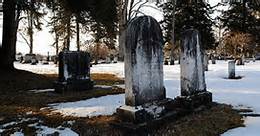
These gravestones have slowly broken down and turned a blackish color due to the action of:
a)
ice wedging
b)
abrasion
c)
acid rain
d)
mechanical weathering
24.
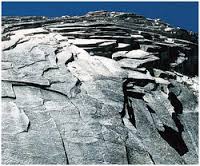
The diagrams shows a rock with water trapped in the cracks during the day and at night. 

Which statement best explains why this process results in weathering?
a)
frozen water acts as a solute
b)
water expands when it freezes
c)
the mass of water increases when it freezes
d)
frozen water dissolves most types of rock
25.
Rain washing away soil from a hillside
a)
Weathering
b)
Erosion
c)
Deposition
26.
Caves being formed by acid rain dissolving underground limestone
a)
Weathering
b)
Erosion
c)
Deposition
27.
Water getting into cracks, freezing, and breaking the rocks or pavement apart
a)
Weathering
b)
Erosion
c)
Deposition
28.
What is the major cause of weathering and erosion?
a)
wind
b)
ice
c)
glaciers
d)
moving water
29.
What is mechanical weathering?
a)
Process through which rocks are physically broken into smaller pieces.
b)
Rocks are broken down through chemical changes.
c)
Rocks are worn away from acid in plant roots.
d)
Rocks broken down by machinery.
30.
Which of the following is NOT a type of chemical weathering?
a)
water
b)
carbon dioxide
c)
ice wedging
d)
living organisms secreting acid to break down rocks
31.
What is mechanical weathering?
a)
Process through which rocks are physically broken into smaller pieces.
b)
Rocks are broken down through chemical changes.
c)
Rocks are worn away from acid in plant roots.
d)
Rocks broken down by machinery.
32.
Carbon dioxide (CO2) combines with water as raindrops fall through the atmosphere. This makes a weak acid, called carbonic acid. Carbonic acid is a very common in nature, where it works to dissolve rock. Pollutants, such as sulfur and nitrogen from fossil fuel burning, create sulfuric and nitric acid. Sulfuric and nitric acids are the two main components of acid rain, which speeds up chemical weathering.
This statue was probably destroyed by _____.
a)
Wind
b)
Humans
c)
Acid Rain
d)
Animals
33.

Waves and currents help to form beaches.

a)

True

b)

False

34.

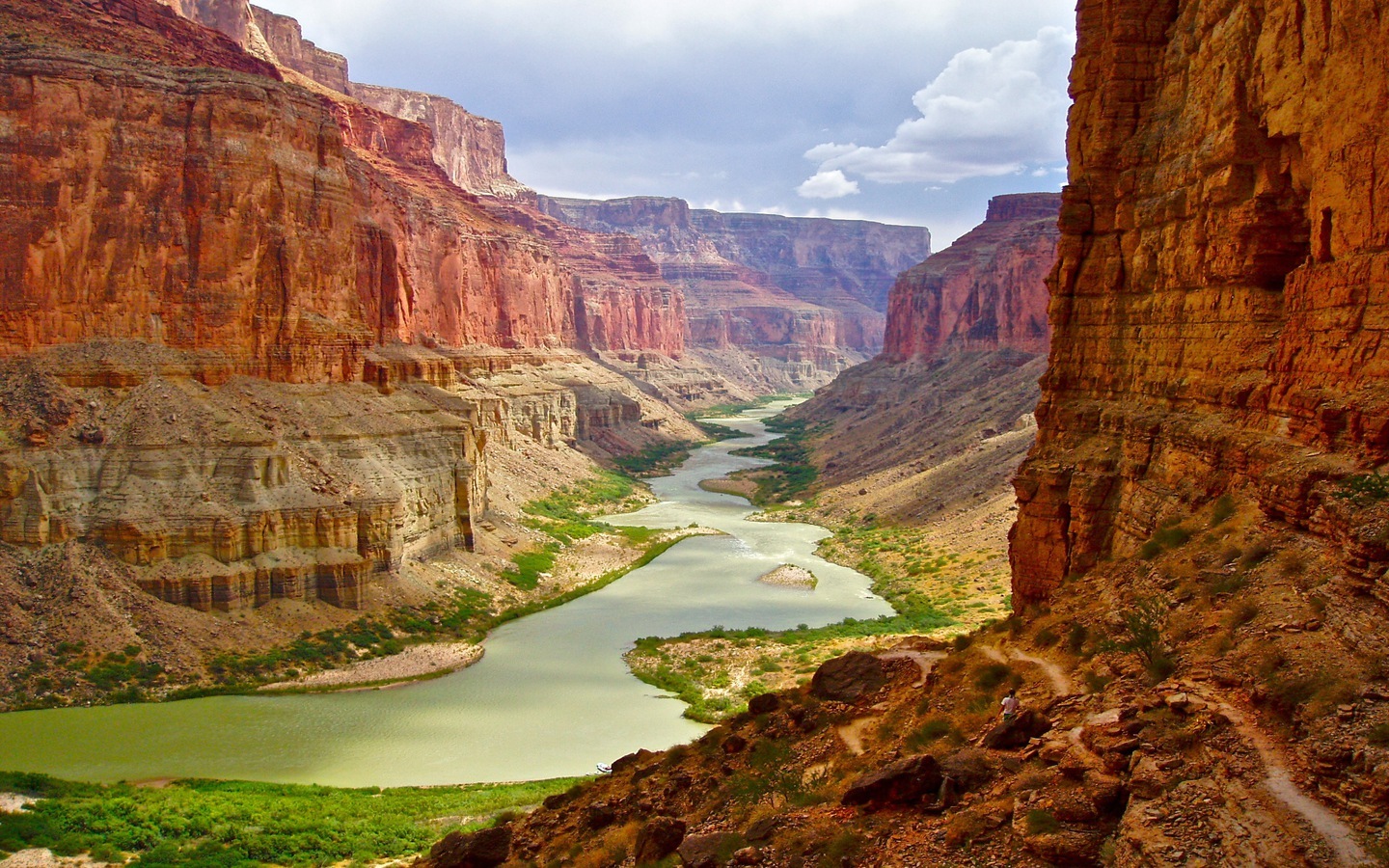
Most of the erosion in the Grand Canyon is caused by

a)

Wind

b)

The Colorado River

c)

Glaciers

d)

Rain

35.

When a material allows water to seep through the tiny holes, the material is considered

a)

Impermeable

b)

Deposition

c)

Permeable

d)

Solid

36.
__________________________ is the breaking down of rocks that does not change the mineral makeup of the rocks- just makes smaller pieces
a)
Chemical weathering
b)
Mechanical weathering
37.

Identify types of physical weathering

a)

1. tree roots, ice wedging, burrowing animals, abrasion, human activity, waves

b)

oxidation, acid rain, lichen

c)

carbonic acid, water, deposition

38.
________________ is oxidized iron.
a)
Carbonic acid
b)
Rust
c)
Calcite