Wayground logo

Free Printable Worksheets

Font size

S
M
L
XL
Worksheets

Moon Phases and Eclipses Study Guide

Total questions: 40

Worksheet time: 28mins

Name
Class
Date
1.
Why does the Moon seem to change shape?
a)
As the Moon revolves around Earth, different parts are lit by the Sun.
b)
The viewpoint from Earth of the illuminated side of the Moon changes.
c)
Earth’s shadow is blocking light from the Sun.
d)
The way the Moon produces light changes, so we see different shapes.
2.
Which statement best shows why the Moon seems to be producing light?
a)
The Moon is making its own light.
b)
The Moon is reflecting light from Earth.
c)
The Moon is reflecting light from the Sun.
d)
The Moon goes through eight phases.
3.
What is the phase of the moon during a solar eclipse?
a)
Full Moon
b)
New Moon
c)
First Quarter
d)
A solar eclipse can happen any time
4.
Approximately how long does it take for the moon to revolve around the Earth?
a)
One day
b)
One week
c)
One month
d)
One year
5.
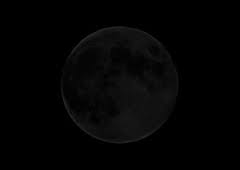
Name the moon phase
a)
First Quarter
b)
Last Quarter
c)
New Moon
d)
Full Moon
6.
A solar eclipse only happens during a ________ moon.
a)
New
b)
Cresent
c)
Gibbous
d)
Full
7.
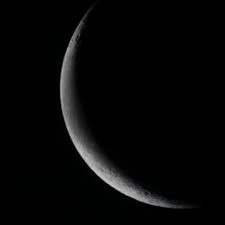
Name the moon phase
a)
waning crescent
b)
waxing crescent
c)
waning gibbous
d)
waxing gibbous
8.

In order to have an eclipse, the Moon, Sun and Earth have to be?

a)

Below each other

b)

Above each other

c)

Lined up exactly

9.
Name the moon phase
a)
waning crescent
b)
waxing crescent
c)
waning gibbous
d)
waxing gibbous
10.

Name the eclipse.

a)

solar eclipse

b)

lunar eclipse

11.
A lunar eclipse only occurs during which moon phase?
a)
New Moon
b)
3rd Quarter
c)
Full Moon
d)
1st Quarter
12.
Name the moon phase
a)
waning crescent
b)
waxing crescent
c)
waning gibbous
d)
waxing gibbous
13.
What is the darkest inner part of the shadow cone called, where a total eclipse can be viewed.
a)
Total
b)
Umbra
c)
Penumbra
14.
Name the moon phase
a)
First Quarter
b)
Last Quarter
c)
New Moon
d)
Full Moon
15.
a)
solar eclipse
b)
lunar eclipse
16.
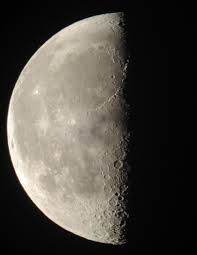
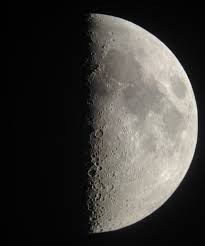
Name the moon phase
a)
First Quarter
b)
Last Quarter or (third quarter)
c)
New Moon
d)
Full Moon
17.
Name the moon phase
a)
First Quarter
b)
Last Quarter
c)
New Moon
d)
Full Moon
18.
How much of the moon is always lit?
a)
can't tell
b)
always changes
c)
half
d)
3/4
19.
Name the moon phase
a)
waning crescent
b)
waxing crescent
c)
waning gibbous
d)
waxing gibbous
20.
How many phases does the moon go through?
a)
4
b)
8
c)
10
d)
16
21.
Name the moon phase that would come AFTER this moon.
a)
waning crescent
b)
waxing crescent
c)
waning gibbous
d)
waxing gibbous
22.
As the moon's shape appears to get smaller, we say that the moon is _.
a)
swelling
b)
waxing
c)
waning
d)
disappearing
23.
Name the moon phase that would come AFTER this moon.
a)
waning crescent
b)
waxing crescent
c)
waning gibbous
d)
waxing gibbous
24.
Phases of the moon in which the moon appears to be getting larger are referred to as _.
a)
waxing
b)
waning
c)
new
d)
eclipse
25.

What do we call an event that the moon blocks the sun from reaching the Earth?

a)

Phase

b)

Lunar Eclipse

c)

Solar Eclipse

d)

Meteoroid

26.

About how long does it take the moon to go through all of it's phases?

a)

30 Days

b)

31 Days

c)

28 Days

d)

29 Days

27.

Why do we know the phases of the moon for months that have not happened?

a)

The Moon moves in a regular pattern in the sky.

b)

The Moon is full for 20 days every month.

c)

I can see the future.

d)

The phases of the Moon are random and irregular.

28.

When one object crosses in front of another, the first object can sometimes block the view of the second. This process is called a(n)_______.

a)

eclipse

b)

gibbous

c)

penumbra

d)

umbra

29.

On a clear night in the summer, Kelly identified the constellation Leo in the sky. When she went star-gazing five months later, she could not find Leo, but could see Gemini instead. Why?

a)

The moon revolved so it was facing a different part of the universe at night.

b)

The stars in Leo moved.

c)

Earth revolved so it was facing different part of the universe at night.

d)

The moon was blocking Leo in the sky.

30.
Which type of eclipse is shown in the image?
a)
solar eclipse
b)
lunar eclipse 
31.
Which type of eclipse is shown in the image?
a)
solar eclipse
b)
lunar eclipse 
32.
_______ means to spin on its axis.
a)
Revolve
b)
Rotate
c)
Orbit
33.
_______ is the movement of an object around another object.
a)
Revolve
b)
Rotate
c)
Orbit
34.
The path of an object in space is known as its ________.
a)
Revolve
b)
Rotate
c)
Orbit
35.
How many degrees is the Earth's axis tilted?
a)
0
b)
23.5
c)
50
d)
90
36.

What causes the moon's phases

a)

Where you are standing on Earth

b)

the amt of sunlight reflected onto the moon from the sun

c)

The tilt of Earth

d)

how fast the moon is moving

37.

Why do we always see the same side of the moon from Earth?

a)

because the phases change

b)

because it rotates and revolves at the same rate

c)

because half of the moon always receives sunlight

d)

The moon changes positions

38.

Mrs. Smith says "the moon looks larger than the stars!" What explains this?

a)

The moons soaks up the star's light

b)

The moon is larger than Earth

c)

The moon is larger than stars

d)

the moon is closer to Earth than stars

39.
The Moon orbits Earth in a ________________ direction
a)
clockwise
b)
counterclockwise
c)
upwards
d)
downwards
40.

In order to have an eclipse, the Moon, Sun and Earth have to be?

a)

Below each other

b)

Above each other

c)

Lined up exactly