
 Worksheets
Plants
Total questions: 38
Worksheet time: 20mins

What produces haploid cells (sex cells) during the life cycle of a plant?
gamete
gametophyte
sporophyte
zygote


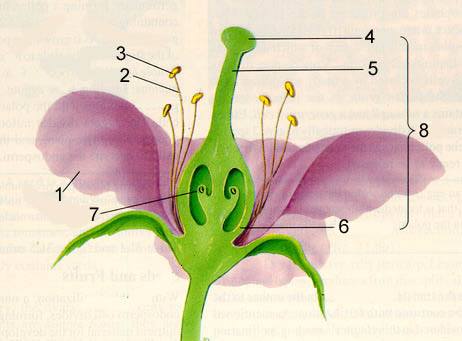
The male part of the flower is known as the _____.
stamen
pistil
ovary
petal

The female part of the flower is known as the ____.
stamen
anther
filament
pistil



Plants that do NOT have true roots, stems and leaves and get their water through osmosis are....
vascular plants
nonvascular plants

According to this cladogram, what is the oldest group of plants?
Mosses
Liverworts
Ferns
Angiosperms

According to this chart what evolutionary milestone allowed angiosperms to dominate the world?
Seed
Cuticle
Flower
Vascular Tissue

according to this cladogram, what group is the closest relative to ferns?
Club Moses
Gymnosperms
Mosses
Hornworts

According to this chart which of the following is a gymnosperm?


Which of the following is a vascular seedless plant?


Succulents are plants that live in dry, arid conditions. They conserve water in large fleshy leaves. Which of the following would fit this description?


"Evergreens" have thin needle-like leaves with thick cuticles to allow them to withstand extreme colds and photosynthesize year round. Which of the following is a good example?


The waxy waterproof layer on the leaves and some stems of plants is called the _________________.
root
stomata
petal
cuticle
The flexibility in plants is due to this kind of simple permanent tissues.
chlorenchyma
aerenchyma
collenchyma
parenchyma
This tissue makes the plant hard and stiff.
Collenchyma
Epidermis
sclerenchyma
collenchyma

Identify the type of simple permanent tissue which is present in the shell of the nut given in the picture.
collenchyma
sclerenchyma
aerenchyma
chlorenchyma
What type of plant tissue has very thin cell walls and is the major portion of ground tissue?
Parenchyma
Collenchyma
Sclerenchyma
Guard Cells
Which type ground tissue is primarily used for photosynthesis and storage?
Parenchyma
Collenchyma
Sclerenchyma
Guard Cells
ferns, vascular, no seeds
bryophyta
hepatophyta
pteridophyta
cycadophyta
cycads, vascular, seeds
cycadophyta
gingophyta
angiophyta
gnetophyta
seeds in cones, vascular
coniferaphyta
gnetophyta
angiophyta
pteridophyta

To what phyla does this plant belong?
anthrophyta
gnetophyta
angiophyta
cycadophyta

To which phyla does this plant belong?
hepaphyta
gnetophyta
bryophyta
cycadophyta

To what phyla does this plant belong?
sphenophyta
pteridophyta
coniferaphyta
ginkgophyta

To which phyla does this plant belong?
lycophyta
pteridophyta
ginkgophyta
anthophyta
Which of the following is a plant structure used for seed dispersal? (Choose all that apply)
Edible Fruit
Grass bur
Winged Seeds
Sporangia

