
 Worksheets
SEMESTER 1 CHEMISTRY REVIEW
Total questions: 75
Worksheet time: 3hrs 49mins





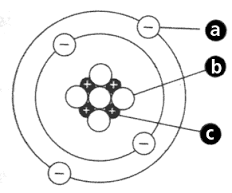

volume

6.5
6.60
6
6.65
The unit cm3 is used to express
length
mass
volume
time


An increase in thermal energy causes:
Particles to become more attracted to each other.
Particles to become less attracted to each other.
Particles to move faster.
Particles to move slower.
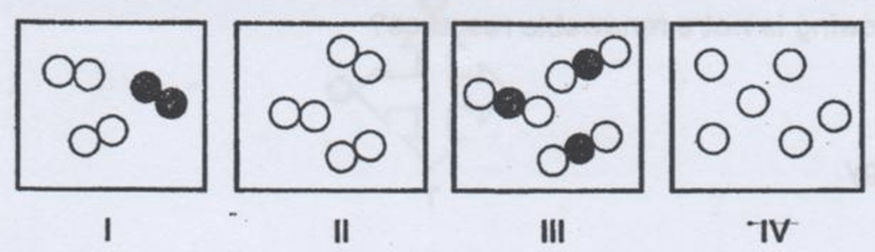
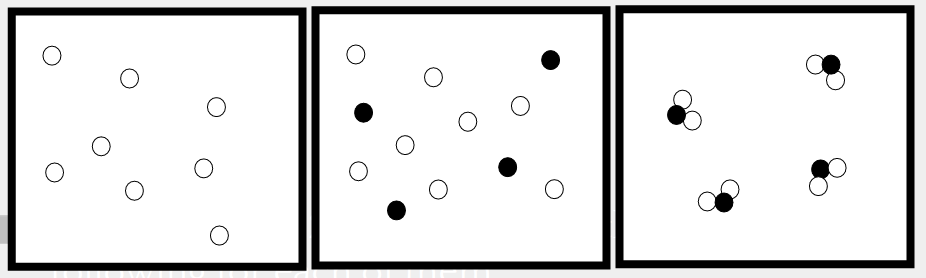
In the diagrams provided, the circles of different colors represent the atoms of different elements. Which diagram represents a mixture?
I
II
III
IV

A block of solid gold is heated from -20 0C to 25 0C in five minutes using a hotplate. Which graph represents this situation?
Graph A
Graph B
Graph C
Graph D


Based on the data, which number shows the correct location of the element with 2 valence electrons and 3 energy levels.
1
2
3
4

Based on the data, which number shows the correct location of the element with 2 valence electrons and 1 energy levels.
1
2
3
4
Which pair of properties describe the elements in group 18
They have 8 valence electrons and are very reactive
They have 8 energy levels and are stable
They are gases at room temperature and are stable
They are gases at room temperature and very reactive.
Which two elements on the periodic table are in the same group?
Na and He
O and C
Li and Ne
He and Ar

Which two atoms are elements that belong in period two in the periodic table?
Atom 3 and Atom 4
Atom 1 and Atom 4
Atom 3 and Atom 2
Atom 1 and Atom 2
Which two atoms are elements in the same group in the periodic table?
Atom 3 and Atom 4
Atom 1 and Atom 4
Atom 3 and Atom 2
Atom 1 and Atom 2
Based on the data, which number shows the correct location of the element that is malleable and a good conductor.
1
2
3
4
Which one of the following discoveries came first?
electrons
neutrons
quarks
atoms
Which scientist discovered the electrons?
Dalton
Thomson
Atristotle
Bohr
Rutherford and his students did experiments that showed
quark
nucleus
proton
electron
Bohr discovered that electrons are located in
the nucleus
inside protons
electron cloud
circular orbits around the nucleus
What is a particle with one negative charge called?
electron
proton
quark
neutron

